Antirrio Fortress
Antirrio Fortress stands as a significant historical monument located in the municipality of Antirrio, Greece, commanding the narrow maritime passage between Central Greece and the Peloponnese. Constructed at the end of the 15th century under the orders of Sultan Bayezid II, this fortress was strategically designed to control access to the Gulf of Corinth. Its rapid construction, completed in 1499, reflects the Ottoman Empire's urgent need to secure this vital waterway against rival naval powers.
The fortress was built in close coordination with the nearby Rio Fortress, located directly across the strait. Together, these fortifications created a formidable crossfire zone that effectively blocked enemy ships from navigating this critical channel. This strategic positioning made Antirrio Fortress a key military asset in controlling maritime traffic and defending Ottoman interests in the region.
Historical significance and military engagements
Early Ottoman period and sieges
Shortly after its completion, the fortress faced significant military challenges. In 1532, the Genoese admiral Andrea Doria led a siege against Antirrio Fortress. The Ottoman garrison, unable to withstand the attack, chose to destroy the fortress by detonating explosives during their withdrawal to deny its use to the enemy. However, the Ottomans swiftly returned in 1533 to reclaim and rebuild the fortification, underscoring its strategic importance.
Strengthening under Ottoman corsairs
In 1543, the renowned Ottoman corsair Hayreddin Barbarossa enhanced the fortress's defenses by installing artillery, reflecting advancements in military technology and the evolving nature of siege warfare. These improvements significantly increased the fortress's ability to resist naval attacks and protect Ottoman maritime routes.
Conflicts with the Knights of Malta and Venetian conquest
The early 17th century brought further conflict when the Knights of Malta destroyed the fortress in 1603. The Ottomans once again rebuilt the structure to maintain their control over this strategic location. Later, during the Venetian offensive led by Francesco Morosini in 1687, the defenders detonated the fortress upon retreating. The Venetians then took control and reconstructed it, incorporating contemporary military engineering techniques to adapt the fortress to new defensive standards.
Later history and modern era
Following the Treaty of Karlowitz in 1699, which ended the conflict between the Ottoman Empire and the Holy League, the fortress reverted to Ottoman control and remained so for the next century. The fortress's control shifted definitively in 1829 when it was handed over to the newly established Greek state through a treaty signed by the Greek official Augustinos Kapodistrias. Since then, Antirrio Fortress has transitioned from a military stronghold to a cultural heritage site.
Today, the fortress serves as a venue for cultural events, with the Greek Ministry of Culture organizing concerts and theatrical performances during the summer months. This use connects the local community and visitors to the fortress's rich historical legacy.
Architectural features and layout
Fortress design and defensive structures
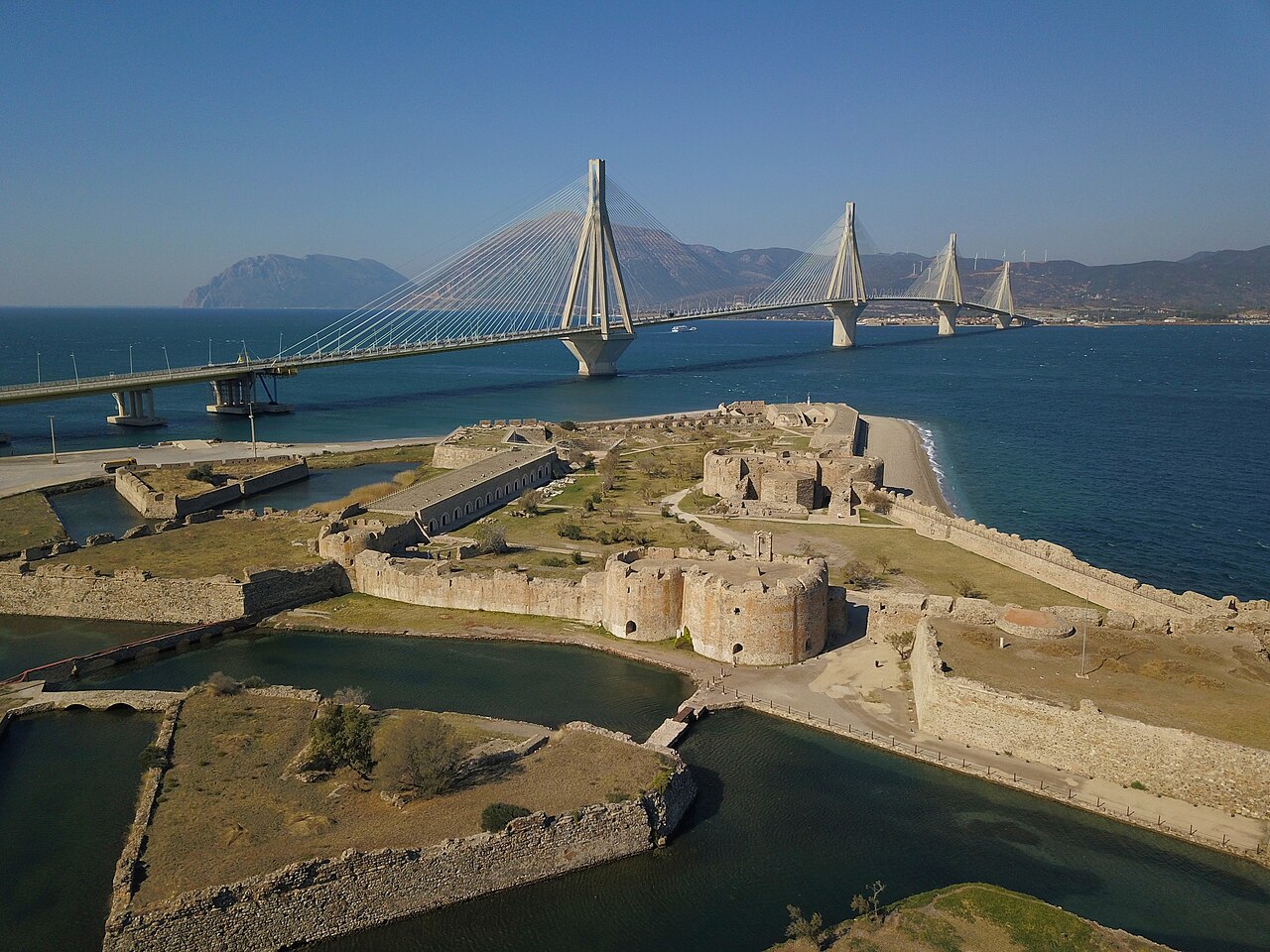
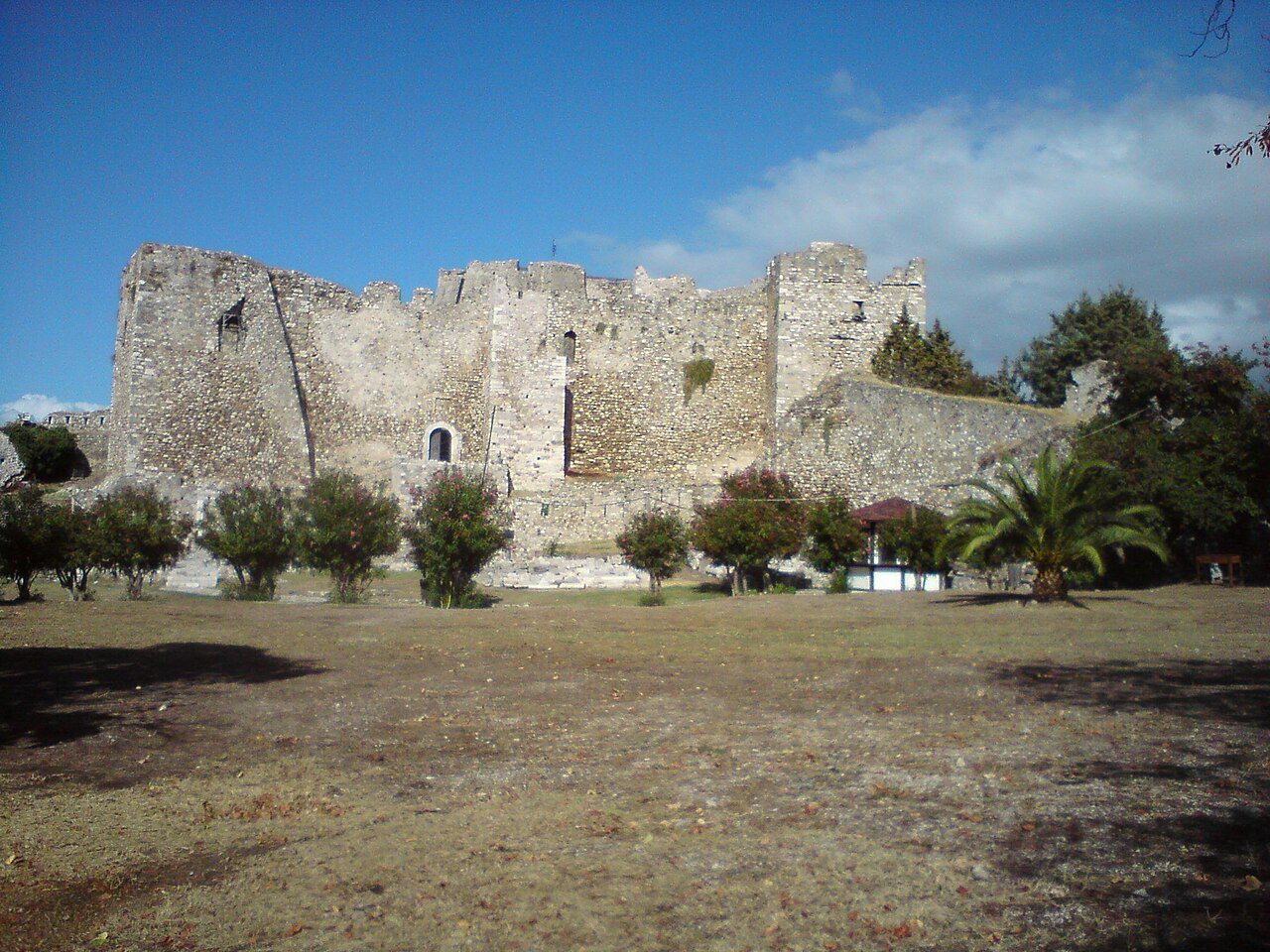
The fortress exhibits a near-hexagonal plan with polygonal bastions at each corner, a design that maximizes defensive coverage. It is surrounded on three sides by the sea, using natural maritime barriers to enhance its defense. The fortress walls rise to about eight meters and are constructed with a slight inward slope to better deflect incoming attacks, a common feature in military architecture of the period.
Cannon embrasures are strategically positioned facing the sea, emphasizing the fortress's role in maritime defense. These openings allowed defenders to fire artillery at approaching enemy ships effectively.
Moat and entrance
Originally, the fortress was protected on its northern side by a moat filled with seawater, isolating it from the mainland and adding an extra layer of defense. Although this moat has since been filled in, it played a crucial role in the fortress's security during its active military use.
The main entrance is located on the northwest side, featuring a barred gate accessed through an arched passage. This entryway leads into the fortified enclosure, controlling access and enhancing security.
Internal structures and community facilities
Historical records from the Ottoman period reveal that the fortress was not solely a military installation but also a settled community. It housed as many as 89 residential buildings, along with two mosques and a Turkish bath, reflecting its dual function as a garrison and a living space for soldiers and their families.
During Venetian control, the fortress was armed with approximately 30 cannons, indicating a significant military presence and adaptation to contemporary warfare needs. The current architectural appearance largely reflects Venetian military engineering, showcasing their advancements in fortification design during the late 17th century reconstruction.
Location and contemporary significance
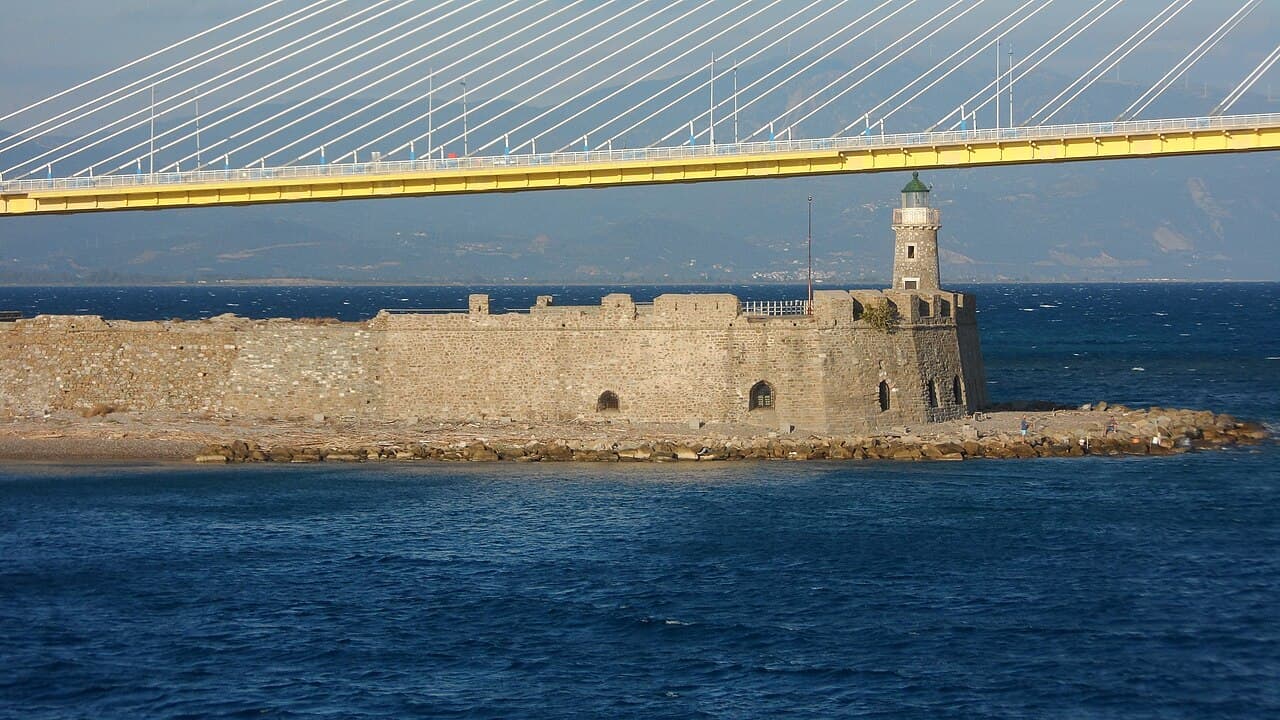
Antirrio Fortress is situated immediately west of the northern end of the Rio–Antirrio Bridge, a modern engineering marvel connecting the Peloponnese with mainland Greece. The fortress's southern tip features a lighthouse, which continues to serve as a navigational aid in this crucial maritime corridor.
Its location at the narrowest point of the strait underscores its historical and ongoing strategic importance in controlling naval passage between the Gulf of Corinth and the broader Mediterranean Sea.
Frequently asked questions (FAQ)
- How do I visit Antirrio Fortress?
- Antirrio Fortress is accessible to visitors year-round, with the best time to visit during the warmer months when cultural events are held. Visitors can explore the fortress grounds and enjoy panoramic views of the Gulf of Corinth. Check local tourism websites for any guided tours or special event schedules.
- What is the historical significance of Antirrio Fortress?
- Antirrio Fortress was built by the Ottoman Empire in 1499 to control the crucial maritime passage of the Gulf of Corinth. It played a strategic role in naval defense and witnessed multiple sieges and reconstructions by Ottomans, Venetians, and other forces.
- Can I attend events at Antirrio Fortress?
- Yes, the Greek Ministry of Culture organizes concerts and theatrical performances at Antirrio Fortress during the summer months. These events offer a unique opportunity to experience the fortress's historic ambiance combined with cultural activities.
- What architectural styles are represented in Antirrio Fortress?
- The fortress showcases a mix of Ottoman and Venetian military architecture. Its polygonal bastions and sloped walls reflect late medieval fortification techniques, while Venetian reconstruction introduced advanced bastioned designs and artillery placements.
- Is Antirrio Fortress wheelchair accessible?
- Due to its historic structure and uneven terrain, Antirrio Fortress may have limited accessibility for wheelchair users. Visitors with mobility concerns should inquire locally about available accommodations or assistance before visiting.
Photo gallery

Information
Website
Visit websiteSources & official resources
Verify the information above using these authoritative references.
Loading map...
Visitor reviews
No reviews yet. Been here? Write the first review and help other travelers!
Write the first reviewVisited this castle? Share your experience
Your review helps other travelers and adds first-hand knowledge to our encyclopedia.