Nafpaktos Castle
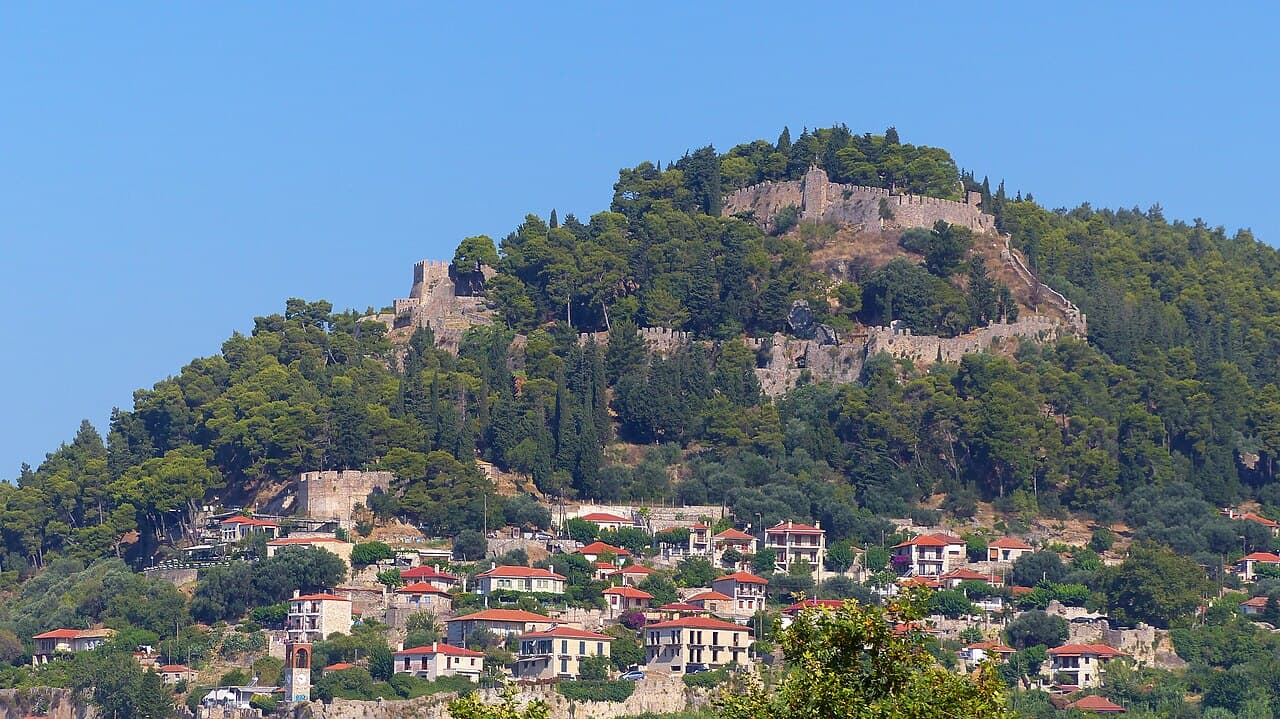
Nafpaktos Castle stands as a remarkable example of a historic hill castle in Greece, embodying a rich tapestry of Byzantine, Venetian, and Ottoman military architecture. Perched on a steep hill overlooking the northern coast of the Corinthian Gulf, this fortress has guarded a strategic maritime gateway for over two millennia. Its origins trace back to the 5th century BCE, making it one of the enduring symbols of Greek defensive ingenuity and historical continuity.
The earliest fortifications were constructed by the ancient Greeks, with the settlement sprawling across the plain east of the current castle and the nearby Agios Georgios hill. The acropolis, or fortified high point, was situated atop this hill, where the modern upper castle—known as Áno Perívolo—now stands. This elevated position provided commanding views and control over the sea approaches, a vital feature for defense and trade.
Historical development and strategic importance
Throughout its long history, Nafpaktos Castle has witnessed numerous phases of construction, destruction, and reconstruction, reflecting the geopolitical shifts in the region. A devastating earthquake in the mid-6th century CE led to the abandonment of the ancient coastal settlement during the subsequent Dark Ages. However, by the 10th century, Nafpaktos re-emerged as an important administrative and military center within the Byzantine Theme of Nicopolis. The Byzantines fortified the acropolis, establishing a stronghold that would serve as the nucleus for later expansions.
The castle's control changed hands multiple times following the Fourth Crusade in 1204. Initially held by the Venetians, it was ceded in 1210 to Michael I Komnenos, founder of the Despotate of Epirus. In 1294, it was part of a dowry to Philip I of Taranto, who enhanced its fortifications. The 14th century saw further turmoil with conquests by the Catalans and John Bua Spata, before the Venetians recaptured it in 1407.
Under Venetian rule, Nafpaktos Castle underwent significant modernization to counter the rising threat from the Ottoman Empire. The Venetians introduced scarped walls—sloped defensive walls designed to deflect artillery fire—and replaced older towers with robust polygonal bastions. They skillfully reused stones from ancient and medieval structures, blending heritage with innovation. Despite repeated Ottoman sieges in the mid-15th century, the castle resisted until 1499 when it fell to the Ottomans under Bayezid II.
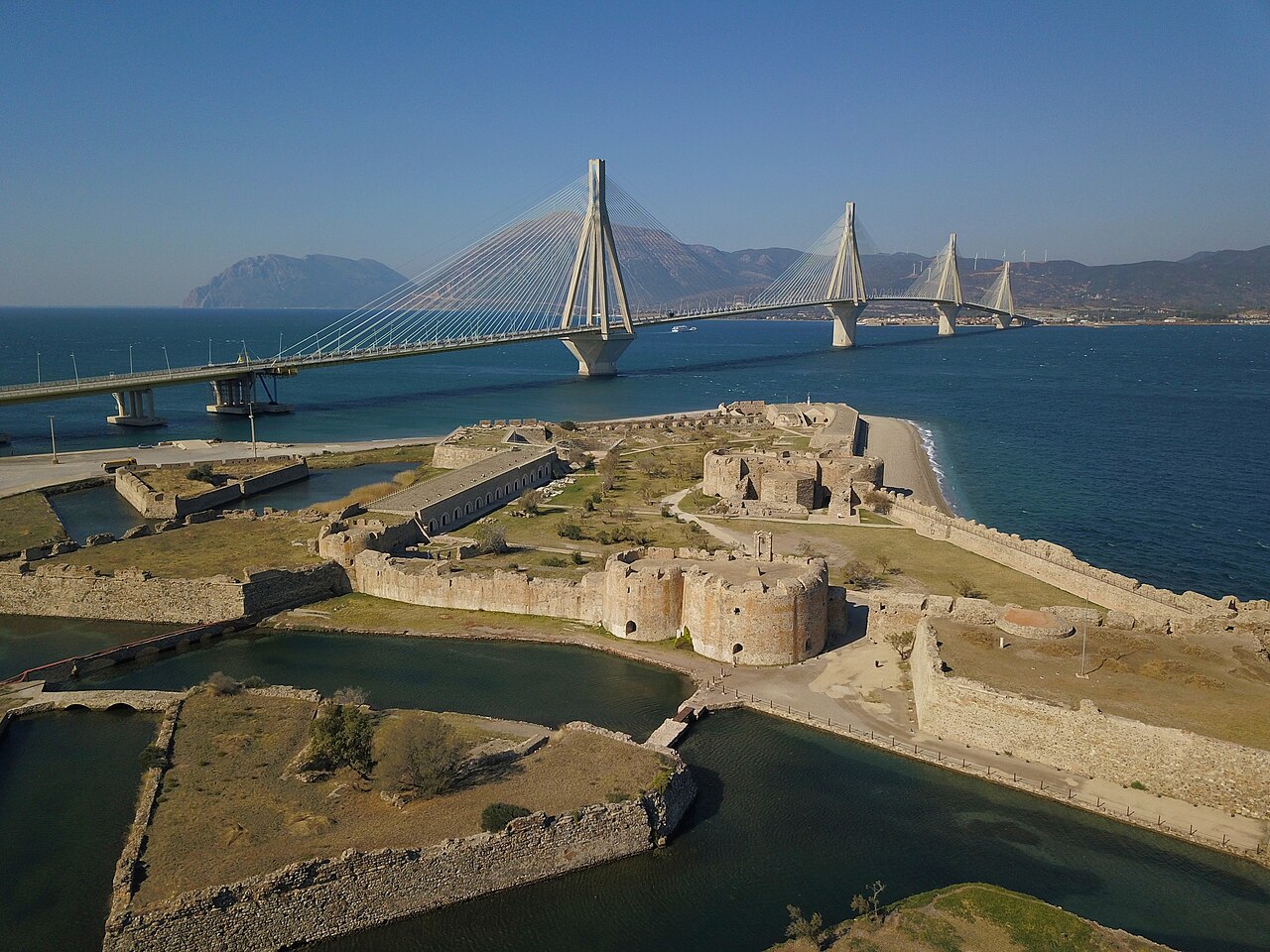
The Ottomans reinforced the fortress and constructed additional defenses at nearby Rio and Antirrio to secure the entrance to the Corinthian Gulf. The Venetians briefly regained Nafpaktos in 1687, repairing the walls, but the Treaty of Karlowitz in 1699 returned it to Ottoman control. Ottoman authorities further strengthened the fortifications in 1714.
During the Greek War of Independence, the castle was a focal point of conflict. An Ottoman garrison resisted a siege in May 1821, but a naval blockade in 1829 compelled surrender. Following incorporation into the modern Greek state, parts of the walls, including the eastern gate, were partially demolished in 1884 to facilitate urban expansion.
Architectural features and fortifications
Location and layout
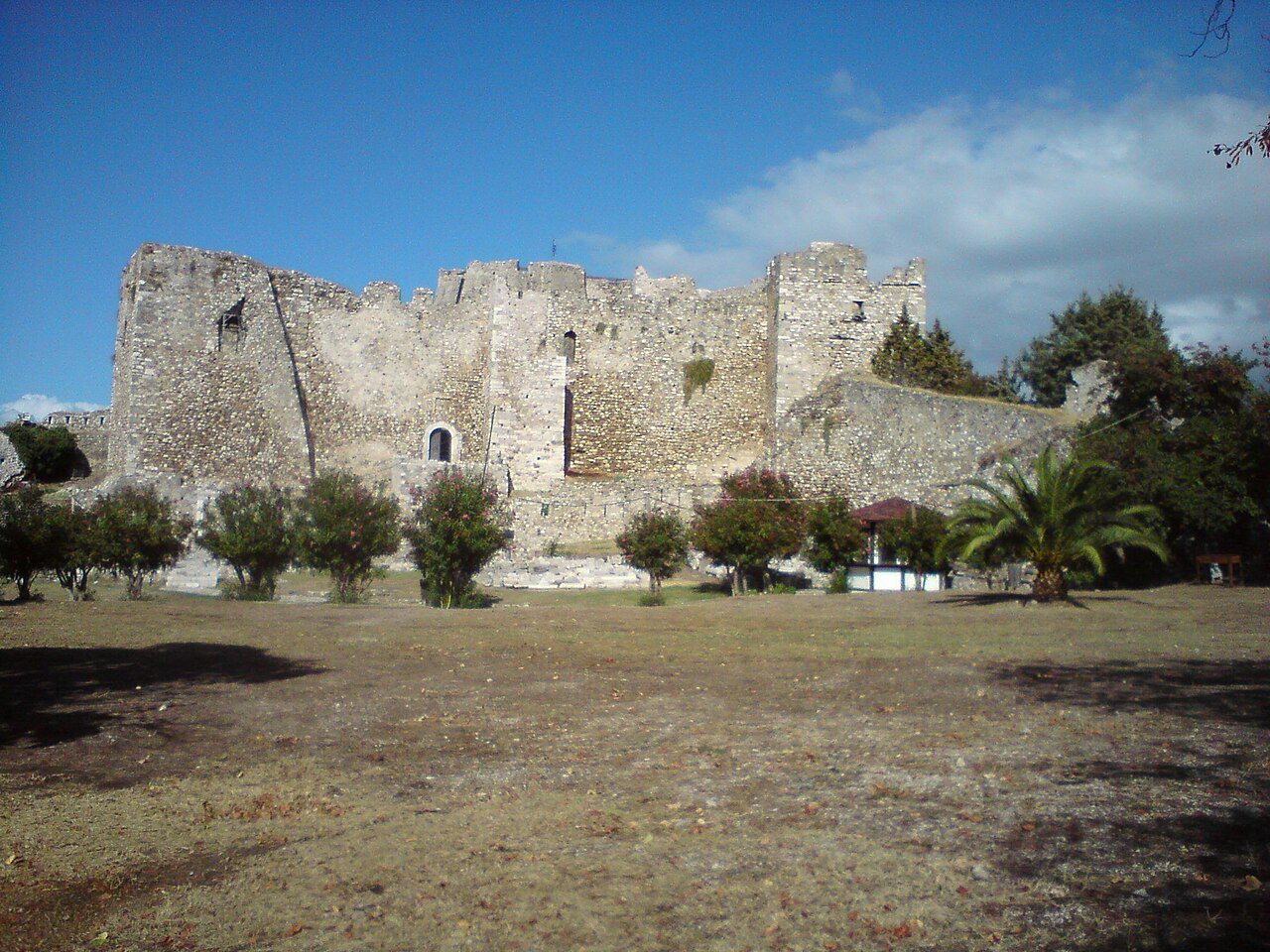
Nafpaktos Castle occupies a commanding position on a hill rising approximately 170 to 200 meters above sea level. The fortress covers an extensive area of about 175,000 square meters (17.5 hectares), with walls stretching roughly 2,250 meters in length and measuring between 2.5 and 3.5 meters thick. The complex is divided into five defensive enclosures separated by four transverse walls, creating a layered defense system.
Upper enclosure (áno perívolo)
The upper enclosure, or Áno Perívolo, crowns the hill as an irregular triangular area of about 24,000 square meters. It is subdivided into three defensive zones by two internal walls. At its pinnacle lies the acropolis known as Itz Kale, featuring four vaulted chambers and a Byzantine-era water cistern. An escape passage is also integrated into this section, underscoring the strategic foresight in its design.
The northern walls of the upper enclosure are in a state of disrepair, lacking towers but reinforced with buttresses. Elsewhere, the walls are strengthened by rectangular towers and angular projections. A forewall and moat protect the northern approach. Two main gates provide access: a southern gate linking to the lower enclosure and a western gate fortified with three consecutive portals and a rectangular tower equipped with a scarp and a portcullis.
Lower enclosure (káto perívolo)
The lower enclosure extends roughly 550 by 350 meters down the slope, encompassing the fortified harbor area. Its western wall is guarded by two towers and two bastions, one tower built upon ancient foundations with a turret. The western gate, dating to 1714, includes an internal bastion for enhanced defense.
The eastern wall features a carved relief of the Lion of Saint Mark dated 1491, symbolizing Venetian dominion. The Faltsoporcio bastion and gate are located nearby. The eastern walls also include four rectangular towers and culminate in a polygonal bastion topped by a clock tower constructed in 1914.
Internally, the lower enclosure is divided by a transverse wall with two towers and the Ottoman "Iron Gate," notable for its portcullis and marble doorframe. The polygonal bastion "Tsaous Tápia," dating to the late Ottoman period, stands in the upper part of this enclosure.
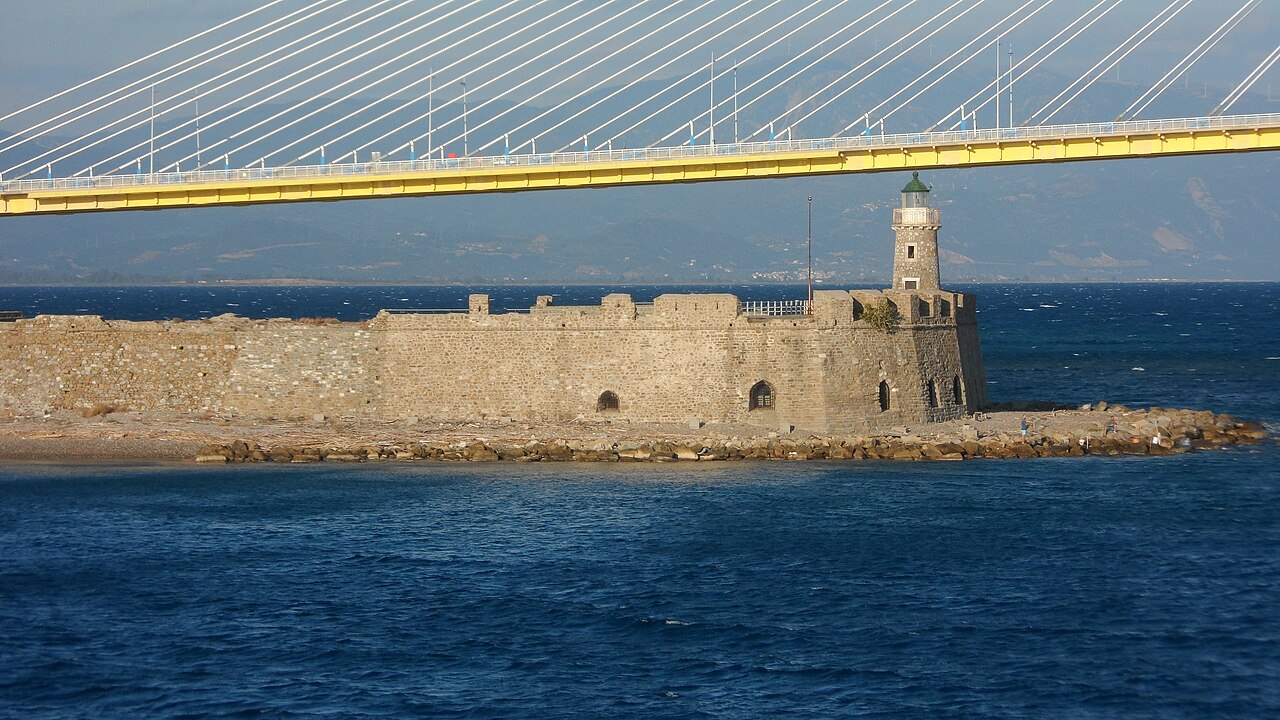
The southern walls face the sea and enclose a small harbor guarded by two bastions: a semicircular bastion with a rectangular turret on the east and a rectangular bastion with the Lion of Saint Mark relief on the west. The western bastion features a small gate with a portcullis and a circular guard post. Cannon openings along the seaward walls highlight the castle's role in coastal defense.
Religious and civic structures within the castle
Within the second enclosure stands the 19th-century church of Prophet Elias, built directly over the ruins of a Byzantine three-aisled basilica uncovered during archaeological excavations. Architectural fragments from the basilica, including the sculpted base of the templon, were repurposed in later constructions.
The site also contains remains of Ottoman-era mosques from the 16th and 17th centuries; notably, the base of one mosque's minaret is incorporated into the current church structure. Adjacent to the church are the ruins of the bishop's palace and a large hall once used as an armory, now serving as a venue for temporary exhibitions.
The third enclosure houses a guardhouse, refreshment area, and remnants of storerooms or cisterns, reflecting the castle's multifunctional role as a military and administrative center.
Architectural styles and preservation
The fortifications of Nafpaktos Castle illustrate a harmonious blend of Byzantine square towers, Venetian triangular bastions, and Ottoman semicircular bastions. This architectural diversity showcases the castle's layered history and adaptation to evolving military technologies.
The walls remain largely preserved near their original height, except where modern urban development has necessitated modifications or partial demolitions. The castle today stands as a testament to the strategic importance of Nafpaktos through the centuries and offers valuable insights into medieval and early modern fortification techniques.
Frequently asked questions (FAQ)
- How do I get to Nafpaktos Castle?
- Nafpaktos Castle is located in the town of Nafpaktos in Western Greece, easily accessible by car or local bus from nearby cities like Patras. The castle is situated on a hill overlooking the town and the Corinthian Gulf, with walking paths leading up to the entrance.
- What are the main historical periods represented in Nafpaktos Castle?
- Nafpaktos Castle reflects several historical periods including ancient Greek origins, Byzantine fortifications, Venetian enhancements, and Ottoman modifications. Each period contributed distinct architectural features visible today.
- Is Nafpaktos Castle open to visitors year-round?
- Yes, the castle is open daily from 09:00 to 19:00. Visitors can explore the extensive fortifications, towers, gates, and the church of Prophet Elias within the castle grounds.
- What are the ticket prices for visiting Nafpaktos Castle?
- Admission to Nafpaktos Castle costs €5 for adults and €3 for children. Tickets can be purchased at the entrance or online through official tourism websites.
- Are there guided tours available at Nafpaktos Castle?
- Guided tours are available and provide detailed insights into the castle's history, architecture, and strategic importance. Tours can be booked in advance through the local municipality or tourist offices.
- What architectural styles can I see at Nafpaktos Castle?
- Visitors can observe a mix of Byzantine, Venetian, and Ottoman architectural styles, including Byzantine square towers, Venetian polygonal bastions, and Ottoman semicircular bastions.
- Can I visit the church of Prophet Elias inside the castle?
- Yes, the 19th-century church of Prophet Elias is accessible to visitors and is notable for being built over the ruins of a Byzantine basilica, with architectural fragments visible within.
Photo gallery

Information
Opening hours
09:00-19:00, daily
Ticket prices
€5 adult, €3 child
Current owner
Municipality of Nafpaktos
Website
Visit websiteSources & official resources
Verify the information above using these authoritative references.
Loading map...
Visitor reviews
No reviews yet. Been here? Write the first review and help other travelers!
Write the first reviewVisited this castle? Share your experience
Your review helps other travelers and adds first-hand knowledge to our encyclopedia.