Rheinstein Castle
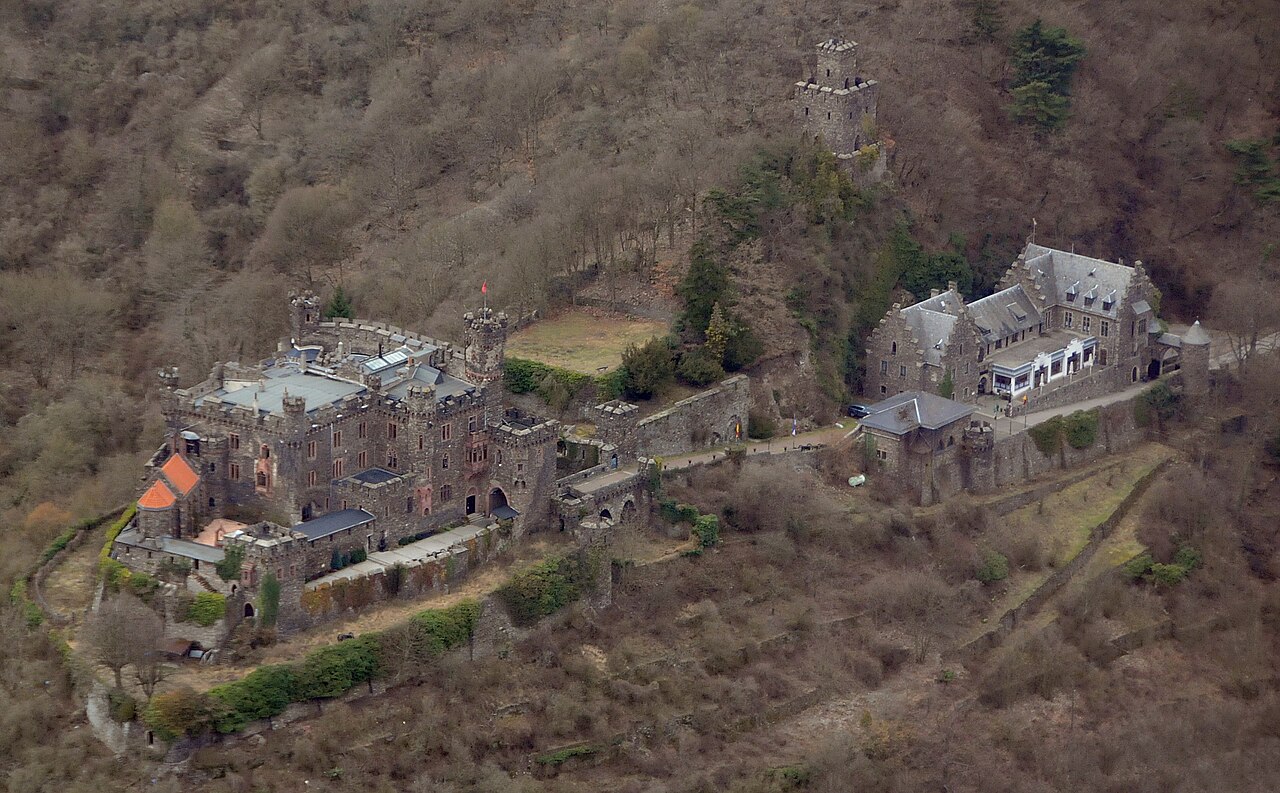
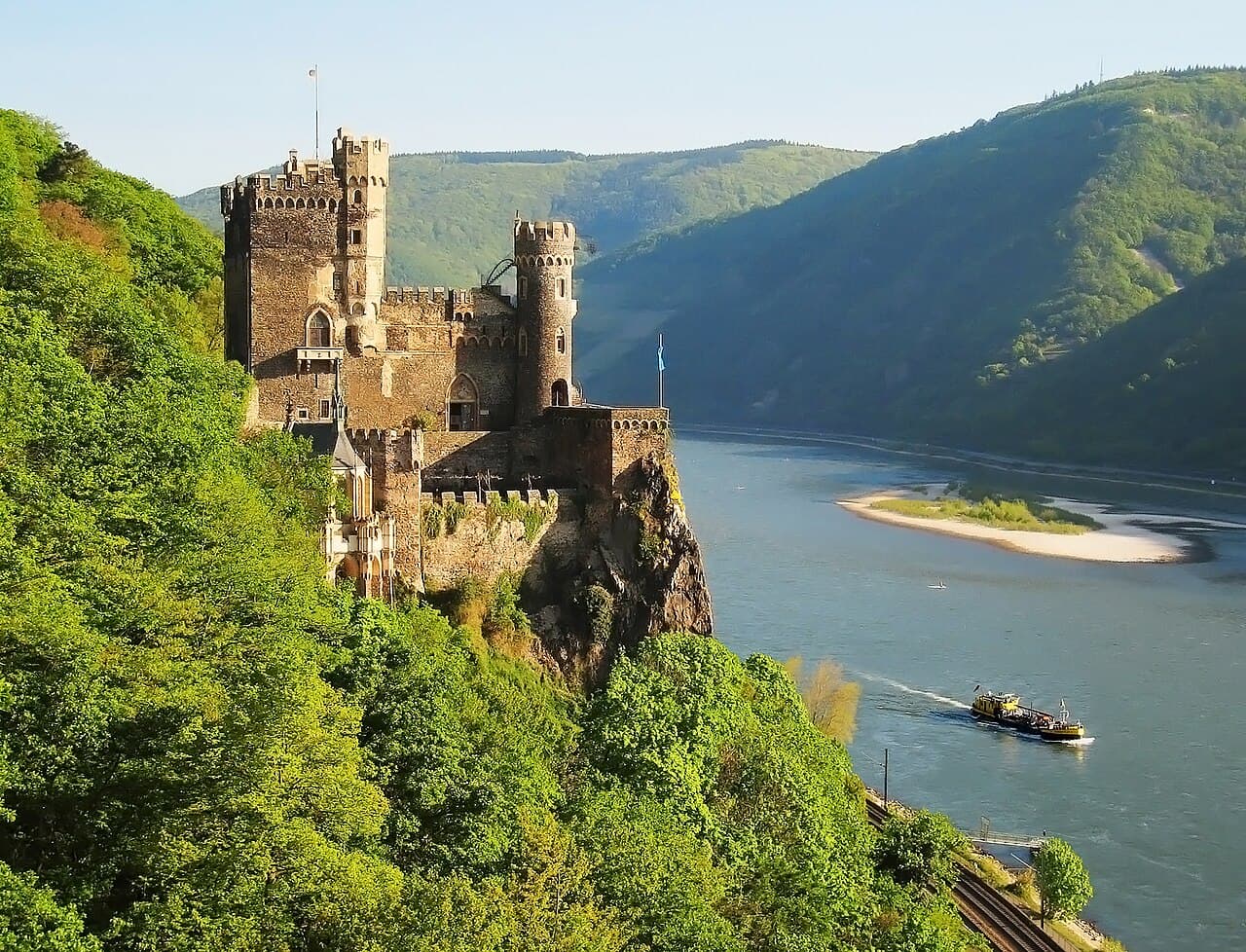
Rheinstein Castle, located near Trechtingshausen, Germany, is a captivating example of a late-medieval hill castle that has played a strategic role along the Rhine River since its construction around 1316-1317. Perched approximately 90 meters above the river on a rocky promontory, the castle offers commanding views over the Rhine Valley and stands as a testament to the evolving military, residential, and romantic architectural traditions of the region.
Originally known as Vaitzburg or Fautsburg, Rheinstein Castle was built under the auspices of the Archbishopric of Mainz, likely commissioned by Archbishop Gerhard II or his successor Peter von Aspelt. Its primary purpose was to assert control over the surrounding territory and to oversee the ruins of the nearby Reichenstein Castle, which had been destroyed in 1286 due to its use as a robber baron stronghold. This strategic function underscores the castle's importance in the regional power dynamics of the 14th century.
Medieval origins and strategic importance
The castle's initial construction phase is well documented through dendrochronological analysis, dating the oldest timbers of the southern wall to 1316 or 1317. Rheinstein first appears in written records in 1323 as property of the Archbishopric of Mainz. Around 1330, the castle underwent expansions, and further additions were likely made in the late 15th century, reflecting its ongoing military and residential use.
Despite its robust beginnings, by 1344 the castle's military significance diminished when the Palatinate relinquished claims to the nearby Reichenstein in favor of Mainz. Over the following centuries, Rheinstein experienced periods of decline, particularly by the late 16th century, as economic and political shifts reduced its strategic relevance. By the time of the Palatinate War of Succession in the late 17th century, the castle had fallen into disrepair and was considered a ruin. Remarkably, it was spared demolition by French forces, preserving much of its structure despite abandonment.
Romantic restoration and neo-gothic revival
The 19th century brought a renewed appreciation for medieval architecture and history, particularly during the Romantic period. After the Rhineland became part of Prussia in 1815, interest in Rheinstein Castle was revived. The renowned architect Karl Friedrich Schinkel devised a restoration plan that emphasized the castle's medieval character while incorporating romanticized elements. In 1823, Prince Friedrich of Prussia purchased the ruins and commissioned architects Johann Claudius von Lassaulx and later Wilhelm Kuhn to carry out the reconstruction.
The restoration, completed in 1829, marked Rheinstein as the first castle on the Rhine to be revived as a romantic summer residence. The project introduced characteristic neo-Gothic architectural features such as turrets, battlements, and ornamental ironwork, blending the medieval foundations with 19th-century aesthetic ideals. Further additions between 1839 and 1844 included a chapel and a guesthouse known as the Swiss House, enhancing the castle's function as a noble residence.
Throughout the restoration, care was taken to preserve original medieval elements, such as the rectangular five-story residential tower and the defensive octagonal and cylindrical turrets. The castle's walls, perched on cliffs, provide natural defense, augmented by architectural features like the pointed-arch portal, projecting bay windows, and battlements supported by corbelled arcades. The working drawbridge and portcullis are authentic medieval defensive mechanisms that have been preserved and restored.
Architectural features and interior highlights
The castle's layout is terraced, adapting to the hillside's slope, with stone as the primary construction material. The main entrance is located on the southern wall of the annex, featuring a pointed-arch portal with traces of sculptural decoration. Residential rooms are equipped with large rectangular windows facing the Rhine, while other walls contain narrow arrow slits designed for defense. Some windows, particularly on the southern balcony, are pointed arches, typical of the Gothic style.
One of the castle's most impressive interior spaces is the Rittersaal or Knight's Hall, which showcases beautiful stained glass windows and elaborate three-dimensional paintings. These windows span from the 14th to the 19th centuries and were sourced from churches in Cologne and Düsseldorf, enriching the castle's historic ambiance. The interior also features a Renaissance fireplace and stylish furniture that reflect the castle's layered history.
The two-storied chapel, added during the 19th-century restoration, is oriented southward and partly embedded in the hillside. Its lower level contains arcaded niches and small windows, while the upper level is a single-nave church with a polygonal east end, buttressed walls, and slender pinnacles. The chapel crypt serves as the burial place for members of the Prussian royal family who owned the castle.
Modern use and cultural significance
Today, Rheinstein Castle remains a well-preserved monument and a popular tourist attraction within the UNESCO World Heritage Upper Middle Rhine Valley. It includes a restaurant, a tower apartment, and a holiday flat, making it accessible for visitors seeking an immersive historical experience. The castle also hosts weddings and cultural events, leveraging its romantic setting and historic architecture.
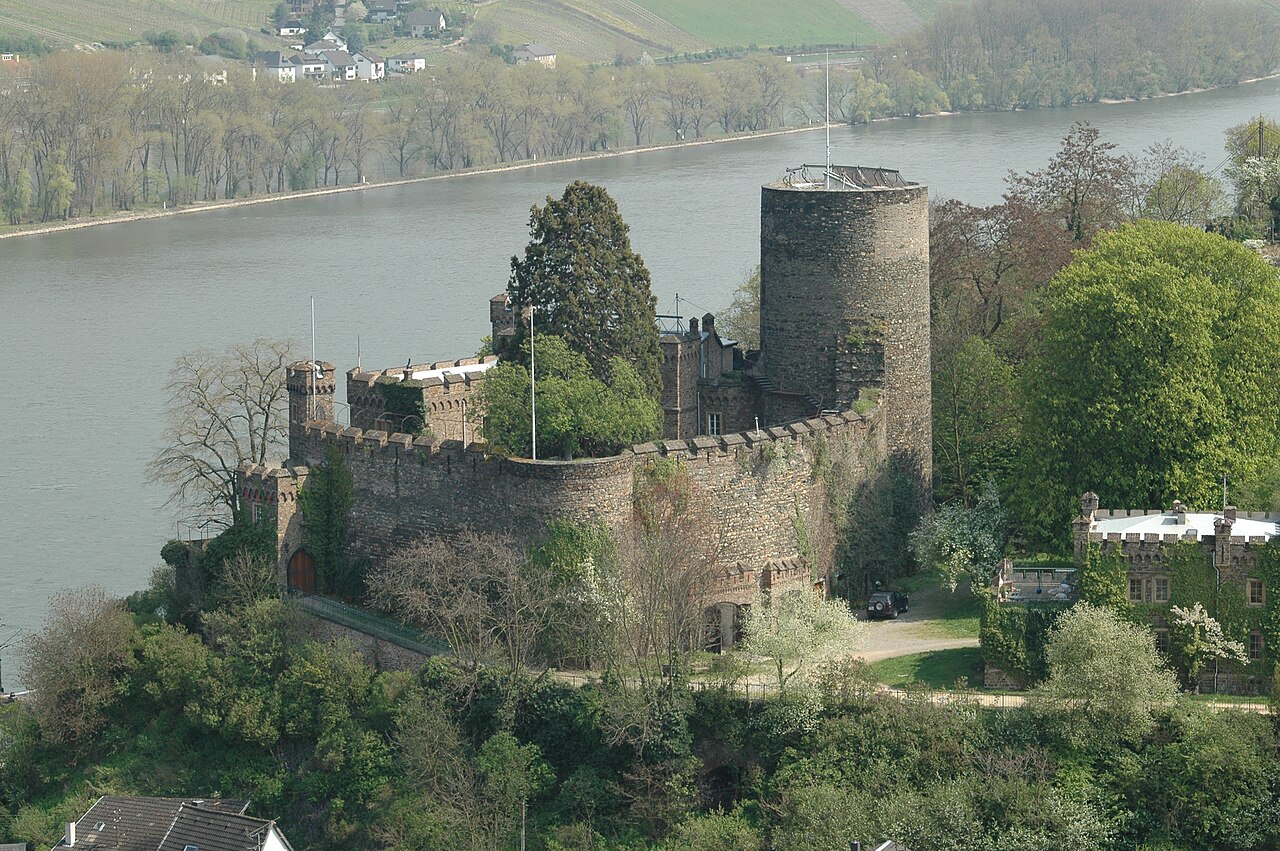
The Rheinturm or Rhine Tower serves as an observation point offering panoramic views of the Rhine Valley and the opposite Assmannshausen. The castle grounds feature a medieval-style garden called the Burgundergarten, which is part of the World Heritage Gardens route, adding botanical interest to the historic site.
Ownership passed from the Prussian royal family to Austrian opera singer Hermann Hecher in 1975, who undertook extensive restorations supported by heritage authorities. These efforts ensured the castle's preservation and enhanced its role as a cultural landmark in the Rhine region.
Historical context and legacy
Rheinstein Castle's history reflects the broader political and cultural shifts of the Middle Rhine region. From its medieval origins as a strategic fortress to its 19th-century romantic revival, the castle embodies the changing attitudes toward heritage and architecture. Its survival through periods of conflict and neglect, followed by careful restoration, illustrates the evolving relationship between history, identity, and tourism.
As part of the UNESCO World Heritage Site, Rheinstein Castle contributes to the preservation of the Upper Middle Rhine Valley's unique cultural landscape, characterized by its castles, vineyards, and historic towns. Visitors today can appreciate not only the castle's architectural splendor but also its role in the rich tapestry of Rhine Valley history.
Frequently asked questions (FAQ)
- How do I get to Rheinstein Castle?
- Rheinstein Castle is located near Trechtingshausen, Germany, accessible by car or boat along the Rhine River. It is about 6 km downstream from Bingen and can be reached via local roads or river cruises.
- What are the opening hours of Rheinstein Castle?
- The castle is generally open to visitors daily from spring through autumn, typically from 10:00 to 17:00. It is advisable to check the official website for seasonal variations and special events.
- Can I tour the interiors of Rheinstein Castle?
- Yes, visitors can explore the castle's interiors, including the Knight's Hall, chapel, and residential rooms, which are furnished with period-appropriate furniture and feature historic stained glass windows.
- Is Rheinstein Castle wheelchair accessible?
- Due to its medieval structure and hillside location, Rheinstein Castle has limited wheelchair accessibility. Visitors with mobility concerns should contact the castle administration in advance to plan their visit.
- What is the best time to visit Rheinstein Castle?
- The best time to visit is during the spring and summer months when the weather is pleasant, and the castle gardens are in bloom. Autumn also offers beautiful views of the Rhine Valley's changing foliage.
- Are there any special events held at Rheinstein Castle?
- Yes, Rheinstein Castle hosts weddings, cultural events, and occasional concerts, taking advantage of its romantic and historic atmosphere. Visitors should check the event calendar on the official website.
Photo gallery

Information
Sources & official resources
Verify the information above using these authoritative references.
Loading map...
Visitor reviews
No reviews yet. Been here? Write the first review and help other travelers!
Write the first reviewVisited this castle? Share your experience
Your review helps other travelers and adds first-hand knowledge to our encyclopedia.