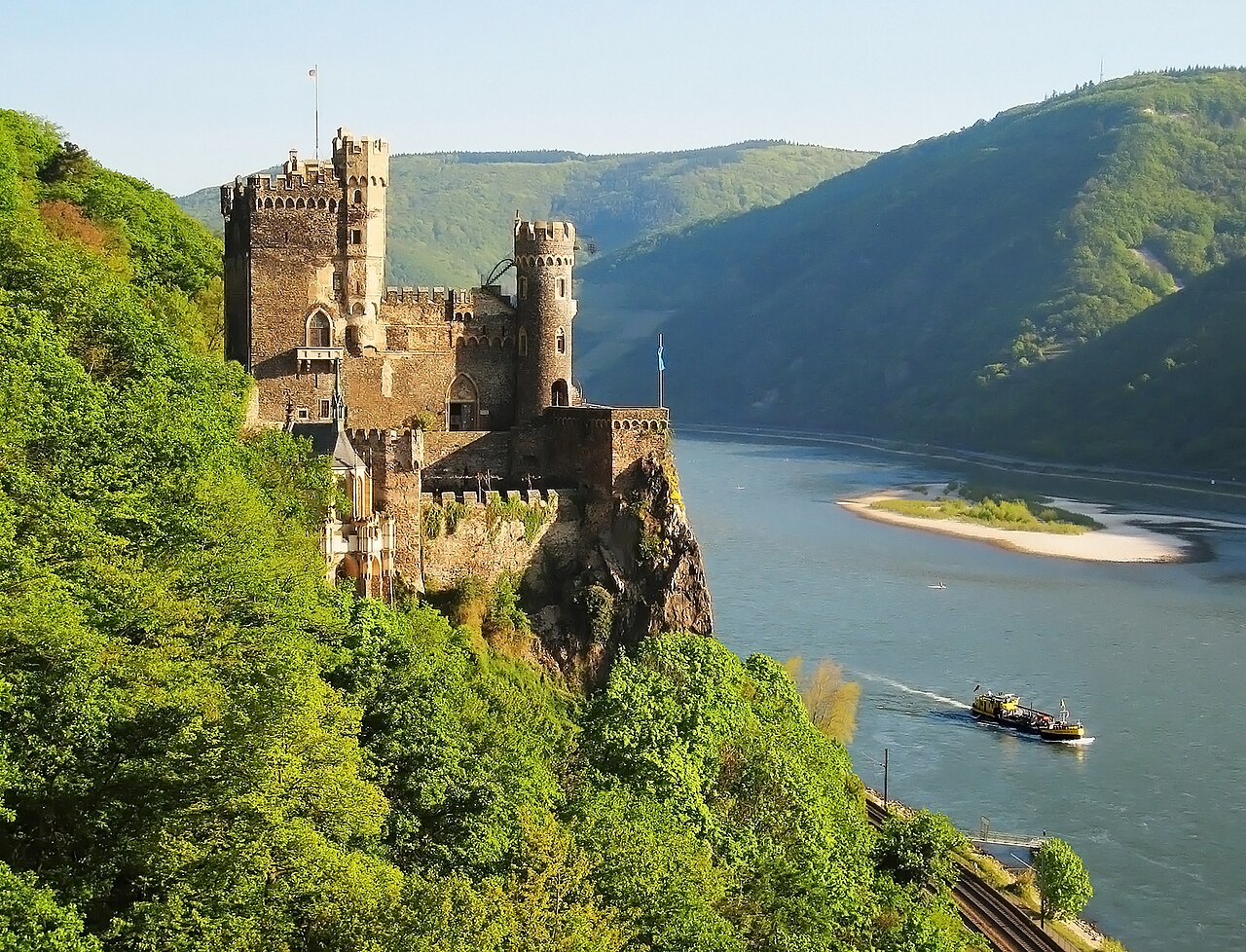
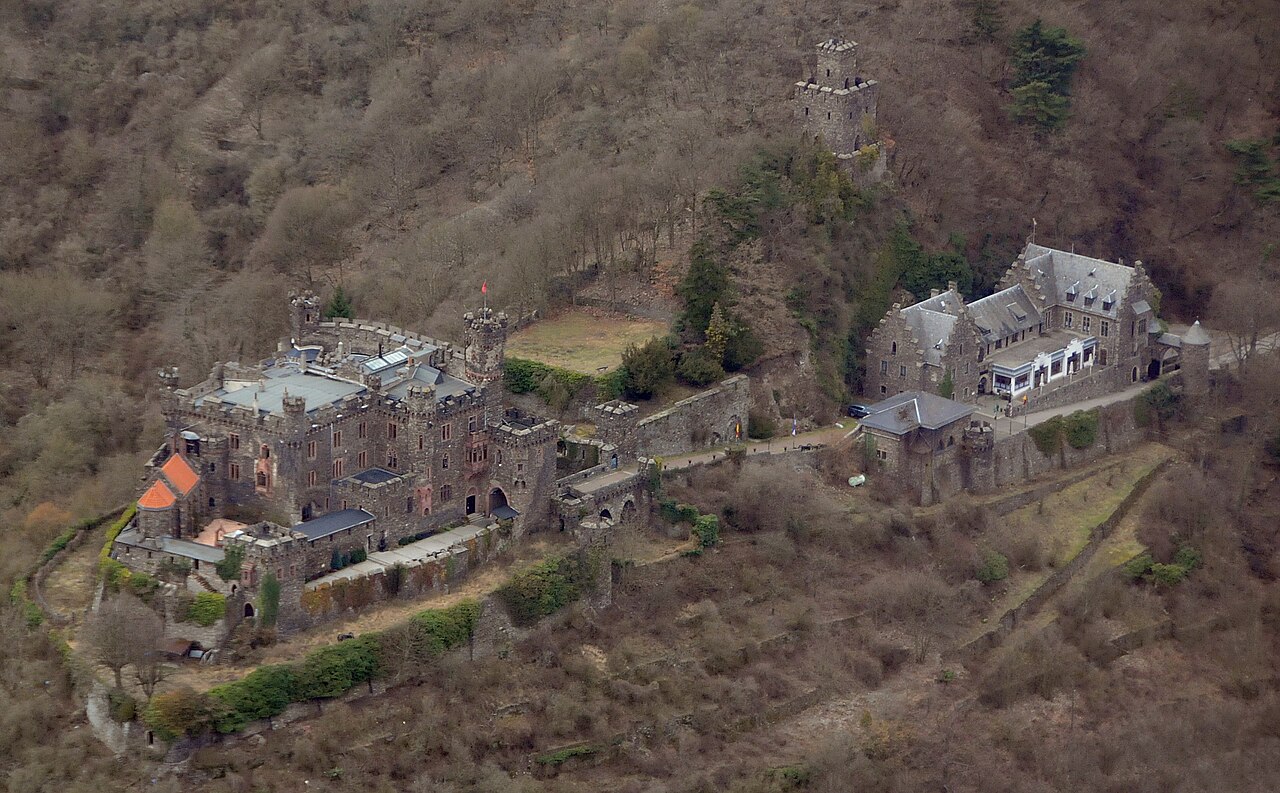
Ehrenfels Castle
Ehrenfels Castle stands majestically on the steep eastern bank of the river Rhine, surrounded by extensive vineyards that have defined the region's landscape and culture for centuries. This high medieval hill castle, constructed in the 13th century, is a striking example of medieval fortification architecture designed to control and protect the vital Rhine trade route. The castle's commanding position allowed it to oversee river traffic and collect tolls, playing a significant role in the economic and military history of the region.
Historical background and strategic importance
Built during the high medieval period, Ehrenfels Castle was part of a network of fortifications established to secure the Rhine valley. Its strategic location near Rudesheim am Rhein enabled its owners to exert control over one of Europe's most important waterways. The castle's construction reflects the military and economic priorities of the era, where controlling trade routes was essential for regional power.
Throughout its history, Ehrenfels Castle was involved in various conflicts, including the Thirty Years' War, during which it suffered significant damage. Despite this, the castle's ruins remain a testament to its former strength and importance. The castle was eventually abandoned and fell into ruin, but its legacy persists through its architectural remnants and the cultural heritage of the Rhine region.
Architectural features and layout
The castle's design is typical of high medieval hill castles, featuring robust stone walls adapted to the natural slope of the terrain. Its defensive structures include battlements, towers, and a fortified gatehouse, which collectively provided formidable protection against invaders. The layout was carefully planned to maximize defensive capabilities while accommodating the needs of its inhabitants.
One of the most notable architectural elements associated with Ehrenfels Castle is the Mouse Tower (Mäuseturm), located on the opposite side of the Rhine. Although technically separate from the castle itself, the Mouse Tower functioned as a complementary fortification to monitor and control river traffic. Its distinctive round shape and historical significance make it a prominent landmark in the area.
Vineyards and cultural significance
The extensive vineyards surrounding Ehrenfels Castle are integral to the region's identity and economy. The castle lends its name to the Ehrenfelser grape variety, a testament to the longstanding tradition of viticulture in the Rhine valley. These vineyards not only contribute to the local wine industry but also enhance the scenic beauty that attracts visitors and hikers alike.
Access and tourism
Today, Ehrenfels Castle is a popular destination for tourists and history enthusiasts. The ruins can be reached from Rudesheim am Rhein via a well-marked hiking trail that winds through the picturesque vineyards, offering stunning views of the Rhine and surrounding landscape. Visitors can explore the remains of the castle and enjoy the natural beauty of the area.
The site provides a unique opportunity to connect with medieval history while experiencing the charm of the Rhine valley. Interpretive signage and guided tours often help visitors understand the castle's historical context and architectural features.
Preservation and current condition
Ehrenfels Castle today exists as a ruin, with many of its original structures partially preserved. Efforts have been made to stabilize the remaining walls and towers to prevent further deterioration, ensuring that this important cultural landmark remains accessible for future generations. The castle's ruins evoke the grandeur of its medieval past and continue to inspire interest in the history and architecture of the Rhine region.
Frequently asked questions (FAQ)
- What is the historical significance of Ehrenfels Castle?
- Ehrenfels Castle, built in the 13th century, played a crucial role in the defense of the Rhine River and the surrounding regions. It is one of the earliest examples of a hill castle in the area, contributing to the development of medieval architecture along the Rhine.
- When was Ehrenfels Castle constructed?
- Ehrenfels Castle was constructed around 1240. Its strategic location allowed it to serve as a watchtower and a stronghold for local lords, reflecting the turbulent history of the region during the Middle Ages.
- What are the opening hours for Ehrenfels Castle?
- Ehrenfels Castle is typically open to visitors from April to October, with hours varying by month. It’s advisable to check the official website for the most current information regarding seasonal hours and any special events.
- Can I access Ehrenfels Castle with public transportation?
- Yes, Ehrenfels Castle is accessible via public transportation. Visitors can take a train to Rudesheim am Rhein and then enjoy a scenic walk or a short bus ride to the castle.
- Is it possible to take guided tours of Ehrenfels Castle?
- Yes, guided tours are available at Ehrenfels Castle, providing visitors with insights into its rich history and architectural features. These tours often enhance the experience by sharing stories of the castle's past and its significance in the region.
- What is the best time to visit Ehrenfels Castle?
- The best time to visit Ehrenfels Castle is during the spring and early autumn months when the weather is mild, and the surrounding vineyards are in full bloom. Additionally, this timing allows visitors to enjoy beautiful views of the Rhine Valley.
- What are the ticket prices for visiting Ehrenfels Castle?
- Ticket prices for Ehrenfels Castle are generally affordable, with discounts available for students and seniors. It’s recommended to check the official website for the latest pricing and any special offers that may be available during your visit.
- Are there any nearby attractions to visit when I go to Ehrenfels Castle?
- Yes, there are several nearby attractions, including the picturesque town of Rudesheim am Rhein, renowned for its wine culture and charming streets. Additionally, the Rhine Gorge, a UNESCO World Heritage site, offers stunning views and opportunities for hiking and boat trips.
Information
Website
Visit websiteSources & official resources
Verify the information above using these authoritative references.
Loading map...
Visitor reviews
No reviews yet. Been here? Write the first review and help other travelers!
Write the first reviewVisited this castle? Share your experience
Your review helps other travelers and adds first-hand knowledge to our encyclopedia.