Reichenstein Castle
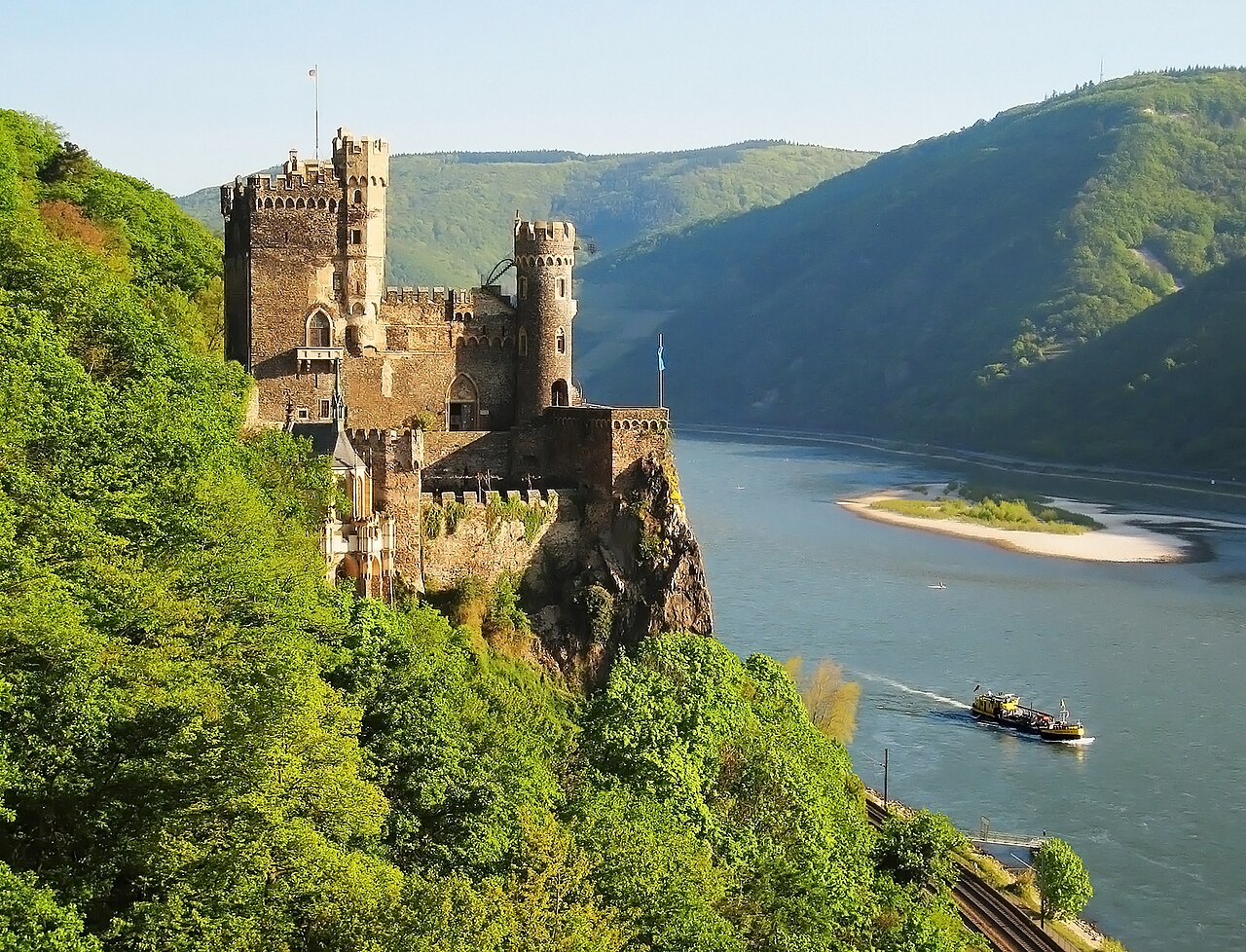
Reichenstein Castle, also known as Falkenburg, is a striking example of medieval fortification and 19th-century romantic revival located in the Upper Middle Rhine Valley, a UNESCO World Heritage site. Perched on a hillside on the eastern slope of the Binger Forest above the community of Trechtingshausen in the district of Mainz-Bingen, Rhineland-Palatinate, Germany, the castle commands panoramic views over the Rhine River and the surrounding landscape. Its proximity to the city of Bingen, just about 5 kilometers southeast, situates it within a historically strategic and culturally rich region.
Early history and medieval significance
The first documented mention of Reichenstein Castle dates back to 1213, when it was referenced in connection with the abbey of Kornelimünster near Aachen and Philipp III of Bolanden, who served as its castellan and vogt. The castle's origins trace to the high medieval period, with a probable construction date around 1100. It functioned as a hill castle, typical of the era, designed for defense and territorial control.
Throughout the 13th century, the castle was embroiled in regional conflicts. A reported conquest in 1253 is debated among historians, but the well-documented siege, conquest, and destruction by King Rudolph of Habsburg in 1282 are pivotal events in its history. Following this destruction, the castle was forbidden to be rebuilt, reflecting its contentious role in regional power struggles.
Ownership changed hands several times: from the Palatinate electors in 1290 to the Archbishopric of Mainz in 1344, when the castle underwent significant reconstruction. This rebuilding included the erection of a double ring wall enclosing a rectangular residential tower and an inner courtyard. The north side featured a foreshore, adding to its defensive capabilities.
Political intrigue and architectural features in the late medieval period
In 1397, the castle played a role in ecclesiastical politics when Archbishop Johann II of Nassau entrenched himself there after a contested appointment to the Archbishopric of Mainz. His rival, Archbishop Gottfried von Leiningen, had been elected by the cathedral chapter in 1396. The standoff was resolved through negotiations, avoiding further military action and preserving the castle from new destruction.
Architecturally, the medieval castle featured robust defensive elements typical of hill castles. The double ring wall provided layered protection, while the rectangular keep served as the stronghold and residence. The inner courtyard was the heart of the castle's daily life, surrounded by living quarters and service buildings. The foreshore to the north likely functioned as an additional defensive outwork or bailey.
Decline, destruction, and 19th-century romantic revival
From the 16th century, Reichenstein Castle fell into decay, reflecting broader shifts in military technology and political power that rendered many medieval fortresses obsolete. Its deterioration accelerated during the Palatine Succession War in 1689, when the remains were further broken up.
In 1834, the ruins were purchased by Franz Wilhelm von Barfus, who initiated restoration by converting a tower into a residence. Subsequent owners included the Freiherren von Rehfuß and consul Chosodowsky, who contributed to the castle's revival.
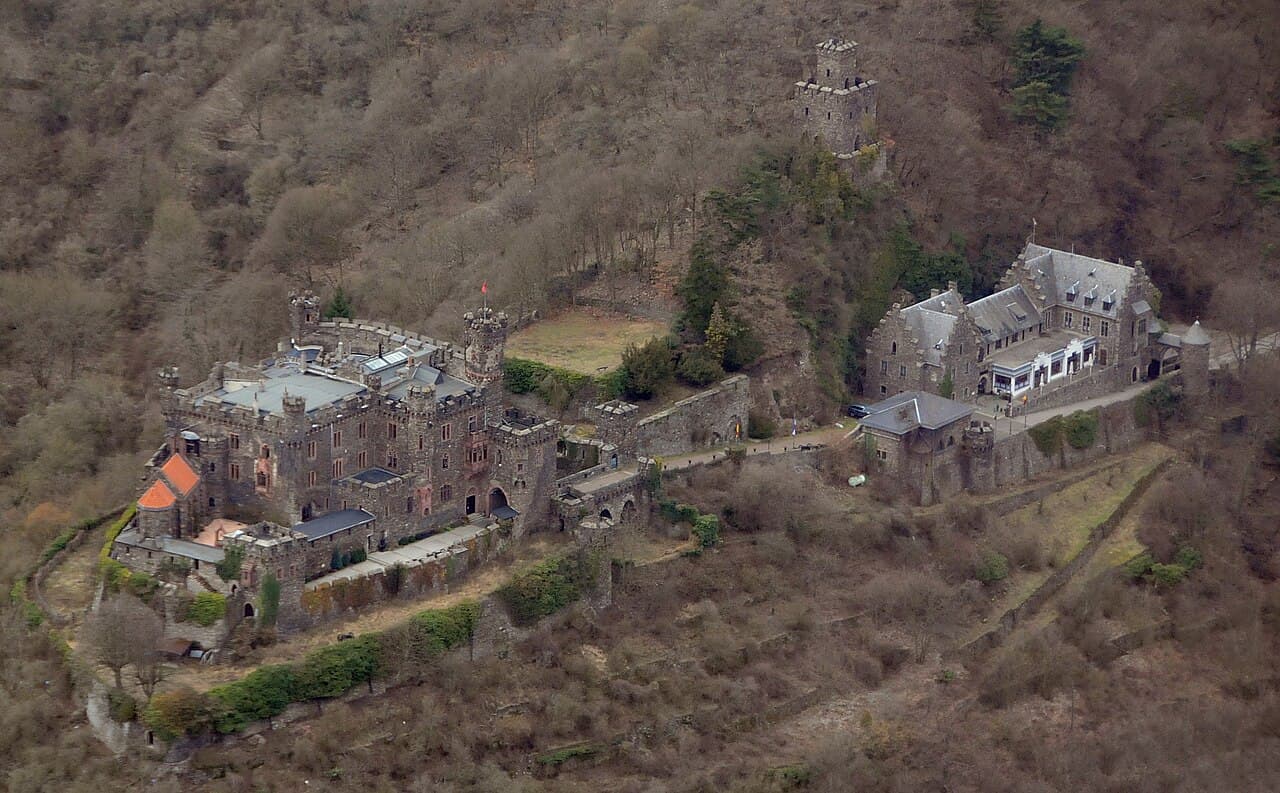
The most significant reconstruction occurred between 1899 and 1902 under Baron Nikolaus of Kirsch-Puricelli, a wealthy industrialist and owner of the Rheinböllerhütte ironworks. He commissioned the Regensburg architect Strebel to rebuild the castle in a neo-Gothic English style, reflecting the Rheinromantik movement that celebrated medieval heritage and romanticized the Rhine landscape. This reconstruction included new residential buildings, a view tower on the site of the former outer bailey (Vorburg), and the notable shield wall, which remains a prominent feature.
Current use and cultural significance
Today, Reichenstein Castle houses a museum with an extensive collection of historical weapons, armor, and cast-iron plaques from the Stromberger Neuhütte and Rheinböllerhütte. The castle also displays approximately 1,200 hunting trophies from around the world, as well as porcelain and furniture spanning five centuries, reflecting its layered history and cultural importance.
The living quarters have been preserved to reflect their appearance from a century ago, offering visitors an immersive historical experience. The castle chapel and old rooms are still used for weddings, maintaining the site's social and ceremonial functions.
Reichenstein Castle features a restaurant and has plans to reopen as a hotel, enhancing its role as a tourist destination in the Rhine Valley. Its location within the Upper Middle Rhine Valley UNESCO World Heritage site underscores its architectural and historical value, making it a must-visit for those interested in medieval castles, romantic revival architecture, and the rich heritage of the Rhineland-Palatinate region.
Architectural highlights and defensive structures
The castle's double ring wall is a defining characteristic, providing formidable defense with multiple layers of fortification. The rectangular residential tower served as the main keep, featuring thick stone walls and limited windows for protection. The inner courtyard was the central space around which the castle's functional buildings were arranged.
The shield wall, rebuilt during the neo-Gothic restoration, is particularly noteworthy for its imposing presence and stylistic details that blend medieval defensive architecture with romantic aesthetics. The addition of a view tower on the site of the former outer bailey offers panoramic vistas of the Rhine and the surrounding forested hills.
Castle museum and collections
The museum within Reichenstein Castle is renowned for its large collection of historical weapons and armor, illustrating the martial heritage of the region. The cast-iron plaques (Takenplatten) from local ironworks highlight the industrial history intertwined with the castle's story. The extensive display of hunting trophies, porcelain, and antique furniture enriches the visitor experience, showcasing the castle's evolution from a medieval fortress to a noble residence and cultural landmark.
Events and visitor experience
Reichenstein Castle offers visitors a multifaceted experience, including guided tours of the preserved living quarters, the museum exhibits, and the castle chapel. The site hosts weddings and cultural events, maintaining its role as a vibrant part of the local community. Plans to reopen the castle as a hotel will further enhance its accessibility and appeal to tourists seeking an authentic historic atmosphere.
Frequently asked questions (FAQ)
- What is the historical significance of Reichenstein Castle?
- Reichenstein Castle, dating back to the 11th century, played a crucial role in the defense of the Rhine River and served as a stronghold for various noble families. Its strategic location and impressive architecture reflect the feudal history of the region, making it a fascinating site for history enthusiasts.
- When was Reichenstein Castle built?
- Reichenstein Castle was originally constructed around the year 1250, although it underwent significant renovations and expansions over the centuries. The castle has been preserved to showcase its medieval architecture and offers visitors a glimpse into its storied past.
- How do I get to Reichenstein Castle?
- Reichenstein Castle is easily accessible by train and car, located in Trechtingshausen, Germany. The nearest train station is in Bingen, from where you can take a short bus ride or a scenic walk along the Rhine to reach the castle.
- What are the opening hours for Reichenstein Castle?
- Reichenstein Castle typically opens to visitors from April to October, with specific hours varying by season. It is recommended to check the official website for the most current information regarding opening days and hours before planning your visit.
- Can I take guided tours of Reichenstein Castle?
- Yes, guided tours are available at Reichenstein Castle, providing visitors with in-depth insights into its history and architecture. These tours are often conducted in multiple languages and enhance the overall experience by highlighting key features of the castle.
- Is it possible to visit Reichenstein Castle year-round?
- While Reichenstein Castle is open seasonally, it is advisable to check for special events or private tours that may be available during the off-season. The winter months may limit access, so planning ahead is essential for a visit outside the main tourist season.
- What are the ticket prices for visiting Reichenstein Castle?
- Tickets for Reichenstein Castle are reasonably priced, with discounts often available for students, seniors, and families. Detailed pricing information can be found on the official website, along with options for guided tours and group rates.
- What is the best time to visit Reichenstein Castle?
- The best time to visit Reichenstein Castle is during the spring and early autumn when the weather is pleasant and the surrounding landscapes are vibrant. Visiting during these seasons also allows you to enjoy local festivals and events that may be happening in the area.
- Are there any nearby attractions to visit while at Reichenstein Castle?
- Yes, nearby attractions include the charming town of Trechtingshausen, the scenic Rhine Valley, and other historical castles such as Burg Rheinstein. Exploring the area can provide a fuller understanding of the region's rich cultural heritage and stunning natural beauty.
Photo gallery

Information
Website
Visit websiteSources & official resources
Verify the information above using these authoritative references.
Loading map...
Visitor reviews
No reviews yet. Been here? Write the first review and help other travelers!
Write the first reviewVisited this castle? Share your experience
Your review helps other travelers and adds first-hand knowledge to our encyclopedia.