Rēzekne Castle
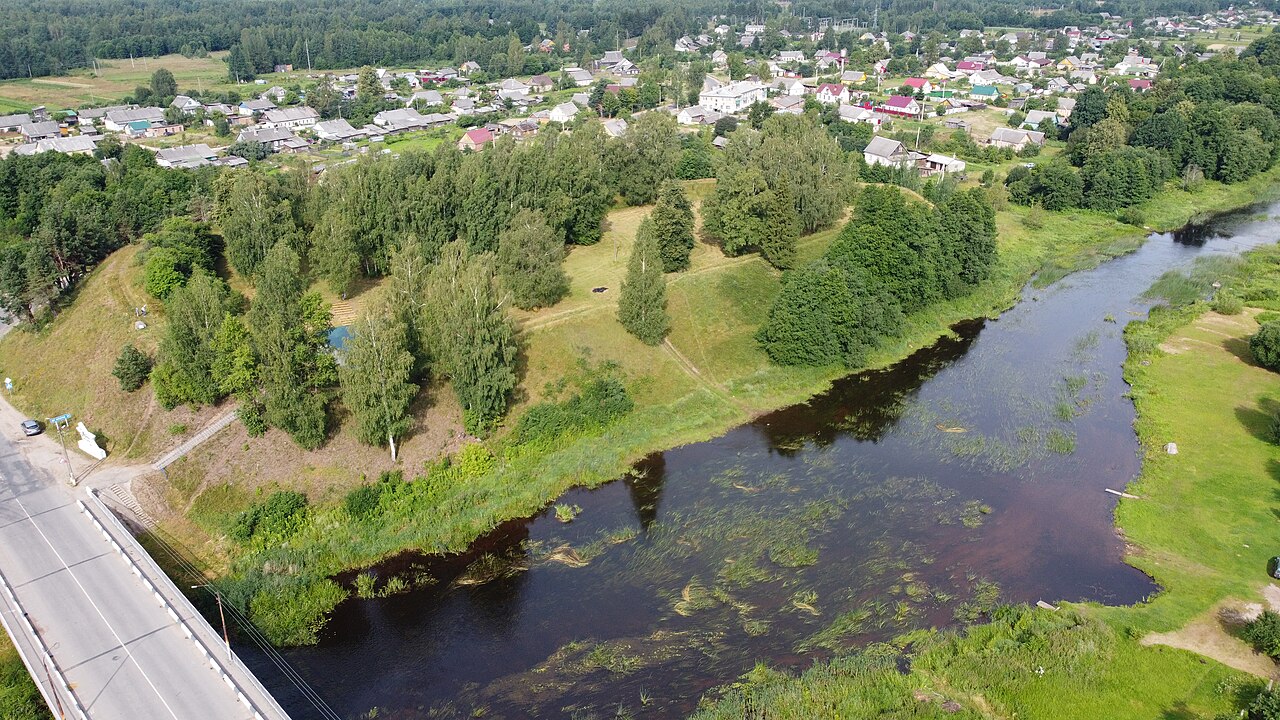
Rēzekne Castle stands as a significant medieval fortress located in the city of Rēzekne, Latvia. Its site, perched atop a 15-meter-high hill nestled within a bend of the Rēzekne River, has been of strategic and commercial importance since the early medieval period. Originally, this hill hosted a Latgalian wooden fortification from the 9th to 12th centuries, serving as a vital trading post linking the regions of Russia and Scandinavia. Known as Lotigolu in the Novgorod Chronicle, the settlement was a bustling center for Latgalian merchants and craftsmen, highlighting its early role in regional commerce and cultural exchange.
The transition from wooden fortifications to stone marked a new era for Rēzekne. In 1285, the Livonian Order, a crusading military order active in the Baltic region, established the stone fortress under the direction of Wilhelm von Schauerburg, a knight of the Order. This construction made Rēzekne Castle one of the earliest stone castles built by the Order within Livonia. It became the residence of the Räisaku vogt, a key local commander who held significant influence, including participation in selecting the head of the Order. The castle's strategic location and robust construction underscored its importance as both a military stronghold and an administrative center throughout the High and Late Medieval periods.
Architectural features and layout
The castle was ingeniously designed to maximize its natural defensive advantages. The hill was transformed into a fortified island by altering the course of the Rēzekne River, creating a protective moat around the site. The fortress comprised two primary sections: the main castle (or pealinnus) and the outer bailey (eeslinnus).
Main castle
The main castle housed a prominent three-winged residential building rising three stories high, which served as the living quarters for the vogt and included a private chapel. This central complex was enclosed by a formidable curtain wall featuring a square gate tower that controlled access and enhanced security. A defining architectural feature was the large circular bergfried located on the western side. This tall, solid tower was typical of medieval castles and provided extensive views over the surrounding landscape, serving as a last refuge in defense. Additionally, a smaller round tower guarded the bridge gate, likely a later addition that reinforced the castle’s main entrance.
Outer bailey
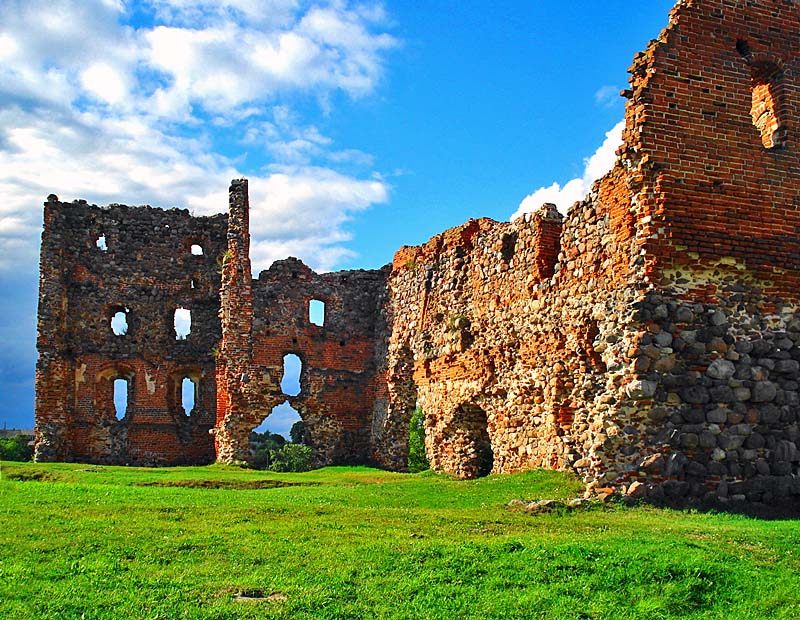
The outer bailey was approximately circular and surrounded by a high curtain wall that followed the natural slope of the riverbank. This area contained facilities for economic activities, including soldiers’ lodgings and servants’ quarters, supporting the daily life and defense of the castle. The walls of both sections combined fieldstones and brick, constructed using the Schalenmauer technique, which involved building sturdy outer faces of carefully selected stones with a core filled by rubble and brick fragments. The foundations were made mostly of shaped fieldstones to ensure stability. Within the central courtyard, a well provided a reliable water source, essential during sieges.
Historical significance and military role
Rēzekne Castle played a pivotal role in the turbulent history of the Baltic region. Its strategic location made it a key defensive and administrative center for the Livonian Order and later powers. Throughout its history, the castle endured multiple sieges and was involved in numerous conflicts, reflecting the shifting political landscape of Eastern Europe.
During the Livonian War (1558–1561), the fortress faced significant challenges. It was occupied by the forces of Ivan the Terrible between 1577 and 1579, highlighting its military importance. Subsequently, control passed to the Polish–Lithuanian Commonwealth as part of the Duchy of Livonia from 1561 until 1773. The castle suffered damage during the Polish-Swedish conflicts and the Northern Wars. In 1656, Swedish troops destroyed much of the fortress, but it was partially restored four years later to serve as a fortification of the Inflanty Voivodeship.
By the early 18th century, Rēzekne Castle’s military significance waned. The fortress fell into decay, and in 1712, the local population was officially permitted to reuse stones from the ruined walls for construction. The region was incorporated into the Russian Empire following the First Partition of Poland in 1772, marking the end of the castle’s active military role.
Archaeological discoveries and preservation
Archaeological excavations in the late 20th century uncovered remnants of the original Latgalian trading post and early medieval settlement beneath the castle ruins. These findings have contributed valuable insights into the region’s early history and the development of trade networks in Eastern Europe.
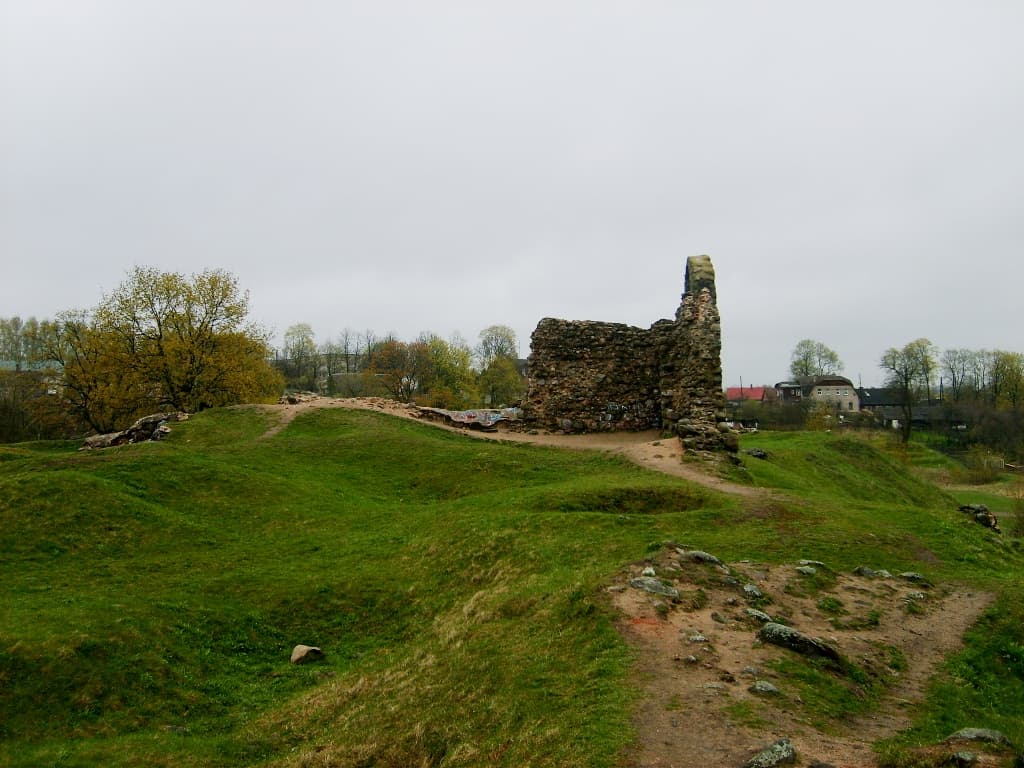
In the early 21st century, a detailed reconstruction model was created near the ruins to illustrate the castle’s historic form and educate visitors about its architectural and historical significance. Today, only parts of the higher walls and foundations remain, partially overgrown with vegetation and debris. The hill itself has been cleared of trees, offering clear views over the surrounding landscape and preserving the outline of the castle’s strategic design.
Cultural heritage and tourism
Rēzekne Castle remains an important cultural heritage site in Latvia, symbolizing the region’s medieval history and the complex interactions between local peoples and foreign powers. The ruins attract visitors interested in medieval architecture, military history, and the legacy of the Livonian Order. Interpretive signage and the reconstruction model enhance the visitor experience, providing context and understanding of the castle’s role over centuries.
Efforts to preserve and study the site continue, emphasizing its value not only as a historical monument but also as a testament to the resilience and cultural identity of the Latgale region.
Frequently asked questions (FAQ)
- How do I get to Rēzekne Castle?
- Rēzekne Castle is conveniently located in the heart of Rēzekne, Latvia. You can reach it by public transport or by car, with parking facilities available nearby. If you are traveling from Riga, it is approximately a 3-hour drive.
- What is the historical significance of Rēzekne Castle?
- Rēzekne Castle was built in the 13th century and served as a defensive fortification during the Livonian War. It played a vital role in the region's history and has witnessed significant events over the centuries, making it a key landmark in Latvian heritage.
- When was Rēzekne Castle built?
- The construction of Rēzekne Castle began in 1285, and it was completed in the early 14th century. Its architecture reflects the medieval military style, and it has undergone various renovations throughout its long history.
- Is it possible to visit Rēzekne Castle year-round?
- Yes, Rēzekne Castle is open to visitors throughout the year. However, it is advisable to check the specific opening hours during the winter months, as they may vary. Guided tours are also available to enhance your experience.
- What are the opening hours for Rēzekne Castle?
- Rēzekne Castle typically opens at 10 AM and closes at 6 PM from Tuesday to Sunday. On Mondays, it may be closed for maintenance or special events, so it’s wise to check the castle’s official website for the latest updates.
- Can I take photographs inside Rēzekne Castle?
- Yes, photography is generally allowed within the castle, but be mindful of any specific restrictions during exhibitions or guided tours. Capturing the stunning architecture and beautiful landscapes surrounding the castle is highly encouraged.
- What is the ticket price for entering Rēzekne Castle?
- The ticket prices for Rēzekne Castle are quite affordable, with discounts available for children, students, and seniors. Group rates may also apply, making it a great option for school trips or family outings.
- What is the best time to visit Rēzekne Castle?
- The best time to visit Rēzekne Castle is during the late spring to early autumn months, when the weather is pleasant and the gardens are in full bloom. Additionally, various cultural events and festivals often take place during this period, enhancing your visit.
- Are there any nearby attractions to Rēzekne Castle?
- Yes, there are several attractions near Rēzekne Castle, including the Rēzekne History and Art Museum and the beautiful Rēzekne River. Exploring the surrounding area provides a deeper insight into the region's rich culture and history.
Photo gallery

Photo by Semigall•Public domain
Information
Website
Visit websiteSources & official resources
Verify the information above using these authoritative references.
Loading map...
Visitor reviews
No reviews yet. Been here? Write the first review and help other travelers!
Write the first reviewVisited this castle? Share your experience
Your review helps other travelers and adds first-hand knowledge to our encyclopedia.