Ludza Castle Ruins
Ludza Castle, located in Ludza, Latvia, stands as a significant relic of the late medieval period and the turbulent history of the Livonian Order and the broader Baltic region. Originally built in 1433 to replace an earlier wooden fortress established by the ancient Latgalians, the castle was designed as a formidable stone stronghold to guard the eastern borders of Livonia and control vital trade routes from Russia. Over the centuries, Ludza Castle witnessed numerous sieges, occupations, and reconstructions, reflecting the shifting political and military struggles in Eastern Europe.
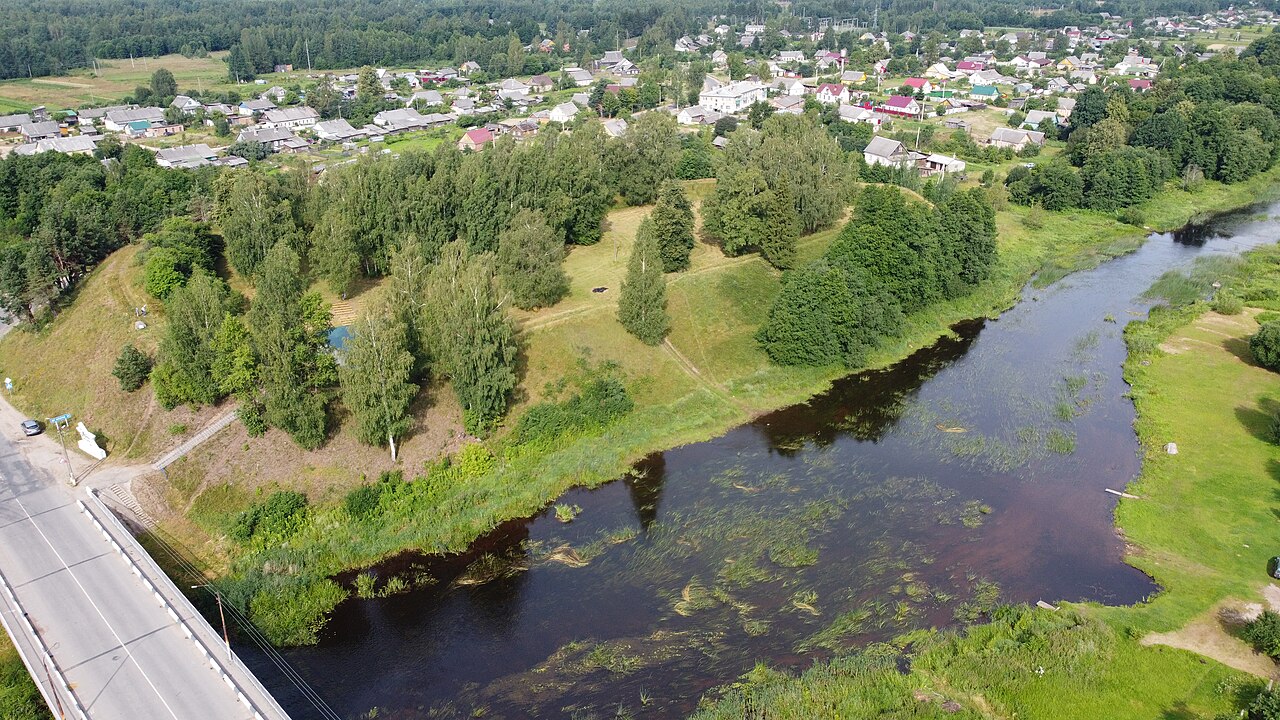
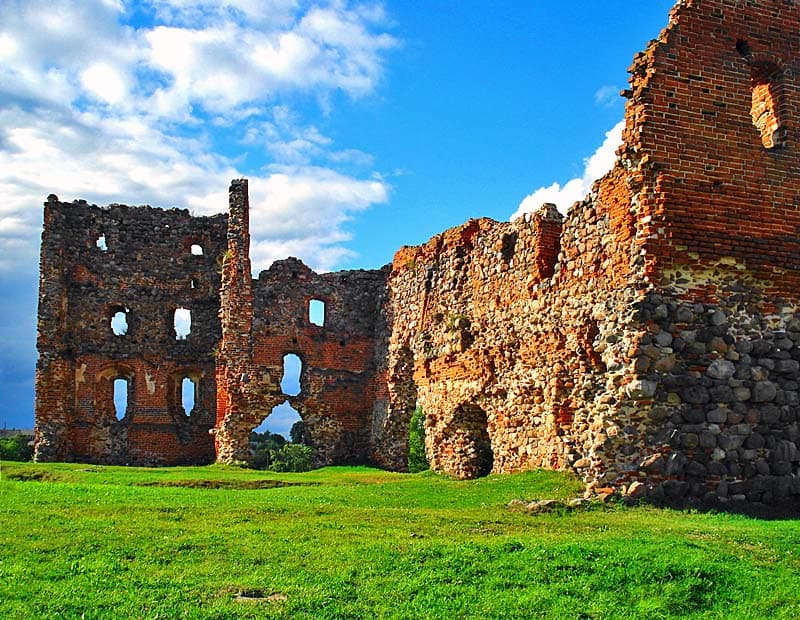
The castle's strategic location on a natural ridge between two lakes provided both defensive advantages and a commanding view of the surrounding landscape. Constructed primarily as a hill castle, Ludza featured a complex layout with a main central tower, multiple defensive walls, and several towers and gates. The fortress's robust fortifications and architectural design exemplify the Gothic style typical of the late 14th and early 15th centuries, incorporating brickwork techniques such as the Wendish bond and Gothic bond patterns, which added both strength and decorative detail.
Historical background and significance
The site of Ludza Castle has a deep-rooted history dating back to the late Iron Age, with the earliest mention in the Kiev Ipatiev Chronicle in 1174, indicating a wooden stronghold used by the Latgalian tribe. The stone castle itself likely arose around the end of the 14th century, attributed to the leadership of Wennemar von Brüggenei, Master of the Livonian Order. Ludza became a critical eastern outpost of the Livonian Order, part of the Livonian Confederation from 1435, and served as a bulwark against Russian principalities.
Throughout its history, Ludza Castle was repeatedly attacked and occupied by Russian forces, notably in 1481 during the reign of Ivan III, and again in the mid-16th century during the Livonian War (1558–1561). The castle changed hands multiple times between the Livonian Order, the Grand Duchy of Moscow, and later the Polish-Lithuanian Commonwealth. King Stefan Batory of Poland enhanced the castle's fortifications, underscoring its military and administrative importance. The castle's final siege occurred in 1654 during the Russian-Polish War, when it was captured by Russian forces under Voivoda Lev Saltikovs. Following a royal decree in 1667, Ludza Castle was abandoned and allowed to fall into ruin, as military focus shifted to other fortifications such as Daugavpils.
Architectural features and layout
Ludza Castle was constructed as a hill castle with a sophisticated defensive system. The main tower, rising approximately 15 meters, was a square structure built predominantly of brick. Its lower sections featured the Wendish bond brick pattern, while the upper stories displayed the Gothic bond with decorative pointed arch friezes in contrasting red and dark bricks. This tower served both residential and defensive functions, containing vaulted cellars, living quarters, and upper chambers.
The castle's defenses included two outer baileys separated by a moat that historically linked the surrounding lakes. The first bailey was enclosed by a stone and brick wall about 500 meters long and 4 meters high, reinforced with six towers and three gates. The walls were built using the Schalenmauer technique, combining fieldstones with brick reinforcements for enhanced durability. These fortifications were designed to control access and repel attackers effectively.
Within the inner bailey, a wooden gallery ran along three sides of the courtyard, reminiscent of a cloister, suggesting a blend of military and monastic architectural influences. The second bailey likely housed a medieval Roman Catholic church, later replaced by a Lutheran church after the Livonian War. In modern times, a white Catholic church with two towers was erected on this site in 1995, continuing the site's religious tradition.
Military conflicts and sieges
Ludza Castle's location made it a focal point in the military conflicts of Eastern Europe. In 1481, Russian forces under Ivan III invaded Livonia and devastated the castle. During the Livonian War, the castle was occupied briefly by Russian troops led by Gregory Temkina in 1558 but was soon retaken. In 1577, Russian troops under Ivan IV Vasilyevich again sacked the castle. The following year, the castle was mortgaged to the Grand Duchy of Lithuania and later integrated into the Polish-Lithuanian Commonwealth in 1582.
The Polish-Swedish War saw the castle occupied by Swedish forces in 1625, though it was soon reclaimed by the Polish-Lithuanian Commonwealth. The final major military action occurred during the Russian-Polish War in 1654 when Russian Voivoda Lev Saltikovs besieged and captured the fortress. After this, the castle was no longer maintained as a military stronghold and gradually fell into ruin.
Archaeological discoveries and preservation efforts
Archaeological excavations conducted in the late 20th and early 21st centuries have provided valuable insights into Ludza Castle's construction phases and historical occupation. Excavations in 1976 and 2013–2014 uncovered a thick cultural layer in the outer bailey, revealing two main phases of habitation corresponding to Livonian Order and Polish administration periods. These studies confirmed that no earlier Latgalian fortifications existed beneath the stone castle, establishing the 15th-century stone structure as the earliest masonry fortress on the site.
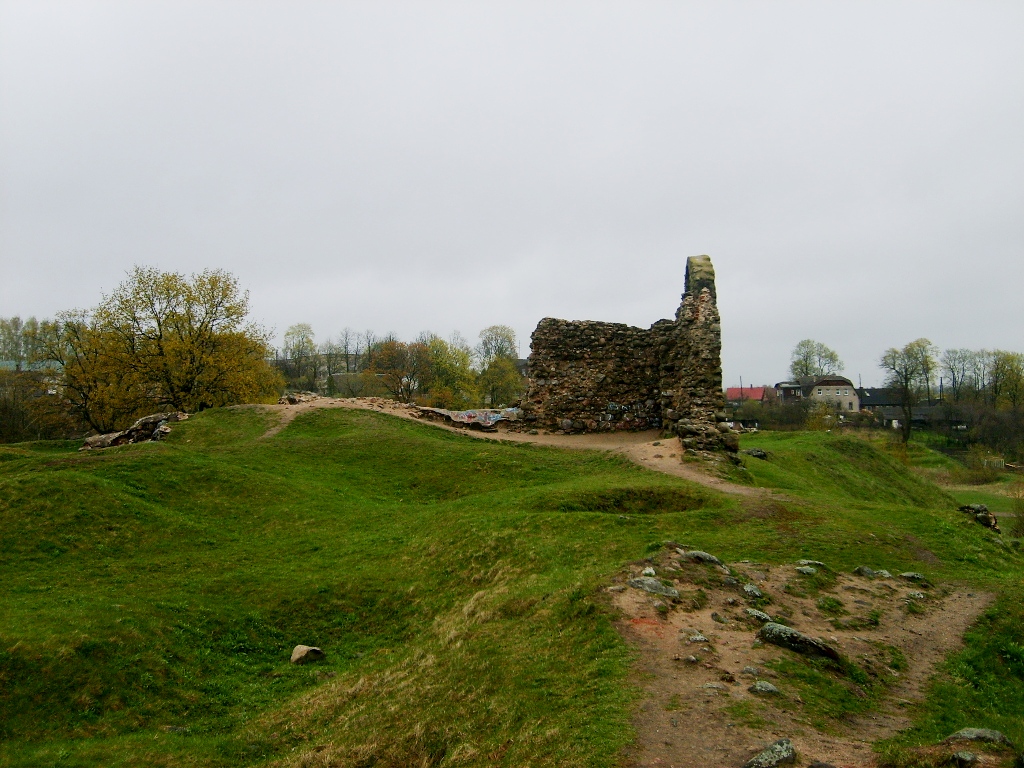
Today, significant portions of the castle's defensive walls remain, including a three-story high fragment of the main tower. The moat, though no longer water-filled, is still visible in the landscape. Conservation and partial restoration efforts aim to preserve these ruins as a cultural heritage site and tourist attraction. Ludza Castle is widely regarded as a symbol of the town and a testament to the region's complex medieval history.
Cultural and touristic importance
Ludza Castle ruins serve as the primary tourist attraction in the Ludza District, drawing visitors interested in medieval history, architecture, and the Baltic region's heritage. The site offers a tangible connection to the Livonian Order and the geopolitical struggles that shaped Eastern Europe. Visitors can explore the remaining walls, towers, and the surrounding landscape, gaining insight into the castle's defensive design and historical significance.
The castle's location between two lakes and on a hilltop provides picturesque views and a unique setting that enhances its appeal. The nearby modern Catholic church continues the site's religious tradition, linking past and present cultural narratives. Ludza Castle remains an emblem of resilience and historical continuity in Latvia, celebrated for its architectural features and storied past.
Frequently asked questions (FAQ)
- How do I get to Ludza Castle?
- Ludza Castle is located in the town of Ludza in eastern Latvia. It is accessible by car and local buses from major cities like Riga and Daugavpils. The castle is situated on a hill between two lakes, making it easy to find.
- What is the historical significance of Ludza Castle?
- Ludza Castle was a key eastern fortress of the Livonian Order and later the Polish-Lithuanian Commonwealth. It played a central role in regional conflicts, guarding trade routes and borders against Russian invasions from the 15th to 17th centuries.
- Can I visit the castle ruins?
- Yes, the ruins of Ludza Castle are open to the public daily from 10:00 to 17:00. Visitors can explore the remaining walls, towers, and moat area at no charge, making it an accessible cultural heritage site.
- When was Ludza Castle built?
- The stone Ludza Castle was constructed in 1433 by the Livonian Order, replacing an earlier wooden stronghold built by the Latgalians.
- What architectural style is Ludza Castle?
- Ludza Castle is primarily built in the Gothic style, featuring brick construction with decorative pointed arch friezes and typical medieval defensive elements like towers, gates, and moats.
- Is there parking available near Ludza Castle?
- Yes, there is parking available near the castle ruins for visitors arriving by car, facilitating easy access to the site.
Photo gallery

Information
Opening hours
10:00-17:00, daily
Ticket prices
Free
Current owner
Municipality
Website
Visit websiteSources & official resources
Verify the information above using these authoritative references.
Loading map...
Visitor reviews
No reviews yet. Been here? Write the first review and help other travelers!
Write the first reviewVisited this castle? Share your experience
Your review helps other travelers and adds first-hand knowledge to our encyclopedia.