Revelin Fort
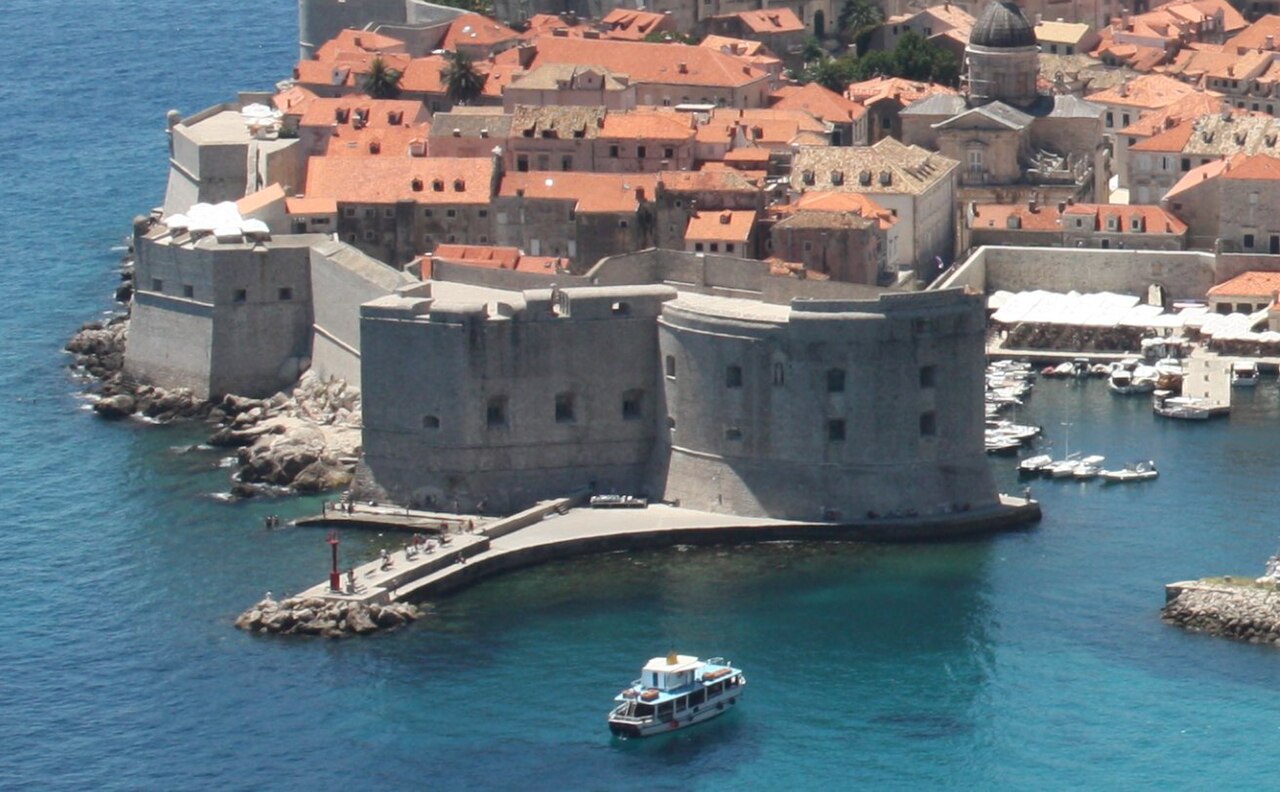
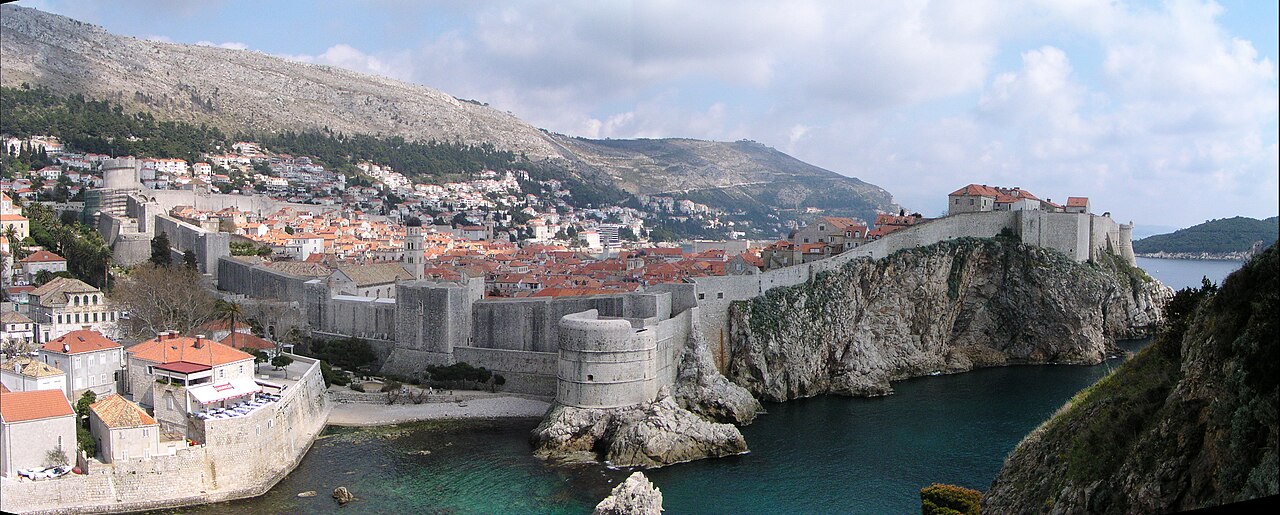
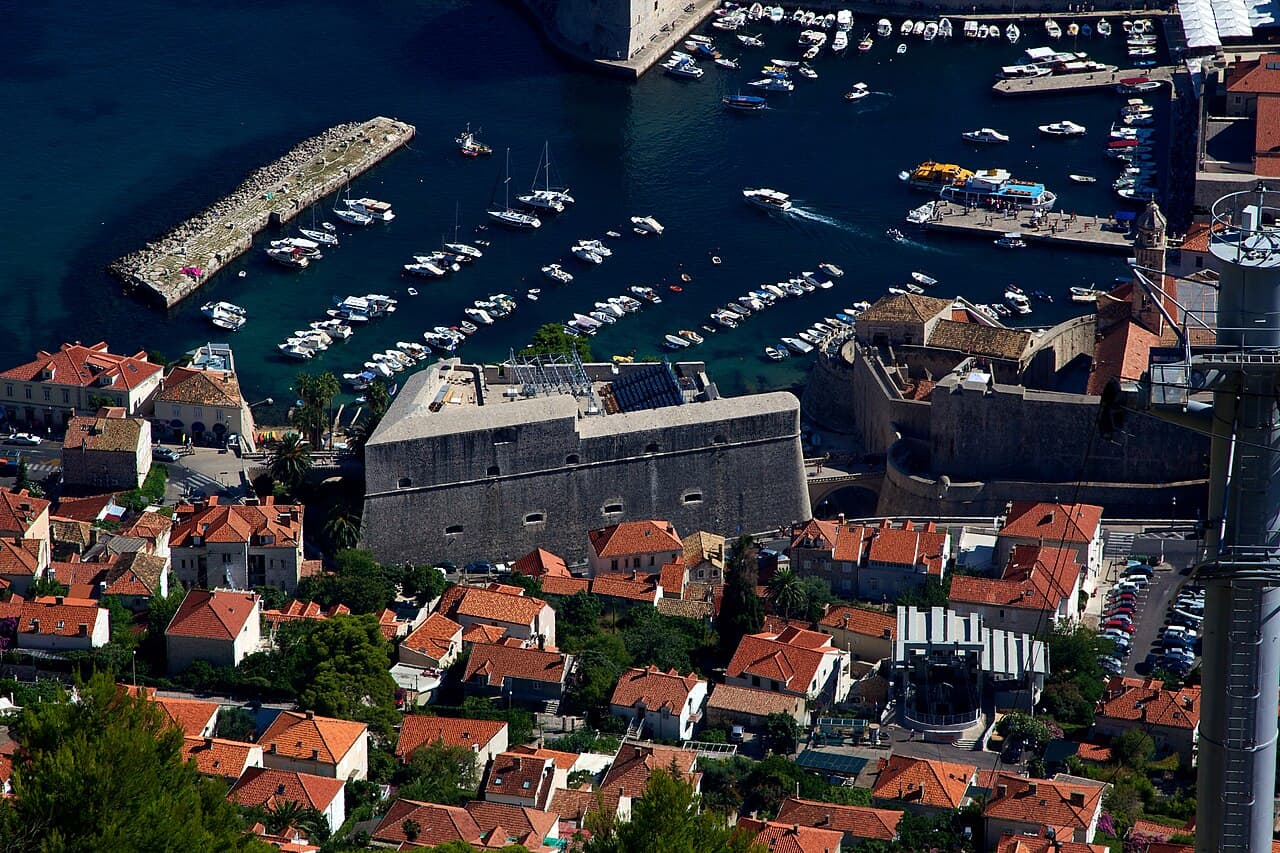
Revelin Fort stands as a significant late medieval bastioned fortress located just outside the city walls of Dubrovnik, Croatia. Constructed initially in 1463, the fort was designed to bolster the city's defenses, particularly protecting the eastern approach from the mainland and the vital entrance to the city harbour. Its strategic placement near the Ploče Gate integrated it into the broader defense complex of Dubrovnik, a city renowned for its formidable fortifications.
The lower part of Revelin Fort was constructed in the mid-15th century, reflecting the military architectural principles of the period. Its initial design is notably captured in the City model held by St. Blaise on the triptych painted by Nikola Božidarević around 1500, which provides a valuable visual record of the fort's early appearance and its role within Dubrovnik's defenses.
Architectural evolution and fortification enhancements
In 1538, Revelin Fort underwent significant strengthening and enlargement to adapt to evolving military technology and threats. This expansion transformed the fortress into an irregular square layout, a design implemented under the guidance of the renowned Italian military engineer Antonio Ferramolino of Bergamo. Ferramolino was instrumental in updating many Adriatic fortifications to withstand artillery advances, and his work at Revelin exemplifies the transition from medieval to Renaissance military architecture.
The fort's defensive features include three entrances and it was originally surrounded by a moat and the sea on three sides, enhancing its natural and constructed defenses. These elements made Revelin a formidable barrier against both land and sea attacks, reflecting the strategic necessity of protecting Dubrovnik's harbor and eastern flank.
Interior functions and Renaissance craftsmanship
Within the spacious interior of Revelin Fort, the famous Renaissance craftsman Ivan Rabljanin established foundries dedicated to casting cannons and bells. This highlights the fort's dual role not only as a defensive structure but also as a center for military production and craftsmanship during the Renaissance period. Rabljanin's work contributed to the fort's operational capacity and the broader defense infrastructure of Dubrovnik.
Modern use and cultural significance
Today, Revelin Fort is well preserved and serves as a prominent cultural venue in Dubrovnik. Its spacious terraces have been adapted to host various events, most notably the Dubrovnik Summer Festival, a prestigious annual cultural festival featuring music, theater, and dance performances. This contemporary use of the fort underscores its enduring importance to the city, bridging its historical military role with modern cultural life.
Location and accessibility
Situated near the Ploče Gate, one of Dubrovnik's main entrances, Revelin Fort is easily accessible to visitors exploring the city's historic core. Its proximity to the Adriatic Sea and integration into Dubrovnik's defensive system make it a key point of interest for those studying medieval and Renaissance fortifications.
Architectural features
The fort's bastioned design reflects the military architectural innovations of the late medieval period, incorporating angled bastions to deflect cannon fire and provide overlapping fields of defense. The irregular square layout created during the 1538 expansion allowed for improved coverage of the surrounding terrain and sea approaches.
The combination of natural maritime defenses with man-made fortifications like the moat and thick walls demonstrates the comprehensive approach to city defense in Dubrovnik. The fort's masonry, battlements, and gateways remain largely intact, offering insight into construction techniques of the era.
Historical context
Revelin Fort was built during a period of increasing Ottoman expansion and Venetian rivalry in the Adriatic region. Dubrovnik, as a wealthy maritime republic, invested heavily in its defenses to maintain independence and control over its trade routes. The fort's construction and later enhancements were direct responses to these geopolitical pressures.
The involvement of Italian engineers like Antonio Ferramolino illustrates the cross-cultural exchange of military knowledge in Renaissance Europe, where fortifications were continuously updated to counter new artillery technologies and siege tactics.
Frequently asked questions (FAQ)
- What is the historical significance of Revelin Fort?
- Revelin Fort, built in the 16th century, is a significant example of military architecture designed to protect the city of Dubrovnik from invasions. Its robust design and strategic location highlight the importance of maritime defense during the Republic of Ragusa's golden era. Today, it stands as a testament to the city's rich history and resilience.
- When was Revelin Fort constructed?
- Construction of Revelin Fort began in 1538 and was completed in 1546. Designed by the architect Giovanni Battista Bonifacio, it was built to defend the city against the threat posed by the Ottoman Empire. Its completion marked a crucial enhancement to Dubrovnik's fortifications.
- Can I visit Revelin Fort, and what are the opening hours?
- Yes, you can visit Revelin Fort, which is open to the public for tours. The typical opening hours are from 9 AM to 6 PM during the summer months, but it's advisable to check the official website for seasonal changes. Guided tours are also available, providing deeper insights into its history and architecture.
- Is it possible to access Revelin Fort with mobility challenges?
- Revelin Fort has made efforts to improve accessibility for visitors with mobility challenges. While some areas may have steep inclines or steps, the main entrance and certain viewing platforms are designed to accommodate visitors. It's recommended to contact the site in advance for specific accessibility options.
- What is the best time to visit Revelin Fort?
- The best time to visit Revelin Fort is during the spring and early fall months when the weather is mild, and the crowds are smaller. This allows for a more enjoyable experience while exploring the fort and its surroundings. Summer can be quite busy, so planning your visit during off-peak times is advisable.
- Are there any nearby attractions to explore after visiting Revelin Fort?
- Yes, after visiting Revelin Fort, you can explore several nearby attractions, including the beautiful Old Town of Dubrovnik, which is a UNESCO World Heritage site. Additionally, the City Walls and the Rector’s Palace are just a short walk away, offering rich historical experiences. The nearby beaches also provide a lovely spot to relax after your visit.
- What are the ticket prices for visiting Revelin Fort?
- Ticket prices for Revelin Fort are generally affordable, with discounts available for students and seniors. As prices may vary, it’s a good idea to check the official website or local tourism information for the most current rates. Group tickets may also be available for a more economical option.
Photo gallery

Information
Loading map...
Visitor reviews
No reviews yet. Been here? Write the first review and help other travelers!
Write the first reviewVisited this castle? Share your experience
Your review helps other travelers and adds first-hand knowledge to our encyclopedia.