Rethymno Fortress
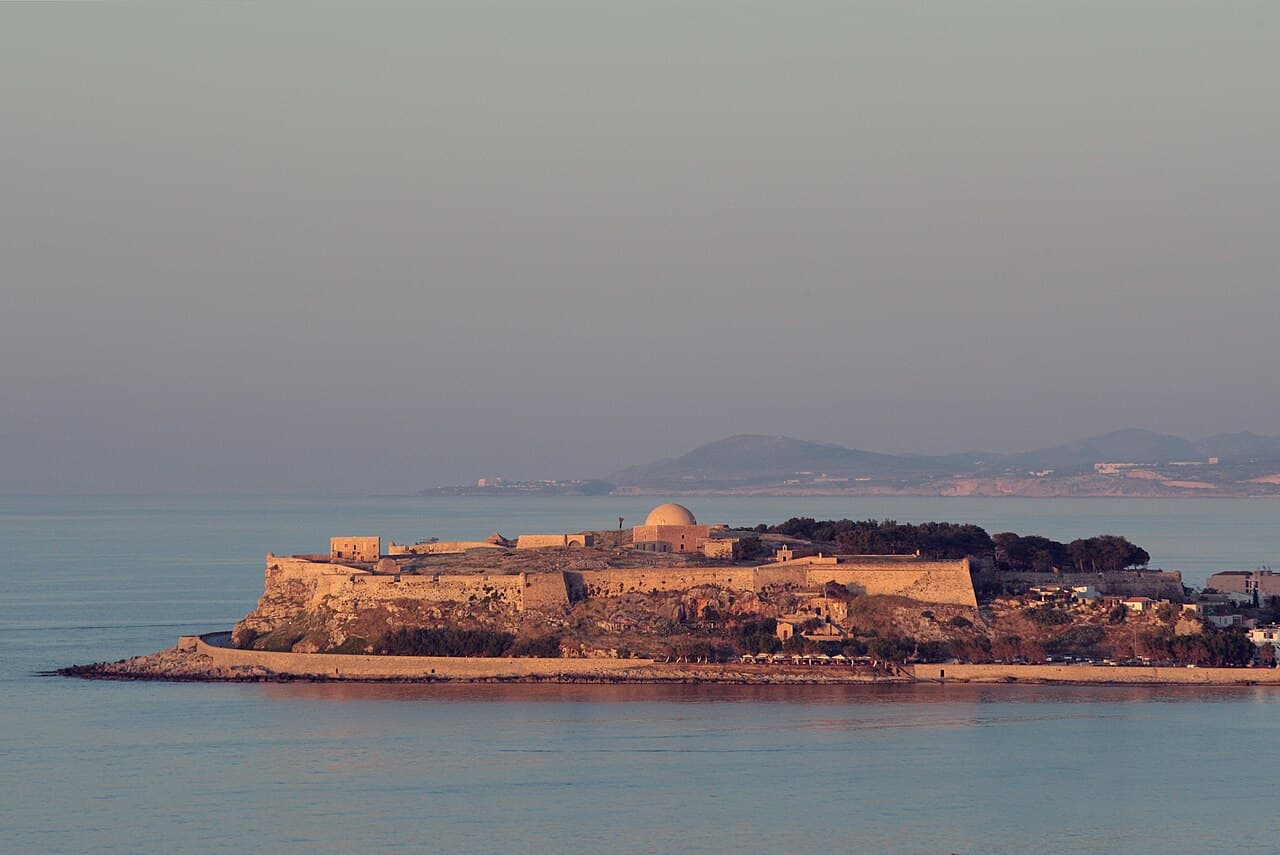
The Fortezza of Rethymno stands as a monumental Renaissance-era fortress perched on the hill of Paleokastro in the city of Rethymno, Crete. Constructed between 1573 and 1580 by the Venetian Republic, this hill castle was designed to protect the city and its harbor from Ottoman and pirate threats. Its strategic location atop the ancient acropolis of Rhithymna reflects centuries of continuous military and civic use, from the Byzantine period through Venetian and Ottoman rule.
Historical background and strategic importance
The site of the Fortezza has a layered history dating back to antiquity, originally serving as the acropolis of the ancient city of Rhithymna. During the 10th to 13th centuries, the Byzantines established a fortified settlement known as Castrum Rethemi, featuring square towers and two gates. This fortification was repaired in the early 13th century, underscoring the hill's long-standing strategic value.
Following the fall of Cyprus to the Ottomans in 1571, Crete became the largest Venetian possession in the eastern Mediterranean. Rethymno had suffered significant damage from pirate raids and corsair attacks, including one led by Uludj Ali Pasha in 1571. To secure the city and its vital harbor, Venetian authorities commissioned a new fortress on the Paleokastro hill.
The fortress was designed by the military engineer Sforza Pallavicini according to the Italian bastioned fortification system, which emphasized angled bastions and low, thick walls capable of withstanding cannon fire. Construction began on September 13, 1573, under the supervision of master builder Giannis Skordilis, employing over 107,000 workers and tens of thousands of animals. The fortress was completed by 1580, becoming a citadel for the Venetian administration rather than a full replacement for the city's older walls, which remained partially intact.
Architectural features and defensive structures
The Fortezza extends irregularly over approximately 340 meters east to west and 230 meters north to south, surrounded by robust limestone walls stretching about 1,307 meters in length. These walls are characteristic of Venetian bastion design, with squared limestone blocks on the exterior and earth embankments internally to absorb artillery impacts.
The fortress is punctuated by a series of defensive bastions adapted to the terrain. The southern and eastern walls host four semi-circular bastions named after saints: Agios Loukas, Agios Ilias, Agios Pavlos, and Agios Nikolaos. The northern and western sides feature three pointed bastions: Agio Pnevma, Agia Ioustini, and Agios Sozon. Ten rounded watchtowers, equipped with arrow slits and domed roofs, provide additional observation and defense, alongside a unique rectangular tower on the southern bastion of Agios Ilias.
The main entrance is located on the southeastern side between the Agios Pavlos and Agios Nikolaos bastions. It is accessed via a vaulted gate passage, or poterne, approximately 3.8 meters wide and 27 meters long, which leads into vaulted chambers within the earth embankment. This gate complex is heavily fortified with three watchtowers overseeing it. Secondary gates on the north and west have been sealed in recent times.
Within the walls, surviving Venetian structures include a two-story armory near the main gate, dating from 1581, now adapted for exhibitions. The House of the Council on the Agia Ioustini bastion served administrative functions and has been restored, though it is not open to the public. The rector's residence, built between 1575 and 1582 near the central square, has been restored in the 21st century.
Religious architecture reflects the fortress's layered history: the Venetian cathedral was converted into the Sultan Ibrahim Mosque during Ottoman rule, featuring a stone dome and an interior mihrab inscribed with Quranic verses.
Water management was integral to the fortress's resilience, with underground cisterns beneath the Agios Ilias bastion providing fresh water and protection against enemy mining.
A notable defensive outwork is the L-shaped fore-bastion on the southwest bastion of Agios Loukas, consisting of two long buildings topped with earth embankments and a cannon platform. This structure guarded the fortress from threats approaching from the western hills and was accessible via a ramp from the western gate.
Additional vaulted casemates and storage rooms run along the northern walls, supported by square columns and rounded arches. While many roofs have collapsed, some eastern sections remain intact and serve as exhibition spaces.
Venetian and ottoman periods
Though planned as a refuge for the entire city population, the Fortezza was too small to house all inhabitants. It primarily sheltered Venetian officials, military personnel, and the Latin bishop during attacks. The older city walls remained in use for broader defense.
In 1646, during the Fifth Ottoman-Venetian War, Ottoman forces led by Hussein Pasha besieged Rethymno. The defenders held out for fourteen days before surrendering under favorable terms. Ottoman rule brought minimal structural changes to the fortress, aside from the addition of a pentagonal ravelin outside the main gate for enhanced protection and construction of administrative buildings and housing for the garrison.
The Ottomans converted the Venetian cathedral into the Sultan Ibrahim Mosque, reflecting the religious transformation of the site. The fortress remained a key military and administrative center throughout Ottoman rule, continuing in use until the early 20th century.
Modern history and restoration
During World War II, under German occupation, the Fortezza served as a military base and prison. Post-war urban expansion led to the demolition of many houses built within the fortress walls.
Since the early 1990s, large-scale restoration efforts led by the Greek Ministry of Culture and Sports have transformed the Fortezza into a preserved cultural monument open to the public. These efforts have stabilized the walls, restored key buildings, and adapted spaces for exhibitions.
The Ottoman ravelin now houses the Archaeological Museum of Rethymno, displaying artifacts from the Neolithic through classical periods, linking the fortress to the broader cultural heritage of the region.
Archaeological significance and cultural heritage
Archaeological research has uncovered remains of an ancient temple dedicated to Rokkaia Artemis on the fortress hill, highlighting its religious significance in antiquity. The site thus represents a continuous cultural and military landmark from ancient Greek times through Byzantine, Venetian, and Ottoman eras.
The fortress's commanding position on a hill nearly surrounded by the sea on three sides provides exceptional views and strategic advantage, with urban development limited to the southwest, preserving its historic setting.
Within the fortress walls, two Greek Orthodox churches were built in the late 19th century: Agia Ekaterini and Agios Theodoros Trichinas, the latter constructed during the Russian mandate over Crete.
Visiting the fortezza today
Today, the Fortezza of Rethymno is a major tourist attraction and cultural site. Visitors can explore the extensive defensive walls, bastions, watchtowers, and restored Venetian buildings. The Archaeological Museum housed in the Ottoman ravelin offers insights into the region's rich history.
The fortress's well-preserved fortifications and panoramic views make it a prime example of Venetian military architecture adapted to the rugged terrain and evolving warfare technologies of the Renaissance period.
Frequently asked questions (FAQ)
- What is the historical significance of Rethymno Fortress?
- Rethymno Fortress, also known as Fortezza, was built by the Venetians in the 16th century to protect the city from invasions. It showcases a blend of Venetian and Ottoman architectural styles, reflecting the diverse history of the region. The fortress played a crucial role during various sieges and remains a symbol of Rethymno's rich cultural heritage.
- When was Rethymno Fortress constructed?
- The construction of Rethymno Fortress began in 1573 and was completed in 1580. It was built during the Venetian rule of Crete, primarily to defend against pirate raids and the growing threat from the Ottoman Empire. Today, it stands as a well-preserved example of Renaissance military architecture.
- What are the opening hours of Rethymno Fortress?
- Rethymno Fortress is open to visitors year-round, typically from 8:00 AM to 8:00 PM during the summer months and from 8:00 AM to 5:00 PM in the winter. It's advisable to check the official website or local sources for any seasonal changes or special holiday hours before your visit. This allows you to plan your trip accordingly and enjoy the fortress at your leisure.
- Can I access Rethymno Fortress with a wheelchair?
- Yes, Rethymno Fortress is accessible for visitors with limited mobility. While some areas may have uneven surfaces, there are pathways and ramps that facilitate access to the main attractions within the fortress. It is recommended to contact the site in advance for specific accessibility arrangements.
- What is the ticket price for entering Rethymno Fortress?
- The entrance fee for Rethymno Fortress is typically around €4 for adults, with discounts available for students and seniors. Children under a certain age may enter for free. It's a good idea to bring cash as some smaller attractions may not accept credit cards.
- When is the best time to visit Rethymno Fortress?
- The best time to visit Rethymno Fortress is during the spring (April to June) and fall (September to October) when the weather is mild and crowds are fewer. Visiting during these months allows you to enjoy the fortress's stunning views and explore its grounds without the peak season hustle. Early mornings or late afternoons can also provide a quieter experience.
- Are there any nearby attractions to Rethymno Fortress?
- Yes, several attractions are located near Rethymno Fortress, including the historic Old Town of Rethymno, the Venetian Harbour, and the Archaeological Museum of Rethymno. These sites offer additional insights into the history and culture of the area, making it easy to plan a full day of exploration. Walking through the charming streets of Old Town can be a delightful way to complete your visit.
Photo gallery

Information
Loading map...
Visitor reviews
No reviews yet. Been here? Write the first review and help other travelers!
Write the first reviewVisited this castle? Share your experience
Your review helps other travelers and adds first-hand knowledge to our encyclopedia.