Izzeddin Fortress
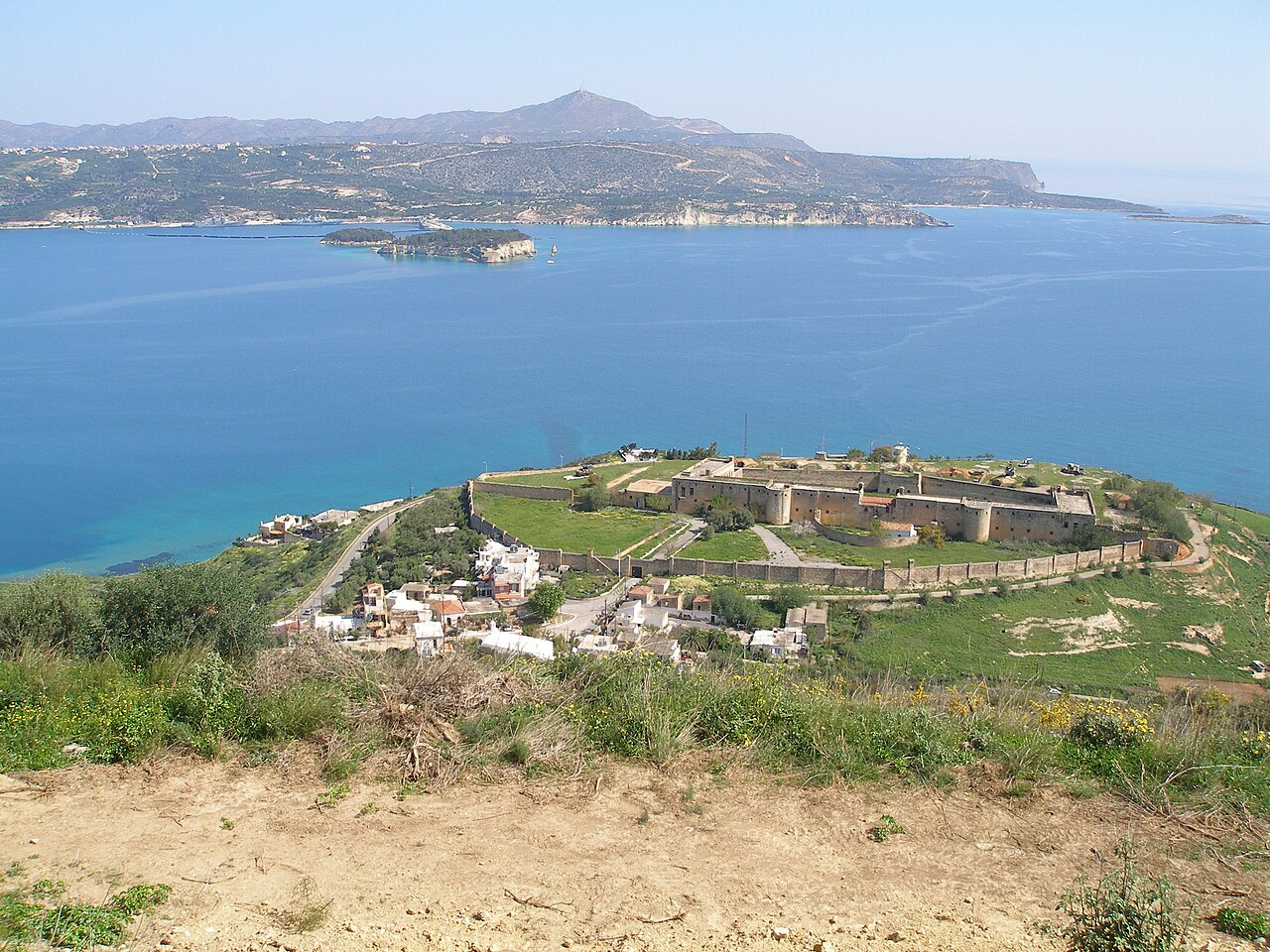
Izzeddin Fortress stands as a significant Ottoman military stronghold located in Souda Bay, Crete, near the village of Kalami. Constructed in 1872 under the direction of the Ottoman governor Rauf Pasha, it was named in honor of Sultan Abdülaziz's son, Izzeddin. This fortress exemplifies the strategic military architecture of the late 19th century Ottoman Empire, designed to control the vital naval passage of Souda Bay and to assert Ottoman dominance over Crete during a turbulent period of regional conflict and political unrest.
Architectural features and military significance
The fortress is a robust example of 19th-century Ottoman fortification, featuring thick stone walls, bastions, and a commanding position overlooking the bay. Its design reflects the military engineering principles of the era, combining traditional Ottoman defensive elements with adaptations to contemporary artillery technology. The fortress's location allowed control over naval access to the bay, which was crucial for both defense and regional power projection. The structure includes battlements, gun emplacements, and fortified gates, showcasing a blend of functional military architecture and imposing aesthetics typical of Ottoman coastal fortresses.
Role as a prison and political significance
Following the establishment of the Cretan State in 1898, the fortress was repurposed as a prison. It retained this function after Crete's union with Greece in 1913, continuing until 1950. Izzeddin Fortress became notorious as a detention center for political prisoners during some of Greece's most turbulent periods, including the dictatorship of Theodoros Pangalos (1925–26) and the Greek Civil War. Among its notable detainees were Eleftherios Venizelos, a prominent Greek statesman imprisoned in 1903, and the deposed dictator Theodoros Pangalos himself, who was held there from 1926 to 1928. The fortress's use as a prison underscores its importance in Greece's political history, symbolizing both repression and resistance.
Transition to modern use and preservation
After its closure as a prison in 1950, the fortress came under the jurisdiction of the Hellenic Navy. In recent decades, it has been recognized as a protected cultural landmark, reflecting its historical and architectural value. Today, Izzeddin Fortress serves as a venue for cultural events, exhibitions, and public gatherings, contributing to Crete's rich heritage tourism. Its preservation allows visitors to explore an important chapter of Crete's Ottoman past and Greece's modern political history.
Historical context and regional importance
The construction of Izzeddin Fortress coincided with a period of significant political upheaval in Crete and the wider eastern Mediterranean. The late 19th century was marked by the decline of Ottoman control and rising nationalist movements. The fortress was part of the Ottoman strategy to maintain control over Crete, an island of great strategic importance due to its location in the Mediterranean Sea. Its presence reflects the military and political tensions that shaped the island's transition from Ottoman rule to autonomous status and eventual union with Greece.
Legacy and cultural impact
Today, the fortress stands as a powerful symbol of the complex history of Crete, embodying layers of military, political, and social narratives. It offers invaluable insights into Ottoman military architecture, the island's struggle for autonomy, and the political conflicts of 20th-century Greece. Visitors to Izzeddin Fortress can appreciate its imposing structure, historical significance, and ongoing role in cultural preservation and education.
Frequently asked questions (FAQ)
- How do I get to Izzeddin Fortress?
- Izzeddin Fortress is located in Chaniá, Gabon, and can be accessed by car, taxi, or public transport from nearby towns. There are clear signs directing visitors to the fortress, making it easy to find. Parking is available nearby for those who choose to drive.
- What is the historical significance of Izzeddin Fortress?
- Izzeddin Fortress dates back to the 17th century and played a crucial role in the defense of the region against invaders. It showcases the military architecture of the time and reflects the cultural heritage of Gabon. The fortress is a testament to the strategic importance of Chaniá in historical trade routes.
- When was Izzeddin Fortress built?
- Construction of Izzeddin Fortress began in the early 1600s and was completed by the mid-17th century. It served as a key military stronghold throughout various conflicts in the region. The fortress has preserved its original structure, allowing visitors to step back in time.
- Can I take guided tours of Izzeddin Fortress?
- Yes, guided tours are available at Izzeddin Fortress, providing visitors with in-depth information about its history and architecture. Tours are typically led by knowledgeable guides who share fascinating stories and insights. It’s advisable to book in advance, especially during peak tourist seasons.
- Why is Izzeddin Fortress an important architectural site?
- Izzeddin Fortress exemplifies the military architecture of the 17th century with its robust walls and strategic design. Its construction reflects the historical context of defense needs during that era. The fortress is a remarkable example of Gabonese heritage and attracts architecture enthusiasts from around the world.
- Is it possible to visit Izzeddin Fortress year-round?
- Yes, Izzeddin Fortress is open to visitors year-round, although operating hours may vary by season. It's best to check the official website or local tourism information for the latest updates on opening hours. Visiting off-peak times may provide a more peaceful experience.
- What are the ticket prices for Izzeddin Fortress?
- Ticket prices for Izzeddin Fortress are generally affordable, with discounts available for students and seniors. Children under a certain age may enter for free, making it an economical outing for families. Prices are subject to change, so it's wise to confirm before your visit.
- What is the best time to visit Izzeddin Fortress?
- The best time to visit Izzeddin Fortress is during the dry season, which typically runs from June to September. This period offers pleasant weather for exploring the fortress and its surroundings. Early mornings or late afternoons are ideal for avoiding crowds and enjoying the sunset views.
- Are there any nearby attractions to visit alongside Izzeddin Fortress?
- Yes, there are several nearby attractions, including local markets, beaches, and cultural museums that showcase Gabon's rich history. Visitors can also explore the stunning natural landscapes that surround Chaniá. Combining your visit to the fortress with these attractions can enrich your experience in the region.
Information
Loading map...
Visitor reviews
No reviews yet. Been here? Write the first review and help other travelers!
Write the first reviewVisited this castle? Share your experience
Your review helps other travelers and adds first-hand knowledge to our encyclopedia.