The 'Dew Men' of Frangokastello Castle
Frangokastello Castle stands as a remarkable example of Venetian military architecture on the southern coast of Crete, Greece. Constructed between 1371 and 1374, this bastioned fortress was built to assert Venetian control over the rebellious Sfakia region, deter pirate raids, and protect Venetian nobles and their properties. The castle's name, meaning "castle of the Franks," reflects the local Greek population's view of the Venetian Catholic foreigners who imposed their rule on the island.
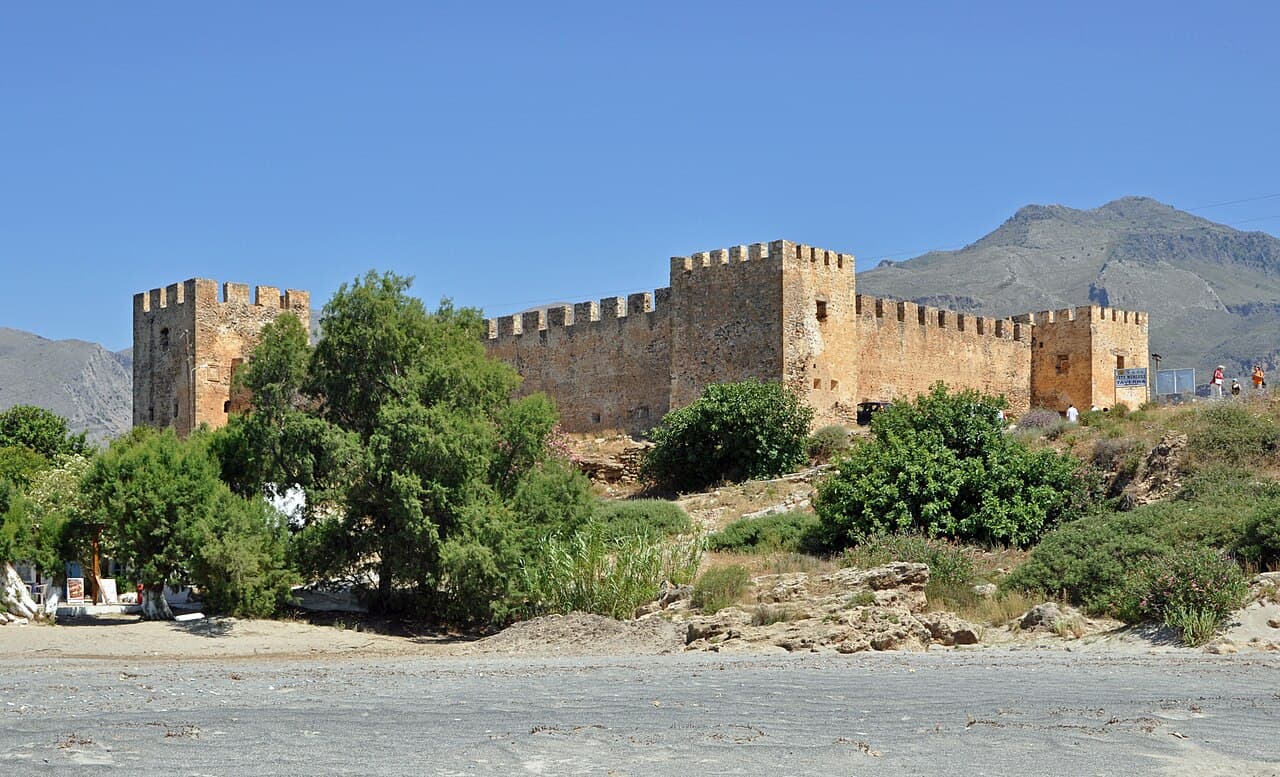
The castle's rectangular plan features four square towers at each corner, with the southwestern tower serving as the main defensive stronghold and guarding the principal southern gate. This gate is adorned with the Venetian coat of arms, including the Lion of Saint Mark and the crests of four noble Venetian families, symbolizing the Republic's authority. The fortress walls, originally built by the Venetians, were later modified during the Ottoman occupation with the addition of battlements and embrasures to enhance defense capabilities.
Historical context and significance
The construction of Frangokastello was authorized by the Venetian Senate on February 10, 1371, following persistent unrest in the Sfakia region caused by local rulers such as the Skordilis family and its branches. The fortress was intended to serve as a military garrison to maintain order and prevent pirate incursions along the southern coast of Crete.
Despite its strategic purpose, the castle often lacked a permanent garrison and struggled to fully pacify the rebellious local population. The Venetians undertook renovations in 1593-1597 and again in 1645 to reinforce the fortress. However, in 1645, the castle fell to the Ottoman Empire during their campaign to conquer Crete.
The ottoman period and local uprisings
During the Ottoman occupation, Frangokastello remained a significant military post. In 1770, the Cretan rebel leader Ioannis Vlachos, known as Daskalogiannis, briefly seized the fortress with a small band of insurgents. The Ottomans quickly recaptured it, and Daskalogiannis was tortured and executed in Heraklion, becoming a symbol of Cretan resistance.
Later, in the context of the Greek War of Independence, the fortress was captured in April 1827 by Greek revolutionaries led by Hatzimichalis Dalianis, a patriot from Epirus. The Ottomans responded by besieging the castle with a large force of around 8,000 soldiers. After six days of intense fighting, the defenders were overwhelmed on May 17, 1828, suffering heavy casualties. The Ottomans subsequently demolished the fortress to prevent its use as a rebel stronghold.
The fortress was rebuilt by the Ottomans during the Cretan Revolt of 1866–1869 to reassert control over the region. Ottoman occupation continued until the end of their rule in Crete, after which the fortress was abandoned.
Architectural features and materials
Frangokastello Castle's design is characterized by its simple rectangular layout and bastioned corners, typical of Venetian fortifications of the late medieval period. The four corner towers are squared, with the southwestern tower being the largest and serving as the main defensive keep.
The fortress walls are constructed from stones recycled from the nearby ancient city of Nikita, linking the castle materially to the region's classical past. Inside the walls, remnants of rectangular buildings that once served as stables, warehouses, and barracks remain visible. These structures were restored during the late Ottoman period, reflecting the continuous military use of the site.
The southern gate, rebuilt in the 19th century, prominently displays the Venetian coat of arms with the Lion of Saint Mark and four noble family crests, symbolizing the Republic of Venice's authority. The fortress walls also bear traces of battlements and embrasures added by the Ottomans to improve defensive firing positions.
The legend of the dew men (drosoulites)
Frangokastello Castle is famously associated with the annual appearance of the Drosoulites, or "dew men," mysterious shadowy figures said to be the ghosts of fallen Greek soldiers from the 1828 battle. Each year around May 17, locals report seeing these dark, fleeting figures marching across the beach toward the fortress at dawn. The phenomenon occurs when the morning humidity creates a misty atmosphere, giving rise to the ethereal apparitions.
Historical accounts note that during World War II, Nazi soldiers patrolling the area reportedly fired upon these ghostly figures, highlighting the enduring local belief in the Drosoulites. Scientific explanations suggest a meteorological cause, though no definitive consensus exists. The legend remains a powerful cultural symbol, connecting the community to its turbulent past and honoring the memory of those who fought and died at Frangokastello.
Visitor experience and cultural heritage
Today, Frangokastello Castle is a significant cultural and historical landmark in Crete, attracting visitors interested in its rich history, architecture, and folklore. The fortress is set against a backdrop of a broad sandy beach and the clear waters of the Libyan Sea, providing a striking coastal setting.
Visitors can explore the remains of the castle's walls, towers, and internal buildings, gaining insight into Venetian and Ottoman military architecture. The nearby church of Agios Nikitas, linked to the ancient city of Nikita, adds an additional layer of historical interest to the site.
The annual Drosoulites phenomenon continues to draw tourists and locals alike, especially around May 17, when the legend is commemorated. The castle's evocative atmosphere and dramatic history make it a compelling destination for those fascinated by medieval fortresses and Greek history.
Frangokastello remains a poignant reminder of Crete's complex past, embodying centuries of conflict, cultural exchange, and resilience. Its preservation as a well-known historical site ensures that the stories of its builders, defenders, and legends endure for future generations.
Frequently asked questions (FAQ)
- When was Frangokastello Castle built and by whom?
- Frangokastello Castle was built by the Venetians between 1371 and 1374 to control the rebellious Sfakia region and protect against pirate raids.
- What is the legend of the Drosoulites or 'dew men'?
- The Drosoulites are shadowy figures believed to be the ghosts of Greek soldiers who died in the 1828 battle at Frangokastello. They reportedly appear each May around dawn, creating a misty, eerie spectacle on the beach.
- Can visitors explore the castle today?
- Yes, visitors can explore the partially preserved ruins of Frangokastello Castle, including its towers, walls, and internal buildings, and enjoy the scenic coastal setting.
- How did the Ottoman occupation affect the castle?
- The Ottomans captured Frangokastello in 1645, added battlements and embrasures to the walls for defense, and rebuilt the fortress during the Cretan Revolt of 1866–1869. They maintained control until the end of Ottoman rule in Crete.
- What architectural features are notable at Frangokastello?
- Frangokastello features a simple rectangular layout with four square bastioned towers at each corner, a main gate with the Venetian coat of arms, and walls constructed from stones recycled from the ancient city of Nikita.
Photo gallery

Information
Sources & official resources
Verify the information above using these authoritative references.
Loading map...
Visitor reviews
No reviews yet. Been here? Write the first review and help other travelers!
Write the first reviewVisited this castle? Share your experience
Your review helps other travelers and adds first-hand knowledge to our encyclopedia.