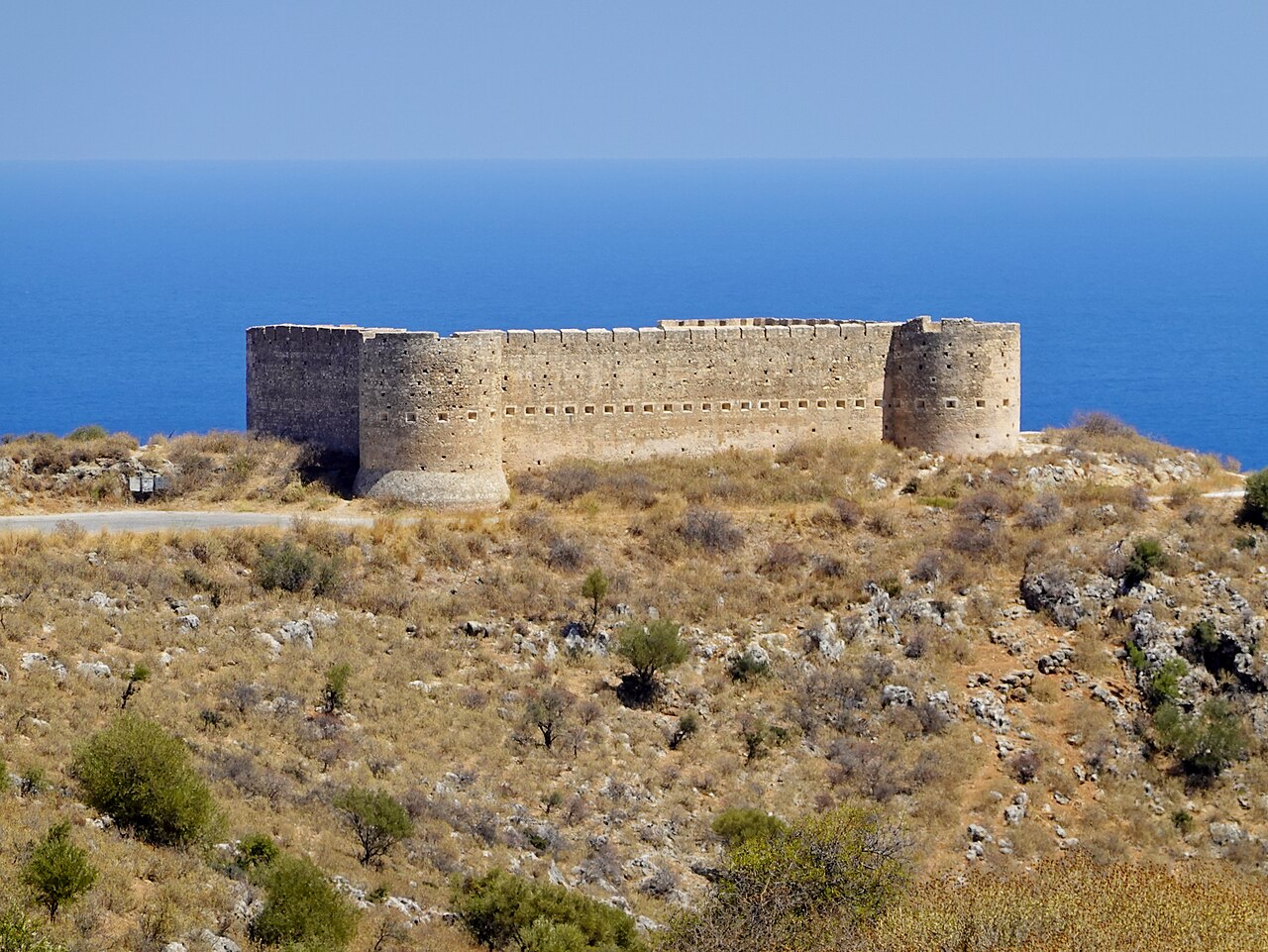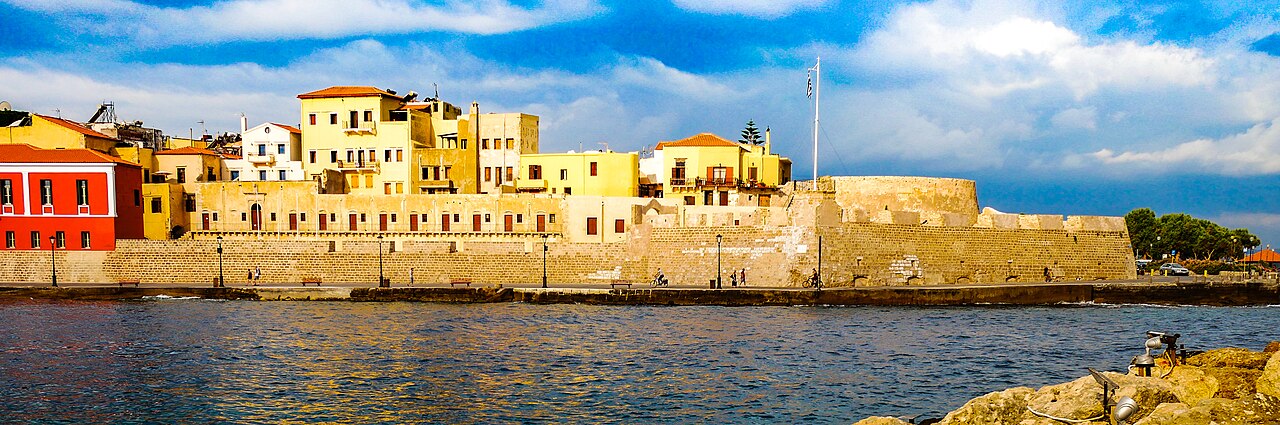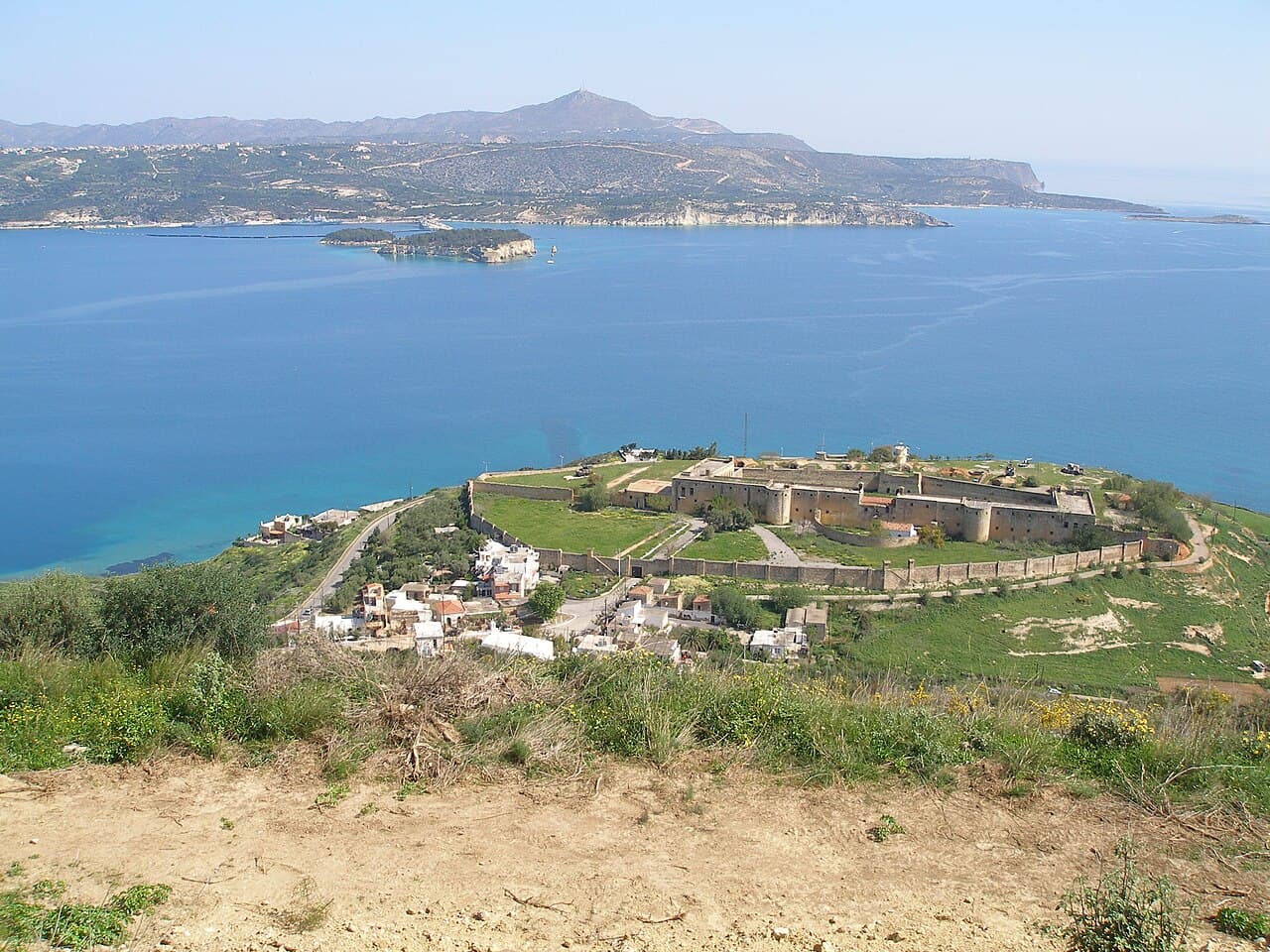
The Izzeddin Fortress (Φρούριο Ιτζεδδίν in Greek, meaning "Glory of the Faith") is a 19th-century Ottoman bastioned fortress located in Souda Bay, Crete, near the village of Kalami. This fortress stands as a significant historical monument reflecting the island's turbulent past under Ottoman and later Greek rule. It is especially notable for its use as a prison for political detainees throughout the 20th century.
Historical background and construction
The fortress was commissioned and established in 1872 by Rauf Pasha, the Ottoman governor of Crete at the time. It was named after Izzeddin, the son of Sultan Abdulaziz, highlighting its Ottoman imperial connections. The fortress was built during a period when the Ottoman Empire was reinforcing its military presence in the Mediterranean, particularly in strategically important locations like Souda Bay, which offered a natural harbor and naval advantage.
Designed as a bastioned fortress, its architecture incorporates angled bastions projecting outward from the main walls, enabling defenders to cover adjacent walls with gunfire and reducing blind spots. This design was a common feature in fortifications of the period, reflecting advances in artillery and siege warfare. The fortress's position on the coast allowed it to control naval access to the bay and protect the surrounding region.
Role as a prison and political significance
Following the establishment of the Cretan State (1898–1913), the fortress's function shifted primarily to that of a prison. This continued after Crete's union with Greece in 1913, with the fortress remaining an important detention site until 1950. Its use as a prison was marked by the incarceration of numerous political prisoners, particularly during periods of political unrest in Greece.
Among its most notable prisoners was Eleftherios Venizelos, a prominent Greek statesman and prime minister, who was detained there in 1903. The fortress also held the deposed dictator Theodoros Pangalos during his imprisonment from 1926 to 1928. The fortress gained notoriety during Pangalos's own dictatorship (1925–26) and the Greek Civil War (1946–1949) as a site where political opponents and dissidents were confined.
Architectural features and layout
The Izzeddin Fortress is characterized by its bastioned design, which includes multiple angular bastions that project from the main curtain walls, allowing for overlapping fields of fire. The walls are constructed from robust stone masonry typical of Ottoman military architecture of the late 19th century. The fortress includes defensive elements such as thick ramparts, embrasures for artillery, and fortified gates.
Inside, the fortress contained various functional buildings, including prison cells, guardhouses, and storage facilities. The layout was designed to facilitate both defense and the containment of prisoners. Its coastal location also meant that the fortress was integrated with the surrounding natural landscape, with commanding views over Souda Bay and the adjacent sea routes.
Transition to modern use and preservation
After 1950, the fortress came under the jurisdiction of the Hellenic Navy, reflecting its continued strategic importance. In recent decades, the site has been recognized for its historical and cultural value, leading to its designation as a protected landmark. The fortress now serves as a venue for cultural events and public visits, allowing visitors to explore its rich history and architectural heritage.
Preservation efforts have focused on maintaining the fortress's structural integrity and highlighting its role in the island's history. While some parts of the fortress show signs of aging, it remains largely well-preserved, offering insight into Ottoman military architecture and the complex political history of Crete during the transition from Ottoman to Greek rule.
Visiting information and cultural significance
Today, Izzeddin Fortress stands as a symbol of Crete's layered history, from Ottoman military dominance to its role in modern Greek political struggles. Visitors can appreciate the fortress's imposing bastions and walls, as well as its scenic setting overlooking Souda Bay. The site hosts occasional cultural events, which help to keep the fortress connected to the community and promote awareness of its historical importance.
Its legacy as a prison for political figures adds a poignant dimension to the fortress, reminding visitors of the island's complex socio-political past. The fortress is accessible to the public, offering a unique opportunity to explore a well-preserved example of 19th-century Ottoman fortification architecture in Greece.
Frequently asked questions (FAQ)
- How do I get to Izzeddin Fortress?
- Izzeddin Fortress is located near the city of Xanthi in Greece. You can reach it by car, and there are public transport options available from nearby towns. The fortress is well-signposted, making it easy for visitors to find.
- What is the historical significance of Izzeddin Fortress?
- Izzeddin Fortress was built during the Byzantine era and later modified by the Ottomans. It played a crucial role in the region's defense and is a testament to the architectural styles of its time. The fortress is also significant for its strategic location overlooking the surrounding plains.
- When was Izzeddin Fortress built?
- Construction of Izzeddin Fortress began in the late 14th century, with various modifications made in the following centuries. Its architecture reflects both Byzantine and Ottoman influences, showcasing the historical transitions in the region. Today, it stands as a monument to the rich history of the area.
- Can I visit Izzeddin Fortress year-round?
- Yes, Izzeddin Fortress is open to visitors throughout the year. However, the best time to visit is during the spring and fall when the weather is mild and pleasant for exploring. Ensure to check for any seasonal events or maintenance closures before planning your trip.
- Why is Izzeddin Fortress a popular attraction?
- Izzeddin Fortress attracts visitors due to its rich history, stunning architecture, and panoramic views of the surrounding landscape. It offers a unique glimpse into Greece's past and is a great spot for photography. Many visitors also enjoy the hiking trails nearby, making it an excellent day trip destination.
- Is it possible to access Izzeddin Fortress with mobility challenges?
- While Izzeddin Fortress has some paths that may be challenging for those with mobility issues, efforts have been made to improve accessibility. It is advisable to contact the site in advance to inquire about specific accommodations available. Visitors should be prepared for some uneven terrain.
- What are the opening hours of Izzeddin Fortress?
- Izzeddin Fortress is typically open from 9 AM to 5 PM, but hours may vary depending on the season. Check the official website or local tourist information for the most accurate and current opening times before your visit. This will help you plan your trip effectively.
- Are there any ticket prices to visit Izzeddin Fortress?
- Yes, there is a small entrance fee to visit Izzeddin Fortress, which helps maintain the site. Ticket prices are generally affordable, making it accessible for most visitors. Children and seniors may receive discounted rates, so check for any special pricing when you arrive.
- What nearby attractions can I explore after visiting Izzeddin Fortress?
- After your visit to Izzeddin Fortress, consider exploring the charming town of Xanthi, known for its vibrant bazaars and traditional architecture. You may also want to visit the nearby Nestos River for outdoor activities such as hiking and kayaking. The region is rich in history and natural beauty, offering plenty to see and do.
Photo gallery

Information
Loading map...
Visitor reviews
No reviews yet. Been here? Write the first review and help other travelers!
Write the first reviewVisited this castle? Share your experience
Your review helps other travelers and adds first-hand knowledge to our encyclopedia.