Reszel
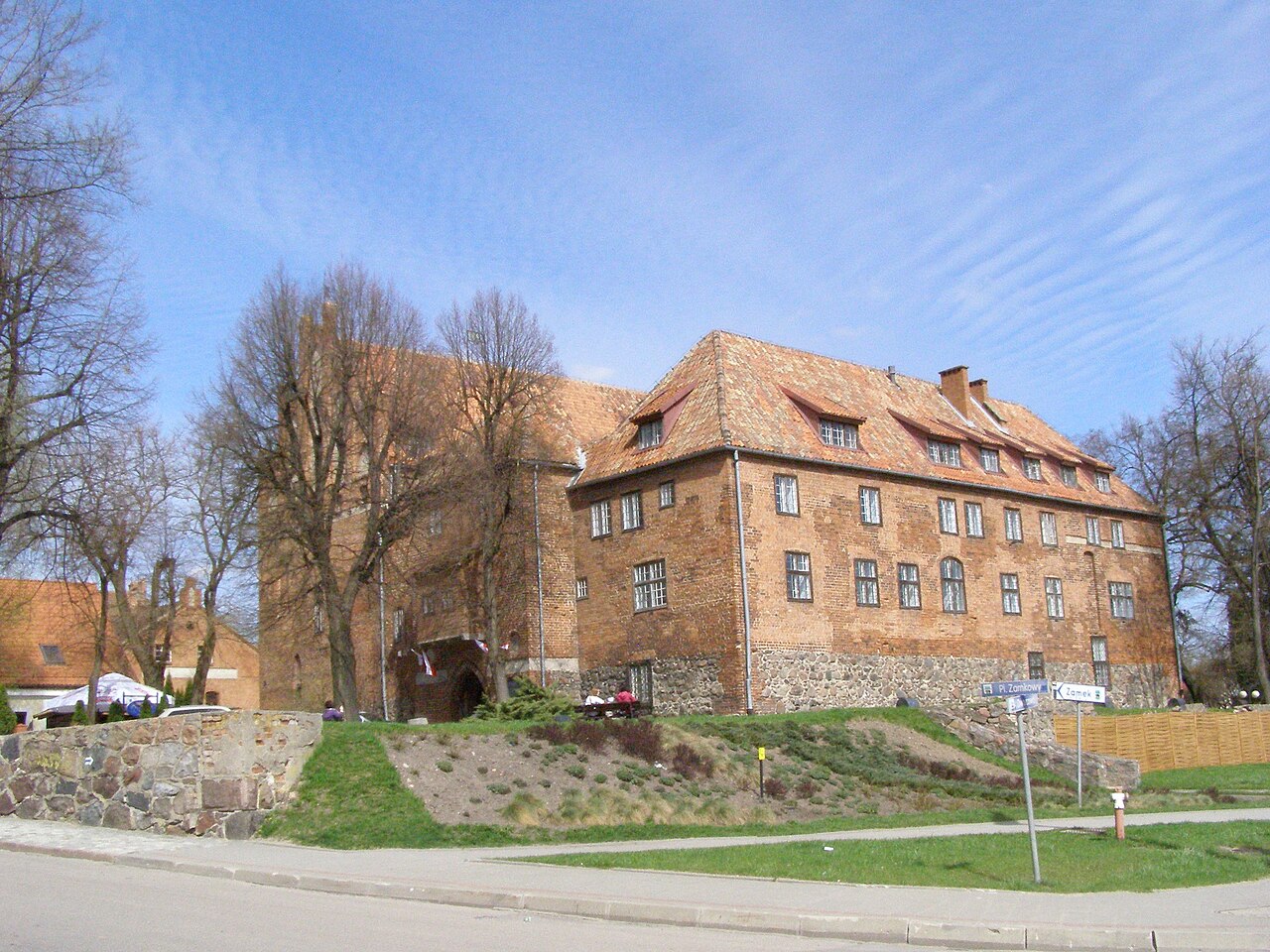
Reszel Castle stands as a remarkable example of a medieval bastioned fortress located in the town of Reszel, Warmia, Poland. Originally established as a wooden and earthwork stronghold by the Teutonic Order in 1241, the castle evolved over centuries into a formidable brick fortress, reflecting the region's turbulent history and architectural advancements. Its strategic position on a small river peninsula, surrounded by deep defensive ditches, underscores its military importance in the High Medieval period.
Early history and teutonic origins
The site of Reszel Castle initially hosted a prussian stronghold before the Teutonic Knights constructed a wooden and earth fortification in 1241. This early fortress was repeatedly destroyed and rebuilt amid local resistance by the Prussian tribes, notably the Barts, who opposed the Teutonic conquest. In the late 13th century, the Teutonic Order transferred control of Reszel to the Bishops of Warmia, who resided in Lidzbark Warmiński, marking the beginning of the castle's ecclesiastical association.
By 1337, the adjacent settlement had grown sufficiently to be granted town rights, and the castle became the administrative and defensive center of the borough. The transition from wooden fortifications to a stone and brick castle commenced around 1350 under Bishop John I of Meissen. His successors, including Bishop Henry II Sorbon, completed the construction by 1400, establishing a Gothic fortress with a roughly square plan measuring approximately 43 by 45 meters.
Architectural development and defensive features
Main structures and layout
The castle's core was a three-story eastern residential building, housing the bishop's apartments, guest chambers, and the castle chapel located in the corner. The ground floor contained essential service rooms such as the kitchen, pantry, and armory, while the upper floors featured representative halls with star and rib vaults. A southern wing accommodated the bishop's private quarters and a refectory, with cellars and ground floors used for practical purposes including a brewery and bathhouse.
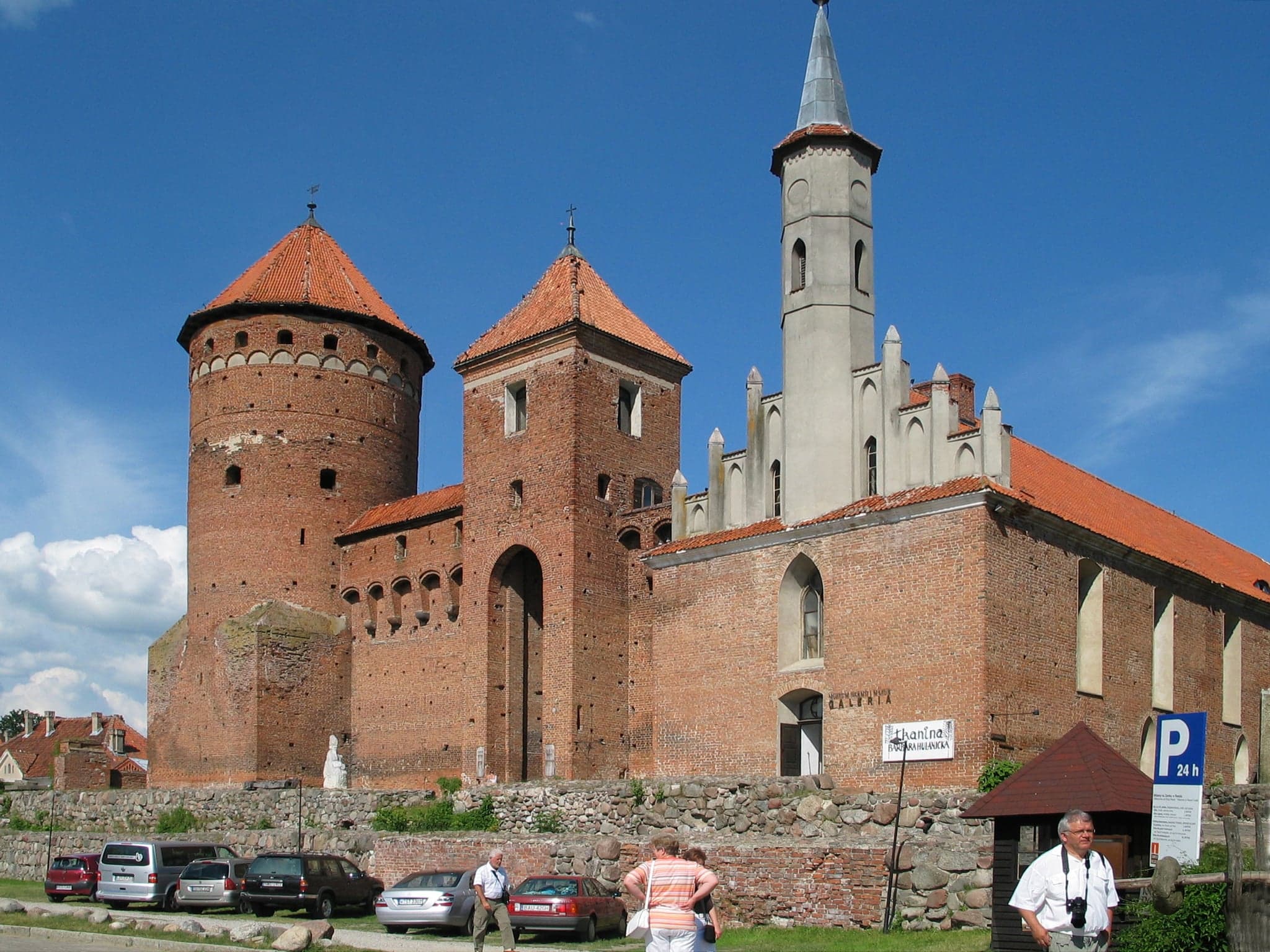
The castle was surrounded by a curtain wall with defensive walkways and machicolations, enhancing its ability to repel attackers. The most prominent defensive feature was the massive main tower (bergfried) at the northwest corner, built on a square base and topped with a cylindrical upper section. This tower served as the last refuge during sieges and included thick walls over four meters thick, arrow slits, and battlements adapted later for firearms.
Outer fortifications and bastions
In the early 15th century, the castle was further fortified with an outer wall featuring three cylindrical bastions on the northern side, including a dansker (latrine tower) connected by an arcaded gallery. Later modifications between 1505 and 1533 added lower outer walls with semicylindrical bastions on the north and west sides, adapting the fortress to the use of gunpowder weapons. These fortifications were integrated with the town's defensive walls, creating a combined defensive system.

Photo by Antekbojar • CC0
Historical significance and notable residents
Reszel Castle played a significant role in regional conflicts, notably resisting a siege by the Teutonic Knights during the Thirteen Years' War in 1462. After the Second Peace of Toruń in 1466, Warmia, including Reszel, became part of the Kingdom of Poland, while the castle remained under the control of the Warmian bishops.
The castle served as a residence for prominent figures such as Bishop Łukasz Watzenrode, uncle of the astronomer Nicolaus Copernicus, and other notable bishops including Andrzej Batory, Theodor Potocki, and the poet-bishop Ignacy Krasicki. In the late 16th century, the fortress was transformed into a comfortable episcopal residence, reflecting its reduced military role.
Decline, destruction, and adaptive reuse
The castle suffered significant damage during the Swedish invasions in 1658 and 1704, leading to partial ruin and the dismantling of some southern walls. Following the First Partition of Poland in 1772, Reszel fell under Prussian control, and the castle was converted into a prison, necessitating alterations to its interior spaces.
Fires in 1806 and 1807 devastated the castle, destroying the main tower and much of the structure. The castle was abandoned until 1822 when it was handed over to the Lutheran community. The southern wing was converted into a church, with vaults and internal walls removed, and the eastern wing housed a school and parson's residence, resulting in the loss of many original Gothic interiors.
Modern restoration and current use
Restoration efforts began in the interwar period, with the establishment of a museum within the castle. After World War II, the castle became a branch of the Museum of Warmia and Mazury in Olsztyn, hosting art exhibitions and cultural events. Extensive renovations from 1976 to 1985 adapted parts of the castle to serve as an art gallery and workshop space. Since 2001, the castle has also housed a hotel and restaurant, blending historical preservation with modern hospitality.
Today, Reszel Castle remains one of the best-preserved medieval fortresses in the region, retaining key Gothic architectural elements such as the main tower with arrow slits, machicolated walls, and the gatehouse with portcullis grooves. Visitors can explore the castle's rich history, architectural grandeur, and its role in the cultural heritage of Warmia and Poland.
Architectural highlights and visitor experience
The castle's layout, with its square plan and robust defensive features, exemplifies High Medieval military architecture adapted over time to accommodate gunpowder weaponry. The interplay of residential and defensive spaces reflects the dual role of the castle as both a fortress and an episcopal residence.
Visitors today can admire the star-vaulted chambers, the imposing bergfried tower, and the remnants of the outer bastioned walls. The castle grounds include reconstructed elements such as the defensive galleries and the drawbridge entrance, offering a vivid impression of medieval fortification techniques.
Frequently asked questions (FAQ)
- How do I get to Reszel Castle?
- Reszel Castle is located in the town of Reszel, Poland, easily accessible by car or public transportation. If you are traveling by train, the nearest station is in Kętrzyn, from where you can take a bus or taxi to reach the castle.
- What is the historical significance of Reszel Castle?
- Reszel Castle dates back to the 14th century and was built by the Teutonic Knights, serving as a defensive fortress. Over the centuries, it has witnessed various historical events and changes, reflecting the region's turbulent history.
- When was Reszel Castle last renovated?
- The castle has undergone several renovations, with significant restoration efforts taking place in the late 20th century. These renovations aimed to preserve its medieval architecture and enhance its appeal as a cultural heritage site.
- Can I take a guided tour of Reszel Castle?
- Yes, guided tours are available at Reszel Castle, providing visitors with in-depth knowledge about its history and architecture. It's recommended to check the castle's official website for tour schedules and booking information.
- Why is Reszel Castle considered an architectural gem?
- Reszel Castle showcases a blend of Gothic and Renaissance architectural styles, featuring impressive brickwork and intricate details. Its well-preserved structure and scenic location make it a notable example of medieval architecture in Poland.
- Is it possible to visit Reszel Castle year-round?
- Yes, Reszel Castle is open to visitors throughout the year, although opening hours may vary by season. It's advisable to check the castle's official website for the most current visiting hours and any seasonal events.
- What are the ticket prices for visiting Reszel Castle?
- Ticket prices for Reszel Castle are quite affordable, with discounts often available for students and seniors. For the latest pricing information, it's best to consult the official website or inquire at the castle entrance.
- When is the best time to visit Reszel Castle?
- The best time to visit Reszel Castle is during the late spring and early autumn months when the weather is mild and pleasant. This period also allows visitors to enjoy the surrounding gardens and scenic views.
- What nearby attractions can I visit after Reszel Castle?
- After visiting Reszel Castle, you can explore the charming town of Reszel, known for its beautiful old town and historic buildings. Additionally, nearby attractions include the Kętrzyn Castle and the picturesque Lake Reszel, perfect for a day of sightseeing.


Information
Website
Visit websiteSources & official resources
Verify the information above using these authoritative references.
Loading map...
Visitor reviews
No reviews yet. Been here? Write the first review and help other travelers!
Write the first reviewVisited this castle? Share your experience
Your review helps other travelers and adds first-hand knowledge to our encyclopedia.