Restormel Castle
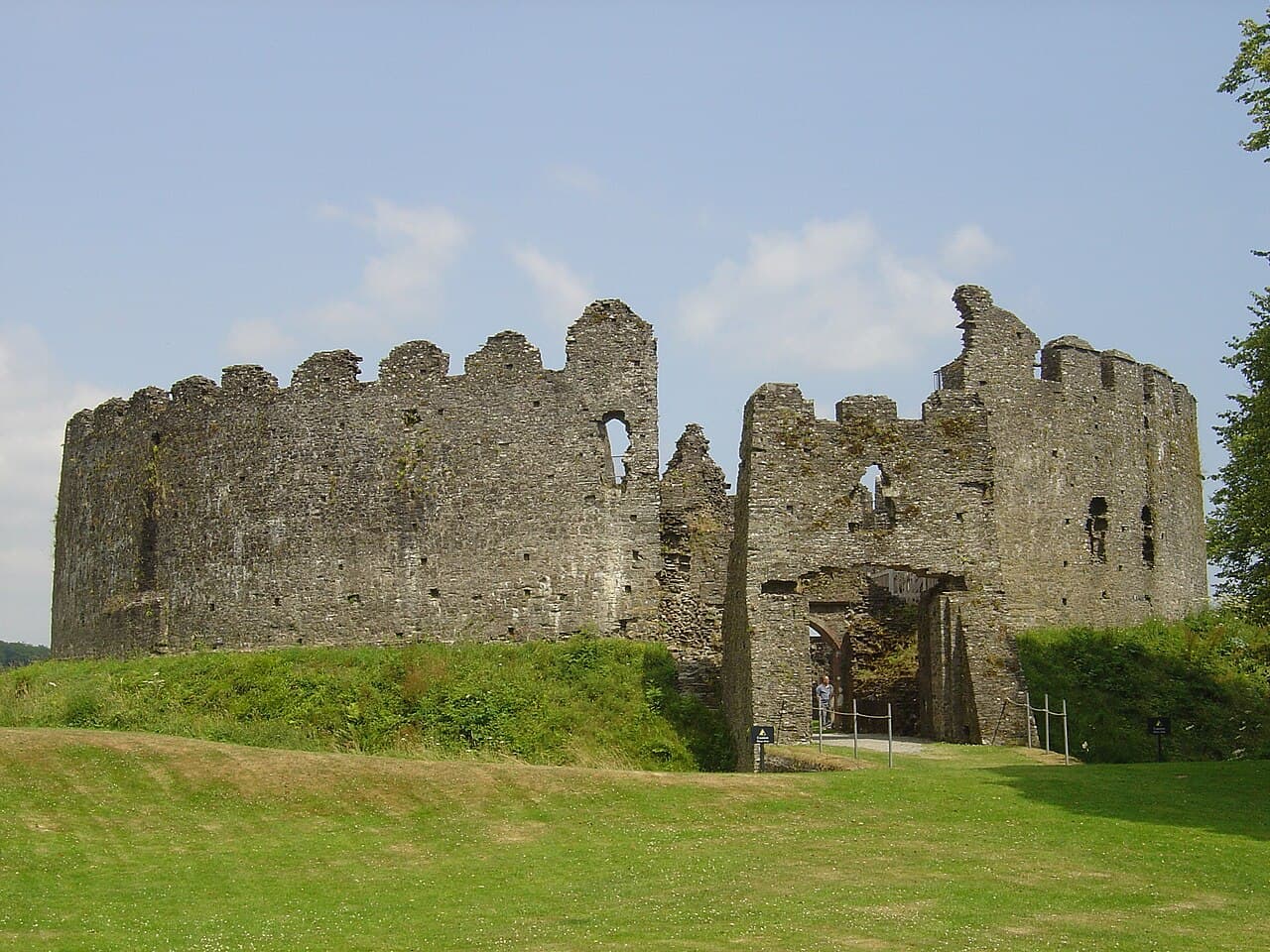
Restormel Castle stands as one of the most remarkable and rare examples of a circular shell keep in Britain, located near Lostwithiel in the picturesque countryside of Cornwall. Built primarily in the late 12th and early 13th centuries, this high medieval fortress served both as a formidable defensive structure and a luxurious residence for the Earls of Cornwall. Its unique circular design, nearly intact stone curtain walls, and well-preserved domestic buildings make it an architectural gem and a significant historical monument.
Historical background and significance
Constructed shortly after the Norman Conquest, Restormel Castle was initially established around 1100 by Baldwin Fitz Turstin, the local sheriff under Robert, Count of Mortain. It formed a key part of the Norman consolidation of power in Cornwall, situated within the manor of Bodardle. The castle's early history is somewhat obscure, but it is known that during the late 12th century, Robert de Cardinham undertook major stone reconstruction, replacing earlier wooden defenses with the distinctive circular stone keep that defines the site today.
Throughout its history, Restormel was closely linked to the administration and governance of Cornwall. In 1270, it became the residence of Edmund, Earl of Cornwall, brother to King Edward I, who transformed it into a lavish palace with advanced amenities such as early plumbing sourced from a natural spring. The castle also functioned as the administrative center for the stannary courts, which regulated the region's vital tin mining industry.
Despite its initial importance, Restormel's prominence declined after the 14th century. It hosted notable visitors such as Edward, the Black Prince, but by the 16th century, it had fallen into disrepair. The castle saw brief military action during the English Civil War, when it was occupied and contested by Parliamentary and Royalist forces, but was ultimately abandoned and left in ruins. Today, it is preserved by English Heritage and remains a popular site for visitors attracted by its history and scenic views.
Architectural features and layout
The circular shell keep
Restormel Castle is distinguished by its almost perfect circular stone curtain wall, approximately 38 meters in diameter, which is one of the best-preserved examples of this rare castle type. The walls rise intact to their original height, topped with a battlemented parapet and a defensive walkway about 7.6 meters above ground level. This design allowed defenders to patrol the perimeter and repel attackers effectively.
The castle sits atop a motte, an artificial earth mound typical of Norman fortifications, with the walls deeply embedded into this raised platform. Surrounding the keep is a wide and deep ditch that historically functioned as a moat, enhancing the castle's defensive capabilities.
Domestic buildings and interior arrangement
Inside the circular wall, the castle’s domestic buildings are arranged along the inner face of the curtain wall, conforming to the rounded shape. These include the Great Hall, kitchens, private chambers (solar), guest rooms, and an ante-chapel. Large windows and substantial fireplaces in these rooms indicate the castle’s role as a comfortable and prestigious residence rather than a purely military fortification.
One of the castle’s most remarkable features is its early plumbing system, which piped water from a natural spring directly into the domestic quarters, a luxury uncommon in medieval castles. The interior also includes a courtyard with a stone staircase leading up to the battlements, offering commanding views of the surrounding Fowey River valley.
Gatehouse and chapel tower
The main entrance is defended by a square gate tower, now mostly in ruins, which was likely one of the earliest stone structures on the site. Opposite the gatehouse stands a projecting square tower that housed the chapel, built in the 13th century. During the English Civil War, this chapel tower was adapted to serve as a gun emplacement, highlighting the castle’s later military reuse.
Outer defenses and landscape
Originally, Restormel was surrounded by a timber and earthwork outer bailey, though no visible traces remain today. Later landscaping filled parts of the surrounding ringwork to create a raised walkway around the ruins, reflecting the castle’s transition from a military fortress to a historical monument.
Restormel castle in the medieval and post-medieval periods
After serving as a ducal palace and administrative center, the castle’s importance waned. By the 16th century, it was largely in ruins, with building materials repurposed locally. The surrounding deer park was converted to farmland during the reign of Henry VIII, and a manor house was built nearby on the site of a former chapel lost during the Reformation.
During the English Civil War, the castle briefly regained military significance. Parliamentary troops repaired and occupied it, but Royalist forces under Sir Richard Grenville captured it in 1644. By 1649, a Parliamentary survey declared Restormel too damaged for repair or demolition. Since then, it has remained a ruin, gradually gaining recognition as a heritage site.
Visiting Restormel castle today
Now managed by English Heritage, Restormel Castle is open to the public and offers visitors a unique glimpse into medieval castle design and life. Its well-preserved circular walls and surviving domestic rooms provide insight into the dual military and residential functions of Norman castles in Cornwall. The site is especially popular for its stunning views over the Fowey River valley and its picturesque setting amidst seasonal wildflowers, making it a favored spot for picnics and historical exploration alike.
Visitors can explore the battlements, climb the stone staircases, and imagine the vibrant medieval life that once flourished within its walls. The castle’s rarity as a circular shell keep and its connection to significant historical figures and events make it a must-see for those interested in medieval architecture and English history.
Frequently asked questions (FAQ)
- How do I get to Restormel Castle?
- Restormel Castle is located near Lostwithiel in Cornwall, England. It is accessible by car and public transport, with nearby parking and walking paths leading to the site.
- What is the historical significance of Restormel Castle?
- Restormel Castle is a rare example of a circular shell keep and was an important administrative center and residence for the Earls of Cornwall during the medieval period.
- Can I explore the interior of the castle?
- Visitors can walk along the battlements, explore the remains of the Great Hall, kitchens, and private chambers, gaining insight into medieval castle life.
- Is Restormel Castle family-friendly?
- Yes, Restormel Castle is suitable for families, offering open spaces for picnics and safe areas to explore the ruins while learning about history.
- When is the best time to visit Restormel Castle?
- The castle is beautiful year-round, but spring and summer offer the best weather and vibrant wildflowers in the surrounding countryside.
Photo gallery

Photo by Zaian at English Wikipedia•Public domain
Information
Sources & official resources
Verify the information above using these authoritative references.
Loading map...
Visitor reviews
No reviews yet. Been here? Write the first review and help other travelers!
Write the first reviewVisited this castle? Share your experience
Your review helps other travelers and adds first-hand knowledge to our encyclopedia.