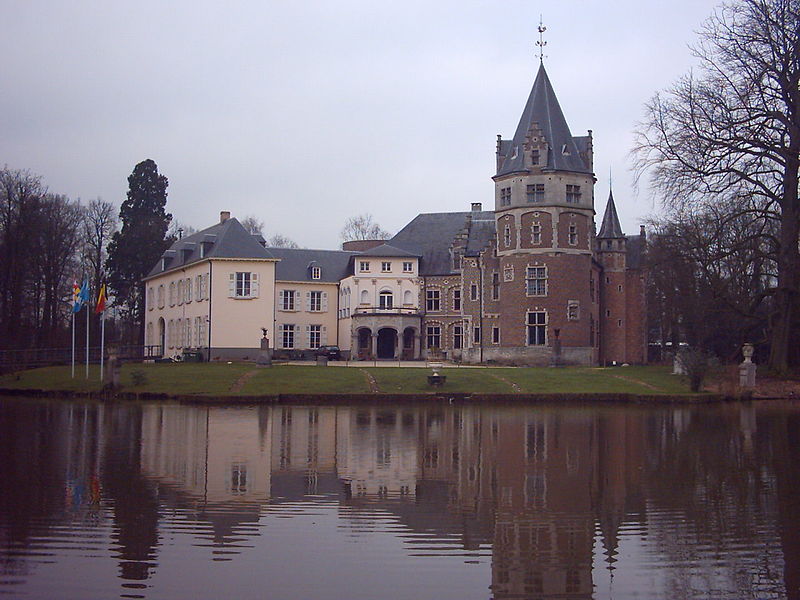
Renesse Castle
Renesse Castle, also known as Kasteel de Renesse or Kasteel Oostmalle, is a historic moated mansion located in the village of Oostmalle, within the municipality of Malle in the province of Antwerp, Belgium. This castle holds significant architectural and historical value, reflecting the turbulent history of the region and the evolution of castle design from the late medieval period through the Renaissance and into the modern era.
The origins of Renesse Castle date back to the 15th century, with the first known structure likely constructed between 1431 and 1464 by Willem van Berchem. Unfortunately, no detailed records or visual depictions survive regarding the original appearance of this early castle. The only surviving medieval element from this initial construction is a flat-topped round tower, which was later integrated into the castle complex as part of the bailey. This tower serves as a tangible link to the castle's medieval roots amidst later architectural transformations.
Medieval origins and destruction
In 1459, ownership of the estate passed into the hands of the Van Hamal family through the marriage of Elisabeth van Berchem to Wouter van Hamal, expanding the estate's holdings significantly. The castle came into the possession of the Renesse family in 1501 when Frederik van Renesse married Anna van Hamal, heiress to the Berchem estate. Under the Renesse family, the castle became a notable noble residence.
However, the castle suffered severe damage during the conflicts of the early 16th century. In 1542, during the revolt led by William, Duke of Jülich-Cleves-Berg against Emperor Charles V, the castle and the surrounding village of Oostmalle were burned down by troops commanded by the notorious Maarten van Rossum. This destruction left only the main tower and the church tower of Oostmalle standing.
Renaissance reconstruction and architectural features
Between 1545 and 1548, Jan van Renesse undertook the construction of a completely new castle, a moated mansion built directly south of the original medieval site. This new structure was designed in the style of a Renaissance manor house, reflecting contemporary architectural trends. The earlier castle's foundations were repurposed to form a bailey, incorporating the surviving medieval round tower.
The new castle was laid out with a horseshoe-shaped arrangement of service buildings, connected by a bridge to the main court. The main residential building was constructed as a square with four corner towers, featuring tiled roofs and towers clad in gold-colored slate. This design combined defensive elements with the more comfortable and prestigious residential features typical of Renaissance noble residences.
Notable visitors and historical significance
Renesse Castle hosted several prominent figures of the 16th century, including Emperor Charles V during his visits in 1545 and 1548, the Governor of the Netherlands Margaret of Parma, Lamoral, Count of Egmont, and William of Orange. These visits underscore the castle's importance as a noble seat and its strategic and political relevance within the region.
Conflicts and decline in the early modern period
In 1561, the castle passed to Frederik van Renesse, the fourth son of Jan van Renesse. During the Eighty Years' War, the castle's fortunes fluctuated dramatically. In 1583, it was confiscated by the Spanish general Fernando Álvarez de Toledo, 3rd Duke of Alba, who garrisoned Spanish troops within its walls. The castle was later returned to Frederik, but it continued to suffer from military occupations and plundering, including an attack in 1603 by soldiers from the Hoogstraten garrison.
The last Renesse family inhabitant, Willem van Renesse, died in 1630, after which the family relocated to other estates. Over the next 170 years, the castle fell into disrepair, frequently left empty or used for military purposes. The main moated mansion was eventually demolished in 1800 due to its dilapidated state.
19th and 20th century transformations
In 1830, Viscount Léonard du Bus de Gisignies acquired the property and undertook significant renovations, converting the remaining service buildings into a country house in the Empire style. The surrounding fields were landscaped into an English garden featuring notable trees such as sequoias, enhancing the estate's aesthetic appeal.
Following World War I, Count Maximilian de Renesse-Breidbach initiated a reconstruction of the castle in the Flemish Renaissance Revival style. Although construction was halted after completing the right wing, this renovation gave the castle much of its present-day appearance. The original 16th-century left wing remained but was no longer used as a residence.
Wartime impacts and restoration
During both World War I and World War II, the castle was occupied by German forces. In 1941, a British bombing raid destroyed part of the left wing. Later, in 1944, the castle served as a field hospital for wounded British, American, and Canadian soldiers. The tornado that struck Oostmalle in 1967 spared the castle but caused lasting damage to the parklands.
After decades of private ownership, the castle was acquired by the municipality of Malle in 1983. Since 1985, the property has been managed by Domein de Renesse, a non-profit organization responsible for its upkeep. Today, Renesse Castle is well preserved and open to the public. The castle itself functions as a cultural venue hosting concerts and exhibitions, while the surrounding domain offers free access to visitors.
Architectural highlights and features
Renesse Castle exemplifies a layered architectural history, with its medieval origins visible in the surviving round tower and the so-called tournament beam displayed above the fireplace in the knight's room. The Renaissance reconstruction introduced a horseshoe-shaped layout with service buildings and a main residential block featuring four corner towers. The 19th and 20th-century renovations incorporated Empire and Flemish Renaissance Revival styles, blending historical elements with modern adaptations.
The castle's moat remains a defining characteristic, emphasizing its defensive origins despite its later transformation into a stately home. The English garden surrounding the castle adds to the picturesque setting, with mature trees and landscaped grounds enhancing the visitor experience.
Cultural and heritage importance
Renesse Castle is a significant cultural landmark in the Antwerp province, reflecting the region's complex history from medieval feudalism through Renaissance nobility to modern heritage conservation. Its association with prominent historical figures and events, including visits by Emperor Charles V and involvement in the Eighty Years' War, underscores its historical importance.
Today, the castle serves as a museum and cultural center, hosting concerts, exhibitions, and community events. The preservation of its architectural features and the maintenance of its parklands contribute to its role as a valuable heritage site accessible to the public.
Frequently asked questions (FAQ)
- What are the opening hours of Renesse Castle?
- Renesse Castle is open to visitors from Tuesday to Sunday, from 10 AM to 5 PM. It is closed on Mondays and public holidays, so be sure to plan your visit accordingly. Special events may affect these hours, so checking the official website before your visit is advisable.
- Can I take guided tours of the castle?
- Yes, guided tours of Renesse Castle are available and highly recommended for a more in-depth experience. These tours typically last about an hour and provide insights into the castle's rich history and architectural features. It is best to book in advance, especially during peak tourist season.
- When was Renesse Castle built?
- Renesse Castle was originally constructed in the 13th century, making it a significant historical landmark in the region. Over the centuries, it has undergone several renovations and restorations, reflecting various architectural styles. This rich history adds to the allure of visiting the castle.
- Is it possible to host events at Renesse Castle?
- Yes, Renesse Castle offers facilities for hosting various events, including weddings, corporate gatherings, and private parties. The picturesque setting and historical ambiance make it a unique venue. Interested parties should contact the castle management for availability and more information.
- What is the historical significance of Renesse Castle?
- Renesse Castle holds a prominent place in Belgium's history, serving as a noble residence and military stronghold throughout the centuries. It has witnessed numerous historical events, making it a valuable site for understanding the region's past. Visitors can explore its rich heritage through various exhibits and artifacts on display.
- How do I get to Renesse Castle using public transport?
- Renesse Castle is accessible via public transport, with regular bus services connecting Malle to nearby cities. The closest train station is located in a neighboring town, from which you can take a bus or taxi to reach the castle. Be sure to check local transport schedules for the most convenient options.
- What are the ticket prices for visiting Renesse Castle?
- Ticket prices for Renesse Castle are generally affordable, with discounts available for students and seniors. Children under a certain age may enter for free. It is advisable to check the official website for the most current pricing and any special offers.
- When is the best time to visit Renesse Castle?
- The best time to visit Renesse Castle is during the spring and early autumn months when the weather is pleasant, and the gardens are in full bloom. These seasons also tend to be less crowded, allowing for a more enjoyable experience. Special events and festivals are often held during these times, enhancing your visit.
- Is Renesse Castle accessible for individuals with disabilities?
- Yes, Renesse Castle strives to be accessible for all visitors, including those with disabilities. There are provisions in place, such as ramps and accessible restrooms, to facilitate easier movement throughout the castle grounds. It is recommended to contact the castle in advance to inquire about specific accommodations.
Information
Loading map...
Visitor reviews
No reviews yet. Been here? Write the first review and help other travelers!
Write the first reviewVisited this castle? Share your experience
Your review helps other travelers and adds first-hand knowledge to our encyclopedia.