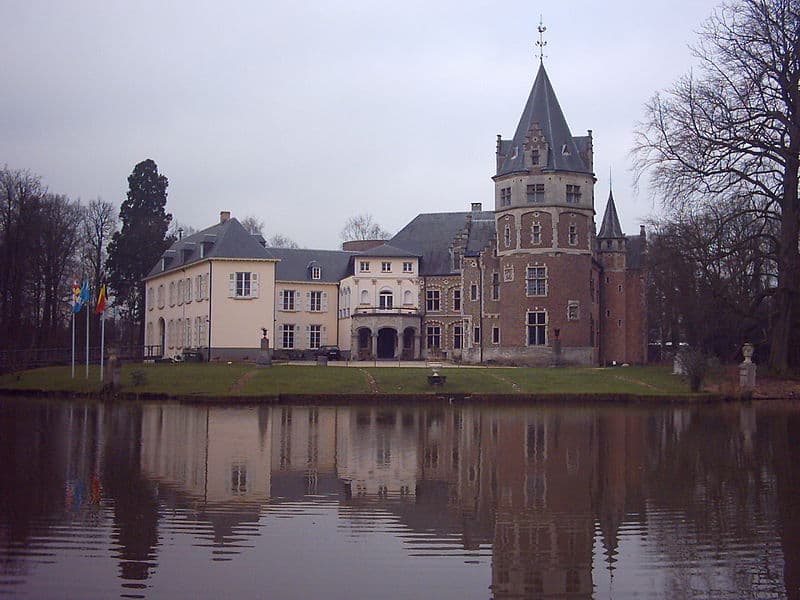
Castle de Renesse
Castle de Renesse, located in Malle within the province of Antwerp, Belgium, stands as a remarkable example of a late medieval hill castle with a rich history spanning several centuries. Originally constructed in the 15th century, this castle has witnessed significant historical events, architectural transformations, and varied ownership that reflect the turbulent and evolving political landscape of the region.
The castle’s origins trace back to Willem van Berchem, a nobleman who began building the original fortified residence between 1431 and 1464. This initial structure was a classic example of a fortified noble estate typical of the late medieval period, designed primarily for defense and residence. Unfortunately, none of the original castle buildings survive today except for the main tower, or donjon, which remains the central architectural feature and a tangible link to the castle's earliest phase.
The destruction and Renaissance rebuilding
In 1542, Castle de Renesse and the surrounding village of Oostmalle were devastated by troops under the command of Maarten van Rossum during a military campaign linked to the conflicts involving William, Duke of Guelder, and Emperor Charles V. This assault resulted in the near-total destruction of the castle, necessitating a comprehensive reconstruction effort.
Between 1545 and 1548, Jan van Renesse led the rebuilding of the castle. The reconstruction embraced Renaissance architectural principles, evident in the creation of a square main building fortified with four corner towers. These towers, topped with distinctive gold-colored slate roofs, exemplify the Renaissance influence on the castle’s design. The surviving 15th-century donjon was incorporated into a horseshoe-shaped complex of service buildings, known as the neerhof, which connected to the main courtyard (opperhof) via a bridge. This layout not only enhanced the castle’s defensive capabilities but also reflected the evolving residential and administrative functions of the estate.
Historical significance and notable visitors
Throughout its history, Castle de Renesse has been a site of political and social importance. It hosted several prominent historical figures, including Emperor Charles V, Margaret of Parma, William I of Orange-Nassau, and Lamoral, Count of Egmont. These visits underscore the castle’s role as a center of regional power and influence during the Renaissance and beyond.

Photo by Ad Meskens • CC BY-SA 3.0
Ownership changes and 19th-century transformations
The castle remained in the hands of a few noble families over the centuries, including the Berchems, Hamals, Renesses, and briefly the du Bus family. In 1830, Viscount Leonard du Bus de Gisignies acquired the property and initiated significant changes. The service buildings were converted into a country house featuring large windows and Empire-style interiors, reflecting 19th-century tastes and domestic comfort. Du Bus also developed the surrounding park into an English garden, planting several sequoia trees, one of which is the thickest sequoia in Flanders and has been protected as a monument since 2010.
20th-century renovations and wartime impact
In 1896, the Renesse family regained ownership through marriage, and in 1920, the castle underwent renovations in the Flemish Neo-Renaissance style. However, only the right wing was completed in this style, while the 16th-century left wing remained unchanged and ceased to be used as living quarters.
During World War II, the castle suffered damage when British forces bombed part of the west wing in 1941. This section was never restored, leaving a visible scar on the historic structure. In 1944, the castle was repurposed as a hospital by British and Canadian troops, highlighting its strategic importance during the conflict.
Modern preservation and current use
After the death of Count Thierry de Renesse-Breidbach in 1973, the municipality of Malle acquired the castle and part of its domain in 1983, with the Flemish government purchasing the remaining lands. Since 1985, the castle and its grounds have been managed by the non-profit organization Domein de Renesse, ensuring ongoing preservation and public accessibility. The castle has been protected as a monument since 1982, reflecting its cultural and historical value.
Today, Castle de Renesse functions as a museum and cultural venue, hosting concerts and various events. The estate’s approximately 60 hectares include marked walking paths, historic buildings, and natural features that offer visitors a rich experience combining heritage and nature.
Architectural features and ancillary buildings
The castle complex is anchored by the square main building with its four corner towers and tiled roof, a hallmark of the Renaissance rebuilding phase. The gold-colored slate covering the towers is a distinctive feature that adds to the castle’s visual appeal. The original 15th-century donjon integrated into the horseshoe-shaped service buildings provides a direct architectural connection to the medieval origins of the site.
The 19th-century conversion of the service buildings into a country house introduced large windows and Empire-style interiors, blending comfort with historic architecture. The surrounding park, designed as an English garden, enhances the estate’s aesthetic and ecological value, especially with its notable sequoia trees.
Several ancillary buildings within the castle grounds are also protected monuments. The coach house, dating from 1830 and modified in 1932, currently houses a local heritage society and a brasserie. The rentmeesterwoning (steward’s house) from 1882 features Neo-Renaissance architecture with alternating brick and sandstone layers, while the boswachterswoning (forester’s house) built in 1908 includes a traditional bread oven. The portierswoning (gatekeeper’s house), likely constructed around 1880, shares architectural similarities with the steward’s house.
The park contains an ice cellar built in 1835, historically used to store ice year-round and accessible to local residents with a doctor’s note. Today, this ice cellar is a protected monument and serves as a bat habitat managed by the nature organization Natuurpunt Voorkempen.
Preservation challenges and landscape
The partial destruction of the west wing during World War II remains unrestored, serving as a reminder of the castle’s wartime experiences. The 16th-century left wing still stands but no longer serves as a residence. The castle domain’s blend of historic structures, landscaped gardens, and natural woodlands creates a unique environment that balances conservation with public engagement.
Frequently asked questions (FAQ)
- What is the historical significance of Castle de Renesse?
- Castle de Renesse is a notable example of medieval architecture in Belgium, dating back to the 13th century. It has witnessed various historical events, including sieges and renovations, reflecting the rich history of the region and its noble families.
- When was Castle de Renesse built?
- Castle de Renesse was originally constructed in the early 13th century, making it one of the oldest castles in the area. Over the centuries, it has undergone several modifications, adapting to the changing needs and styles of its occupants.
- Can I visit Castle de Renesse?
- Yes, Castle de Renesse is open to the public for visits. Guests can explore its historical grounds and learn about its architecture and significance through guided tours and informational displays.
- What are the opening hours for Castle de Renesse?
- Castle de Renesse is typically open from 10 AM to 5 PM, but it is advisable to check the official website for specific days and any seasonal changes in hours. Special events may also affect regular visiting times.
- Is it possible to access Castle de Renesse for visitors with disabilities?
- Yes, Castle de Renesse is committed to being accessible for all visitors. There are provisions in place to assist those with mobility challenges, including wheelchair access to certain areas of the castle.
- What are the ticket prices for visiting Castle de Renesse?
- Ticket prices for Castle de Renesse are generally affordable, with discounts available for students and seniors. Children under a certain age may enter for free, making it a great family-friendly destination.
- When is the best time to visit Castle de Renesse?
- The best time to visit Castle de Renesse is during the spring and early autumn when the weather is mild and the gardens are in full bloom. Additionally, visiting on weekdays may help you avoid larger crowds.
- What nearby attractions can I explore after visiting Castle de Renesse?
- After visiting Castle de Renesse, you can explore the quaint town of Malle, known for its beautiful parks and local shops. Additionally, nearby attractions include other historical sites and nature reserves, perfect for a full day of exploration.
Photo gallery


Information
Website
Visit websiteSources & official resources
Verify the information above using these authoritative references.
Loading map...
Visitor reviews
No reviews yet. Been here? Write the first review and help other travelers!
Write the first reviewVisited this castle? Share your experience
Your review helps other travelers and adds first-hand knowledge to our encyclopedia.



