Rembów zamek Szumsko
Rembów zamek Szumsko stands as a testament to the rich medieval heritage of Poland, located strategically on a steep hilltop between the Łagów-Raków road and the village of Rembów. This late medieval hill castle is a remarkable example of defensive architecture adapted to challenging terrain, with its origins tracing back to the early 14th century. The castle is closely linked to the noble Odrowąż family, specifically Jakub or Krzesław of Szumsko, who are credited as its founders. Historically, the castle was also known as Szumsko or Sumsko, names derived from its founders' lineage.
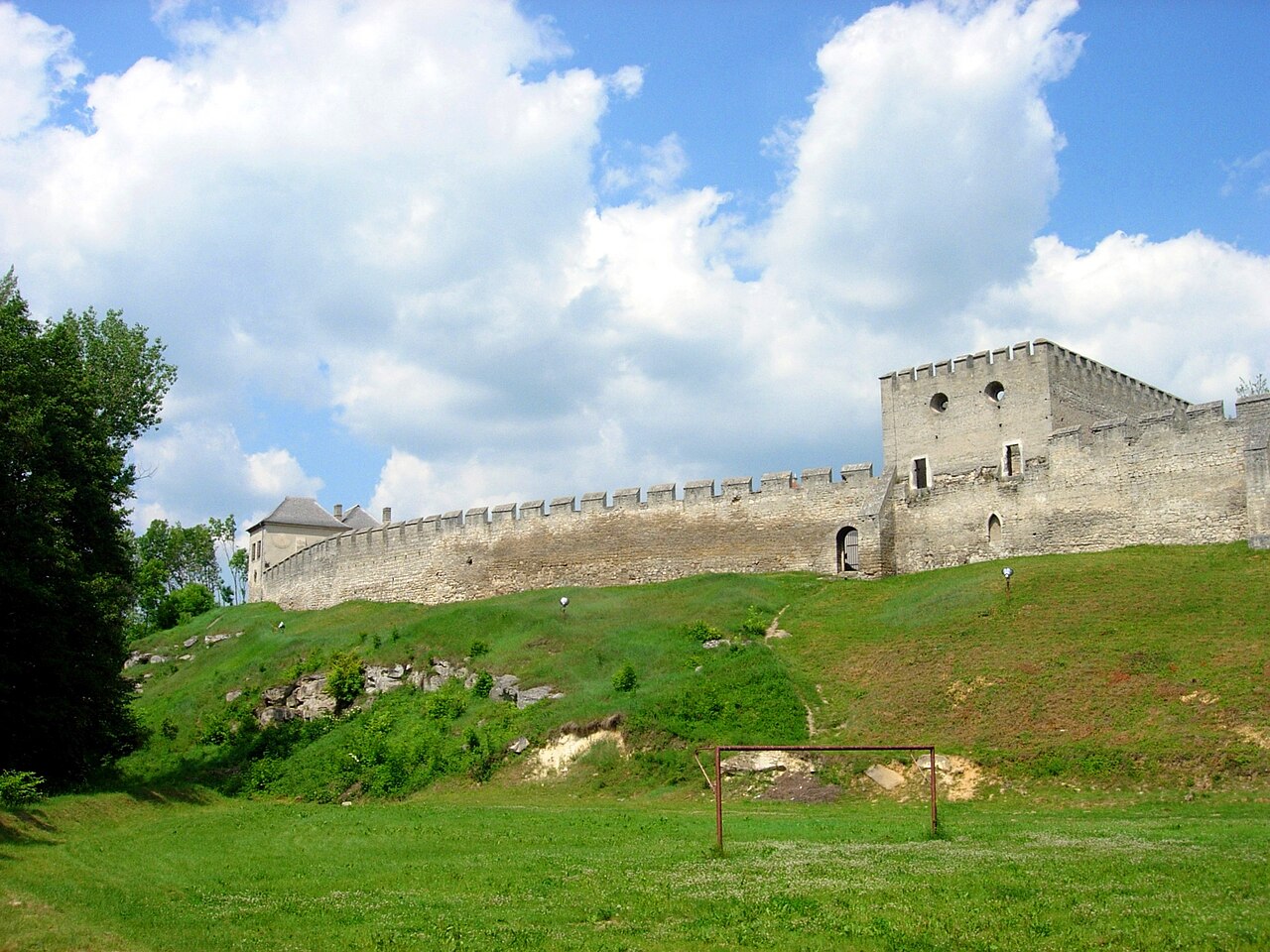
The castle's location was carefully chosen on a lessive plateau, which was artificially separated by a deep moat to form a promontory with steep slopes surrounded by a stream. This natural defense was enhanced by the castle's irregular oval plan, which conformed closely to the topography of the site. The fortress was divided into two main sections: the western part served agricultural and economic functions, while the eastern section, situated at a higher elevation, was residential. The entire complex was constructed primarily from locally quarried sandstone, a material abundantly available due to excavation works during the castle's construction.
Architectural design and construction phases
Archaeological excavations within the castle walls have revealed the foundations of four distinct buildings, indicating a complex and multifunctional layout. The construction proceeded in two main phases. The initial phase involved erecting the perimeter walls and a centrally positioned square tower that served both defensive and residential purposes. This tower was likely the castle's keep, a critical stronghold in times of siege.
During the subsequent phase, a three-room building was added along the northern wall, and another tower—possibly a stołp (a type of defensive tower)—was constructed in the eastern part of the castle. The main entrance was located on the southern side, adjacent to which a fourth building was erected to the east of the gate. An interesting defensive feature was the so-called "kurza stopka" or "chicken's foot," a projecting oriel supported by two buttresses housing a small chamber, which served as an active defense element.
Historical ownership and decline
After 1357, ownership of the castle transferred to the Kurozwęcki family, another prominent noble lineage in Poland. Historical records suggest that the castle was abandoned before 1435. The reasons for its decline are multifaceted but include significant structural issues caused by the geological conditions of the site. Built on a lessive substrate, the castle suffered from suffosion—a process where the soil gradually slides down steep slopes, undermining foundations. This led to the castle walls leaning and shifting, compromising the structural integrity of the fortress.
Archaeological evidence supports the hypothesis that the castle was deliberately vacated, as no iron artifacts were found in the excavations, implying that valuable items were removed. Following its abandonment, the castle became a quarry for local inhabitants who dismantled the stone walls down to the foundations. Additionally, treasure hunters extensively disturbed the site, further damaging its remains.
Current condition and archaeological significance
Today, rembów zamek Szumsko exists only as faint ruins. Visitors can observe the remnants of the walls and traces of cellars, offering a glimpse into the castle's former grandeur. Despite its ruined state, the site holds considerable archaeological value, providing insights into medieval construction techniques, noble residence layouts, and defensive strategies adapted to natural landscapes.
The castle's story is emblematic of many smaller medieval fortresses in Poland that played crucial roles in regional power dynamics but eventually succumbed to natural and human-induced decay. Preservation efforts focus on protecting the site from further degradation and promoting awareness of its historical importance.
Architectural features and defensive elements
The castle's irregular oval plan is a distinctive characteristic, reflecting a design philosophy that prioritized adaptation to the natural environment over rigid geometric forms. The division into a higher residential eastern section and a lower economic western section illustrates the multifunctional nature of such fortresses, combining defense with daily life and resource management.
The central square tower functioned as both a lookout and a last refuge during attacks, embodying the dual role of medieval keeps. The presence of the kurza stopka or oriel window is notable as an active defense feature, allowing defenders to observe and attack assailants without exposing themselves. This architectural detail highlights the ingenuity of medieval military architecture in Poland.
Cultural and historical context
Rembów zamek Szumsko reflects the socio-political landscape of medieval Poland, where noble families like the Odrowąż and Kurozwęcki clans established fortified residences to assert their power and secure their domains. The castle's construction and eventual abandonment mirror broader trends in medieval fortification development, influenced by changing military technologies, economic shifts, and geological challenges.
Its mention in the "Liber beneficiorum" by Jan Długosz, a seminal 15th-century Polish chronicler, underscores its historical significance within the region. Although less renowned than larger castles, Szumsko offers valuable perspectives on the architectural and feudal history of Lesser Poland.
Frequently asked questions (FAQ)
- How do I get to Rembów zamek Szumsko?
- Rembów zamek Szumsko is located on a hilltop near the village of Rembów in the Świętokrzyskie Voivodeship of Poland. It can be accessed via local roads connecting Łagów and Raków. Visitors should prepare for a hike up the steep hill to reach the ruins.
- What is the historical significance of Rembów zamek Szumsko?
- The castle was founded by the Odrowąż family in the early 14th century and later owned by the Kurozwęcki family. It is mentioned in the 15th-century Liber beneficiorum by Jan Długosz, highlighting its role in regional medieval history.
- Can I visit the ruins of Rembów zamek Szumsko?
- Yes, the ruins are accessible to the public. However, as the site consists mainly of faint wall remnants and cellar traces, visitors should wear appropriate footwear and be cautious on uneven terrain.
- When was Rembów zamek Szumsko abandoned?
- Historical records indicate the castle was abandoned before 1435, likely due to structural issues caused by soil subsidence and suffosion affecting the foundations.
- Are there any notable architectural features at the castle?
- The castle featured an irregular oval plan adapted to the terrain, a central square defensive tower, a three-room northern building, and a unique defensive oriel known as the kurza stopka, showcasing medieval military ingenuity.
Information
Current owner
Municipality
Loading map...
Visitor reviews
No reviews yet. Been here? Write the first review and help other travelers!
Write the first reviewVisited this castle? Share your experience
Your review helps other travelers and adds first-hand knowledge to our encyclopedia.