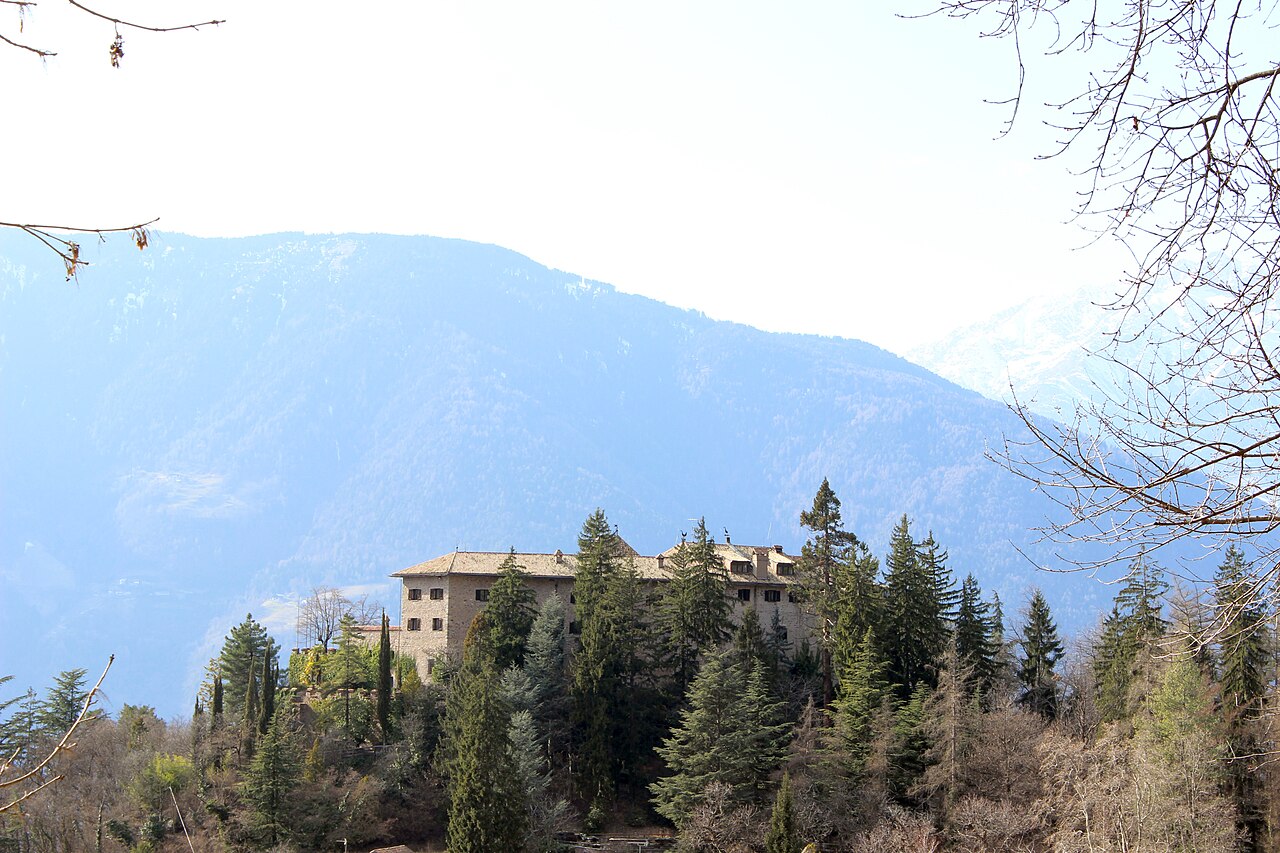
Reinegg Castle
Reinegg Castle, located in the municipality of Sarentino in northern Italy, is a notable example of a high medieval hill castle dating back to the mid-13th century. Constructed around 1250, it stands as a testament to the feudal power structures and territorial control characteristic of the High Middle Ages in the Tyrol region. The castle's architecture reflects the defensive needs and residential functions typical of its era, with features designed to withstand siege and assert noble authority.
Historical ownership and significance
The earliest recorded mention of Reinegg Castle dates to 1263, when it was owned by Countess Elisabeth von Eppan. This initial ownership situates the castle within the network of noble families that dominated the region during the 13th century. By 1273, the castle had passed into the hands of Count Meinhard II of Tyrol, a significant figure who expanded his influence across the Tyrolean lands. This transfer underscores the castle's strategic and political importance during a period marked by territorial consolidation.
Over subsequent centuries, the castle's fiefs were granted to various noble families, reflecting the common medieval practice of feudal tenure and vassalage. This pattern of ownership highlights the castle's role as a center of local administration and control.
In 1635, ownership shifted from noble hands to that of David Wagner, a merchant from Bolzano. This transition from feudal nobility to bourgeois ownership illustrates broader socio-economic changes in the region during the early modern period. The Wagner family was ennobled in 1861 as the Counts of Sarthein, maintaining possession of the castle until 1936, when it was sold outside the family.
Architectural features and layout
While detailed architectural records of Reinegg Castle are limited due to its private ownership and restricted access, the castle is classified as a hill castle, typically situated on elevated terrain to maximize defensive advantages. Castles of this type often include stone curtain walls, towers for surveillance and defense, and a central keep or donjon serving as the last refuge.
The castle's construction around the mid-13th century places it in the High Medieval period, a time when fortifications evolved to counter advances in siege technology. Architectural elements likely include thick masonry walls, narrow arrow slits, and possibly a moat or natural defensive features such as steep slopes.
Given the castle's long history and changes in ownership, modifications and renovations over the centuries are probable, adapting the structure for residential comfort or changing military needs. However, specific details about such alterations remain undocumented publicly.
Current status and accessibility
Reinegg Castle remains in private ownership and is not open to the public. Its condition is generally described as partially preserved, indicating that while significant portions of the structure survive, it may not be fully intact or restored. The lack of public access limits detailed study and tourism but also helps preserve the site's historical fabric.
Cultural and regional context
The castle is situated in the South Tyrol region, an area rich in medieval history and dotted with numerous castles that narrate the complex feudal and political history of the Alps. Reinegg Castle contributes to this heritage as part of the network of fortifications that controlled trade routes and local territories.
Its association with notable figures such as Count Meinhard II of Tyrol connects the castle to broader historical narratives of Tyrolean state formation and noble lineage. The transition to merchant ownership in the 17th century also reflects the evolving social landscape of the region.
Visiting and research opportunities
Due to its private status, Reinegg Castle is not accessible for public tours or events. Researchers interested in the castle typically rely on archival documents and regional historical studies. The castle's setting in Sarentino offers scenic views and proximity to other historic sites in South Tyrol, making the area attractive for cultural tourism despite limited access to the castle itself.
Frequently asked questions (FAQ)
- Is Reinegg Castle open to the public for visits?
- Reinegg Castle is privately owned and not open to the public, so visits inside the castle are not possible.
- When was Reinegg Castle originally built?
- Reinegg Castle was constructed around the mid-13th century, approximately in 1250, during the High Medieval period.
- Who were some of the notable owners of Reinegg Castle?
- Notable owners include Countess Elisabeth von Eppan, Count Meinhard II of Tyrol, and later the Wagner family, who were elevated to Counts of Sarthein.
- What type of castle is Reinegg Castle?
- Reinegg Castle is classified as a hill castle, built on elevated terrain for defensive advantage.
- Where is Reinegg Castle located?
- Reinegg Castle is located in Sarentino, in the South Tyrol region of northern Italy.
Information
Current owner
Private owner
Loading map...
Visitor reviews
No reviews yet. Been here? Write the first review and help other travelers!
Write the first reviewVisited this castle? Share your experience
Your review helps other travelers and adds first-hand knowledge to our encyclopedia.