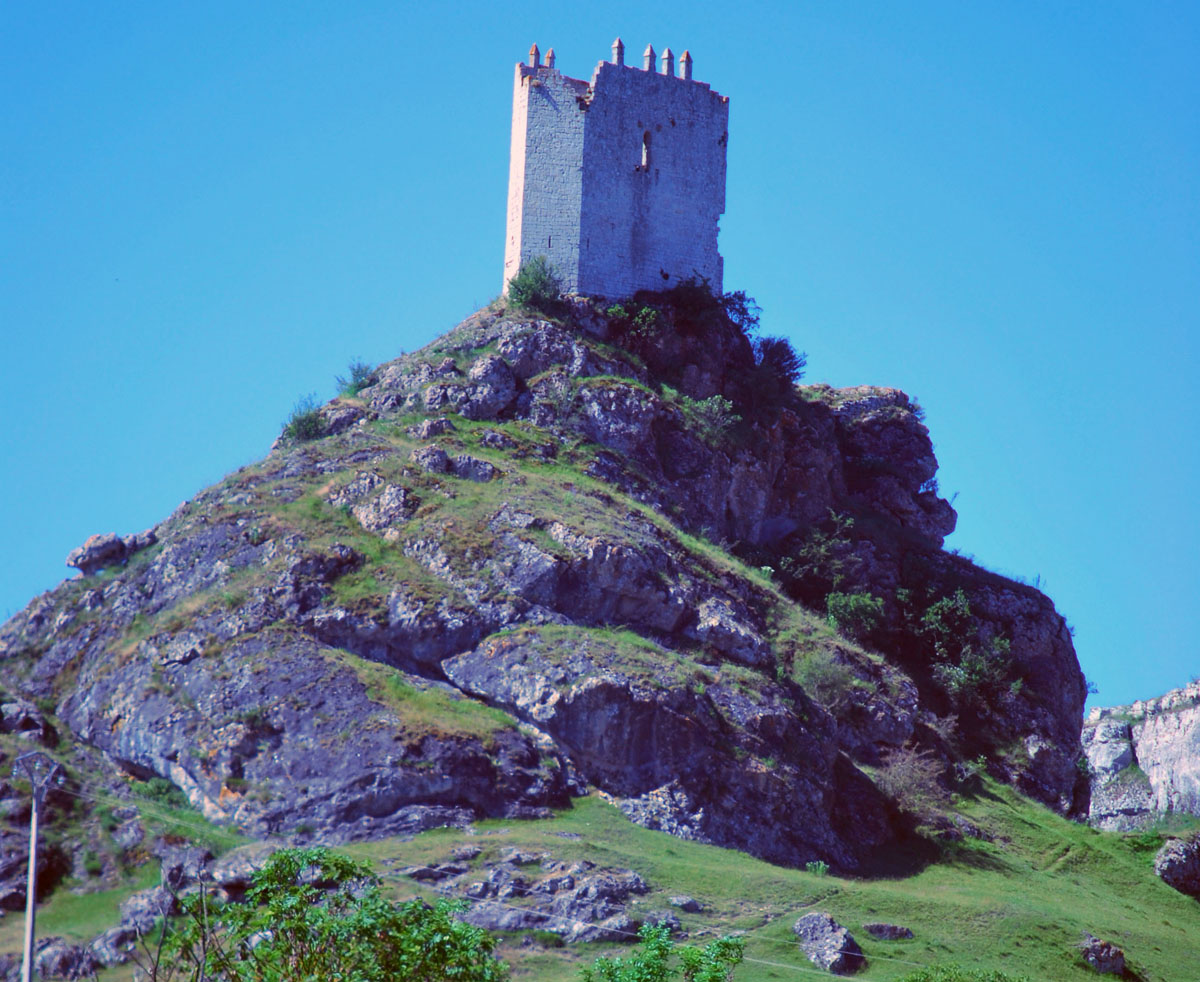
Ermitage rupestre de Campo de Ebro
The Ermitage rupestre de Campo de Ebro is a remarkable example of early medieval rock-cut architecture located in the municipality of Valderredible, in northern Spain. This hermitage stands as a testament to the religious and cultural transformations that took place on the Iberian Peninsula during the Early Middle Ages. Originally carved into the natural rock between the 6th and 10th centuries, the site reflects the transition from pagan practices to Christianity under the influence of the Visigoths, a Germanic people who ruled much of Spain during this period.
Historical context and origins
The hermitage likely began as a pagan sanctuary, carved directly from the rock to serve early religious purposes tied to pre-Christian beliefs. With the Christianization of the region in the 6th century, the Visigoths transformed the site into a small church dedicated to Christian worship, marking a significant cultural shift. This change aligns with broader historical patterns of religious conversion and the establishment of Christian institutions across the Iberian Peninsula during the Visigothic era.
Architectural features and layout
The rock-cut hermitage is characterized by its simplicity and functional design. It consists of a single rectangular nave ending in a quadrangular apse, all carved out of the natural stone bedrock. This technique of rock-cut architecture required considerable skill and knowledge of the stone's properties. The absence of additional construction materials emphasizes the ingenuity of its creators in utilizing the existing landscape to form a sacred space.
The layout supports early Christian liturgical functions, with the nave serving as the main assembly area for worshippers and the apse likely housing the altar. Despite its modest size and lack of elaborate decoration or inscriptions, the hermitage's design is a clear reflection of early medieval ecclesiastical architecture adapted to local conditions.
Later uses and preservation
In the early 20th century, the hermitage was repurposed as a school to serve the educational needs of the local community, demonstrating its continued importance beyond its original religious function. During the Spanish Civil War in the 1930s, the site provided refuge to nearby residents, highlighting its role as a place of safety during turbulent times.
The hermitage was officially recognized in 1985 as a Bien de Interés Cultural, a designation that underscores its cultural and historical significance within Spain. Preservation efforts have focused on maintaining the integrity of the rock-cut structure, ensuring that its form and historical value endure for future generations.
Significance and cultural heritage
The Ermitage rupestre de Campo de Ebro offers valuable insight into the religious practices and architectural methods of the Visigothic period in Spain. Its rock-cut design is a rare and evocative example of how early medieval communities adapted their spiritual spaces to the natural environment. The hermitage's survival through centuries of change, including shifts in religious practice, educational use, and wartime refuge, marks it as an important cultural landmark.
Though modest and lacking in ornate features, the hermitage's enduring presence provides a tangible connection to the early medieval history of the region. It stands as a unique witness to the Christianization process and the resilience of local communities in preserving their heritage through diverse historical phases.
Frequently asked questions (FAQ)
- What is the historical significance of Ermitage rupestre de Campo de Ebro?
- The hermitage reflects the transition from paganism to Christianity during the Visigothic rule in early medieval Spain, carved between the 6th and 10th centuries.
- Can I visit the Ermitage rupestre de Campo de Ebro?
- While specific visiting hours are not widely published, the site is accessible to the public as it is recognized as a cultural heritage monument in Spain.
- What architectural style characterizes the hermitage?
- The hermitage features rock-cut architecture typical of early medieval Christian sites, with a rectangular nave and quadrangular apse carved directly into the rock.
- Why was the hermitage used as a school in the early 20th century?
- The hermitage was adapted to serve the local community's educational needs, reflecting its continued functional importance beyond religious use.
- Is the hermitage well preserved?
- Yes, the rock-cut structure remains well preserved, maintaining its original form and historical features despite centuries of use and adaptation.
Information
Loading map...
Visitor reviews
No reviews yet. Been here? Write the first review and help other travelers!
Write the first reviewVisited this castle? Share your experience
Your review helps other travelers and adds first-hand knowledge to our encyclopedia.