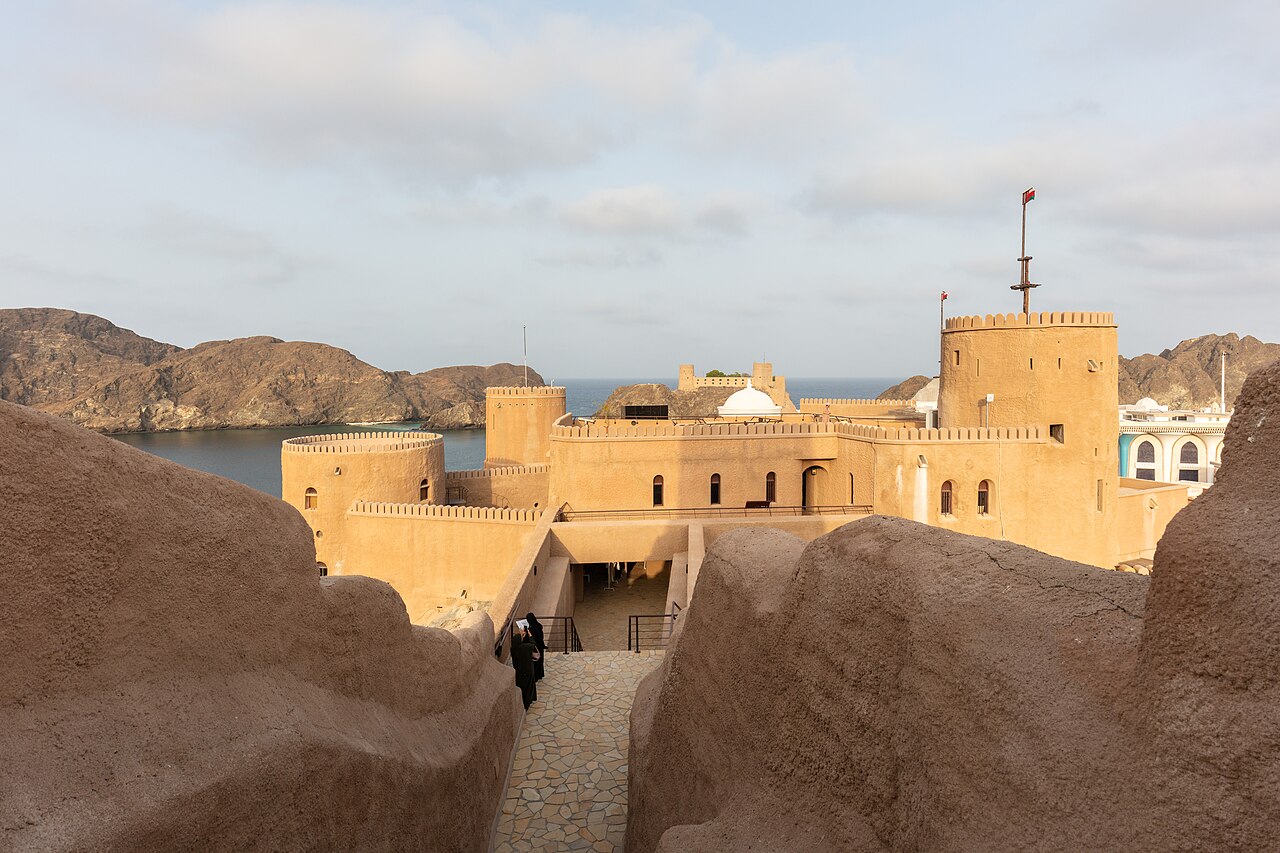
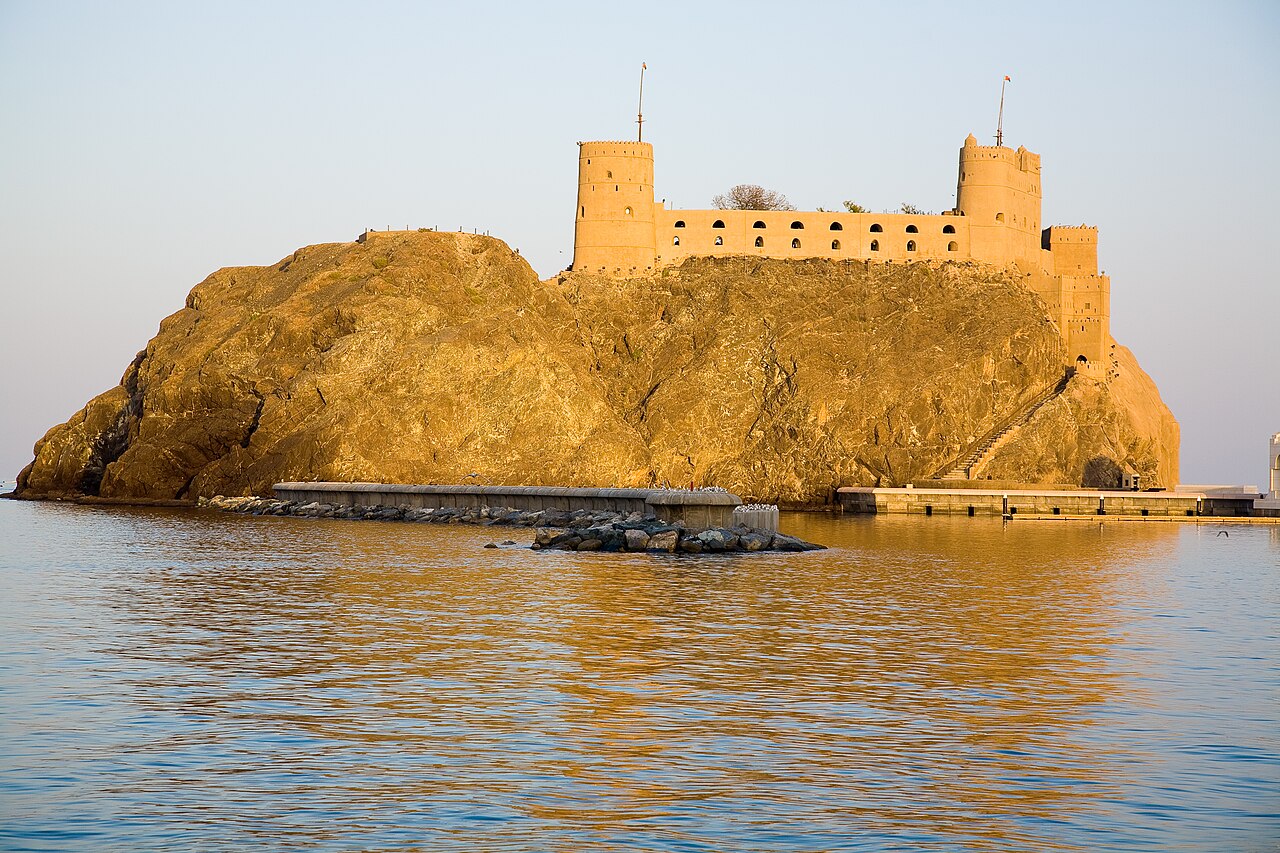
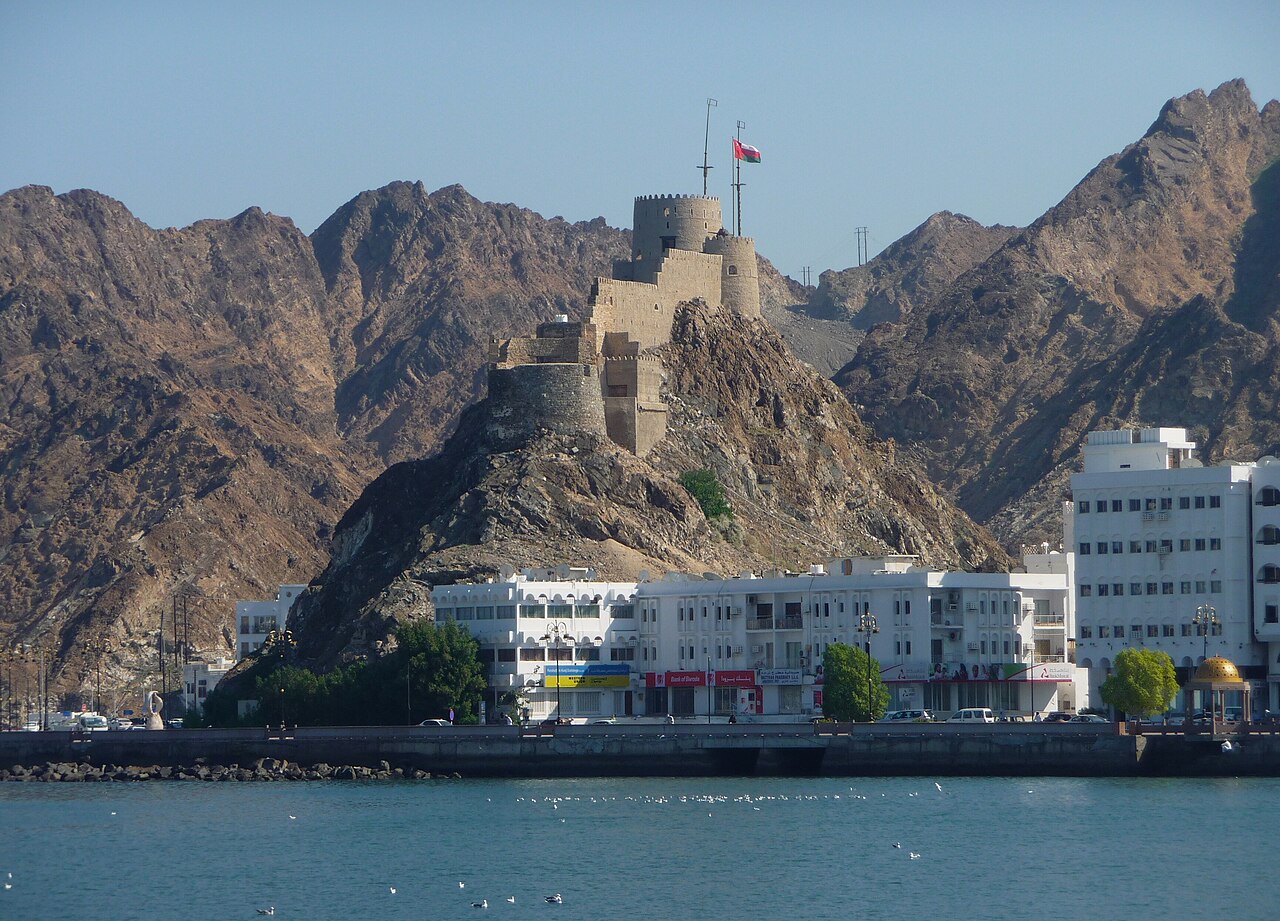
Rawia Fort is a historic fortification located in the heart of Muscat, the capital city of Oman. Positioned within the old inner city center, this fort represents a modest but significant example of traditional defensive architecture in the region. Although the fort's detailed history remains largely undocumented, its structural features offer insights into its original defensive purposes and residential use.
Architectural features and layout
The fort is characterized by a square structure, a common design choice for many small forts and fortified residences in Oman. One of the most distinctive elements of Rawia Fort is the presence of a well adjacent to the building, which would have been essential for sustaining its occupants during sieges or periods of isolation.
The entrance to the fort was originally located on the upper floor of the east wall, accessed through a door that was protected by a murder hole. This defensive feature allowed defenders to repel attackers attempting to breach the door by dropping projectiles or boiling substances. The fact that the entrance is elevated and the ground floor appears to have been filled in suggests a design focused on security and controlled access.
Above the entrance level, there is an additional floor that covers only part of the building. This upper level contains gun slits, narrow openings designed for firing weapons while offering protection to the defenders. The combination of these defensive features indicates that Rawia Fort was built to withstand attacks, although on a smaller scale compared to larger regional fortresses.
Function and historical context
Rawia Fort's architecture suggests it functioned more as a defendable residence rather than a major military fortress. Its compact size and design elements imply it was intended for local defense and safeguarding a small group of inhabitants, possibly a family or local leader.
The fort's location within Muscat's old city center places it among other historic buildings that collectively reflect the city's strategic importance as a port and trading hub on the Arabian Peninsula. While specific historical records about Rawia Fort's construction date and its builders are not available, the fort likely dates back to a period when Muscat was fortified to protect against maritime and inland threats.
Current condition and visitor information
Today, Rawia Fort remains a visible landmark in a quiet neighborhood of Muscat. Although the exterior of the fort is accessible to visitors, the interior cannot be entered, limiting direct exploration of its internal spaces. The fort's preservation state is partially preserved, with some structural elements like the filled-in ground floor indicating changes over time.
Visitors to Rawia Fort can appreciate its traditional defensive architecture and its role in Muscat's urban fabric. The fort provides a glimpse into the defensive strategies employed in Omani coastal cities and contributes to the cultural heritage of the region.
Significance within Oman's fortification heritage
Oman is renowned for its numerous forts and castles, which served as military strongholds, administrative centers, and residences for ruling families. Rawia Fort, while smaller and less famous than some of the grander forts like Jalali Fort or Mirani Fort, exemplifies the widespread use of fortified structures throughout the city to ensure security and control.
The fort's architectural features, such as the murder hole and gun slits, reflect common defensive innovations in the region. These elements highlight the adaptation of fort design to local needs and threats, incorporating both traditional and more modern defensive techniques.
Frequently asked questions (FAQ)
- How do I get to Rawia Fort?
- Rawia Fort is located in Muscat, Oman, and can be accessed by car or public transportation. If you are driving, there are signposts that guide you to the fort, and ample parking is available nearby.
- What is the historical significance of Rawia Fort?
- Rawia Fort dates back to the 17th century and played a crucial role in protecting the region from invasions. It is a symbol of Oman's rich history and showcases the architectural styles of the period.
- When was Rawia Fort built?
- Rawia Fort was constructed in the late 1600s, during a time of significant political and military activity in Oman. Its establishment was vital for the defense of the coastal areas against potential threats.
- Can I take photographs inside Rawia Fort?
- Yes, visitors are welcome to take photographs inside Rawia Fort, but it's advisable to be respectful of other guests and the site's historical significance. Be sure to check for any specific photography restrictions that may apply.
- Why is Rawia Fort an important architectural site?
- Rawia Fort showcases traditional Omani architectural techniques, including its massive stone walls and strategic design. The fort's layout and construction methods reflect the ingenuity and craftsmanship of the time.
- Is it possible to visit Rawia Fort year-round?
- Yes, Rawia Fort is open for visitors throughout the year, although the best time to visit is during the cooler months from October to April. This period allows for a more comfortable exploration of the fort and its surroundings.
- What are the opening hours of Rawia Fort?
- Rawia Fort is typically open from 9:00 AM to 5:00 PM daily, though hours may vary on public holidays. It's a good idea to check the official website or local sources for any updates before your visit.
- What are the ticket prices for visiting Rawia Fort?
- Entry to Rawia Fort is usually free, making it an accessible destination for all visitors. However, there may be guided tours available for a fee, which can enhance your experience by providing deeper insights into the fort's history.
- Are there any nearby attractions to visit after Rawia Fort?
- Yes, after exploring Rawia Fort, visitors can enjoy nearby attractions such as the Sultan Qaboos Grand Mosque and Mutrah Souq. These sites offer a chance to experience Oman's culture and heritage further.
Loading map...
Visitor reviews
No reviews yet. Been here? Write the first review and help other travelers!
Write the first reviewVisited this castle? Share your experience
Your review helps other travelers and adds first-hand knowledge to our encyclopedia.