Fort Al-Mirani
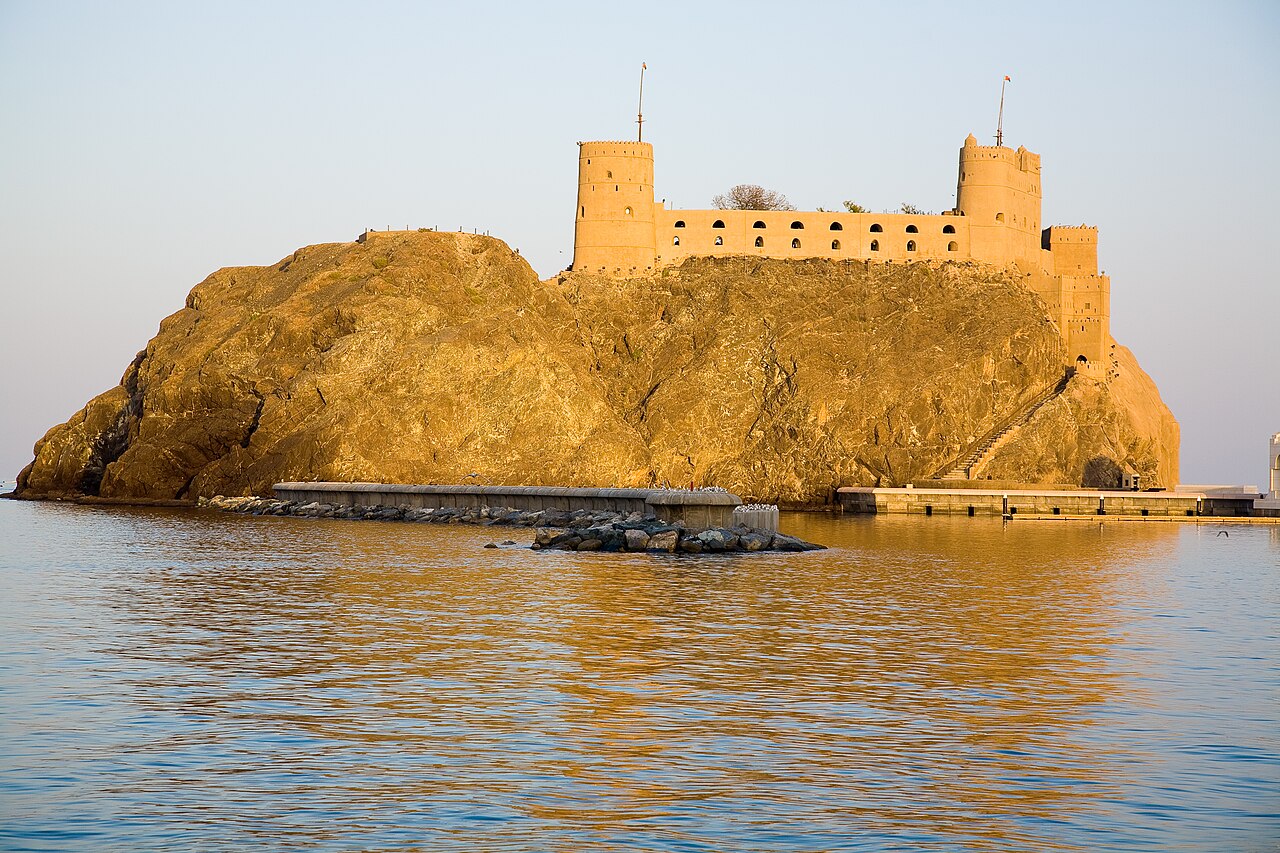
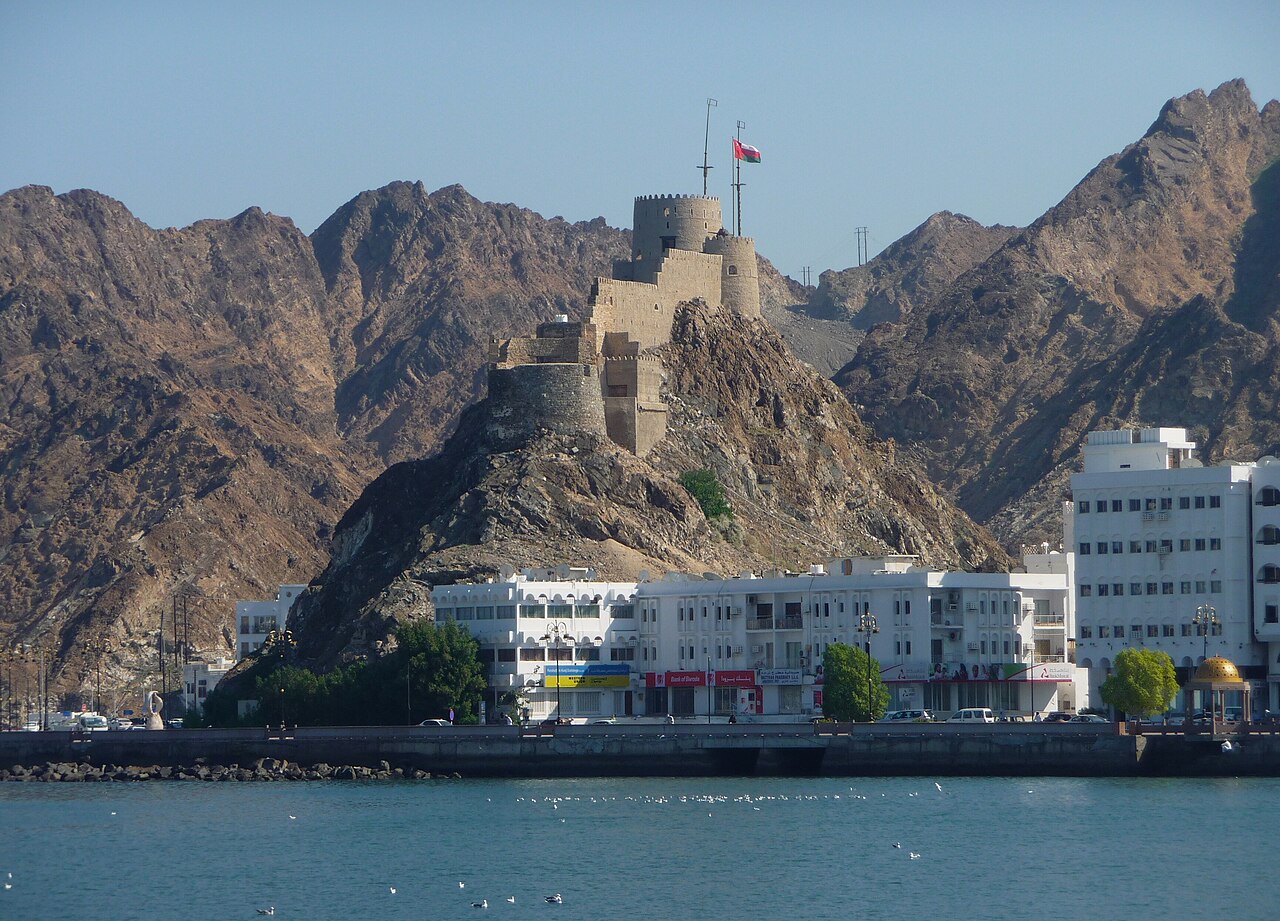
Fort Al-Mirani (Arabic: قلعة الميراني) is a historic bastioned fortress situated strategically in the harbor of Old Muscat, Oman. This fort holds a significant place in Oman's military history as it was one of the earliest fortifications in the region to incorporate the use of cannons, marking a shift in defensive architecture and military technology in the Arabian Peninsula.
Historical background and strategic importance
The origins of Fort Al-Mirani predate the arrival of the Portuguese in Oman, indicating its importance as a defensive structure guarding the vital maritime gateway to Muscat. The fort was extensively rebuilt by the Portuguese in 1587 during their period of control over the coastal areas of Oman. This reconstruction was part of a broader Portuguese effort to fortify their holdings in the Indian Ocean and protect their trade routes against rival powers.
The fort's location on the harbor allowed it to control access to the port and defend the city from naval attacks. Its presence contributed to Muscat's resilience against sieges and invasions, playing a crucial role in the defense of the city throughout the early modern period.
Architectural features and design
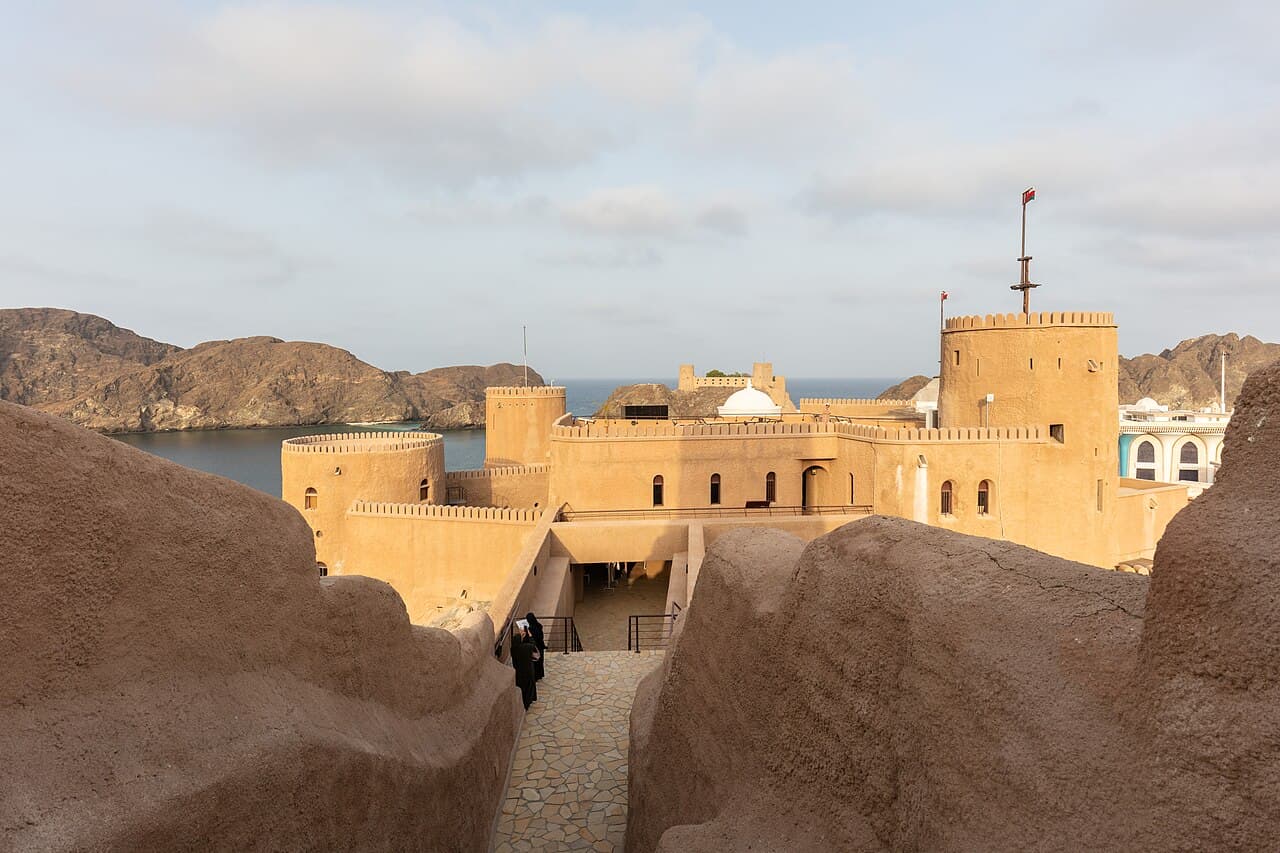
Fort Al-Mirani exemplifies the characteristics of a bastioned fortress, a style that emerged in response to the increasing use of artillery in warfare. The fort's design includes thick, angled bastions projecting from the main walls, allowing defenders to cover adjacent walls with cannon fire and eliminate blind spots.
The fortress is constructed primarily from local stone and mortar, with robust walls designed to withstand cannon bombardment. Its layout is compact but effective, with defensive walls enclosing a central courtyard and various chambers used for storage, garrison quarters, and command posts.
The fort's most notable feature is its embrasures and gun ports designed specifically for cannons, reflecting the adaptation of traditional fortifications to the era of gunpowder weaponry. This made Fort Al-Mirani one of the first forts in Oman to integrate artillery into its defensive system.
The Portuguese influence and legacy
The Portuguese occupation of Muscat in the 16th century left a lasting architectural and military legacy, with Fort Al-Mirani standing as a prominent example. The rebuilding of the fort in 1587 was part of a larger network of fortifications established by the Portuguese along the Arabian coast, including the nearby Fort Al-Jalali.
The Portuguese enhancements to Fort Al-Mirani included strengthening the walls, adding bastions, and installing artillery positions. These improvements reflected contemporary European military engineering principles and helped maintain Portuguese dominance in the region for several decades.
Later history and current status
After the Portuguese period, Fort Al-Mirani continued to serve as a key defensive structure for Muscat under Omani rule. It witnessed various conflicts and changes in control but retained its military significance well into the modern era.
Today, Fort Al-Mirani is recognized as a cultural heritage site, symbolizing Oman's rich history of maritime defense and interaction with European powers. The fort remains well-preserved, allowing visitors to appreciate its architectural features and historical context.
Visiting Fort Al-Mirani
Fort Al-Mirani is accessible to visitors interested in exploring Oman's historical fortifications and maritime heritage. Its location in Old Muscat offers scenic views of the harbor and the city, making it a popular destination for tourists and history enthusiasts alike.
The fort's robust construction and distinctive bastioned design provide insight into the evolution of military architecture in Oman and the broader Arabian Peninsula during the transition from medieval to early modern warfare.
Frequently asked questions (FAQ)
- When was Fort Al-Mirani built and by whom?
- Fort Al-Mirani was rebuilt by the Portuguese in 1587 on the site of an earlier fortification, marking a significant enhancement in Oman's coastal defenses.
- What architectural features distinguish Fort Al-Mirani?
- The fort is a bastioned fortress featuring thick angled bastions, robust stone walls, and embrasures designed for cannon use, reflecting military engineering advances of the late 16th century.
- Can visitors tour Fort Al-Mirani today?
- Yes, Fort Al-Mirani is open to visitors and offers a glimpse into Oman's military history and Portuguese colonial architecture, located in the historic harbor of Old Muscat.
- Why was Fort Al-Mirani important historically?
- Its strategic position guarding Muscat's harbor and its early adoption of cannon artillery made Fort Al-Mirani a key defensive structure during Portuguese and later Omani control.
- Is Fort Al-Mirani well preserved?
- The fort is well preserved and maintained by the Omani government, allowing visitors to explore its bastioned walls and historical features.
Photo gallery

Information
Current owner
Omani government
Loading map...
Visitor reviews
No reviews yet. Been here? Write the first review and help other travelers!
Write the first reviewVisited this castle? Share your experience
Your review helps other travelers and adds first-hand knowledge to our encyclopedia.