Raubschloss Ringethal
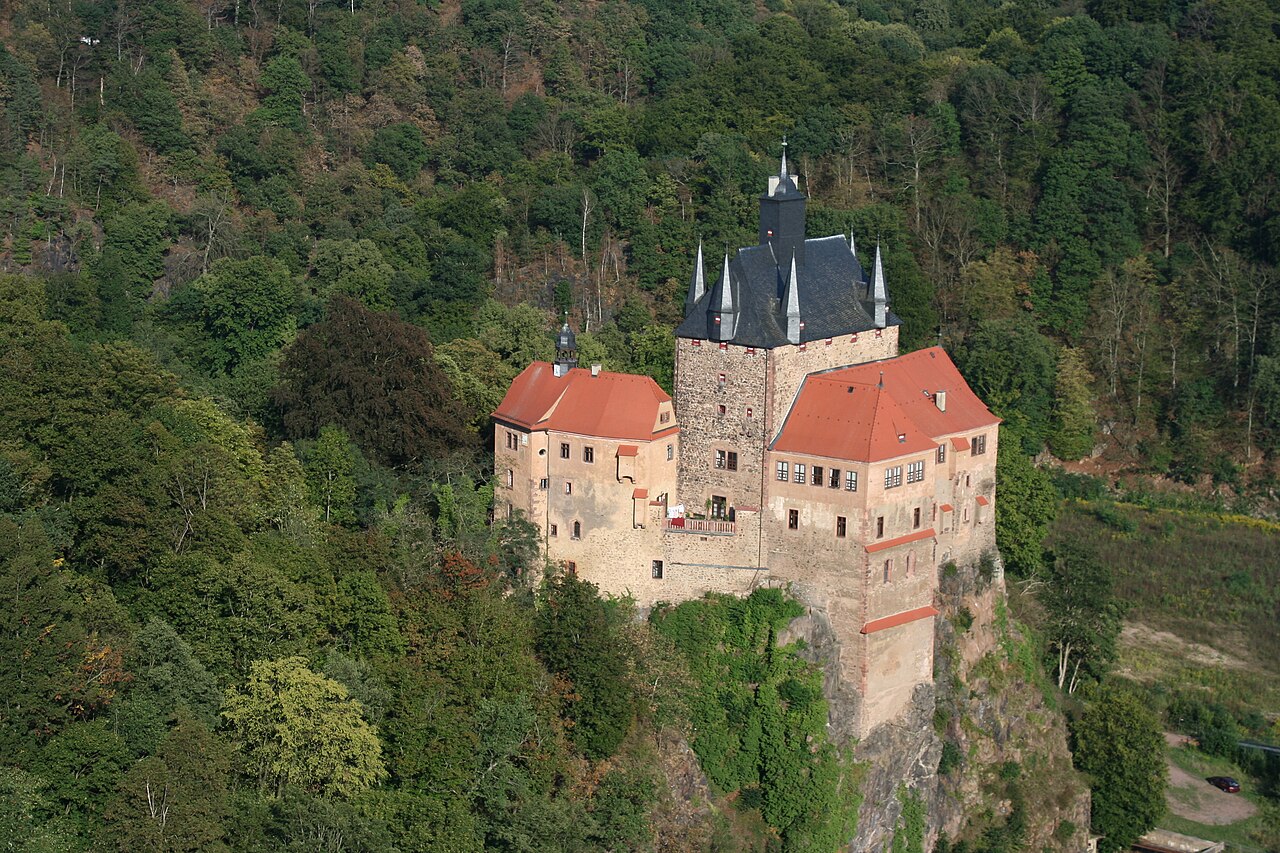
Raubschloss Ringethal stands as a remarkable example of a medieval hill castle strategically positioned on a rocky promontory overlooking the Zschopau River near the village of Ringethal, within the municipality of Mittweida, Germany. Constructed in the 13th century by local nobility, this castle functioned as a fortified seat of power, controlling the surrounding territories and serving as a symbol of noble authority throughout the Middle Ages.
Historical significance and noble lineage
The earliest documented mention of Raubschloss Ringethal dates back to 1221, when it was recorded as the residence of Ulrich von Ringenhagen. This points to its early role as a center of regional governance and aristocratic presence. The associated lordship originally centered on Arnsberg, also known as Einsiedelei, situated within a bend of the Zschopau River. However, by 1315, the noble family strategically relocated their residence to the more defensible site that became known as Raubschloss Ringethal. This move reflected shifting political and military considerations, emphasizing the castle's importance in regional power dynamics.
The lordship governed not only the castle itself but also the agricultural villages of Falkenhain, Hermsdorf, and Erlebach. These settlements formed part of the feudal domain overseen by the castle’s occupants, highlighting its role in local administration, economic control, and territorial oversight during the medieval period.
Throughout its history, the castle was also referred to as Burg Lewenhain, indicating variations in nomenclature over time. Although there is no record of significant military conflicts or religious affiliations tied to the castle, its function as a noble residence contributed substantially to the political landscape of the region.
Architectural features and defensive design
Raubschloss Ringethal exemplifies a spur castle — a fortress built on a rocky outcrop projecting from a hillside, which provided natural defensive advantages. The castle's core area is irregularly shaped, approximately 15 by 22 meters, and occupies an exposed rock plateau commanding extensive views of the surrounding landscape, particularly the river bend below.
The defensive system was sophisticated, combining natural and man-made elements. Encircling the core plateau is a deep section ditch around 7 to 8 meters wide and situated roughly 8 meters below the castle platform. This ditch served as a formidable obstacle to attackers, enhancing the castle's defensibility.
Complementing the ditch is an outer rampart approximately 5 meters wide, which extends from the west through the north to the east sides of the site. This earthwork fortification cleverly integrates with the natural rocky terrain, maximizing defensive efficacy. Additional smaller ditches and ramparts to the north and east provide layered protection, while the south and southeast sides benefit from steep natural slopes that functioned as inherent defensive barriers.
19th-century romanticized ruins
In 1804, a notable alteration occurred when artificial ruins were constructed atop the original castle platform. This intervention was part of a broader 19th-century trend to create romanticized ruins that enhanced the picturesque quality of historic sites. While this changed the appearance and fabric of the original remains, it also contributed to the site's cultural significance as a symbol of medieval heritage and romantic historicism.
Current state and visitor experience
Today, Raubschloss Ringethal exists as ruins that allow visitors to explore the extensive defensive earthworks and appreciate the commanding views of the Zschopau River loop below. The site retains its rugged charm and historical atmosphere, with informational signage providing context about its medieval origins and strategic importance.
The visible layers of ditches, ramparts, and the rocky plateau clearly convey the castle's original defensive design and its adaptation to the natural terrain. Visitors can gain insight into medieval fortification techniques and the lifestyle of regional nobility through the preserved features and interpretive materials available on site.
Frequently asked questions (FAQ)
- What is the historical significance of Raubschloss Ringethal?
- Raubschloss Ringethal, dating back to the 13th century, is a fascinating testament to medieval architecture and the feudal system in Germany. It played a crucial role in regional defense and local governance, making it a significant landmark in the history of Saxony.
- When was Raubschloss Ringethal built?
- The construction of Raubschloss Ringethal began in the early 1200s, with the castle evolving over the centuries to adapt to changing architectural styles and defensive needs. Its enduring structure reflects the rich history and craftsmanship of the medieval period.
- Can I visit Raubschloss Ringethal?
- Yes, visitors are welcome to explore Raubschloss Ringethal. Guided tours are available, providing insights into its history, architecture, and the surrounding area, making for an enriching experience.
- Is it possible to access Raubschloss Ringethal with public transportation?
- Yes, Raubschloss Ringethal is accessible via public transportation. Local buses run regularly to the nearest station, from which it is a short walk to the castle.
- What are the opening hours for Raubschloss Ringethal?
- Raubschloss Ringethal is typically open from April to October, Wednesday through Sunday, from 10 AM to 5 PM. It's advisable to check the official website for any seasonal variations in opening times.
- What are the ticket prices for visiting Raubschloss Ringethal?
- Tickets to Raubschloss Ringethal are reasonably priced, with discounts available for children, students, and seniors. A family ticket option is also available, making it an affordable outing for all.
- When is the best time to visit Raubschloss Ringethal?
- The best time to visit Raubschloss Ringethal is during the spring and early autumn when the weather is mild and the surrounding landscape is particularly beautiful. Special events and medieval reenactments often take place during these seasons, enhancing the visitor experience.
- What nearby attractions can I explore after visiting Raubschloss Ringethal?
- After visiting Raubschloss Ringethal, you can explore nearby attractions such as the charming town of Chemnitz, known for its museums and parks, or the picturesque Ore Mountains, perfect for hiking and nature walks. Each location offers unique experiences to complement your castle visit.
Information
Website
Visit websiteSources & official resources
Verify the information above using these authoritative references.
Loading map...
Visitor reviews
No reviews yet. Been here? Write the first review and help other travelers!
Write the first reviewVisited this castle? Share your experience
Your review helps other travelers and adds first-hand knowledge to our encyclopedia.