Ranigat
Ranigat, known locally as Rani Gatt (Pashto: راني ګټ, meaning "the queen of stones"), is a significant archaeological site located in the Buner District of Khyber Pakhtunkhwa, Pakistan. This site preserves the remnants of a 2,500-year-old Buddhist settlement that was part of the Gandhara civilization, an ancient cultural and artistic hub that flourished in the region during the 2nd century CE.
Situated atop a hill, Ranigat offers a commanding view of the surrounding landscape, emphasizing its strategic and religious importance in antiquity. The site is accessible today by a stairway constructed by Japanese experts, which facilitates visitor access to the elevated ruins. The extensive use of local mountain stone in its construction highlights the resourcefulness and architectural style of the Gandharan builders.
Historical significance and cultural context
Ranigat was a thriving center of Buddhist art, culture, and religious practice for several centuries. It stands as a testament to the spread of Buddhism across Central and South Asia during the early centuries CE. The Gandhara civilization, known for its unique fusion of Greek, Persian, and Indian artistic influences, produced some of the most exquisite Buddhist sculptures and architectural forms, many of which are reflected in the remains found at Ranigat.
The site is mentioned in local folklore and is celebrated through songs and stories, underscoring its enduring cultural impact on the region's heritage. These narratives often highlight the spiritual and historical importance of Ranigat as a sacred place.
Architectural features and layout
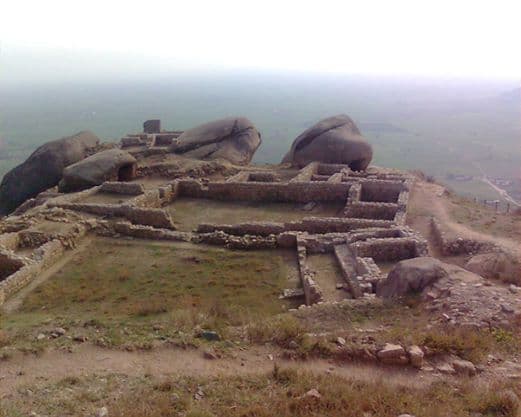
Ranigat encompasses an area of approximately 4 square kilometers (1.5 square miles), containing numerous ruins of Buddhist structures, including stupas, monastic cells, and other religious buildings. The stupas, which are dome-shaped structures used to house relics, are among the site's most prominent features. One notable element is a large rock erected at some distance from the main complex, believed to have been an object of worship or a symbolic marker in ancient times.
The settlement was carefully planned, with a layout that reflects both religious and practical considerations. The use of stone from nearby mountains for construction not only provided durability but also integrated the buildings harmoniously into the natural environment.
Stairways and access
The modern stairway built by Japanese specialists allows visitors to reach the hilltop ruins safely and comfortably. This access has facilitated archaeological study and tourism, helping to preserve and promote the site.
Preservation and current condition
Today, Ranigat is classified as archaeological ruins and remains in a state of ruins, with many structures partially preserved. The site requires ongoing conservation efforts to protect its fragile remains from natural decay and human impact.
Despite its condition, Ranigat continues to attract scholars, tourists, and devotees interested in the rich Buddhist heritage of the region. It serves as a valuable educational resource and a symbol of Pakistan's ancient cultural diversity.
Location and accessibility
Ranigat is located about 20 kilometers (12 miles) from Swabi and approximately 100 kilometers (62 miles) from both Peshawar and Islamabad. It is accessible via major highways, including the M1 and N35, making it a convenient destination for visitors traveling from major urban centers.
The site’s remote hilltop position offers visitors not only a glimpse into ancient Buddhist civilization but also panoramic views of the surrounding region.
Ranigat in the context of Gandhara civilization
The Gandhara civilization was a crossroads of cultural exchange, combining influences from the Hellenistic world, Persia, and the Indian subcontinent. Ranigat's ruins exemplify this blend, particularly in the artistic styles of its Buddhist monuments.
Archaeologists recognize Ranigat as a center where Buddhist art and culture were preserved and developed over centuries, contributing significantly to the religious and artistic history of the region.
Frequently asked questions (FAQ)
- How do I get to Ranigat archaeological site?
- Ranigat is accessible via the M1 and N35 highways. It is located about 20 km from Swabi and 100 km from Peshawar and Islamabad, making it reachable by car or local transport.
- What can I see at Ranigat?
- Visitors can explore the ruins of Buddhist stupas, monastic cells, and a large rock believed to have been used for worship. The site offers panoramic views from its hilltop location.
- When was Ranigat built?
- Ranigat dates back to the 2nd century CE and was part of the Gandhara civilization, a significant Buddhist cultural center.
- Why is Ranigat important historically?
- Ranigat represents a key site of Buddhist art and culture in the Gandhara civilization, reflecting the fusion of Greek, Persian, and Indian influences in its architecture and sculpture.
- Is Ranigat suitable for visitors with limited mobility?
- The site is located on a hilltop accessed by stairs, which may pose challenges for visitors with limited mobility. There are no currently available facilities to assist with access.
Photo gallery

Information
Loading map...
Visitor reviews
No reviews yet. Been here? Write the first review and help other travelers!
Write the first reviewVisited this castle? Share your experience
Your review helps other travelers and adds first-hand knowledge to our encyclopedia.