Attock Fort
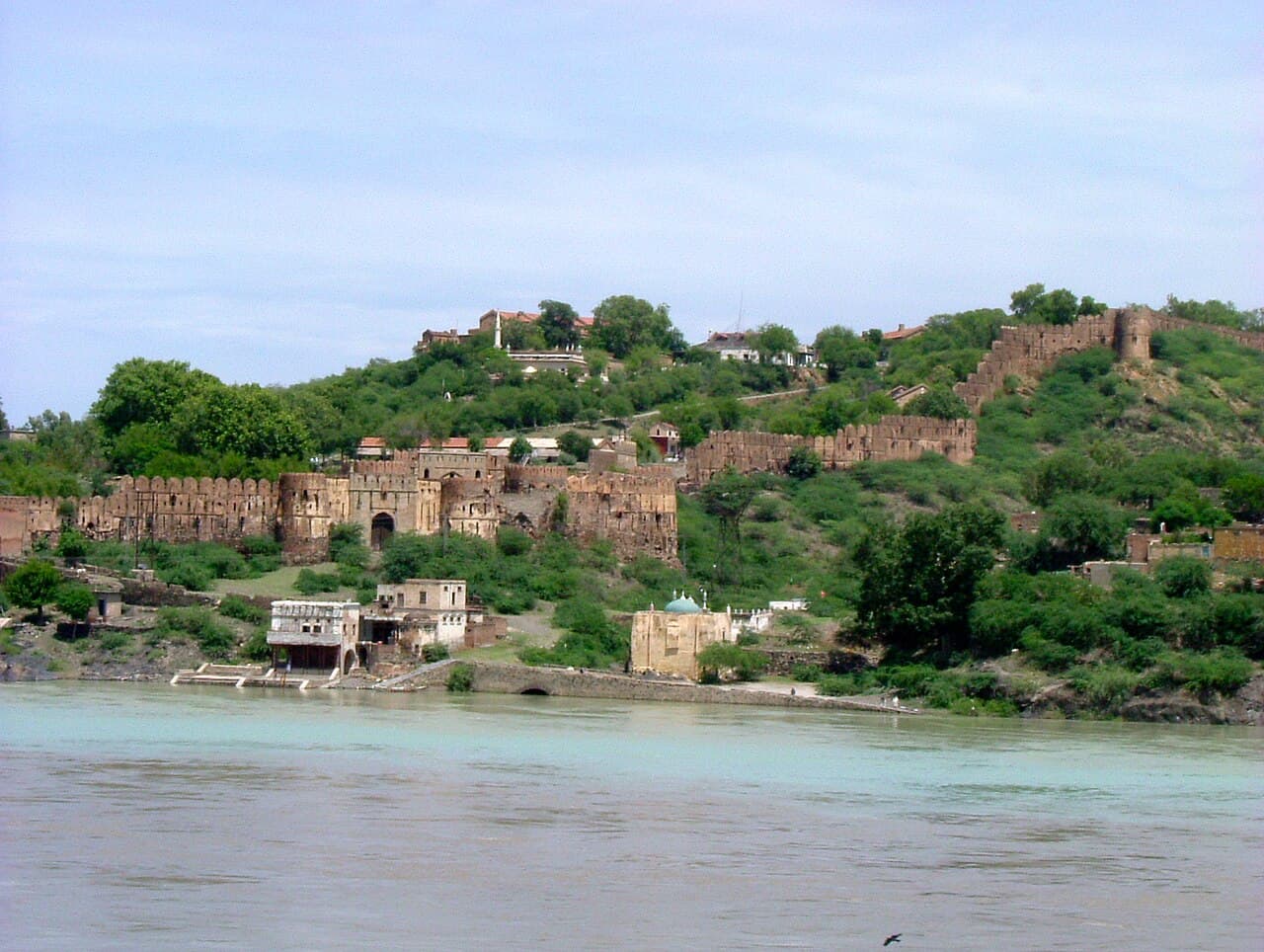
Attock Fort is a prominent 16th-century bastioned fortress located in Punjab, Pakistan, strategically positioned at Attock Khurd to oversee and protect the vital crossing of the River Indus. Constructed during the reign of the Mughal Emperor Akbar between 1581 and 1583, the fort was designed under the supervision of Khawaja Shamsuddin, a notable figure of the time. Its primary purpose was to secure the passage along the Indus River, a critical route for trade and military movements connecting the Indian subcontinent with Central Asia.
Historical context and strategic significance
The construction of Attock Fort came at a time when the Mughal Empire was consolidating its power across northern India. The fort's location on the banks of the Indus River was of immense strategic importance, as it controlled one of the few accessible crossing points over the river. This made it a key military and trade checkpoint, enabling the Mughals to monitor and regulate movement along this crucial corridor.
Throughout its history, Attock Fort witnessed various military engagements due to its strategic position. It served as a defensive stronghold against invasions from the northwest and played a role in the regional conflicts involving the Mughals, Afghans, Sikhs, and later the British colonial forces.
Architectural features and design
Attock Fort exemplifies the bastioned fortress design typical of the late 16th century, reflecting advancements in military architecture that responded to the increasing use of gunpowder artillery. The fort is built with massive stone walls featuring angular bastions at the corners, which allowed defenders to provide overlapping fields of fire and better withstand cannon attacks.
The walls are constructed from locally sourced stone and brick, with thick ramparts and parapets designed to absorb and deflect artillery fire. The fort's layout is roughly rectangular, enclosing a central courtyard and various internal structures such as barracks, armories, and administrative buildings.
Entrances to the fort are fortified with heavy gates and guard towers, incorporating defensive features like machicolations and arrow slits. The design also includes water management systems to maintain supplies during sieges, highlighting the fort's role as a self-sufficient military installation.
Defensive bastions and walls
The bastions at Attock Fort are prominent and robust, with thick walls and wide platforms for mounting cannons. Their angular shape was a deliberate architectural choice to eliminate blind spots and provide comprehensive defensive coverage. These bastions are connected by curtain walls that form the perimeter, creating a formidable barrier against attackers.
Internal structures and facilities
Inside the fort, the central courtyard served as a muster point for troops and a space for military drills. Surrounding this area are various chambers that housed soldiers, officers, and storage for weapons and provisions. The fort's design ensured functionality and defense, with narrow passages and fortified gates controlling access between sections.
Role in regional history and military campaigns
Over the centuries, Attock Fort played a pivotal role in the military history of the region. It was a key defensive site during Mughal campaigns to secure their northwestern frontier. Later, the fort was contested during the invasions by Afghan forces and saw action in the Sikh Empire's expansion under Maharaja Ranjit Singh.
During British colonial rule, the fort continued to serve as a military garrison, reflecting its enduring strategic importance. Its robust construction and location made it a valuable asset for controlling the surrounding region and maintaining order.
Preservation and current condition
Today, Attock Fort remains well preserved as a historical monument. Its massive walls and bastions stand largely intact, offering insight into the military architecture of the Mughal era. The fort is accessible to visitors interested in exploring its extensive ramparts and internal structures.
Efforts have been made to maintain the fort's structural integrity, and it serves as a cultural heritage site that reflects the complex history of Punjab and the broader region. Visitors can appreciate the fort's architectural features and its role in shaping the area's historical landscape.
Visiting Attock Fort
Attock Fort is open to the public, providing an opportunity to explore one of Pakistan's significant historical fortifications. Visitors can walk along the ramparts, examine the bastions, and learn about the fort's role in regional history through onsite information.
The fort's location near the Indus River offers scenic views, and the surrounding area includes other historical sites that complement a visit. It is advisable to check local visiting hours and any entry requirements before planning a trip.
Frequently asked questions about Attock Fort
- When was Attock Fort built? It was constructed between 1581 and 1583 during the reign of Mughal Emperor Akbar.
- What is the architectural style of Attock Fort? The fort features a bastioned fortress design typical of the late 16th century, incorporating defensive bastions and thick stone walls.
- Why was Attock Fort built? It was built to protect the passage of the Indus River and secure a strategic crossing point for military and trade purposes.
- Is Attock Fort open to visitors? Yes, the fort is accessible to the public and offers a glimpse into Mughal military architecture and history.
- Where is Attock Fort located? It is situated at Attock Khurd in Punjab, Pakistan, near the Indus River.
Frequently asked questions (FAQ)
- What is the historical significance of Attock Fort?
- Attock Fort holds great historical importance as it was built in the late 16th century by the Mughal Emperor Akbar to protect the northern borders of his empire. The fort has witnessed numerous battles and has served various rulers, playing a crucial role in the region's history.
- When was Attock Fort constructed?
- Attock Fort was constructed between 1581 and 1583. It was strategically built at the confluence of the Indus and Kabul rivers, showcasing the architectural prowess of the Mughal Empire during that period.
- How do I get to Attock Fort?
- Attock Fort is accessible by road from major cities like Islamabad and Peshawar, with regular public transport available. Visitors can also hire private vehicles or take taxis for a more comfortable journey.
- What are the opening hours for Attock Fort?
- Attock Fort is generally open to visitors from sunrise to sunset. It's advisable to check local guidelines or contact the local tourism office before planning your visit, as hours may vary due to seasonal changes.
- Can I take photographs inside Attock Fort?
- Yes, visitors are allowed to take photographs inside Attock Fort, capturing its stunning architecture and breathtaking views. However, it's important to be respectful of any designated areas where photography may be restricted.
- Is it possible to explore the fort on my own?
- Yes, guests can explore Attock Fort independently, although guided tours are available for those seeking in-depth historical insights. A self-guided visit allows you to appreciate the fort's beauty at your own pace.
- What is the best time to visit Attock Fort?
- The best time to visit Attock Fort is during the cooler months from October to March, when temperatures are more pleasant for outdoor exploration. Avoiding the peak summer months ensures a more comfortable experience.
- Are there any nearby attractions to visit?
- Yes, nearby attractions include the historic town of Attock, the Indus River, and the beautiful landscape surrounding the fort. Visitors can also explore other historical sites in the region to enhance their experience.
- What are the ticket prices for Attock Fort?
- Entry to Attock Fort is typically free, but it's recommended to check for any updates regarding fees or guided tour charges. Local tourism offices can provide the most current information on any costs associated with your visit.
Photo gallery

Information
Current owner
Government of Pakistan
Loading map...
Visitor reviews
No reviews yet. Been here? Write the first review and help other travelers!
Write the first reviewVisited this castle? Share your experience
Your review helps other travelers and adds first-hand knowledge to our encyclopedia.