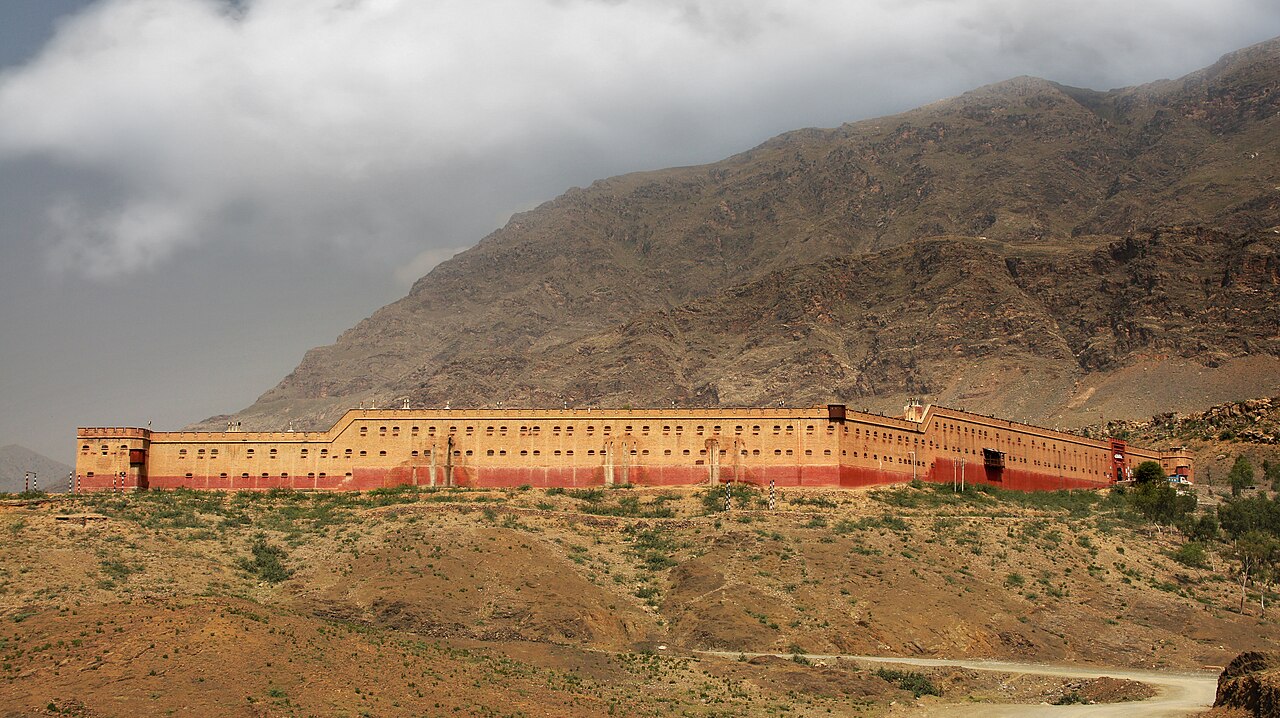
Bala Hisar Fort — Pakistan castle

Bala Hisar Fort

Bala hisar fort in peshawar, pakistan
Peshawar, Khyber Pakhtunkhwa, Pakistan
Early Medieval (5th–10th c.)
Well Preserved

Bala Hisar Fort is a significant bastioned fortress located in Peshawar, Khyber Pakhtunkhwa, Pakistan. Its origins trace back to the 7th century, with the earliest recorded mention by the Chinese Buddhist monk and explorer Xuanzang, who noted the presence of a fortification at this strategic site. The fort's elevated position overlooking the city made it a crucial military and administrative center throughout its long history.

Historical significance and evolution

The fort gained prominence during the rule of the Durrani Empire when it was chosen as the royal residence by Timur Shah Durrani in 1772. At that time, Peshawar was declared the capital of the empire, and Bala Hisar Fort served as the seat of power. The fortress was a symbol of Durrani authority and played a central role in regional governance and defense.

In 1823, the fort underwent significant changes when the Sikh Empire conquered Peshawar. The Sikhs destroyed parts of the original structure and reconstructed the fort, adapting it to their military needs. Later, following the British East India Company's annexation of the region in 1849, the fort's outer walls were rebuilt to strengthen its defenses and accommodate new military functions.

Architectural features and fortifications

Bala Hisar Fort is characterized by its bastioned walls, which are typical of fortifications designed to withstand artillery attacks. The fortress features massive stone walls with projecting bastions that provided vantage points for defenders to repel invaders. The layout includes defensive gates, ramparts, and internal courtyards that housed military personnel and administrative offices.

The fort's strategic location atop a hill allowed commanding views over Peshawar and the surrounding plains, making it a formidable defensive position. Over centuries, the fort's architecture reflects layers of modifications by different rulers, blending indigenous construction techniques with influences from Persian, Sikh, and British military engineering.

Role in regional history and military use

Throughout its history, Bala Hisar Fort has been a critical military stronghold controlling access to the Khyber Pass and the broader region. It witnessed numerous battles and sieges as various empires vied for control of this strategic frontier. The fort's military importance continued into the British colonial period and beyond.

Today, Bala Hisar Fort serves as the headquarters for Pakistan's Frontier Corps, a paramilitary force responsible for security in the region. Its continued use for military purposes underscores its enduring strategic value.

Cultural and heritage importance

Bala Hisar Fort is not only a military monument but also a cultural landmark reflecting the complex history of Peshawar and the broader Khyber Pakhtunkhwa region. It embodies the architectural and historical legacy of multiple empires and serves as a tangible connection to the area's past. The fortress attracts historians, archaeologists, and visitors interested in the region's rich heritage.

Preservation efforts have aimed to maintain the fort's structural integrity while recognizing its role as a living military installation. The fort stands as a testament to centuries of regional power struggles and architectural adaptation.

Frequently asked questions (FAQ)

What is the historical significance of Bala Hisar Fort?
Bala Hisar Fort is a historical fortress that dates back to the 16th century, originally built by the Mughal Empire. It has served as a strategic military base and royal residence throughout its history, witnessing numerous battles and changes in power in the region.
When was Bala Hisar Fort built?
Bala Hisar Fort was constructed in 1586 during the reign of the Mughal Emperor Akbar. It has undergone various renovations and expansions over the centuries, reflecting the architectural styles and military needs of different eras.
Can I visit Bala Hisar Fort?
Yes, Bala Hisar Fort is open to visitors who wish to explore its historical architecture and enjoy panoramic views of Peshawar. It's advisable to check local regulations and any potential restrictions before your visit.
What are the opening hours for Bala Hisar Fort?
Bala Hisar Fort typically opens daily from 9:00 AM to 5:00 PM. However, it's best to confirm these hours before your visit, as they may vary on public holidays or due to special events.
Is it possible to access Bala Hisar Fort with public transport?
Yes, Bala Hisar Fort is accessible via public transport options available in Peshawar, including buses and rickshaws. Visitors can also hire taxis for a more direct and comfortable journey to the fort.
What is the best time to visit Bala Hisar Fort?
The best time to visit Bala Hisar Fort is during the spring and autumn months, specifically from March to May and September to November. During these periods, the weather is mild, making it more enjoyable for exploration and sightseeing.
Are there any nearby attractions to Bala Hisar Fort?
Yes, nearby attractions include the Peshawar Museum, the historic Qissa Khwani Bazaar, and the beautiful Mahabat Khan Mosque. These sites offer a rich experience of the local culture and history, complementing your visit to Bala Hisar Fort.
What are the ticket prices for entering Bala Hisar Fort?
Ticket prices for Bala Hisar Fort are generally quite affordable, with nominal fees for locals and slightly higher rates for foreign tourists. It's advisable to carry cash, as card payments may not be accepted.
What architectural features can I expect to see at Bala Hisar Fort?
Bala Hisar Fort showcases a blend of Mughal and Pashto architectural styles, with impressive walls and bastions. Key features include ornate gateways, intricate stone carvings, and expansive courtyard areas that reflect its historical significance and military purpose.

Photo gallery

Bala Hisar Fort
Click to view

Photo by NoahOmarY•CC BY-SA 4.0

1 photo • Click any image to view in full screen

Information

Bastioned Fortress

Loading map...

Visitor reviews

No reviews yet. Been here? Write the first review and help other travelers!

Write the first review

Visited this castle? Share your experience

Your review helps other travelers and adds first-hand knowledge to our encyclopedia.
Write a review

(5/5)

0/2000 characters

Your review will be visible after admin approval

Nearby castles

17.7 km
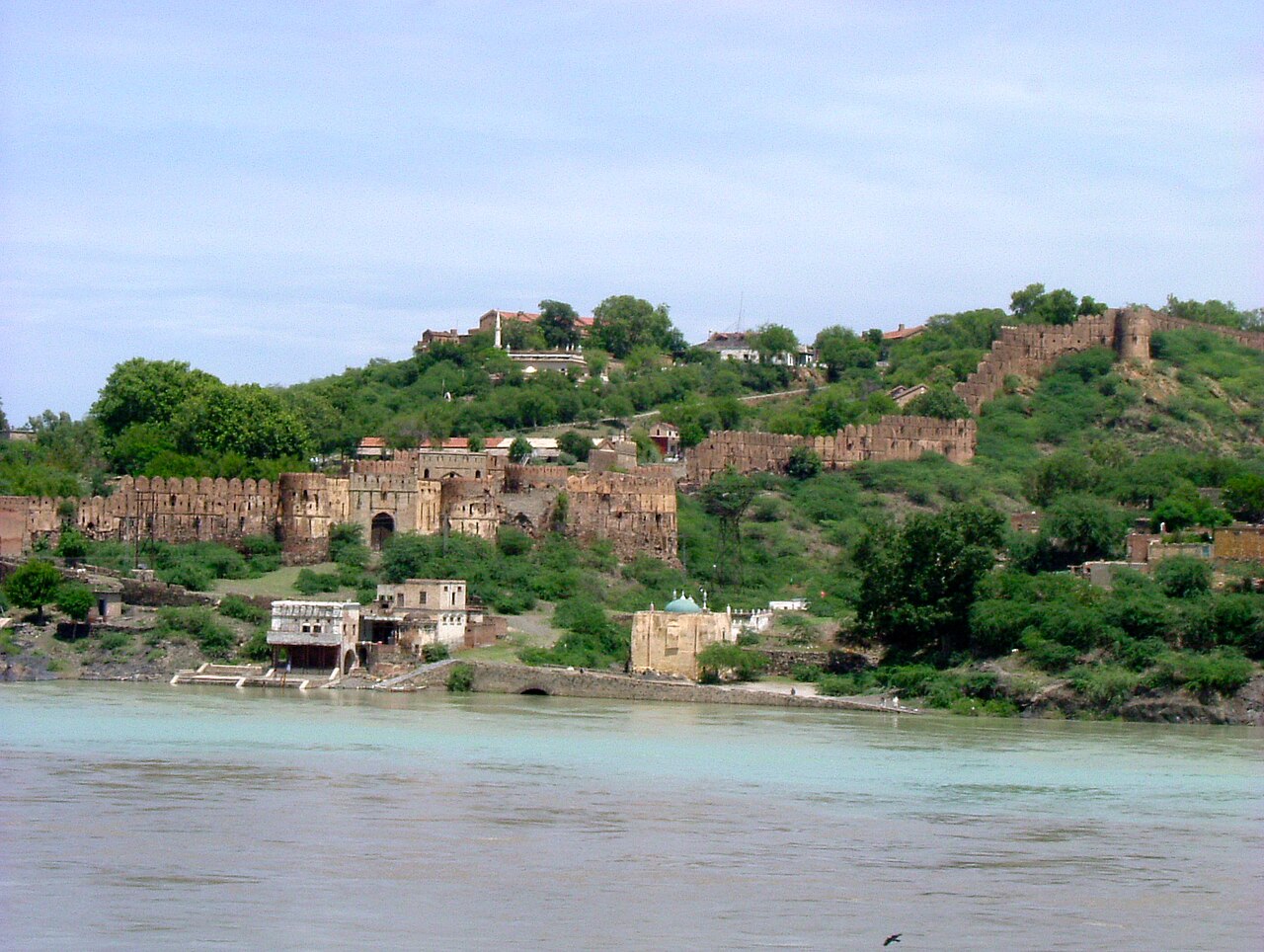
Jamrud Fort — Pakistan castle

Jamrud Fort

Jamrud, Pakistan

Jamrud Fort, also known as Fatehgarh Fort, is a significant 19th-century bastioned fortress located beside Bab-e-Khyber at the eastern entrance to the Khyber Pass from Peshawar, in the Khyber District of Khyber Pakhtunkhwa, Pakistan. This fort holds a strategic position controlling the historic mountain pass that connects Pakistan to Afghanistan, making it a critical military and trade gateway for centuries.Historical context and strategic importanceThe Khyber Pass has long been a vital corridor for invasions, trade, and cultural exchange between Central Asia and the Indian subcontinent. The construction of Jamrud Fort in the 19th century was part of efforts by the British colonial administration to secure this crucial frontier during the period of the Anglo-Afghan Wars. The fort's location allowed control over movements through the pass, serving both defensive and administrative purposes.Jamrud Fort was initially built by the Sikh Empire under the leadership of Hari Singh Nalwa in the early 19th century before coming under British control. The fort played a significant role during the First Anglo-Afghan War (1839-1842) and subsequent conflicts, acting as a military outpost and checkpoint.Architectural features and designJamrud Fort is classified as a bastioned fortress, featuring robust defensive walls with multiple bastions or projecting parts designed to provide overlapping fields of fire against attackers. The fort's design reflects military architectural principles of the period, emphasizing strong fortifications to withstand artillery assaults.The fort is constructed primarily of stone and mortar, with thick walls and a rectangular layout. It includes guard towers, gates, and internal structures such as barracks and storage facilities. Its proximity to the Khyber Pass necessitated a design that could sustain prolonged sieges and control the narrow mountain route effectively.Defensive structuresThe bastions at Jamrud Fort are positioned to cover all approaches, allowing defenders to repel attackers from multiple angles. The fort's walls are punctuated with embrasures for cannon and musket fire, illustrating the adaptation to contemporary military technology of the 19th century.Internal layoutInside the fort, there are quarters for soldiers and officers, as well as storage rooms for ammunition and supplies. The internal courtyard served as a muster area and facilitated communication within the garrison. The fort's design balances defensive needs with functional living spaces for its occupants.Role in regional history and conflictsJamrud Fort has witnessed several military engagements, particularly during the British colonial period. Its strategic location made it a focal point during the Anglo-Afghan Wars and subsequent tribal uprisings in the region. The fort's control was essential for maintaining British influence over the volatile frontier areas.Following the decline of British colonial power, the fort came under Pakistani administration and remains a symbol of the region's turbulent history. It continues to be a point of interest for historians and military scholars studying frontier defense and colonial military architecture.Current condition and preservationToday, Jamrud Fort is partially preserved and stands as a historical monument near the Khyber Pass. While some sections have suffered from weathering and neglect, efforts have been made to maintain its structural integrity. The fort attracts visitors interested in military history and the heritage of the Khyber region.Its location near the Bab-e-Khyber gateway also makes it accessible to tourists traveling through the area, providing insight into the military and cultural history of this important frontier.Visiting information and accessibilityVisitors to Jamrud Fort can explore the exterior fortifications and some internal areas, although access may be limited due to preservation concerns and security considerations. The fort is reachable from Peshawar and is often included in tours of the Khyber Pass region.While there are no formal visitor facilities inside the fort, local guides offer historical explanations and context. The best time to visit is during the cooler months to avoid the intense summer heat of the region.

Modern (19th–20th c.)
Details
26.7 km
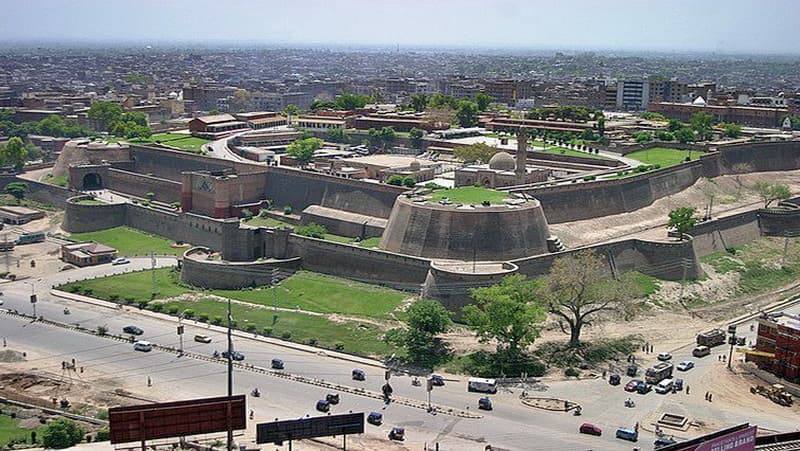
Shagai Fort — Pakistan castle

Shagai Fort

, Pakistan

Shagai Fort is a strategically located military fortress situated approximately 13 kilometres from Jamrud in the Khyber District of Khyber Pakhtunkhwa, Pakistan. Constructed in 1927 by the British colonial forces, the fort was established to assert control over the vital Khyber Pass, a historic mountain pass that has served as a critical trade and invasion route between Central Asia and the Indian subcontinent for centuries. Perched at an elevation of about 847 metres above sea level, the fort occupies a commanding position overlooking the rugged terrain of the Khyber Pass. Its location was chosen to enable effective monitoring and defense of this narrow mountain corridor, which has historically been a gateway for armies, traders, and travelers alike. Architectural design and military features Shagai Fort is classified as a bastioned fortress, a style characterized by angular bastions projecting from the main walls, designed to provide overlapping fields of fire and eliminate blind spots. This architectural approach reflects military engineering principles of the early 20th century, adapted to the challenging mountainous environment of the region. The fort's construction incorporates robust stone masonry walls, reinforced to withstand artillery fire and provide secure defense against potential attackers. The bastions are strategically positioned to cover the approaches to the fort and the surrounding passes, allowing defenders to repel any hostile forces attempting to traverse the area. Within the fort, there are various military installations including barracks, observation posts, and command centers. These facilities support the operational needs of the garrison stationed at Shagai Fort, which is currently manned by Pakistani military and paramilitary personnel. Historical context and strategic importance The establishment of Shagai Fort in the early 20th century was part of the British Empire's broader strategy to secure its northwestern frontier. The Khyber Pass has long been a contested and strategically vital route, linking the Indian subcontinent with Afghanistan and beyond. Control of this pass was essential for maintaining regional security and managing trade routes. Following the British withdrawal from the Indian subcontinent and the creation of Pakistan in 1947, Shagai Fort continued to serve as a key military installation. It functions as the headquarters of the Khyber Rifles, a paramilitary force with a historic role in guarding the Khyber Pass and maintaining stability in the region. Modern military role In recent decades, Shagai Fort has gained additional significance due to geopolitical developments in the region. It serves as a venue for trilateral flag meetings involving military officials from Pakistan, NATO, and Afghanistan. These meetings aim to coordinate security efforts, manage border issues, and facilitate cooperation in counterterrorism operations. The fort's continued use underscores its enduring strategic value as a military outpost overseeing one of South Asia's most important mountain passes. Geographical and cultural significance The Khyber Pass, where Shagai Fort is located, has been a vital corridor for centuries, shaping the cultural and economic exchanges between diverse peoples. The fort stands as a symbol of the region's complex history of conflict, trade, and diplomacy. Today, Shagai Fort not only functions as a military facility but also represents a tangible link to the colonial and post-colonial history of the area. Its presence highlights the ongoing importance of the Khyber Pass in regional security and international relations. Visiting Shagai Fort As an active military installation, Shagai Fort is generally not open to the public for tourism. However, its historical and strategic significance makes it a subject of interest for scholars and those studying military architecture and South Asian history.

Contemporary (20th–21st c.)
Details
63 km
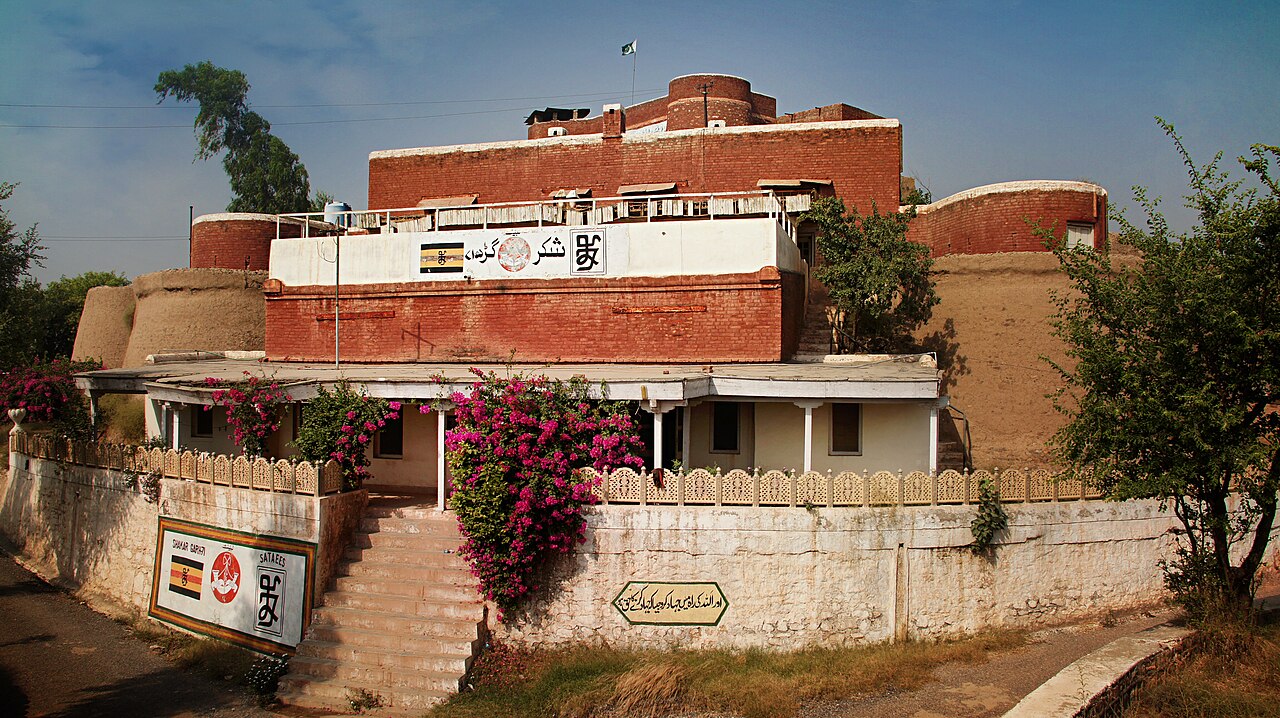
Attock Fort — Pakistan castle

Attock Fort

Attock, Pakistan

Attock Fort is a prominent 16th-century bastioned fortress located in Punjab, Pakistan, strategically positioned at Attock Khurd to oversee and protect the vital crossing of the River Indus. Constructed during the reign of the Mughal Emperor Akbar between 1581 and 1583, the fort was designed under the supervision of Khawaja Shamsuddin, a notable figure of the time. Its primary purpose was to secure the passage along the Indus River, a critical route for trade and military movements connecting the Indian subcontinent with Central Asia. Historical context and strategic significance The construction of Attock Fort came at a time when the Mughal Empire was consolidating its power across northern India. The fort's location on the banks of the Indus River was of immense strategic importance, as it controlled one of the few accessible crossing points over the river. This made it a key military and trade checkpoint, enabling the Mughals to monitor and regulate movement along this crucial corridor. Throughout its history, Attock Fort witnessed various military engagements due to its strategic position. It served as a defensive stronghold against invasions from the northwest and played a role in the regional conflicts involving the Mughals, Afghans, Sikhs, and later the British colonial forces. Architectural features and design Attock Fort exemplifies the bastioned fortress design typical of the late 16th century, reflecting advancements in military architecture that responded to the increasing use of gunpowder artillery. The fort is built with massive stone walls featuring angular bastions at the corners, which allowed defenders to provide overlapping fields of fire and better withstand cannon attacks. The walls are constructed from locally sourced stone and brick, with thick ramparts and parapets designed to absorb and deflect artillery fire. The fort's layout is roughly rectangular, enclosing a central courtyard and various internal structures such as barracks, armories, and administrative buildings. Entrances to the fort are fortified with heavy gates and guard towers, incorporating defensive features like machicolations and arrow slits. The design also includes water management systems to maintain supplies during sieges, highlighting the fort's role as a self-sufficient military installation. Defensive bastions and walls The bastions at Attock Fort are prominent and robust, with thick walls and wide platforms for mounting cannons. Their angular shape was a deliberate architectural choice to eliminate blind spots and provide comprehensive defensive coverage. These bastions are connected by curtain walls that form the perimeter, creating a formidable barrier against attackers. Internal structures and facilities Inside the fort, the central courtyard served as a muster point for troops and a space for military drills. Surrounding this area are various chambers that housed soldiers, officers, and storage for weapons and provisions. The fort's design ensured functionality and defense, with narrow passages and fortified gates controlling access between sections. Role in regional history and military campaigns Over the centuries, Attock Fort played a pivotal role in the military history of the region. It was a key defensive site during Mughal campaigns to secure their northwestern frontier. Later, the fort was contested during the invasions by Afghan forces and saw action in the Sikh Empire's expansion under Maharaja Ranjit Singh. During British colonial rule, the fort continued to serve as a military garrison, reflecting its enduring strategic importance. Its robust construction and location made it a valuable asset for controlling the surrounding region and maintaining order. Preservation and current condition Today, Attock Fort remains well preserved as a historical monument. Its massive walls and bastions stand largely intact, offering insight into the military architecture of the Mughal era. The fort is accessible to visitors interested in exploring its extensive ramparts and internal structures. Efforts have been made to maintain the fort's structural integrity, and it serves as a cultural heritage site that reflects the complex history of Punjab and the broader region. Visitors can appreciate the fort's architectural features and its role in shaping the area's historical landscape. Visiting Attock Fort Attock Fort is open to the public, providing an opportunity to explore one of Pakistan's significant historical fortifications. Visitors can walk along the ramparts, examine the bastions, and learn about the fort's role in regional history through onsite information. The fort's location near the Indus River offers scenic views, and the surrounding area includes other historical sites that complement a visit. It is advisable to check local visiting hours and any entry requirements before planning a trip. Frequently asked questions about Attock Fort When was Attock Fort built? It was constructed between 1581 and 1583 during the reign of Mughal Emperor Akbar. What is the architectural style of Attock Fort? The fort features a bastioned fortress design typical of the late 16th century, incorporating defensive bastions and thick stone walls. Why was Attock Fort built? It was built to protect the passage of the Indus River and secure a strategic crossing point for military and trade purposes. Is Attock Fort open to visitors? Yes, the fort is accessible to the public and offers a glimpse into Mughal military architecture and history. Where is Attock Fort located? It is situated at Attock Khurd in Punjab, Pakistan, near the Indus River.

Renaissance (15th–17th c.)
Details