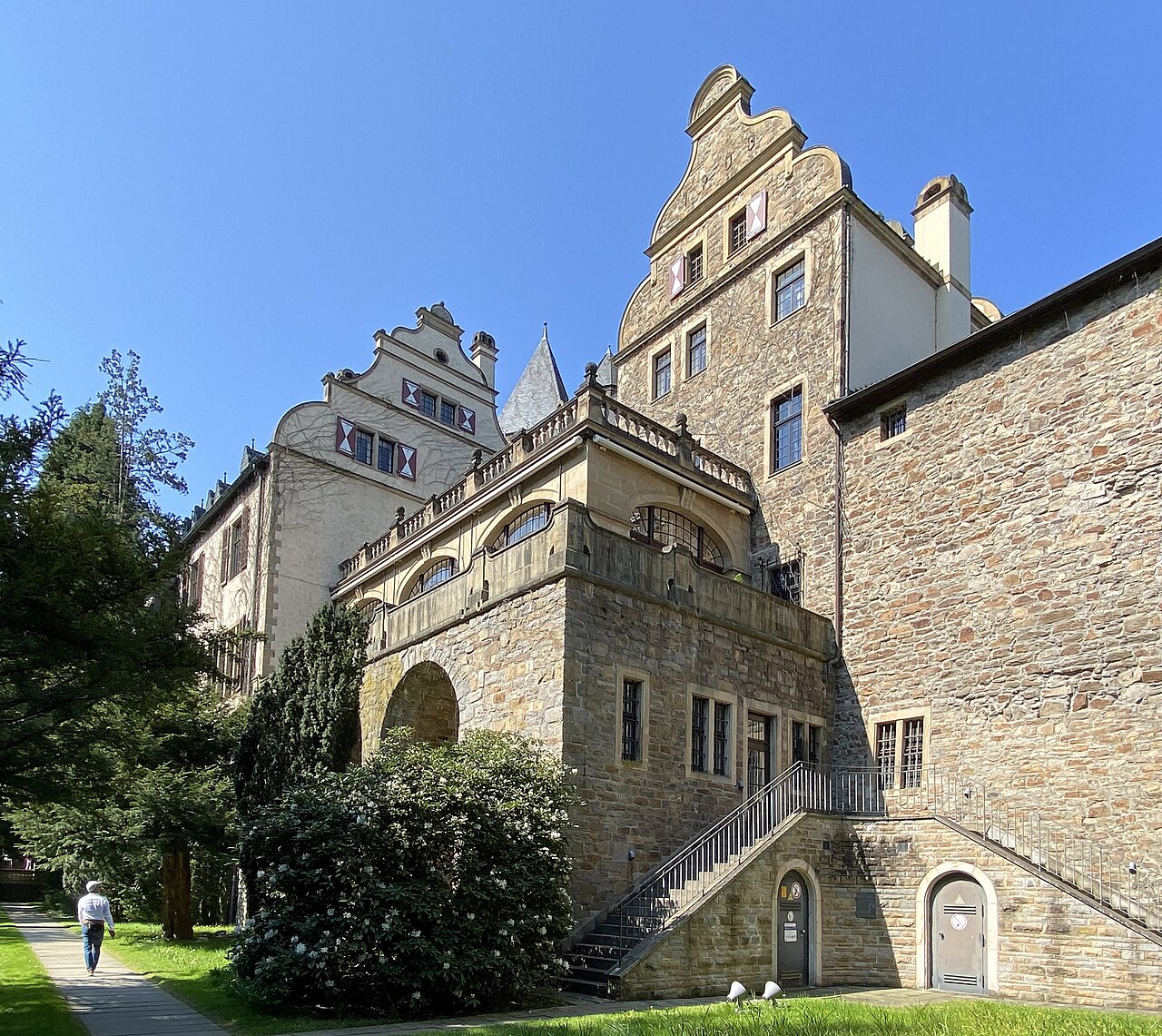
Randeck Castle
Randeck Castle is a ruined hill castle situated on the Schlossberg, just west of the wine-growing village of Mannweiler-Cölln in the Nordpfälzer Land region of Germany. The castle, built in the 12th century, stands as a significant example of high medieval fortification architecture in this part of Rhineland-Palatinate. Its strategic location atop a hill provided commanding views of the surrounding landscape, which was crucial for defense and control during the turbulent medieval period.
The earliest documented mention of the castle dates to 1202, associated with Henry of Randeck (Henricus de Randeke), who was likely a grandson of Ulrich of Wartenberg. His lineage continued to play an influential role in the castle's history, with his son Godfrey I of Randeck succeeding him in 1231. The family maintained possession through successive generations, including notable figures such as Dietrich of Randeck in 1298 and George of Randeck in 1311. The castle was also linked to Eberhard of Randeck, who died in 1372 and served as cathedral dean and Bishop-elect of Speyer, highlighting the family's ecclesiastical connections.
Architectural features and surviving structures
Although largely in ruins today, several key architectural elements of Randeck Castle remain visible. The enceinte, or defensive outer wall, still outlines the perimeter, providing insight into the castle's defensive strategy. A corner outwork survives, which would have served as an advanced defensive position to protect vulnerable angles of the castle walls. Flanking towers, designed to provide overlapping fields of fire along the curtain walls, are partially preserved.
The foundations of the bergfried, a tall central tower typical of German castles used as a last refuge and lookout, remain a prominent feature of the ruins. The bergfried's substantial base indicates the castle's importance and its role as a fortified residence.
Historical ownership and events
Throughout its history, Randeck Castle passed through various hands. In 1649, Emperor Ferdinand III loaned the castle to Hans Ludwig of Lewenstein, a Teutonic knight. Following the extinction of the Lewenstein family line, the castle came under the ownership of Nikolaus Georg Reigersberg, the Electoral Mainz chancellor, in 1668.
The castle's military significance persisted until the late 17th century. During the War of the Palatine Succession in 1690, French forces stormed and deliberately destroyed the castle by blowing it up. Despite this devastation, some of the buildings were restored enough to be habitable for a period afterward.
By the mid-19th century, the castle had fallen into private ownership and suffered further deterioration. Reports from 1844 indicate that the castle was dismantled for building materials, a common fate for many ruined castles during that era. Today, the site is owned by the Cultural History Society of Mannweiler-Cölln, which preserves the ruins as a cultural monument.
Earlier historical context and legends
The origins of Randeck Castle are somewhat obscure. Some sources suggest that a fortress may have existed on the site as early as the 10th century, possibly built by Duke Arnulf to defend against Hungarian raids. There is also a tradition attributing the castle's construction in the 11th century to Baron von Rotteneck, although documentary evidence is lacking.
In the 13th century, the castle reportedly came under the control of the Counts of Abensberg. One owner, Jack von Abensberg, was notorious as a robber baron, leading to conflict with the city of Nuremberg. In 1446, his castles were demolished and burned following hostilities with the city. The last Count of Abensberg, Niclas, was killed in 1485 during a feud with a neighboring family.
Destruction and decline in the early modern period
The castle suffered further damage during the Thirty Years' War in the 17th century, when it was attacked by Swedish forces. Both the castle and an associated convent were destroyed in this period of widespread conflict across Central Europe.
By 1838, significant portions of the castle collapsed following heavy rainfall, accelerating its decline. The ruins have since been stabilized to preserve what remains.
Cultural significance and preservation
Today, Randeck Castle is recognized as an important cultural and historical site within the Nordpfälzer Land. The ruins provide valuable insight into medieval castle construction, feudal history, and regional conflicts. The Cultural History Society of Mannweiler-Cölln manages the site, facilitating preservation efforts and public access.
Visitors to the castle can explore the surviving defensive walls, towers, and foundations, gaining a tangible connection to the medieval past. The castle's hilltop location also offers scenic views of the surrounding vineyards and countryside, enhancing its appeal as a heritage destination.
Frequently asked questions (FAQ)
- How do I get to Randeck Castle?
- Randeck Castle is located in Mannweiler-Cölln, Germany, and can be accessed by car or public transport. The nearest major city is Kaiserslautern, from where you can take a bus or taxi to the castle. There is parking available on-site for visitors arriving by car.
- What is the historical significance of Randeck Castle?
- Randeck Castle dates back to the 12th century and served as a strategic stronghold in the region during the Middle Ages. It played a crucial role in local defense and governance, reflecting the medieval power dynamics of the time. Today, it stands as a testament to the rich history and architectural heritage of Germany.
- When was Randeck Castle built?
- Construction of Randeck Castle began in the early 12th century, with significant expansions and renovations occurring in subsequent centuries. The castle has undergone various changes, adapting to the needs of its inhabitants over the years. Its enduring structure showcases the architectural styles of different periods.
- Can I visit Randeck Castle year-round?
- Yes, Randeck Castle is open to visitors year-round, although specific opening hours may vary by season. It is advisable to check the official website or contact the castle administration for the most current visiting hours. Special events may also be held during certain times of the year, enhancing the visit.
- Why is Randeck Castle a popular tourist attraction?
- Randeck Castle attracts visitors due to its historical significance, stunning architecture, and picturesque location. The panoramic views from the castle grounds provide a breathtaking backdrop for photography and exploration. Additionally, it offers a glimpse into medieval life and architecture, making it a favorite among history enthusiasts.
- Is it possible to take guided tours of Randeck Castle?
- Yes, guided tours are available at Randeck Castle, providing an in-depth look at its history and architecture. Knowledgeable guides share fascinating stories and insights during the tours, enhancing the visitor experience. It is recommended to book in advance, especially during peak tourist seasons.
- What are the ticket prices for Randeck Castle?
- Ticket prices for Randeck Castle are generally affordable, with discounts available for students and seniors. Children under a certain age may enter for free or at a reduced price. For the most accurate and current pricing, it's best to check the castle's official website before your visit.
- What is the best time to visit Randeck Castle?
- The best time to visit Randeck Castle is during the spring and early autumn when the weather is mild, and the surrounding landscapes are vibrant. These seasons also see fewer crowds compared to the summer months. Special events and activities may also be scheduled during these times, enhancing your visit.
- Are there any nearby attractions to Randeck Castle?
- Yes, there are several nearby attractions, including local hiking trails and other historical sites that reflect the region's rich heritage. Visitors can explore the beautiful countryside or visit other castles and ruins within a short drive. These nearby attractions make it easy to create a full day of exploration in the area.
Information
Loading map...
Visitor reviews
No reviews yet. Been here? Write the first review and help other travelers!
Write the first reviewVisited this castle? Share your experience
Your review helps other travelers and adds first-hand knowledge to our encyclopedia.