Montfort Castle
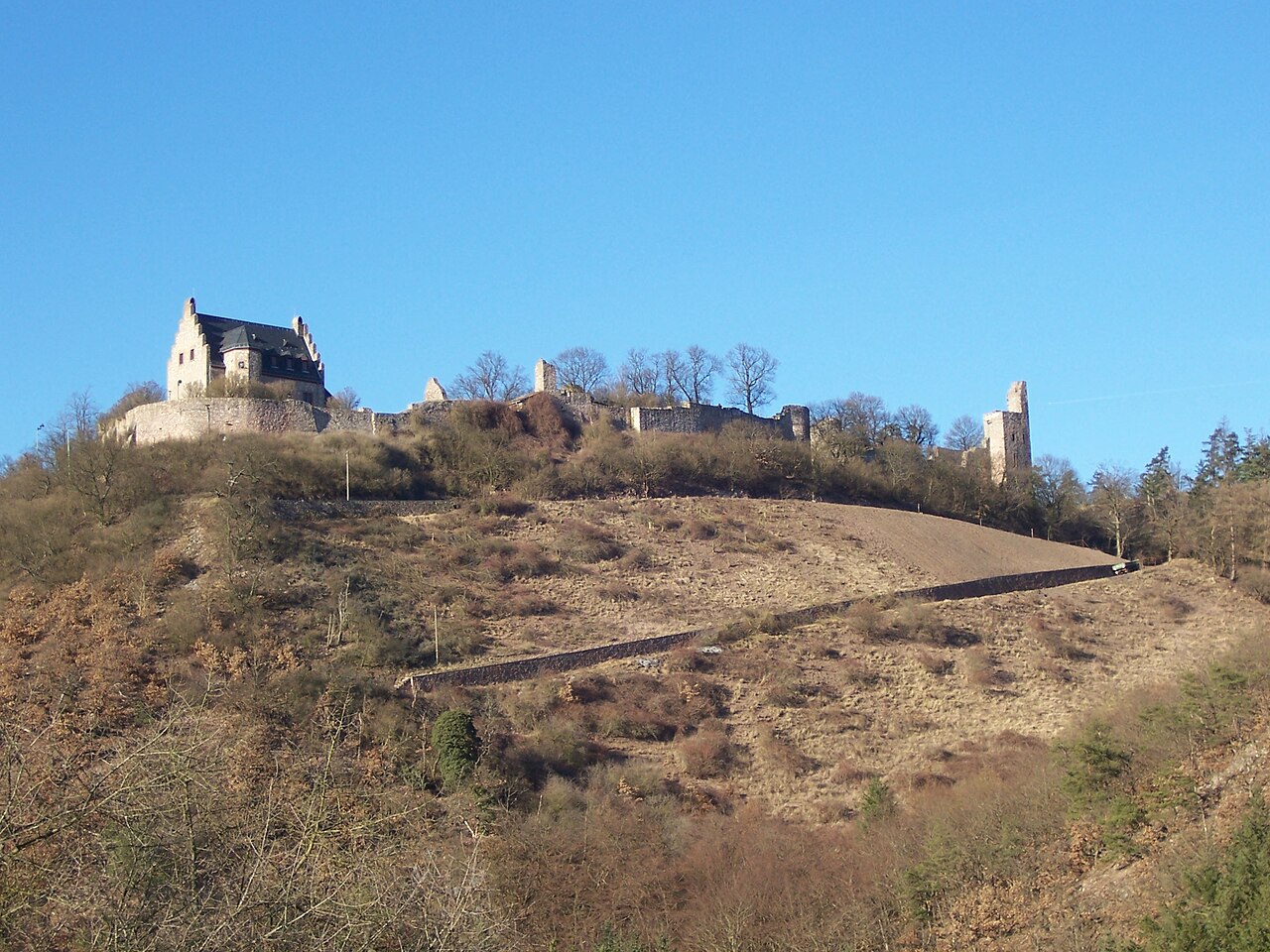
Montfort Castle, located near Hallgarten in Germany, is a captivating example of a high medieval hill castle dating back to around the year 1200. Constructed by the Counts of Veldenz, it served as a strategic fortress overseeing important military routes within the Holy Roman Empire. The castle's position atop a wooded hill at approximately 280 meters above sea level provided a commanding view over the surrounding landscape, making it a vital point for controlling travel and trade in the region.
The origins and early history of Montfort Castle
The castle was initially built to assert the Counts of Veldenz's dominance and to protect their territorial interests. The first known resident was Eberhard von Lautern (1182–1240), who managed the estate as a vassal. The family later adopted the name "von Montfort" from 1247 onward, signifying their close association with the castle. This noble lineage maintained control for nearly two centuries, during which the castle functioned both as a fortified residence and a military stronghold.
Strategic importance and noble residence
Montfort Castle was strategically placed to monitor a nearby military road, ensuring control over vital communication and transportation routes. Its design reflects typical high medieval defensive architecture, including an outer bailey, inner bailey, and a central stronghold. The castle's layout was optimized for both defense and habitation, with living quarters integrated within the fortified walls.
The decline and destruction in the 15th century
By the 15th century, the castle's role shifted as its occupants became known as robber knights, engaging in unauthorized raids along trade routes. This lawlessness provoked a combined military campaign in 1456 led by Archbishop Diether of Mainz and Elector Friedrich I of the Palatinate, who captured and destroyed the fortress. This decisive action ended Montfort's use as a base for raiders and marked the beginning of its long decline.
Partial rebuilding and centuries of ruin
In 1480, the castle was granted as a hereditary fief to Simon Boos von Waldeck, who received permission to rebuild. Although some reconstruction of a residential tower likely occurred, the castle largely remained in ruins. Ownership eventually fragmented among local forest owners and residents, and the site was neglected for centuries.
Architectural features and surviving remains
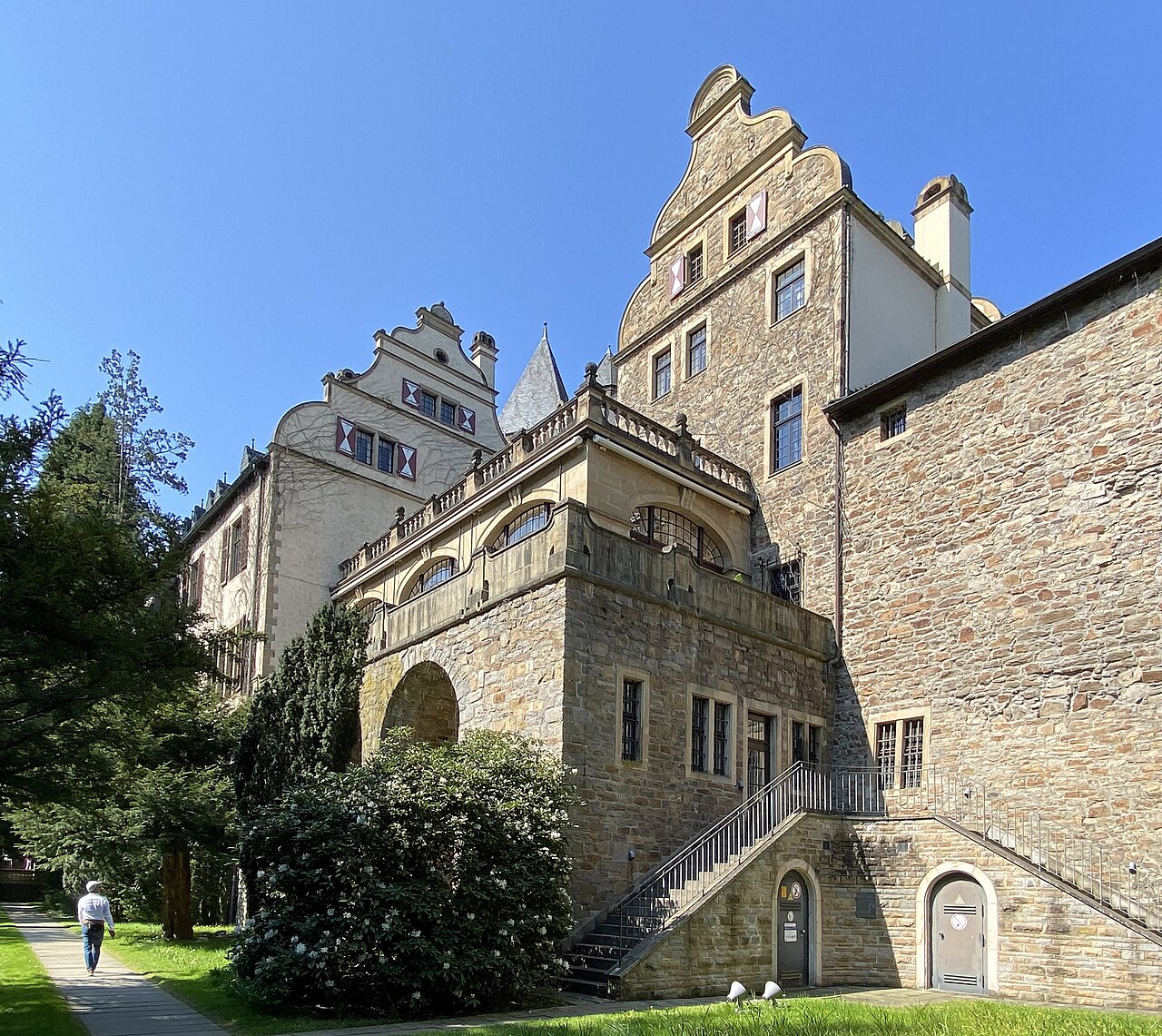
The ruins of Montfort Castle preserve significant elements of its original structure, offering insight into medieval castle construction. The site features remnants of the outer bailey with surviving walls and the gatehouse, which controlled access to the fortress. A notable defensive feature is the zwinger, a narrow enclosed passage between walls designed to trap attackers, illustrating the castle's sophisticated fortifications.
The bergfried and residential towers
The most prominent surviving structure is the shell of the bergfried, the main tower used for lookout and last-resort defense. Standing about nine meters tall, the bergfried now includes a metal railing that serves as a viewing platform for visitors. Access is provided by a modern 34-step metal spiral staircase installed within one of the residential towers, which themselves rise to the height of their third floors, revealing the scale of the living quarters.
Additional structural remains
Foundational walls outline the former locations of essential facilities, including the well house, heated chambers (kemenaten), and stables. These features highlight the castle's self-sufficiency and the daily life of its medieval inhabitants.
Preservation and museum displays
Since 1969, the site has been managed by the Bad Kreuznach district, which has undertaken efforts to stabilize and preserve the ruins. The castle remains largely in its post-destruction state, maintaining an authentic medieval atmosphere without significant modern alterations.
Lapidarium museum and visitor experience
The castle hosts a lapidarium museum showcasing architectural fragments, stone carvings, ceramics, glassware, and iron tools recovered during archaeological excavations. A detailed reconstruction model helps visitors visualize the castle's original appearance. The nearby Montforterhof, located in the valley below, complements the hilltop fortress and includes a courtyard and cemetery, indicating a broader manorial complex associated with the castle.
Montfort Castle's cultural and historical significance
Montfort Castle stands as a testament to the turbulent history of medieval Germany, illustrating the rise and fall of noble families and the strategic importance of fortifications in controlling trade and territory. Its ruins offer valuable insights into high medieval military architecture and the lifestyle of the nobility during that period.
Today, Montfort Castle is accessible to the public free of charge, inviting visitors to explore its evocative ruins and learn about its complex history through the museum exhibits. The site remains a significant cultural landmark within the Rhineland-Palatinate region, attracting history enthusiasts and scholars interested in medieval fortifications and noble heritage.
Frequently asked questions (FAQ)
- How do I get to Montfort Castle in Hallgarten?
- Montfort Castle is located on a wooded hilltop near Hallgarten, Germany. Visitors can reach the site by car or local transport, followed by a short hike uphill to the ruins. Clear signage guides visitors from the town center to the castle entrance.
- What is the historical significance of Montfort Castle?
- Montfort Castle was built around 1200 by the Counts of Veldenz and served as a strategic fortress overseeing military roads. It later became a base for robber knights until its destruction in 1456 by forces of Mainz and the Palatinate.
- Can I visit the museum at Montfort Castle?
- Yes, the castle features a lapidarium museum displaying architectural fragments, ceramics, glassware, and iron tools from archaeological excavations. The museum helps visitors understand the castle’s medieval history and architecture.
- Is Montfort Castle accessible year-round?
- Montfort Castle ruins are open to visitors year-round and free of charge. However, weather conditions may affect access to the hilltop site, so it is advisable to check local information before planning a visit.
- What architectural features are notable at Montfort Castle?
- Notable features include the bergfried tower with a viewing platform, the zwinger defensive passage, gatehouses, curtain walls, and remnants of residential towers and essential facilities like the well house and heated chambers.
Information
Sources & official resources
Verify the information above using these authoritative references.
Loading map...
Visitor reviews
No reviews yet. Been here? Write the first review and help other travelers!
Write the first reviewVisited this castle? Share your experience
Your review helps other travelers and adds first-hand knowledge to our encyclopedia.