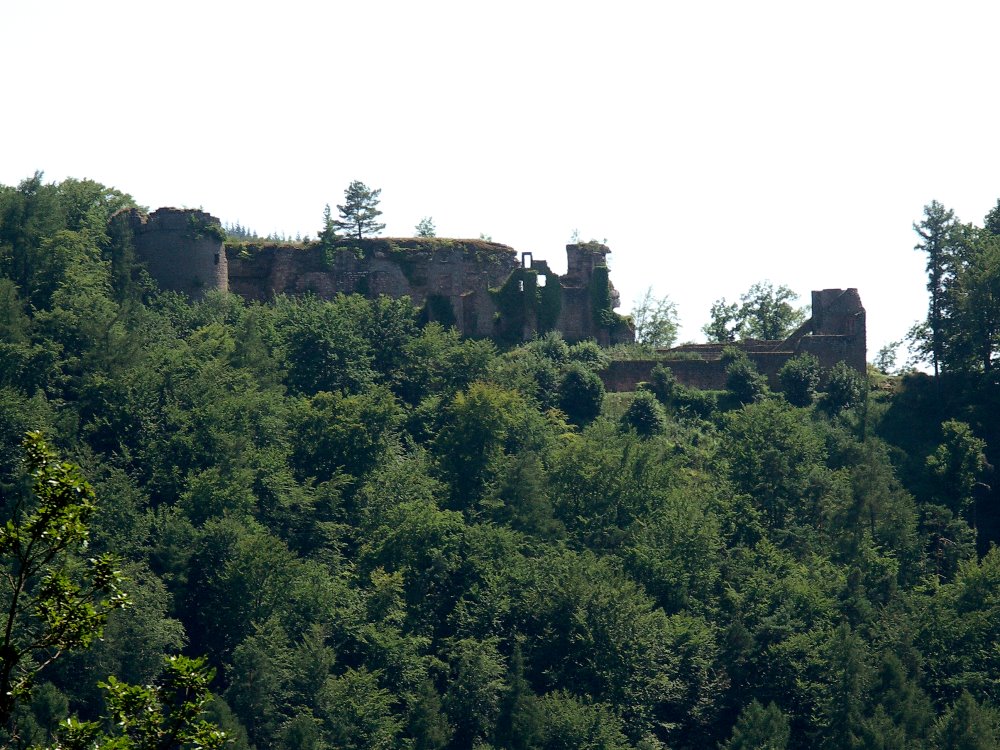
Ramburg Castle
The Ramburg Castle ruins are perched on the Schlossberg hill above the village of Ramberg in the Palatinate region of Germany. This high medieval hill castle was constructed in the 12th century under the auspices of the House of Hohenstaufen as an imperial fortress to guard the nearby Trifels Castle, a major imperial stronghold. The castle's strategic location overlooking the valley through which the Dernbach river flows provided natural defense and control over the surrounding area.
First documented in 1163 as the seat of imperial ministeriales, Ramburg played a key role in the regional power structure of the Holy Roman Empire. The castle was initially built to serve as a protective outpost and administrative center, reflecting the military and political priorities of the Hohenstaufen dynasty during the high medieval period. Its architecture combined defensive features with residential functions, typical of castles from this era.
Architectural features and layout
The castle's remains reveal significant elements of medieval military architecture. The most prominent surviving structure is the mighty shield wall, a thick defensive wall designed to withstand attacks and protect the inner buildings. Adjacent to this is the palas, the main residential building where the lord and his family would have lived. The palas was typically the largest and most elaborate structure within the castle, featuring living quarters and a great hall for gatherings and administrative purposes.
Additional surviving features include a neck ditch, a deep defensive trench that separated the castle from the hillside, making direct assaults more difficult. Several other wall fragments outline the castle's former perimeter, while a large rock cellar remains intact, likely used for storage of food and supplies. These features illustrate the castle's dual role as a fortress and noble residence.
Historical timeline and ownership changes
Ramburg Castle's history is marked by several significant events and changes in ownership. In 1519, Hans of Ramburg, the last lord from the House of Ramburg, sold the castle to the Dalberg family. Shortly after, during the Peasants' War of 1525, the castle was completely razed, reflecting the widespread social upheaval and violence of the period.
In 1540, the ruins were acquired by the counts of Löwenstein, who undertook rebuilding efforts. However, in 1560, the castle suffered a devastating lightning strike that caused significant destruction. Despite this, it was restored and converted into a residential castle once again, indicating its continued importance as a noble seat.
During the Thirty Years' War (1618–1648), Ramburg was plundered but avoided complete destruction, a fate that befell many castles in the region. It remained in use as a district office (Amtsitz) until 1638, serving administrative functions. Afterward, the castle gradually fell into disrepair and was eventually used as a quarry in the early 18th century, contributing to its current ruined state.
Cultural significance and preservation
Today, the ruins of Ramburg Castle stand as a testament to the region's medieval history and architectural heritage. The visible remains of its defensive walls, palas, and cellar provide valuable insights into castle construction techniques and noble life during the high medieval period. Its location on the Schlossberg hill offers panoramic views of the surrounding Palatinate landscape, attracting visitors interested in history and hiking.
Efforts to preserve the site focus on maintaining the structural remains and providing information to visitors about the castle's historical context. The ruins are accessible and serve as a cultural landmark, connecting modern audiences with the legacy of the Hohenstaufen dynasty and the turbulent history of medieval Germany.
Geographical context and strategic importance
Situated above the village of Ramberg, Ramburg Castle overlooks the valley carved by the Dernbach river, a tributary of the Eisbach. This vantage point allowed control over local trade routes and provided early warning against potential invaders. The castle's proximity to Trifels Castle, one of the most important imperial castles of the era, underscores its role in a network of fortifications designed to secure imperial interests in the region.
Architectural style and construction materials
The castle's construction reflects typical high medieval architectural styles with robust stone masonry designed for defense. The shield wall is a characteristic feature of German castles from this period, built to absorb and deflect attacks. The use of local stone materials contributed to the castle's durability, although centuries of weathering and human activity have reduced much of the structure to ruins.
Visitor experience and accessibility
Visitors to the Ramburg Castle ruins can explore the remaining walls and cellar, gaining a tangible sense of medieval fortification. The site is accessible via hiking trails from Ramberg and offers interpretive signage to explain the castle's history and architecture. While the castle is in ruins, the impressive remains provide a compelling glimpse into the past for history enthusiasts and tourists alike.
Frequently asked questions (FAQ)
- What is the historical significance of Ramburg Castle?
- Ramburg Castle, dating back to the 13th century, served as a strategic fortification in the region. Its well-preserved ruins offer insights into medieval military architecture and the socio-political dynamics of the time.
- When was Ramburg Castle built?
- Ramburg Castle was constructed in the early 1200s, making it one of the oldest fortifications in the area. Its construction reflects the feudal system prevalent in medieval Germany.
- What are the opening hours for Ramburg Castle?
- Ramburg Castle is open to visitors from 10 AM to 6 PM daily during the tourist season, which typically runs from April to October. Off-season hours may vary, so it's advisable to check the official website before planning your visit.
- Can I access the castle grounds with a wheelchair?
- While Ramburg Castle has made efforts to improve accessibility, some areas may still be challenging for wheelchair users due to the uneven terrain. It's recommended to contact the visitor center for the best access options.
- Is there an admission fee to visit Ramburg Castle?
- Yes, there is a small admission fee to enter the castle grounds, typically around 5 Euros for adults and reduced rates for children and seniors. This fee helps maintain the site and supports ongoing preservation efforts.
- When is the best time to visit Ramburg Castle?
- The best time to visit Ramburg Castle is during the spring and early autumn months when the weather is pleasant and the surrounding landscapes are particularly beautiful. Additionally, visiting during weekdays can help you avoid the larger crowds.
- What nearby attractions can I visit while at Ramburg Castle?
- Visitors to Ramburg Castle can also explore the charming village of Ramberg, known for its picturesque landscapes and hiking trails. Additionally, the nearby Palatinate Forest offers numerous outdoor activities and scenic views.
- How do I get to Ramburg Castle?
- Ramburg Castle is easily accessible by car, with parking available nearby. For those using public transportation, local bus services connect Ramberg to major cities in the region, and it's just a short walk from the bus stop to the castle.
Information
Loading map...
Visitor reviews
No reviews yet. Been here? Write the first review and help other travelers!
Write the first reviewVisited this castle? Share your experience
Your review helps other travelers and adds first-hand knowledge to our encyclopedia.