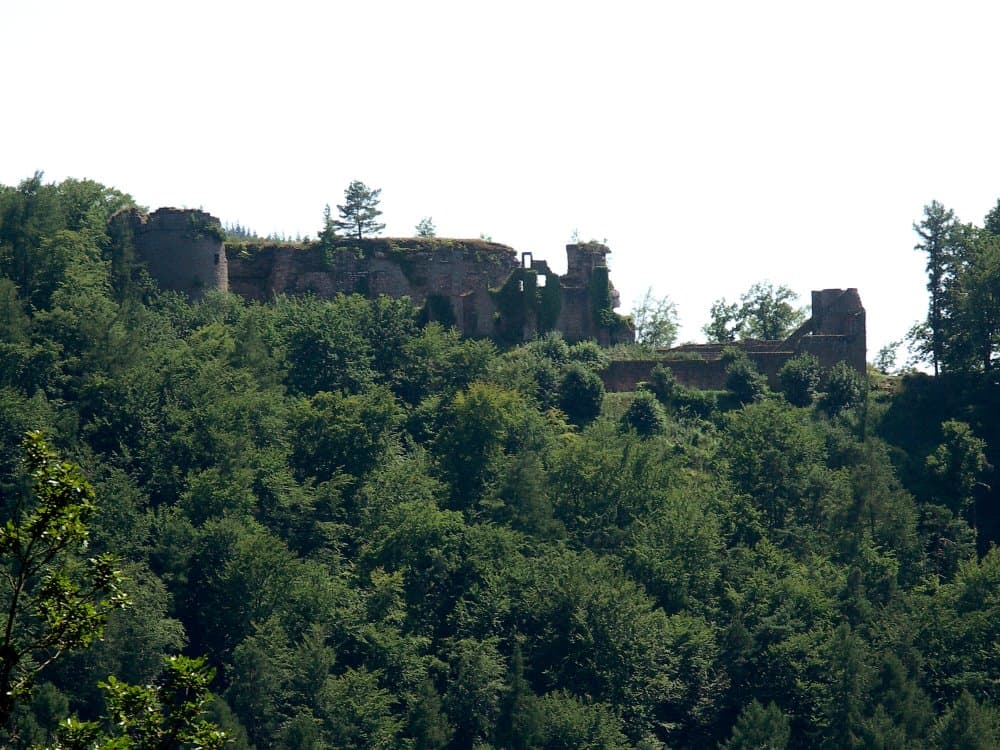
Neuscharfeneck Castle
Neuscharfeneck castle ruins are located in the eastern part of the Palatine Forest, near the town of Annweiler in Rhineland-Palatinate, Germany. Perched on the western foothills of the Kalkofen Berg, this medieval fortress is surrounded by dense woodland and accessible only via forest tracks, emphasizing its original strategic seclusion. The castle's remains stretch over an area approximately 60 by 150 metres, revealing the footprint of a significant fortification from the high medieval period.
Historical background and construction phases
The initial construction of Neuscharfeneck castle dates back to between 1212 and 1232. The earliest phase produced a smaller stronghold than what the ruins suggest today. This original castle was built during the high medieval period, a time marked by the rise of fortified structures designed to assert territorial control and provide defense against regional conflicts.
The castle underwent several expansions and reinforcements over the centuries, notably in the years 1470 and 1530. These later modifications reflect the evolving military architecture and the need to adapt to advances in siege technology. The most prominent feature from these periods is the castle's shield wall, which remains one of the most formidable in the Palatinate region.
Architectural features and defensive structures
The shield wall
The shield wall at Neuscharfeneck is a massive defensive construction measuring about 58 metres in length and up to 12 metres thick. Built originally in the early 13th century and later extended, it served primarily as a passive barrier protecting the inner castle buildings. Unlike many medieval fortifications, this wall contains relatively few usable passages, chambers, or casemates, underscoring its role as a robust barricade rather than a living space.
The original entrance to the castle was through this shield wall, accessible by a drawbridge that spanned a defensive ditch or moat. Although the hoarding platform that once stood atop the wall has not survived, the wall's sheer thickness and length demonstrate the emphasis placed on defense.
Inner castle and water management
The upper castle (Oberburg), situated on a central rock outcrop measuring approximately 30 metres long, was the first residential section built during the initial construction phase. Unfortunately, little remains of this structure aside from a well, an inaccessible chamber, and carved steps in the rock. These remnants hint at the castle's original layout and the living quarters of its medieval occupants.
Water supply was a critical concern for the castle's inhabitants. Four cisterns, carved directly from rock in the 13th century, collected rainwater to sustain the castle during sieges. From the 16th century onward, water was also channeled from the Roßberg Spring, located roughly 2 kilometres away. This was achieved through a system of pipes made from clay or hollowed tree trunks, demonstrating advanced medieval engineering to ensure a reliable water source.
Gateways and towers
Among the surviving structures is a partially preserved gateway flanked by a defensive tower. This entrance controlled access to the castle grounds and would have been a key point of defense against attackers. The presence of flanking towers allowed defenders to cover the gate with crossfire, a common feature in medieval military architecture.
Castle gardens and herbal cultivation
Within the castle grounds, there is evidence that rare herbs such as White Henbane, Ingräu, and Abbey Hyssop were cultivated. These plants were likely used for medicinal or culinary purposes, reflecting the self-sustaining nature of medieval castles and their role as centers of local knowledge and resource management.
Location and cultural significance
Neuscharfeneck castle is situated above the villages of Ramberg and Dernbach, within an exclave of Flemlingen in the Südliche Weinstraße district. Its position in the Palatine Forest offered natural defensive advantages and control over surrounding territories. Today, the ruins serve as an important cultural monument, providing insight into the high medieval fortification techniques and the historical landscape of the region.
Preservation and current condition
The castle is classified as ruins and an archaeological site. Although much of the original structure has been lost to time, the remaining walls, cisterns, and gateways allow visitors and scholars to study its construction and defensive strategies. The site is accessible by forest tracks, maintaining its secluded character and offering a glimpse into the medieval past amid natural surroundings.
Frequently asked questions (FAQ)
- How do I get to Neuscharfeneck Castle?
- Neuscharfeneck Castle is located in Annweiler, Germany, and can be accessed by car or public transport. There are designated parking areas nearby, and if you prefer public transport, local buses operate routes that connect to Annweiler.
- What is the historical significance of Neuscharfeneck Castle?
- Neuscharfeneck Castle dates back to the 12th century and played a vital role in the region's defense during the Middle Ages. Its strategic position allowed it to oversee trade routes and protect the surrounding areas, making it an important historical landmark.
- When was Neuscharfeneck Castle built?
- Construction of Neuscharfeneck Castle began in the late 12th century, around 1180. Over the centuries, it underwent various modifications and restorations, reflecting the architectural styles of different eras.
- Can I visit Neuscharfeneck Castle year-round?
- Yes, Neuscharfeneck Castle is open to visitors year-round, although opening hours may vary by season. It's advisable to check the official website for the most current information regarding visiting hours and any special events.
- Why is Neuscharfeneck Castle popular among tourists?
- Neuscharfeneck Castle is popular for its stunning views of the surrounding landscape and its well-preserved ruins that offer a glimpse into medieval life. The picturesque setting and rich history attract many visitors, making it a favorite destination for history enthusiasts and nature lovers alike.
- Is it possible to explore the castle grounds freely?
- Yes, visitors are generally allowed to explore the castle grounds freely, enjoying the scenic views and historical architecture. However, some areas may have restricted access for safety reasons, and guided tours may be available for a more in-depth experience.
- What are the ticket prices for visiting Neuscharfeneck Castle?
- Entry to Neuscharfeneck Castle is usually free, but donations are appreciated to help with the upkeep of the site. If guided tours are offered, there may be a fee associated with those, which typically includes additional insights into the castle's history.
- What is the best time to visit Neuscharfeneck Castle?
- The best time to visit Neuscharfeneck Castle is during the spring and early fall when the weather is mild, and the surrounding nature is in full bloom. These seasons also see fewer tourists, allowing for a more peaceful exploration of the castle and its grounds.
- Are there any nearby attractions to visit after Neuscharfeneck Castle?
- Yes, there are several attractions near Neuscharfeneck Castle, including the picturesque town of Annweiler and the beautiful Palatinate Forest. Visitors can also explore nearby hiking trails and other historic sites that enhance the overall experience of the region.
Photo gallery

Information
Loading map...
Visitor reviews
No reviews yet. Been here? Write the first review and help other travelers!
Write the first reviewVisited this castle? Share your experience
Your review helps other travelers and adds first-hand knowledge to our encyclopedia.



