Raka Castle
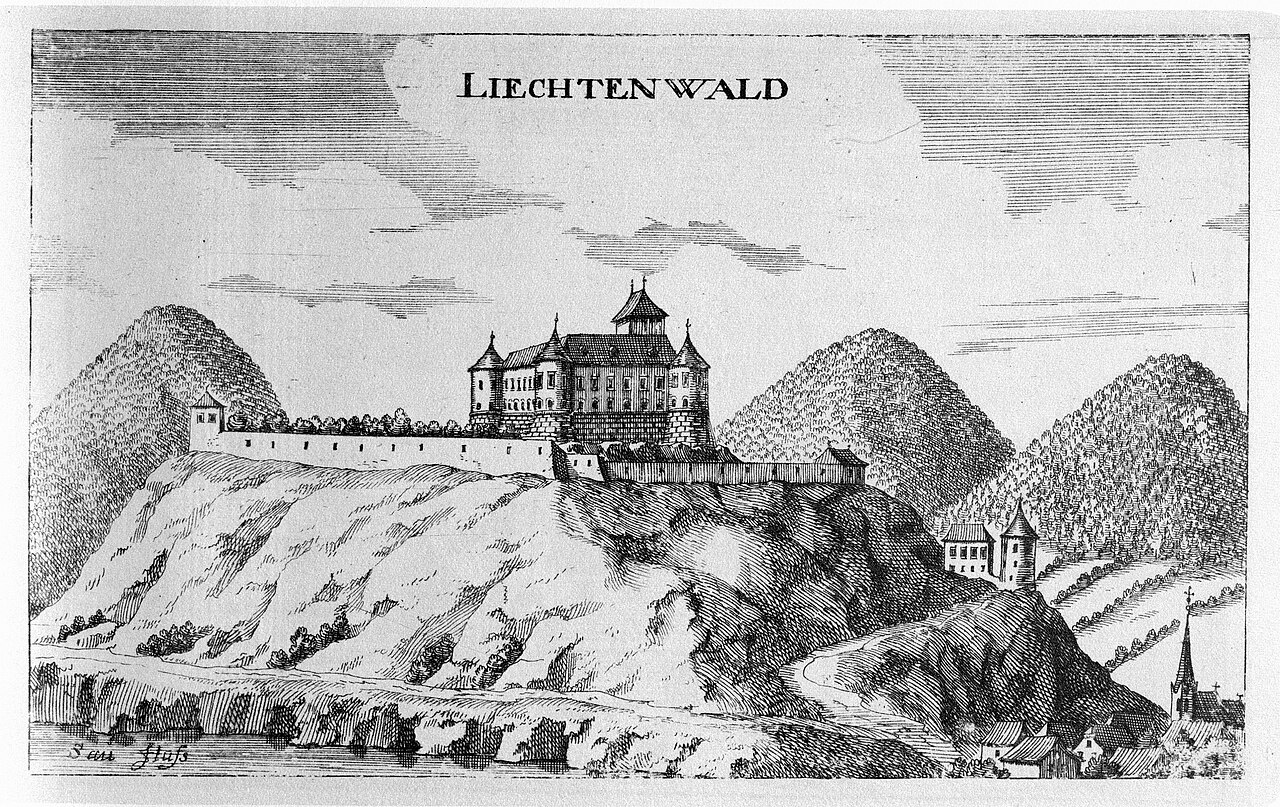
Raka Castle stands as one of the oldest and most historically significant medieval castles in Slovenia. Located in the City Municipality of Krško, this hill castle was originally constructed in the 12th century, making it a remarkable example of High Medieval fortification architecture in the region. Documented as early as 1161 and explicitly mentioned as Castrum Arch in 1279, the castle has witnessed centuries of noble ownership, architectural evolution, and historical events that shaped its current form.
Early history and noble ownership
Raka Castle was initially built in the second half of the 12th century by the Counts of Bogen, a prominent noble family of the time. Ownership later passed to the Counts of Andechs and subsequently to the Dukes of Spanheim, reflecting the shifting political landscape of medieval Slovenia. From 1248 until the end of the 15th century, the castle was under the stewardship of the Archer knights, a notable knightly family who played a significant role in the castle's administration and defense.
In 1501, a relative of the Archer knights, Leonhard Herič from Kompolje in Blagovica, sold the castle to Baron Georg von Scheyer from Soteska. This marked a new chapter in the castle’s history, although it suffered damage during the 1515 peasant revolt when it was burned. Following this, in 1525, the castle and its estate were granted in fief to Baron Johann Balthasar von Werneck by Archduke Karl, indicating its continued strategic and economic importance.
Architectural development and estate expansion
Throughout the 17th century, Raka Castle remained under the ownership of the Werneck barons and was later sold to the Kajzelj family. The Kajzelj family developed the estate further by establishing greenhouse plots and a pond with crab breeding facilities below the castle, illustrating the integration of agricultural and aquacultural practices within the castle grounds.
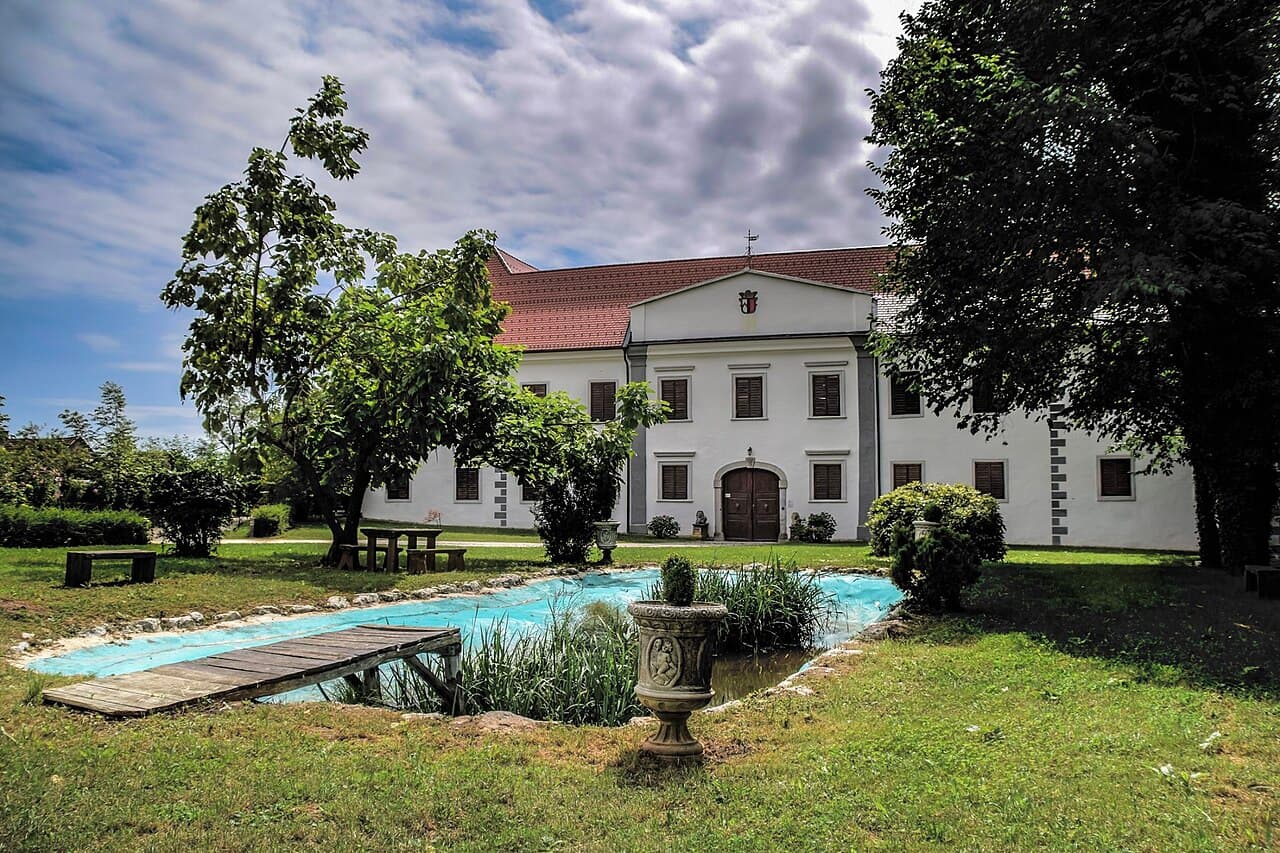
The castle underwent significant restoration and modernization under Baron Franz Karl Haller von Hallerstein, who owned it from 1784 to 1825. He transformed the castle's appearance, giving it a refined look characterized by classicist architectural elements. He also designed new landscaped formal gardens and constructed several purpose-built outbuildings, enhancing both the aesthetic and functional aspects of the estate. During his tenure, the estate was expanded through acquisitions of neighboring lands, including parts of the Studenice estate in 1800 and Dolenje Radulje in 1811.
Architectural features and layout
The castle is a quadrangular three-story building with a partial basement, featuring an eleven-bay facade on the north side and an eight-bay facade on the east. It is surrounded to the west and south by woodlands and thickets, with a narrow, untended path allowing passage around the structure. Entry into the arcaded courtyard is through a grand classicist stone portal, a highlight of the castle's refined architectural style.
Inside, the castle's layout includes basements accessible from the courtyard via broad wooden staircases, primarily in the south and west wings. The ground floor historically served agricultural purposes, including storage for crops in the granary and pantry, which were equipped with floor compartments and wooden ceiling beams for hanging produce.
The first floor is accessed by broad stone stairs located in the east wing's arcaded corridor. Some rooms on this floor are partitioned. Notably, the southern wing houses a hall with a flat ceiling and a Baroque-style parquet floor. One of the best-preserved rooms is known as Johanna's room. A manual dumbwaiter on the outer side was used historically to transfer food from the kitchen to the rooms, and a food distribution area with a built-in cabinet, barrier, and distribution counter remains intact.
Modern history and preservation efforts
In the 20th century, Raka Castle served various roles, including as a military outpost during World War II and as a municipal seat between 1952 and 1961. After the war, in 1948, the Daughters of Charity were expelled from their convent and moved into the castle, where they stayed until 1998. During their occupancy, they installed plumbing, enclosed the courtyard arcades with wood and glass, partially repaired the roof, and built a simple brick garage on the property.
Since the departure of the Sisters of Charity, the castle has been vacant and empty, with some interior furnishings and facilities remaining intact. The roof has fallen into disrepair, and the castle requires restoration to preserve its architectural and historical integrity.
In 2007, the Municipality of Krško declared Raka Castle a monument of special architectural or historic interest. This designation aims to protect the castle's landscape, architectural, artistic, and historical value, promote its cultural significance, and encourage educational and scientific research related to the site.
Cultural significance and visitor experience
Raka Castle is a valuable cultural landmark that offers insights into medieval Slovenian noble life, architectural evolution from the 12th century onward, and the region's socio-political history. Its combination of High Medieval origins and later classicist renovations provides a layered narrative of architectural styles and estate management.
Visitors to Raka Castle can appreciate its arcaded courtyard, classicist stone portal, and the preserved interiors such as Johanna's room. The surrounding woodlands and estate lands contribute to the castle's historic atmosphere, though access around the castle is limited by the narrow paths and natural vegetation.
Frequently asked questions (FAQ)
- When was Raka Castle originally built?
- Raka Castle was originally constructed in the 12th century, with the first documentation dating back to 1161.
- What architectural styles are present at Raka Castle?
- Raka Castle features a mix of High Medieval fortification elements and later classicist architectural renovations from the late 18th and early 19th centuries.
- Who were the notable owners of Raka Castle?
- Notable owners include the Counts of Bogen, Counts of Andechs, Dukes of Spanheim, the Archer knights, Baron Georg von Scheyer, the Werneck barons, the Kajzelj family, and Baron Franz Karl Haller von Hallerstein.
- Is Raka Castle open to visitors?
- Raka Castle has been vacant since 1998 and does not have regular public visiting hours. Visitors should check local sources for any special access or events.
- What is the current condition of Raka Castle?
- The castle is partially preserved but requires restoration, especially the roof and some interior areas, to maintain its historical and architectural integrity.
Photo gallery

Information
Loading map...
Visitor reviews
No reviews yet. Been here? Write the first review and help other travelers!
Write the first reviewVisited this castle? Share your experience
Your review helps other travelers and adds first-hand knowledge to our encyclopedia.