Leskovec Castle
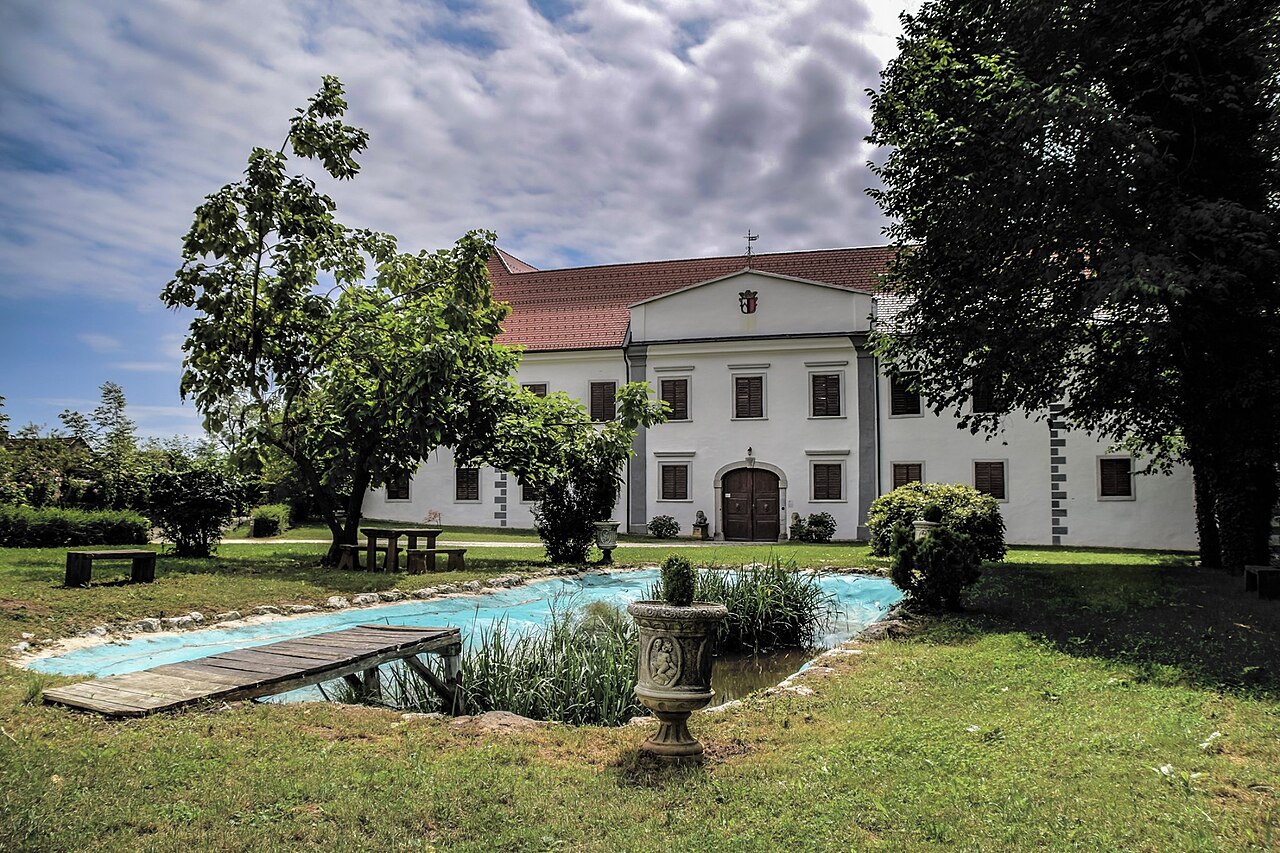
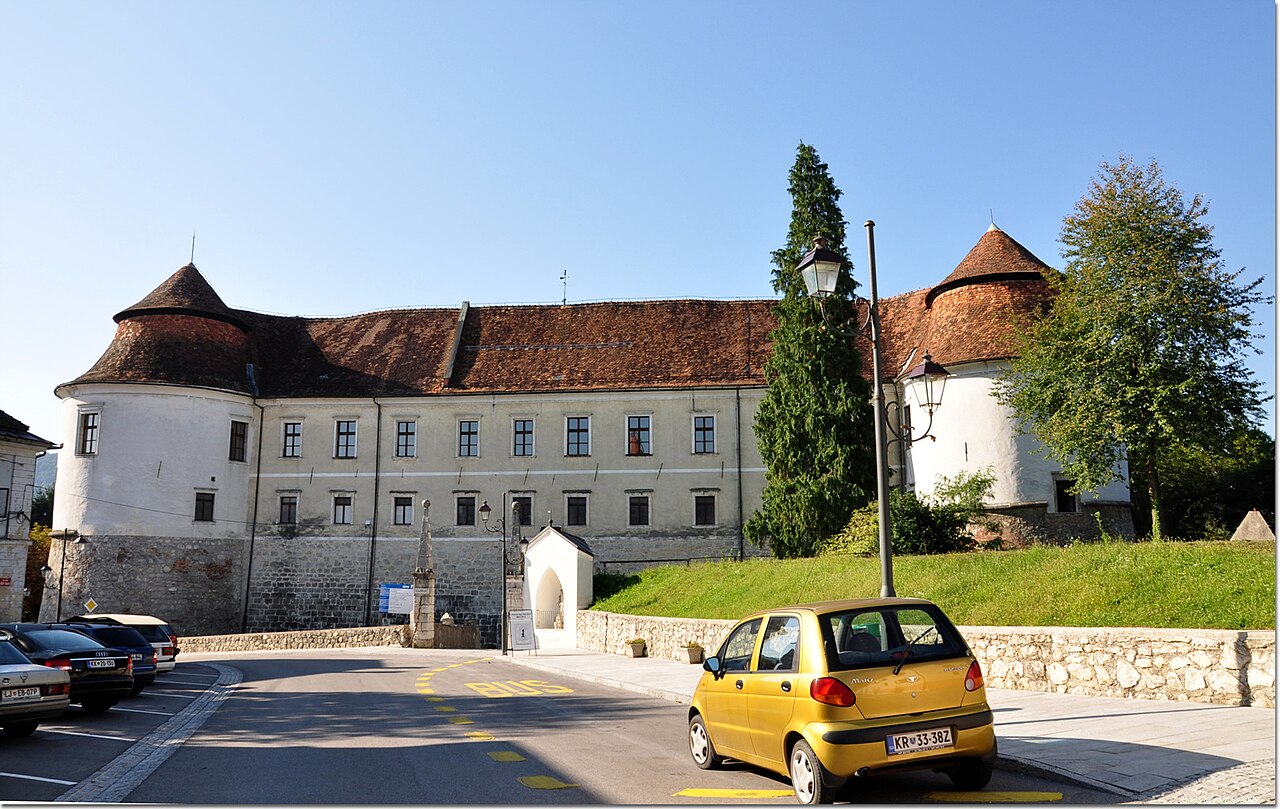
Leskovec Castle, also known as Turn Castle, is a prominent 15th-century late-medieval castle located north of the village of Leskovec pri Krškem in Slovenia. This castle represents a significant example of centrally-based defensive architecture from the late medieval period, later enhanced with Renaissance elements during its 16th-century redesign. The castle's history reflects the complex feudal and noble dynamics of the region, serving as a residence and stronghold for several noble families over the centuries.
Historical background and ownership lineage
The site of Leskovec Castle originally comprised two manors first mentioned in 1436. These were held by Baron Johann Dürrer concurrently with the Counts of Celje, a powerful noble family in the region. Eventually, the manors were sold to the Counts of Celje, who played a significant role in the castle's early history. The castle endured a notable event in 1515 when it was taken and looted by peasant rebels during widespread uprisings, reflecting the social tensions of the time.
Following the Counts of Celje, the castle passed through the hands of several distinguished owners, including Baron Janez Valvasor in 1581, the Counts of Mosconi, and the House of Auersperg who owned it from 1653 to 1903. Later proprietors included Baron Gagern and a Dr. Trenz. This succession of noble families contributed to the castle's architectural evolution and the preservation of its cultural significance.
Architectural features and renovations
The current form of Leskovec Castle primarily dates from the second quarter of the 16th century, reaching substantial completion by the mid-16th century. It is characterized by a rectangular layout with four residential wings enclosing a central arcaded courtyard, a hallmark of Renaissance influence. This courtyard is one of the castle's most significant architectural features, offering both aesthetic appeal and functional space.
Defensive elements include corner towers that reinforce the castle's fortifications, typical of late-medieval military architecture. Above the main gate, visitors can observe a relief of the coat of arms of the house of Auersperg-Falkenhayn, symbolizing the family's long-standing association with the castle. Additionally, the courtyard wall displays the arms of the noble family Khysl, further emphasizing the castle's noble heritage.
Renaissance-style castle park
Surrounding the castle is a 17th-century renaissance-style park, which adds to the site's historical and cultural ambiance. The park contains a monument dedicated to Alfonz Paulin (1853-1942), a renowned Slovene botanist and son of the castle warder, linking the castle to important figures in Slovenian scientific history.
Cultural significance and preservation
Leskovec Castle and its surrounding grounds have been officially recognized by the government of Slovenia as a cultural monument of national importance since 1999. This designation underscores the castle's value as a heritage site, reflecting its architectural, historical, and cultural importance within Slovenia.
Today, Leskovec Castle stands as a well-preserved example of late-medieval and Renaissance architecture in the region, offering insights into the noble lifestyles and defensive strategies of its era. Its combination of fortified structures and elegant arcades makes it a notable destination for those interested in medieval fortifications and Renaissance design.
Frequently asked questions (FAQ)
- When was Leskovec Castle originally built?
- Leskovec Castle was originally constructed in the 15th century, with its current form largely completed by the mid-16th century.
- What architectural styles are featured in Leskovec Castle?
- The castle features a mix of late-medieval defensive architecture and Renaissance elements, including a rectangular arcaded courtyard and corner towers.
- Who were some notable owners of Leskovec Castle?
- Notable owners included the Counts of Celje, Baron Janez Valvasor, the Counts of Mosconi, the House of Auersperg, Baron Gagern, and Dr. Trenz.
- What is the significance of the coat of arms above the main gate?
- The relief above the main gate displays the coat of arms of the house of Auersperg-Falkenhayn, reflecting the family's long association with the castle.
- Is Leskovec Castle open to the public?
- Visiting information is not specified, so it is advisable to check locally for access and opening hours.
Information
Loading map...
Visitor reviews
No reviews yet. Been here? Write the first review and help other travelers!
Write the first reviewVisited this castle? Share your experience
Your review helps other travelers and adds first-hand knowledge to our encyclopedia.