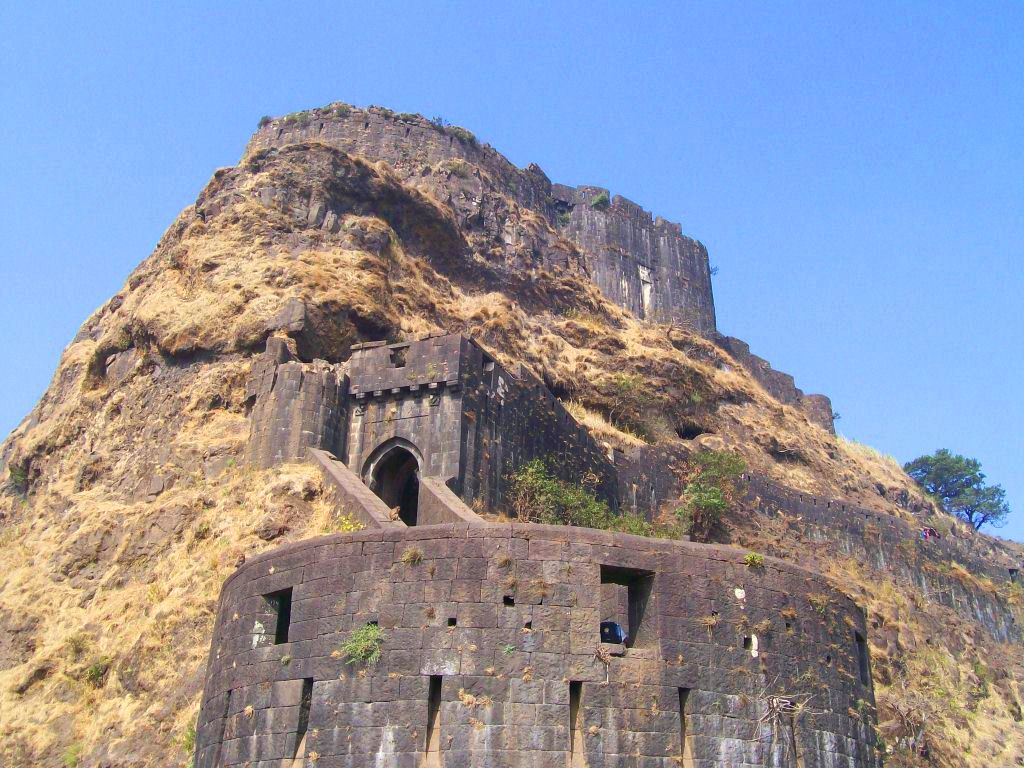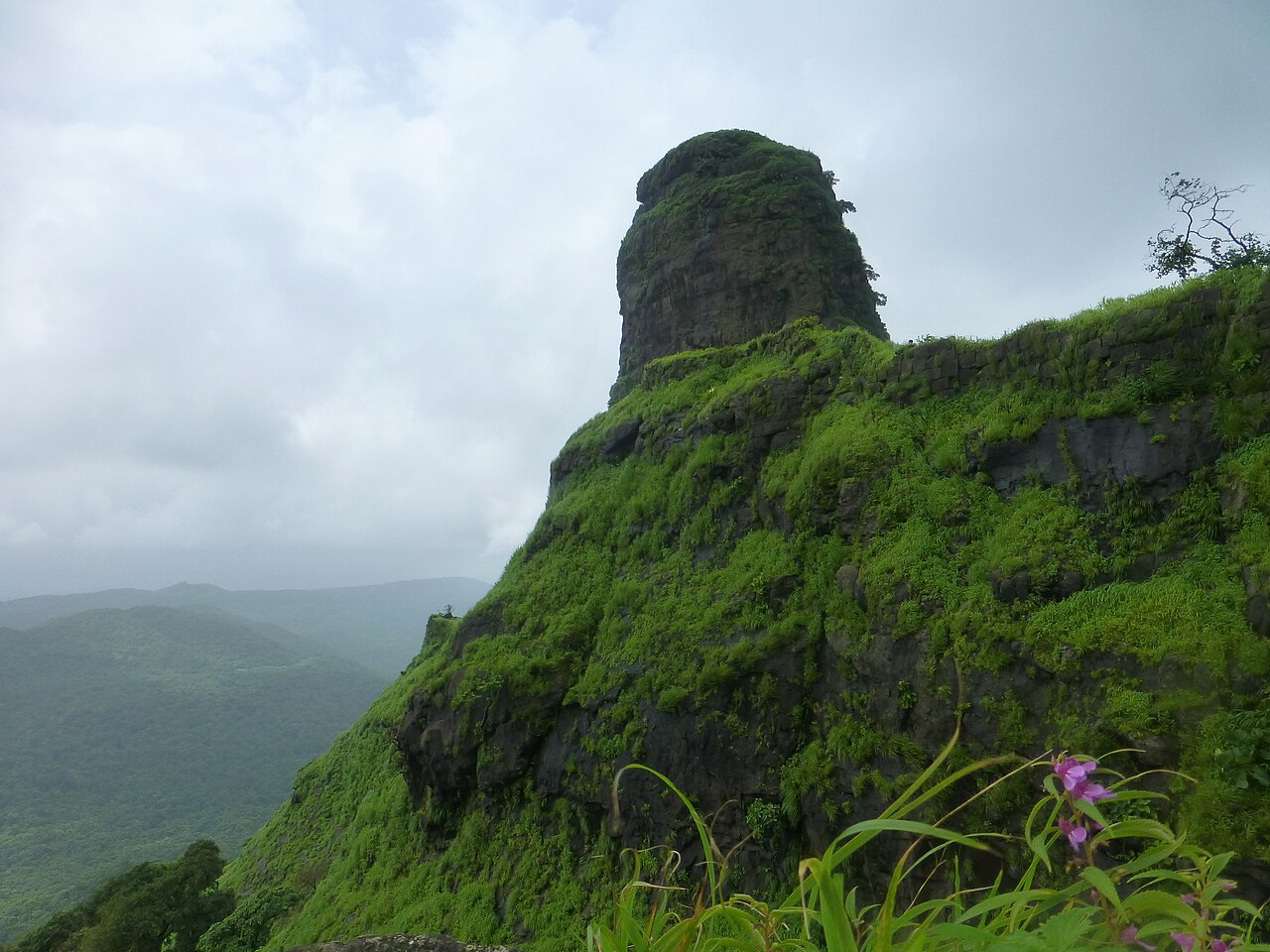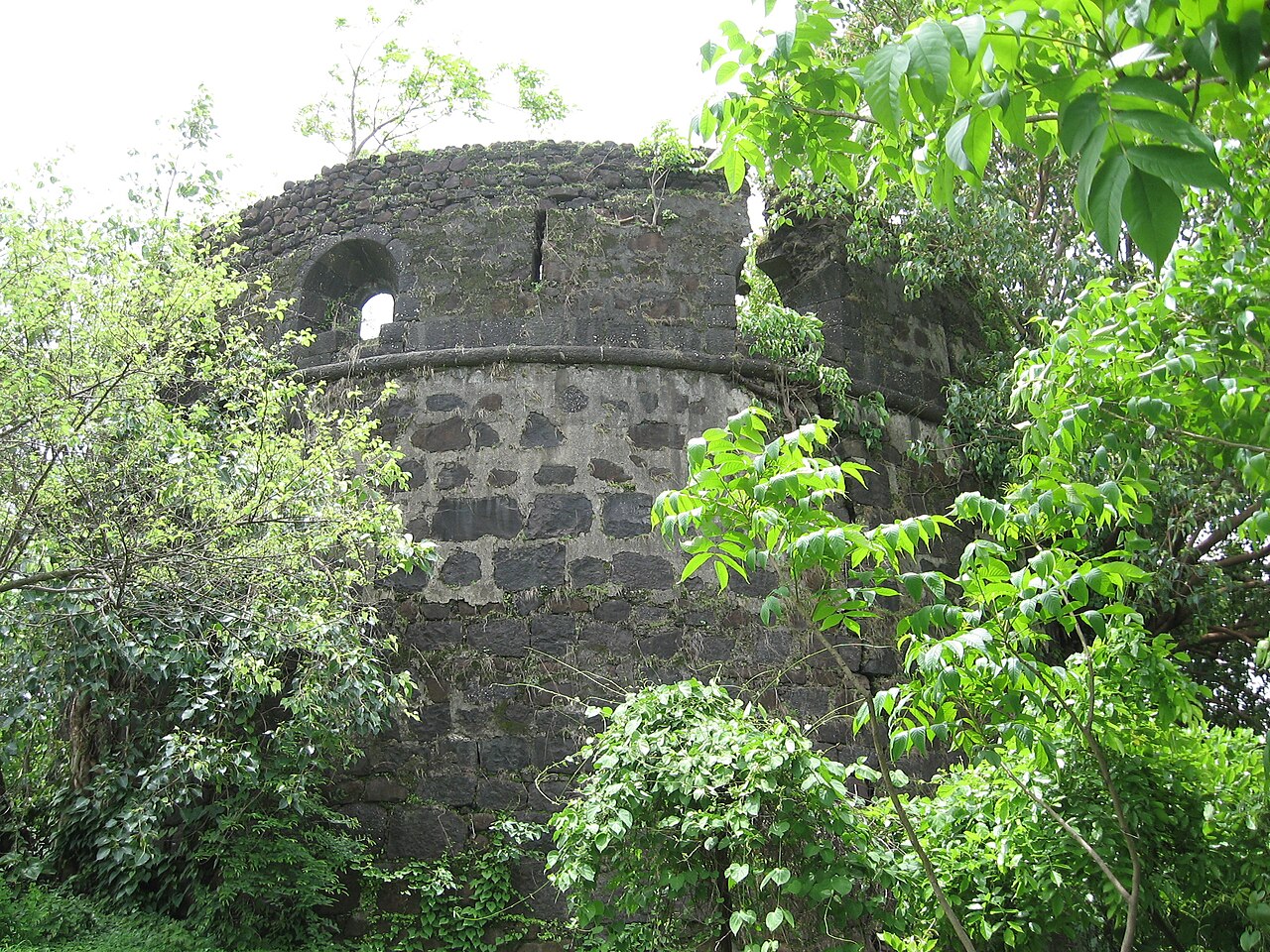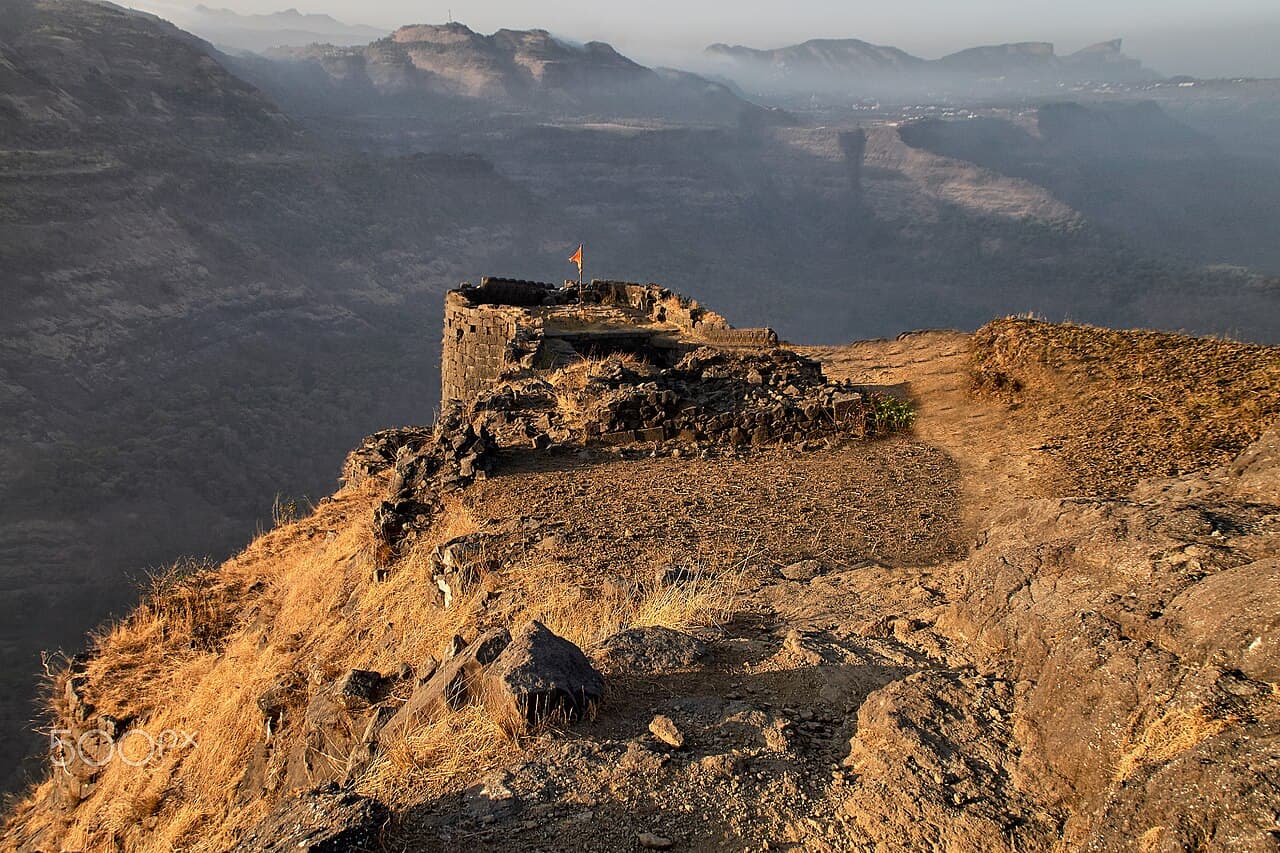
Rajmachi Fort, located in the Sahyadri mountain range of the Western Ghats in India, is a notable example of a bastioned fortress complex. The fort comprises two twin fortresses named Shriwardhan and Manaranjan, which are situated on prominent hilltops connected by a wide machi or plateau. This plateau serves as a strategic and natural defense area, providing a broad vantage point over the surrounding landscape.
Geographical setting and strategic importance
Rajmachi Fort is nestled in the rugged terrain of the Sahyadri hills, part of the Western Ghats, a mountain range known for its dense forests and steep escarpments. The fort's location offered a commanding view of the surrounding valleys and trade routes, making it a significant military outpost during its time of use. The twin fortresses, Shriwardhan and Manaranjan, are positioned to control different directions, enhancing the fort's defensive capabilities.
The twin fortresses: Shriwardhan and Manaranjan
Shriwardhan Fort is the larger of the two and is situated on a higher elevation. It features extensive bastions that were designed to withstand artillery attacks and provide platforms for cannons and other defensive weaponry. The fort's walls are robust, constructed from locally sourced stone, and include several gates and watchtowers that allowed defenders to monitor approaching enemies.
Manaranjan Fort, slightly smaller but equally formidable, lies to the south of Shriwardhan. It also has strong bastions and defensive walls. The two forts together formed a stronghold that could be defended effectively against invading forces.
The machi plateau and Udhewadi village
The machi is a broad, flat plateau that lies between the two forts. This area was used for various purposes including as a base camp, storage area, and agricultural land to support the fort's inhabitants during sieges. At the southern foot of Manaranjan lies Udhewadi, a small village with about 60 households as per the 2011 census. The village is part of the fort complex and provides insight into the local community that historically supported the fort.
Architectural features and defensive design
The fortifications of Rajmachi are characteristic of bastioned fortresses built in the region during the medieval period. The walls are thick and high, designed to resist cannon fire and scaling attempts. The bastions are rounded and project outward from the walls, allowing defenders to cover all approaches with crossfire. The gates are fortified with heavy doors and often preceded by narrow passages or barbicans to slow attackers.
Within the fort, there are remnants of residential quarters, granaries, and water cisterns, indicating a self-sustaining fortification capable of withstanding prolonged sieges. The use of natural rock formations was integrated into the design to enhance defense and reduce construction efforts.
Historical context and significance
Rajmachi Fort has a history that ties it to various regional powers in the Deccan, including the Maratha Empire. Its strategic location made it a valuable military asset during conflicts in the area. The fort's twin structure allowed for effective control over the surrounding territory and served as a refuge during times of war.
Though the exact date of construction is uncertain, the fort likely dates back to the medieval period, with significant modifications made during the Maratha era. It reflects the military architecture of the time, adapted to the hilly terrain and evolving warfare technology.
Current condition and tourism
Today, Rajmachi Fort is partially preserved, with many sections in ruins but still accessible to visitors. It is a popular trekking destination due to its scenic location and historical importance. The village of Udhewadi continues to be inhabited, offering cultural insights and hospitality to tourists.
Visitors can explore the fort's bastions, gates, and the plateau, experiencing firsthand the scale and design of this bastioned fortress. The surrounding Sahyadri hills provide a rich natural backdrop, enhancing the appeal for history enthusiasts and nature lovers alike.
Visiting tips
The best time to visit Rajmachi Fort is during the cooler months from October to March, when the weather is pleasant for trekking. Visitors should be prepared for uneven terrain and limited facilities. Guided tours are available that provide detailed historical context and highlight the architectural features of the fort.
Frequently asked questions (FAQ)
- What is the historical significance of Rajmachi Fort?
- Rajmachi Fort holds immense historical significance as it served as a strategic military outpost during the Maratha Empire. Its location provided a vantage point for monitoring enemy movements and controlling trade routes in the region. The fort is also associated with the legendary Maratha warrior king, Shivaji Maharaj.
- When was Rajmachi Fort built?
- Rajmachi Fort was constructed in the 17th century, during the reign of Chhatrapati Shivaji Maharaj. The fort features impressive architecture and has been a witness to numerous historical events over the centuries, reflecting the rich cultural heritage of Maharashtra.
- How do I get to Rajmachi Fort?
- Rajmachi Fort is accessible by a trek from the base village of Lonavala or by hiring a local vehicle. The trek offers scenic views and takes approximately 2-3 hours, making it a popular choice among adventure enthusiasts. Ensure you wear comfortable shoes and carry enough water for the journey.
- Is it possible to visit Rajmachi Fort year-round?
- Yes, you can visit Rajmachi Fort year-round, but the best time is from October to March when the weather is pleasant. During the monsoon season, the lush greenery makes the landscape stunning, but the trek can be challenging due to slippery trails. Plan your visit according to your preference for weather and scenery.
- What are the opening hours of Rajmachi Fort?
- Rajmachi Fort is open to visitors throughout the day, allowing flexibility in planning your visit. However, it is recommended to start your trek early in the morning or in the late afternoon to avoid the heat and enjoy the cooler temperatures. Always check local guidelines for any changes in access hours.
- Can I find accommodations near Rajmachi Fort?
- Yes, there are several accommodations available near Rajmachi Fort, ranging from budget guesthouses to luxury resorts in Lonavala. Camping options are also popular among trekkers who wish to experience the fort's beauty at night. Booking in advance, especially during peak season, is advisable.
- Are there any nearby attractions to explore?
- In addition to Rajmachi Fort, visitors can explore various nearby attractions, including the Bhira Dam, Tikona Fort, and the scenic Pawna Lake. Each of these spots offers unique experiences and stunning views, making them perfect for day trips. Consider allocating extra time to enjoy the rich natural beauty of the area.
- What are the ticket prices for visiting Rajmachi Fort?
- There are no formal ticket prices for entering Rajmachi Fort, as it is primarily a trekking destination. However, visitors may need to pay nominal fees for parking or local guides if they choose to hire one. Always check for any updates or changes in fees before your visit.

Information
Loading map...
Visitor reviews
No reviews yet. Been here? Write the first review and help other travelers!
Write the first reviewVisited this castle? Share your experience
Your review helps other travelers and adds first-hand knowledge to our encyclopedia.