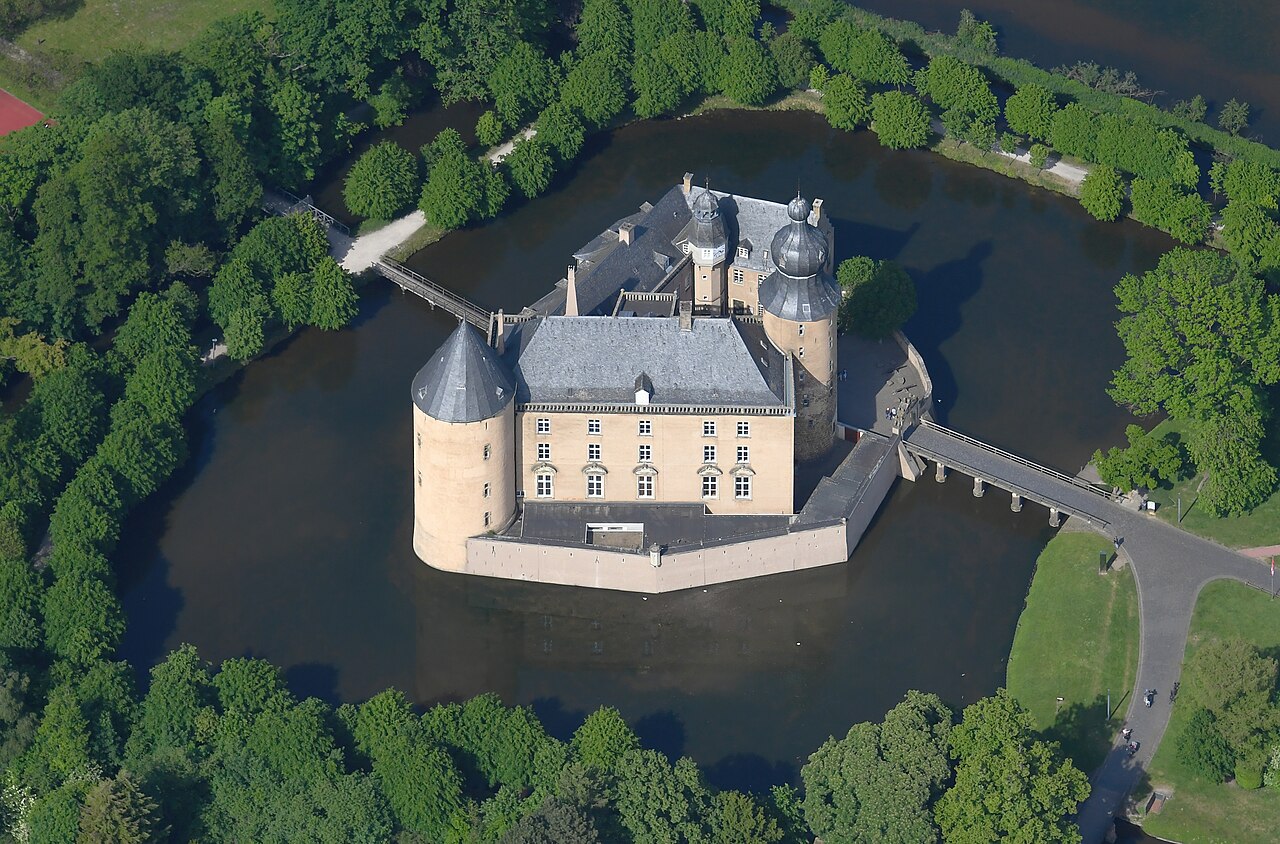
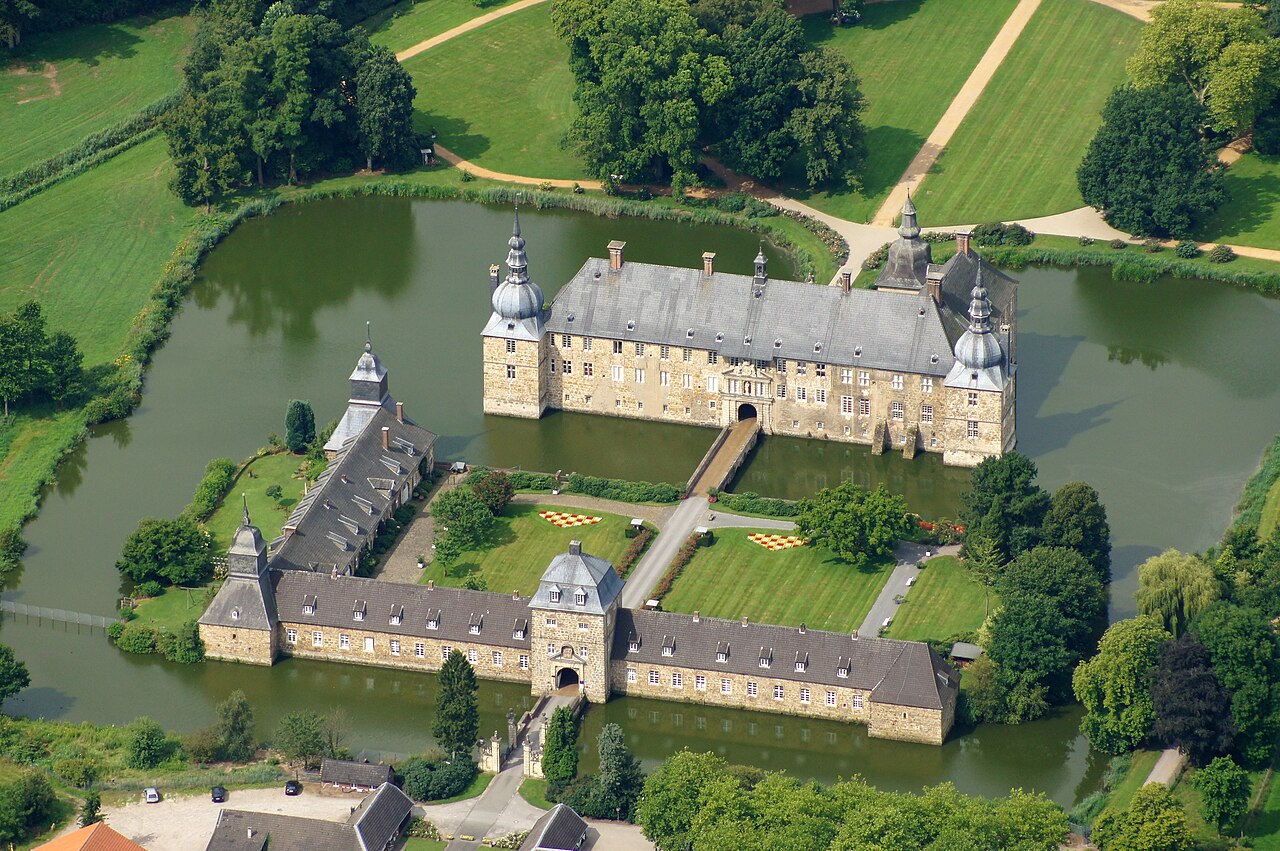
Raesfeld Castle
Raesfeld Castle is a significant historical structure located in Raesfeld, Germany, with origins tracing back to the early 12th century. Initially established as a medieval fortress by the Lords of Raesfeld, it served as a strategic stronghold in the region. The castle's early architecture reflected the defensive priorities of the High Medieval period, featuring robust fortifications typical of the era.
The medieval origins and early ownership
The castle was first documented in the 12th century, marking it as a longstanding symbol of feudal power in the Westphalian region. The Lords of Raesfeld maintained control over the castle for several centuries, using it as both a defensive site and administrative center. The original structure likely included a fortified keep and surrounding curtain walls, designed to withstand sieges and local conflicts common in medieval Germany.
Transition to Renaissance residence under the von Velen family
At the end of the 16th century, ownership transferred to the von Velen family, a prominent noble lineage in Westphalia. This change marked the beginning of a significant architectural transformation. Between 1643 and 1658, Imperial Count Alexander II von Velen, known as the 'Westphalian Wallenstein', commissioned a comprehensive conversion of the castle into a Renaissance-style residential palace. This renovation introduced elements such as expansive windows, ornate facades, and more comfortable living quarters, reflecting the period's shift from purely military functions to residential and representational purposes.
Architectural features of the Renaissance conversion
The castle's redesign included the addition of a stepped tower on the west wing, a distinctive feature that remains today. The Renaissance influence is evident in the symmetry of the building's layout and the decorative details that replaced the earlier austere medieval fortifications. The castle was adapted to accommodate the lifestyle of a noble family, emphasizing aesthetics and comfort alongside defense.
Decline and partial demolition in the 18th and 19th centuries
Following the extinction of the von Velen von Raesfeld dynasty in the first half of the 18th century, the castle's importance waned. It was inhabited sporadically and gradually fell into disrepair. By the early 19th century, parts of the castle complex were demolished, and the remaining structures were repurposed for agricultural use. This period saw the loss of three of the original four wings, leaving only the west wing with its stepped tower and the adjoining old building to the north with a rebuilt round tower intact.
20th-century restoration and modern use
After World War II, the castle changed hands to the Chambers of Crafts of the State of North Rhine-Westphalia, who undertook significant restoration efforts to preserve the remaining structures. Today, Raesfeld Castle serves as the seat of the Chambers of Crafts' further education and training institution. It also functions as a venue for cultural events and houses a restaurant, integrating historical preservation with contemporary community use.
Preservation status and cultural significance
The castle is considered well preserved in terms of its remaining structures, with restoration work maintaining its Renaissance character while respecting its medieval origins. Raesfeld Castle stands as an important cultural landmark in North Rhine-Westphalia, showcasing the evolution of castle architecture from medieval fortification to Renaissance residence.
Architectural highlights and layout
The surviving west wing with its stepped tower is the most prominent architectural feature, symbolizing the castle's Renaissance transformation. The adjoining old building to the north includes a rebuilt round tower, which adds to the complex's historic character. The castle's layout originally included four wings arranged around a central courtyard, a common design in Renaissance palaces that balanced defense with residential comfort.
Defensive elements and adaptations
While the castle's Renaissance renovation softened its military appearance, some defensive features remained. The thick masonry walls, towers, and strategic positioning within the landscape reflect its origins as a hill castle designed for defense. The integration of Renaissance aesthetics with medieval fortifications illustrates the architectural transition during the 17th century.
Raesfeld Castle in the context of German castle history
Raesfeld Castle exemplifies the transformation of many German castles from medieval fortresses to Renaissance residences. Its history mirrors broader social and political changes in the region, including the decline of feudal warfare and the rise of noble court culture. The castle's preservation and adaptive reuse highlight efforts to maintain Germany's architectural heritage while providing functional spaces for modern use.
Visitor experience and cultural events
Today, visitors to Raesfeld Castle can explore its historic architecture, attend cultural events, and enjoy the castle's restaurant facilities. The site offers insight into the layered history of German castles, from medieval military stronghold to Renaissance noble residence, and its ongoing role in community life.
Frequently asked questions (FAQ)
- How do I get to Raesfeld Castle?
- Raesfeld Castle is conveniently located in the town of Raesfeld, Germany. Visitors can reach the castle by car, with ample parking available nearby, or by taking public transport to the closest bus stop and walking a short distance to the site.
- What is the historical significance of Raesfeld Castle?
- Raesfeld Castle, originally built in the 14th century, served as a fortified residence and has witnessed significant historical events throughout the centuries. Its architecture reflects the styles of various periods, showcasing the castle's evolution and importance in local history.
- When was Raesfeld Castle built?
- Raesfeld Castle was constructed in the 14th century, with its first documented mention dating back to 1350. Over the years, it has undergone various renovations and restorations, preserving its historical character while adapting to the needs of different eras.
- Can I visit Raesfeld Castle year-round?
- Yes, Raesfeld Castle is open to visitors throughout the year, but specific opening hours may vary by season. It is advisable to check the official website for the most current information on visiting hours and any special events.
- Why is the architecture of Raesfeld Castle unique?
- The architecture of Raesfeld Castle is unique due to its blend of Gothic and Renaissance styles, characterized by its impressive towers and defensive structures. The castle's design reflects its historical role as both a residence and a fortress, making it an interesting study for architecture enthusiasts.
- Is it possible to take guided tours of Raesfeld Castle?
- Yes, guided tours are available at Raesfeld Castle, offering visitors a deeper understanding of its history and architecture. These tours are led by knowledgeable guides and are a fantastic way to explore the castle's rich heritage.
- What are the ticket prices for Raesfeld Castle?
- Ticket prices for Raesfeld Castle are generally affordable, with discounts available for students and seniors. Children under a certain age may enter for free, making it a great option for family outings.
- What is the best time to visit Raesfeld Castle?
- The best time to visit Raesfeld Castle is during the spring and summer months when the weather is pleasant and gardens are in full bloom. Additionally, the castle often hosts events and activities during these seasons, enhancing the visitor experience.
- Are there any nearby attractions to Raesfeld Castle?
- Yes, there are several attractions near Raesfeld Castle, including beautiful parks and charming local shops. Visitors can also explore the picturesque town of Raesfeld, which offers a glimpse into traditional German culture and architecture.
Information
Loading map...
Visitor reviews
No reviews yet. Been here? Write the first review and help other travelers!
Write the first reviewVisited this castle? Share your experience
Your review helps other travelers and adds first-hand knowledge to our encyclopedia.