Rachol Fort
Rachol Fort is a significant Portuguese era bastioned fortress situated in the village of Rachol, within the Salcette concelho of Goa, on the west coast of India. This fortification reflects the strategic military architecture employed by the Portuguese during their colonial rule in India, which lasted from the early 16th century until the mid-20th century.
Historical context and strategic importance
The construction of Rachol Fort took place during the period when the Portuguese were consolidating their hold over the coastal regions of India. The fort was built to protect the surrounding territory and to serve as a defensive bulwark against invasions by regional powers and rival European colonizers. Its position in Salcette was crucial for controlling inland access and securing the important trade routes that passed through Goa.
Throughout its history, the fort witnessed several military engagements and played a role in the defense system of Portuguese Goa. It was part of a network of fortifications that included other notable forts such as Aguada and Reis Magos, which together formed a defensive perimeter around the colony.
Architectural features and design
Bastioned fortress layout
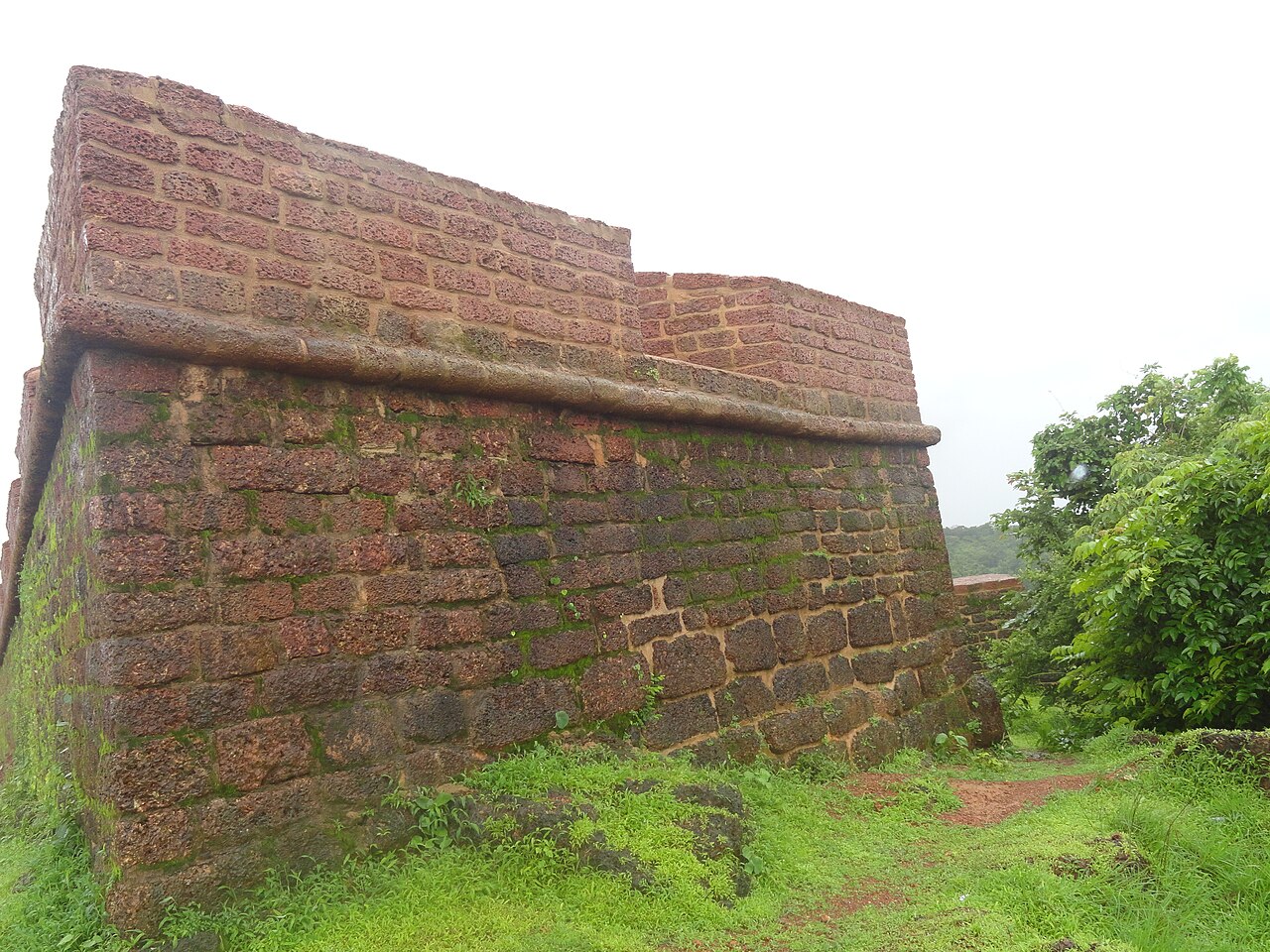
Rachol Fort exemplifies the bastioned fortress style, which was a prevalent military architectural form in the 16th and 17th centuries. This design features angular bastions projecting outward from the main walls, allowing defenders to cover adjacent walls with cannon and musket fire, eliminating blind spots and enhancing the fort's defensive capabilities.
The fort's walls are constructed from laterite stone, a common building material in the region, known for its durability and resistance to tropical weather conditions. The bastions are robust and designed to withstand artillery attacks, with thick walls and embrasures for cannons.
Entrances and internal structures
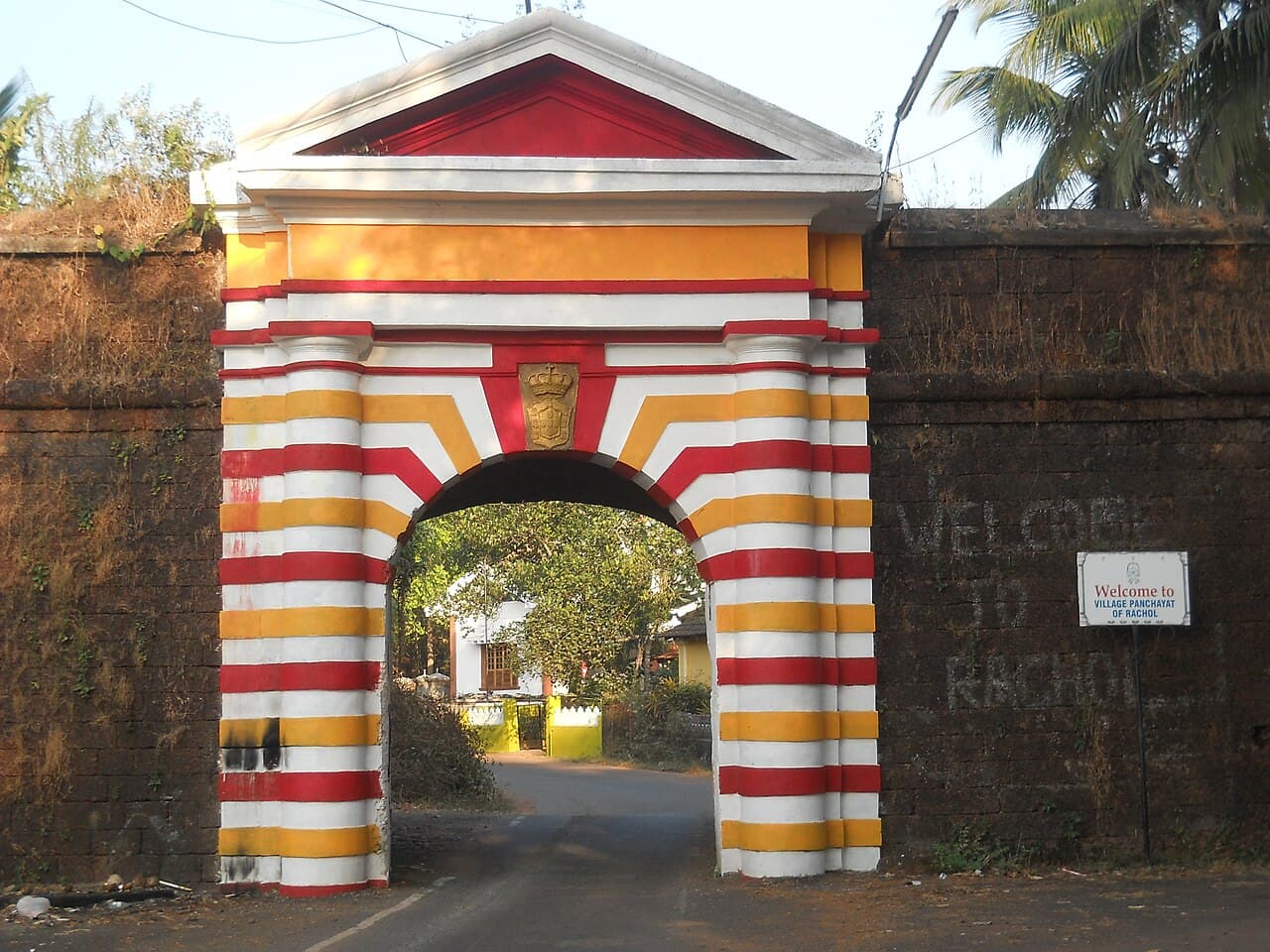
The main entrance of Rachol Fort is fortified with a heavy gate and defensive features such as guardhouses and loopholes for firing. Inside, the fort once housed barracks, ammunition storage, and quarters for officers, although many of these structures are now in ruins or have been repurposed.
The layout includes a courtyard that would have served as a muster point for troops and a space for supplies and equipment. The fort's design reflects the military engineering principles of the Portuguese colonial period, emphasizing functionality and defense.
Role in Portuguese Goa and subsequent history
During the height of Portuguese power in Goa, Rachol Fort was a key military installation. It helped maintain Portuguese dominance in the region and safeguarded the colony against both local resistance and foreign threats. The fort's presence contributed to the stability of Portuguese administration in Salcette and the surrounding areas.
After the decline of Portuguese rule and the eventual annexation of Goa by India in 1961, the fort lost its military significance. Today, it stands as a historical monument, reflecting the colonial past and military heritage of Goa.
Current condition and preservation efforts
Rachol Fort is currently classified as partially preserved. While some sections of the fort remain intact, others are in a state of ruin, with walls and bastions showing signs of weathering and neglect. Efforts have been made by local authorities and heritage organizations to conserve the fort and promote it as a cultural and tourist attraction.
Visitors to the fort can observe the characteristic bastioned walls and imagine the strategic importance it held during the Portuguese era. The fort's location also offers views of the surrounding landscape, including the nearby village and the Sal River.
Visiting information and cultural significance
The fort is accessible to visitors interested in the military history of Goa and Portuguese colonial architecture. It provides insight into the defensive strategies employed by European powers in India and the adaptation of European fortification styles to the tropical environment.
Nearby attractions include the historic Rachol Seminary and the Church of Our Lady of Snows, which together with the fort form part of the rich cultural tapestry of the region.
Frequently asked questions (FAQ)
- What is the historical significance of Rachol Fort?
- Rachol Fort was a key Portuguese military fortification in Goa, protecting the region and trade routes during colonial times.
- Can I visit Rachol Fort today?
- Yes, the fort is partially preserved and open to visitors who want to explore its bastioned walls and historical layout.
- What architectural style characterizes Rachol Fort?
- The fort is designed as a bastioned fortress, featuring angular bastions for enhanced defense typical of 16th and 17th-century military architecture.
- Where is Rachol Fort located?
- Rachol Fort is located in the village of Rachol, in the Salcette region of Goa, India, on the west coast.
- Are there other historical sites near Rachol Fort?
- Nearby attractions include the Rachol Seminary and the Church of Our Lady of Snows, important cultural landmarks in the area.
Photo gallery

Information
Loading map...
Visitor reviews
No reviews yet. Been here? Write the first review and help other travelers!
Write the first reviewVisited this castle? Share your experience
Your review helps other travelers and adds first-hand knowledge to our encyclopedia.