Rabati Castle
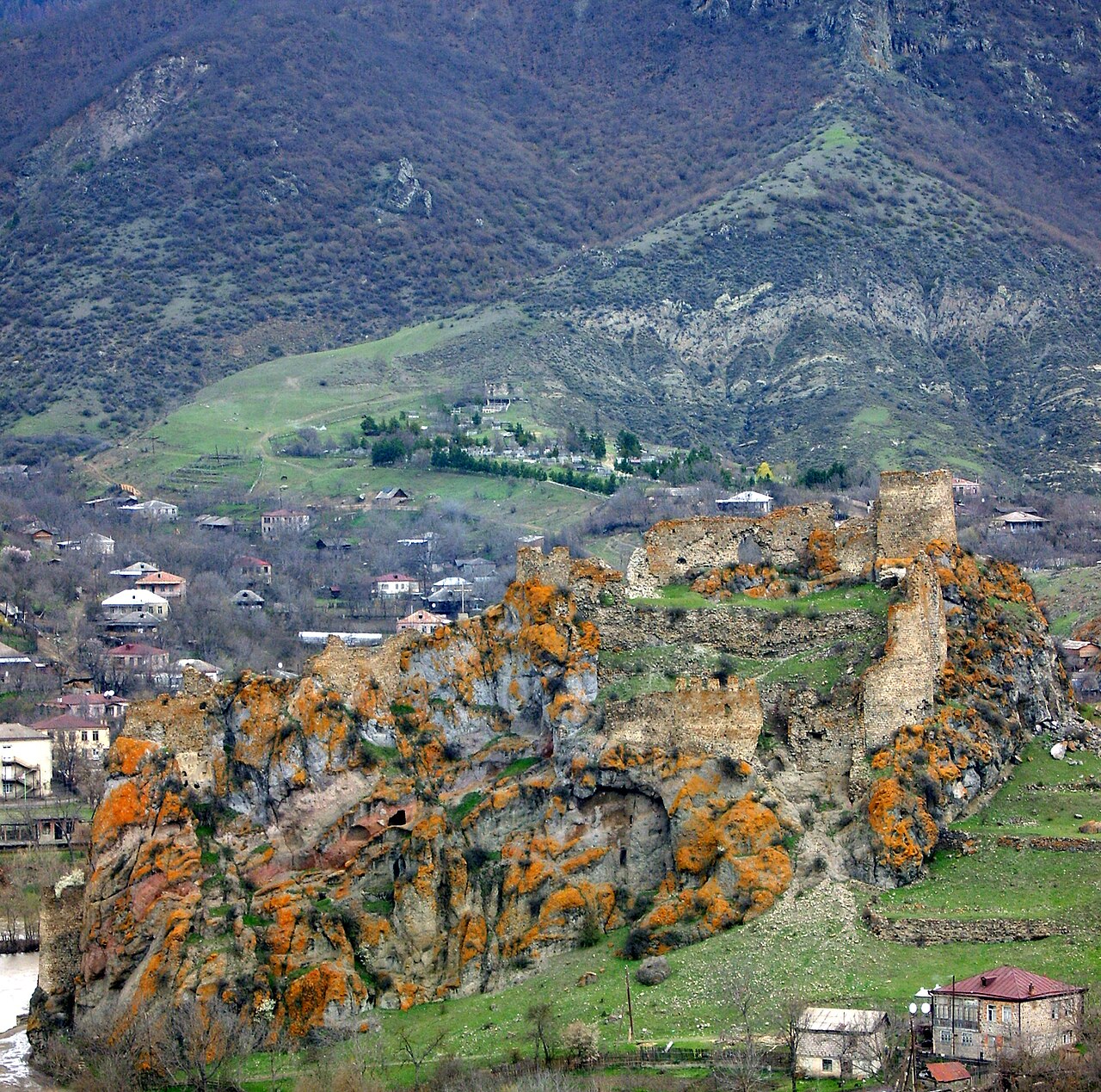
Rabati Castle is a prominent historic fortress complex located in the city of Akhaltsikhe, within the Samtskhe–Javakheti region of Georgia. This castle, also known as Akhaltsikhe Castle, has a rich history that spans over a millennium, reflecting the complex cultural and political changes in the region. Originally founded in the 9th century by Guaram Mampali, a Georgian Bagratid prince, the fortress was initially called Lomisa. The name Akhaltsikhe, meaning "New Castle," first appeared in historical records in 1204, indicating the replacement or expansion of an earlier fortification.
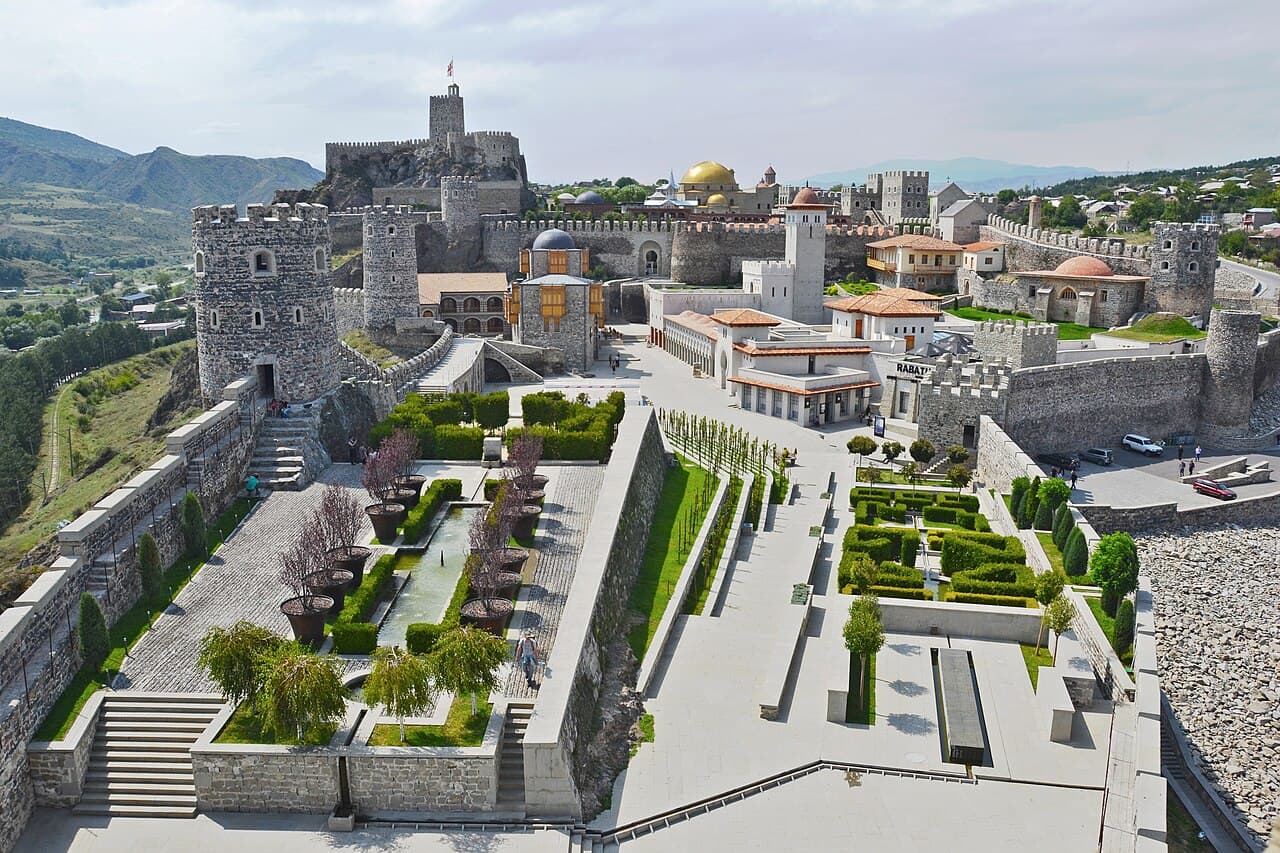
The castle's strategic location on the left bank of the Potskhovi River and its position on a rocky outcrop known as Rabati Inn Rocky made it a vital stronghold throughout its history. The fortress complex is architecturally diverse, comprising a small castle perched on the highest point, a middle bailey containing religious and administrative buildings, and an outer bailey. The middle bailey notably includes a mosque, a madrasa (Islamic school), a church, and the Jaqeli Palace. A covered walkway from the outer bailey extends down to the river, illustrating the castle’s integration with the natural landscape.
Early history and medieval significance
The origins of Rabati Castle trace back to the 9th century when it was established by Guaram Mampali, the youngest son of Ashot I of Iberia. Initially called Lomisa, the fortress served as a defensive and administrative center. By the 13th century, Akhaltsikhe had become the capital of the Principality of Samtskhe or Samtskhe-Saatabago, governed by the influential House of Jaqeli. This Georgian princely family played a crucial role in the region’s political and cultural life.
During the late 13th and 14th centuries, the castle and city flourished as a regional capital. However, in 1393, the fortress endured a significant attack by the Turco-Mongol armies of Tamerlane. Despite this assault, Rabati Castle withstood the siege and continued to serve as a vital stronghold in the region.
Ottoman rule and architectural transformation
The geopolitical landscape shifted dramatically after the 1590 Treaty of Constantinople, which placed the entire territory of Samtskhe-Saatabago under Ottoman rule. The Ottomans undertook extensive rebuilding and fortification of the castle throughout the 17th and 18th centuries. This period saw the addition of several Islamic architectural elements, including the construction of the present mosque in 1752 and the establishment of a madrasa within the complex.
The Ottoman architectural influence is evident in the castle’s defensive walls, towers, and religious structures, which contrast with the earlier Georgian medieval elements. Despite the Islamization of much of the local population, the complex retained a functioning Orthodox church, highlighting the area's religious diversity during Ottoman rule.
Russian conquest and decline
The early 19th century marked a turbulent era for Rabati Castle. In 1810, the Russian Empire made an unsuccessful attempt to capture the fortress from the Ottomans. However, during the Russo-Turkish War of 1828-1829, Russian forces under General Paskevich successfully seized the castle at the Battle of Akhaltsikhe in 1828. This victory was a significant step in Russia's expansion into the Caucasus region.
Following the Russian conquest and the subsequent Treaty of Adrianople in 1829, Rabati Castle gradually lost its military importance. The fortress and its buildings fell into disrepair over the ensuing decades, reflecting the diminished strategic value in the new political context.
Modern restoration and cultural significance
In the early 21st century, a comprehensive restoration project was undertaken between 2011 and 2012 to revive Rabati Castle as a cultural and tourist attraction. The restoration included the renovation of the mosque, madrasa, Jaqeli Palace, and the 9th/10th century church. Additionally, modern facilities such as a museum, hotel, and restaurants were developed within the outer bailey to enhance visitor experience.
While the restoration has been praised for revitalizing the site, some critics note the extensive use of modern materials like concrete, which affects the castle's perceived authenticity. Nonetheless, Rabati Castle remains a significant symbol of the region's layered history, showcasing Georgian medieval heritage, Ottoman architectural influence, and modern cultural preservation.
Architectural features and layout
The castle complex is notable for its multi-layered defensive and functional layout. The small inner castle occupies the highest terrain, providing a vantage point for surveillance and defense. The middle bailey serves as the cultural and religious heart of the complex, containing the mosque, madrasa, church, and the palace. The outer bailey encloses the entire complex and includes modern amenities for visitors.
The presence of both Islamic and Christian religious buildings within the same fortress is a unique feature, reflecting the region's diverse heritage. The covered walkway leading down to the Potskhovi River suggests a sophisticated integration of the fortress with its natural surroundings, likely facilitating water access and movement during sieges.
Museum and cultural collections
Rabati Castle also hosts the Ivane Javakhishvili Samtskhe-Javakheti History Museum, established in 1972 and named after the renowned Georgian historian. The museum's extensive collections include over 25,000 artifacts, ranging from ancient manuscripts and printed books dating back to the 11th century to archaeological, numismatic, ethnographic, and textile collections.
The museum also preserves ancient stone inscriptions and carpets from the 19th and 20th centuries, providing invaluable insights into the region's cultural and historical development. Since 2004, the museum has been part of the Georgian National Museum network, enhancing its role in heritage preservation.
Visiting rabati castle today
Today, Rabati Castle is open to visitors for a small admission fee during regular office hours. The site offers panoramic views of Akhaltsikhe and the surrounding landscape, making it a popular destination for tourists interested in history, architecture, and culture. Despite some critiques regarding the restoration approach, the castle complex remains a compelling example of Georgia's rich and diverse past.
Visitors can explore the well-preserved and reconstructed elements of the fortress, including the Jaqeli Palace, the mosque, the madrasa ruins, and the medieval church. The museum within the complex provides additional context and depth to the historical narrative of the region.
Frequently asked questions (FAQ)
- How do I get to Rabati Castle?
- Rabati Castle is located in Akhaltsikhe, Georgia, and is accessible by car or public transport from major cities like Tbilisi and Batumi. The castle is well-signposted, making it easy for visitors to find. If you're driving, ample parking is available nearby.
- What is the historical significance of Rabati Castle?
- Rabati Castle has a rich history dating back to the 9th century and has served as a strategic fortification throughout various periods. It reflects the diverse cultural influences that have shaped Georgia, including Persian, Ottoman, and Russian elements. Today, it stands as a symbol of the region's resilience and historical importance.
- When was Rabati Castle renovated?
- Rabati Castle underwent significant renovations from 2011 to 2012, restoring its structures and enhancing its facilities for visitors. These renovations aimed to preserve the castle's historical integrity while making it more accessible and engaging for tourists. The updated site now showcases a blend of historical architecture and modern amenities.
- Can I take guided tours of Rabati Castle?
- Yes, guided tours are available at Rabati Castle, providing visitors with in-depth insights into its history and architecture. Tours are conducted in multiple languages, ensuring a comprehensive experience for all guests. It's recommended to check the schedule in advance and book your tour to secure a spot.
- Why is Rabati Castle a popular tourist destination?
- Rabati Castle is popular due to its stunning architecture, historical significance, and picturesque views of the surrounding area. The castle complex includes museums, churches, and gardens, offering visitors a multifaceted experience. Its rich heritage and well-preserved structures attract history enthusiasts and casual visitors alike.
- Is it possible to visit Rabati Castle year-round?
- Yes, Rabati Castle is open to visitors year-round, with each season offering a unique experience. However, it's advisable to check the weather conditions, as winter can bring snow and colder temperatures, which may affect accessibility. The castle's beauty changes with the seasons, making it a worthwhile visit at any time of the year.
- What are the opening hours for Rabati Castle?
- Rabati Castle typically opens at 10 AM and closes at 6 PM, but these hours may vary during the off-peak season or holidays. It's best to verify the current opening hours before your visit to ensure you have ample time to explore the site. Extended hours may be available during the summer months.
- What are the ticket prices for Rabati Castle?
- Tickets to Rabati Castle are reasonably priced, with discounts available for students and groups. Children under a certain age can often enter for free, making it a great family destination. Check the official website or local tourism information for the most up-to-date pricing details before your visit.
- Are there any nearby attractions to visit after Rabati Castle?
- Yes, after exploring Rabati Castle, visitors can enjoy nearby attractions such as the historic Akhaltsikhe city center and the picturesque Sapara Monastery. The area is rich in natural beauty, with opportunities for hiking and enjoying the scenic landscapes of Georgia. Plan a full day to experience the culture and history of the region.
Photo gallery

Information
Loading map...
Visitor reviews
No reviews yet. Been here? Write the first review and help other travelers!
Write the first reviewVisited this castle? Share your experience
Your review helps other travelers and adds first-hand knowledge to our encyclopedia.