Okros Castle
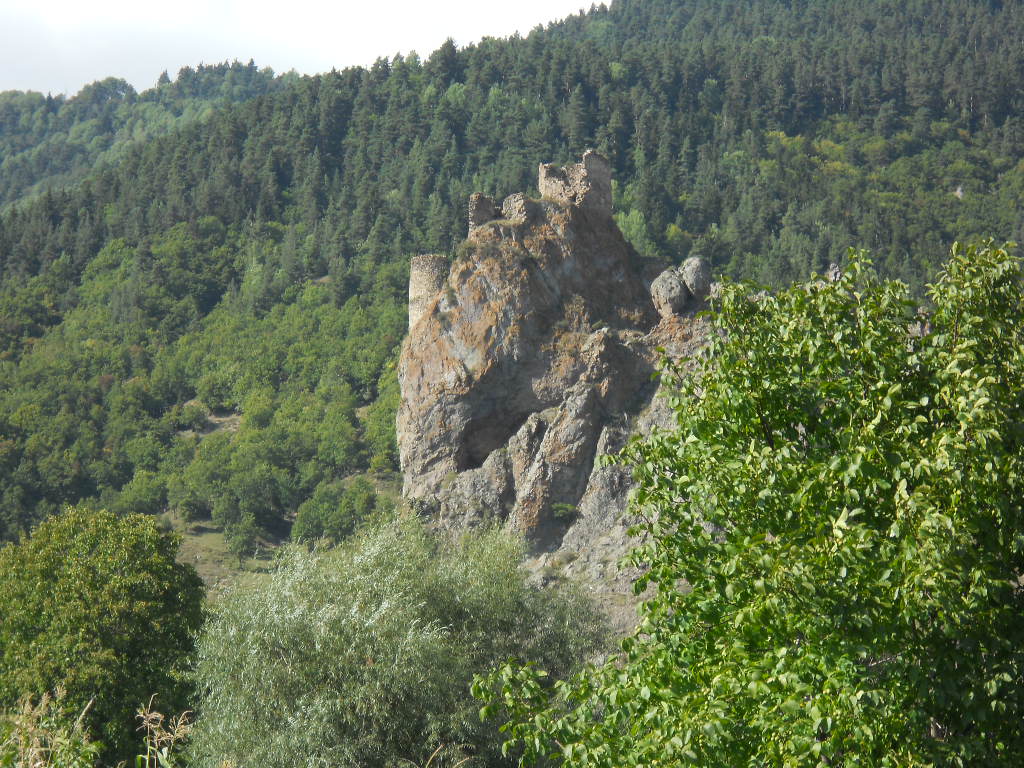
Okros Castle, also known as Okrostsikhe or the Golden Fortress, is a significant medieval stronghold perched on a cliff-like rocky ridge west of the village of Shoka in the Samtskhe–Javakheti region of Georgia. Its evocative name derives from the golden hue it reportedly takes on when the setting autumn sun illuminates its stone walls, a natural spectacle that highlights the castle's unique position and architectural presence in the landscape. The alternative name Altunkala reflects the Ottoman influence in the area during later centuries.
Historical context and strategic importance
While the exact origins of Okros Castle remain uncertain, historical analysis suggests it was constructed in the late 13th or early 14th century, situating it firmly within the late medieval period. The castle's primary role was defensive, guarding the Meskheti region against various incursions and serving as a military and administrative center. Between the 15th and 18th centuries, Okros Castle was a pivotal fortress in the defense network of southern Georgia, reflecting the region's turbulent history marked by frequent conflicts and shifting political powers.
Architectural features and layout
Okros Castle is notable for its irregular ground plan, which closely follows the natural contours of the rocky ridge on which it is built. This strategic placement, rising approximately 500 meters above the Adigeni valley, provided commanding views over the surrounding landscape and made the fortress difficult to assault. The castle's extensive size ranks it among the largest medieval castles in Georgia.
The fortress incorporates defensive walls that adapt to the ridge's shape, with battlements and towers positioned to maximize defensive coverage. The natural rocky outcrop itself served as a formidable barrier, reducing the need for artificial fortifications on certain sides. Access to the castle was deliberately challenging, requiring a strenuous hour-long hike from Shoka village, which further enhanced its defensibility.
Construction materials and techniques
The castle's construction primarily utilized local stone, skillfully shaped and assembled to create robust walls capable of withstanding sieges. The masonry work reflects the typical methods of the late medieval period in the Caucasus region, combining functionality with an imposing aesthetic. The walls' thickness and the positioning of the defensive structures suggest careful planning to leverage the natural terrain.
Notable historical events and figures
One of the most significant historical episodes associated with Okros Castle occurred in 1578, when it served as the headquarters of Dedisimedi, the widow of Kaikhosro II Jaqeli, the Atabeg of Samtskhe. During this period, Dedisimedi led resistance efforts against the advancing Ottoman army, highlighting the castle's strategic and symbolic importance.
Following the eventual acceptance of Ottoman suzerainty by the Jaqeli family, the castle witnessed the visit of Lala Mustafa Pasha, an Ottoman general. His diplomatic yet firm demand that Dedisimedi's sons convert to Islam underscores the political and religious pressures exerted on Georgian nobility during Ottoman expansion.
Current status and visitor information
Today, Okros Castle remains accessible to visitors interested in exploring Georgia's medieval heritage. Its partially preserved state allows for an evocative glimpse into its past, though the rugged terrain and weather conditions can pose challenges. Visitors should be prepared for a demanding hike of about an hour from Shoka village to reach the site.
The castle's dramatic setting and historical significance make it a compelling destination for those interested in medieval architecture, Georgian history, and the legacy of the Meskheti region. The site offers panoramic views of the surrounding valleys and mountains, enriching the visitor experience.
Accessibility and safety considerations
Due to its mountain location, access to Okros Castle can be affected by weather, as heavy storms may render the paths unsafe. It is advisable to check local conditions before planning a visit. The castle is freely open to the public, with no entrance fees, though facilities are minimal, reflecting its remote and historic nature.
Cultural and heritage significance
Okros Castle stands as a testament to the medieval military architecture of Georgia and the region's complex history of conflict and cultural exchange. Its evocative names and enduring presence link it to the broader narratives of Georgian resilience and adaptation during periods of foreign domination.
The castle's association with notable figures like Dedisimedi and its role in resisting Ottoman advances contribute to its status as a cultural landmark. Preservation efforts and historical research continue to shed light on its importance within the heritage of the Samtskhe–Javakheti region.
Frequently asked questions (FAQ)
- How do I get to Okros Castle from Shoka village?
- Okros Castle is accessible via a hiking trail from Shoka village, which takes about an hour. The path follows mountainous terrain, so visitors should be prepared for a moderately challenging hike.
- What is the historical significance of Okros Castle?
- Okros Castle played a key role in the defense of the Meskheti region from the 15th to the 18th century and was the headquarters of Dedisimedi during resistance against the Ottoman invasion in 1578.
- Is Okros Castle open to the public?
- Yes, Okros Castle is freely accessible to visitors. There is no entrance fee, but facilities are limited due to its remote location.
- When was Okros Castle built?
- Okros Castle was likely built in the late 13th or early 14th century, placing it in the late medieval period of Georgian history.
- Why is Okros Castle called the Golden Fortress?
- The castle is called the Golden Fortress because it reportedly emits a golden glow when the setting autumn sun shines on its stone walls, creating a striking visual effect.
Information
Loading map...
Visitor reviews
No reviews yet. Been here? Write the first review and help other travelers!
Write the first reviewVisited this castle? Share your experience
Your review helps other travelers and adds first-hand knowledge to our encyclopedia.