Atskuri Castle — Georgia castle

Atskuri Castle

Atskuri castle in samtskhe-javakheti, georgia
Atskuri, Samtskhe-Javakheti, Georgia
Early Medieval (5th–10th c.)
Partially Preserved

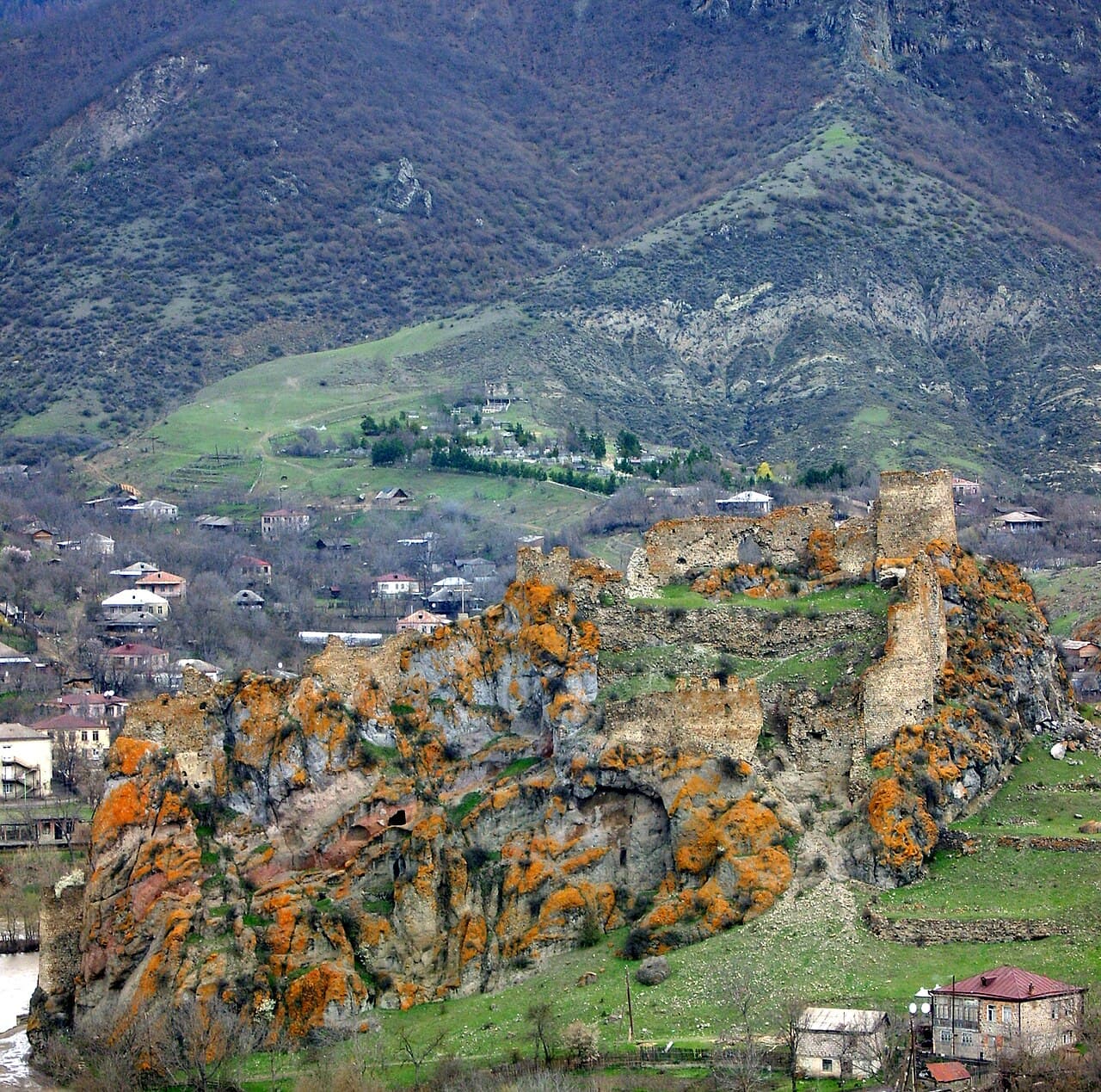
Atskuri Castle is a significant historical fortress located in the village of Atskuri within the Akhaltsikhe municipality, part of the Samtskhe-Javakheti region in Georgia. This early medieval bastioned fortress was constructed in the 10th century on a rocky ridge overlooking the right bank of the Kura River (known locally as the Mtkvari), a strategic natural gateway leading to the Georgian heartland from the south.

Strategic location and defensive role

The castle's position was chosen for its commanding views and natural defensive advantages. It guarded the entrance to the Kura River gorge, a vital passageway for trade and military movements. The fortress's walls follow the natural contours of the rocky terrain, integrating the landscape into its defensive design. This location allowed the defenders to control access to the region and monitor any approaching forces effectively.

Architectural features and construction

Atskuri Castle exemplifies medieval military architecture adapted to its rugged environment. The fortress was built with bastioned fortifications, a style that provided enhanced defensive capabilities through projecting walls and platforms for artillery or archers. The walls are constructed to conform closely to the rocky ridge, maximizing the natural barriers against attackers.

At the western end of the castle ruins, visitors can observe the remains of a tunnel leading down to the river. This feature likely served as a secret passage for water supply or escape during sieges, demonstrating the strategic foresight in the castle's design.

Historical events and sieges

The history of Atskuri Castle is marked by several significant military events. In 1260, the fortress endured a siege by a Mongol army commanded by Arghun Aqa. This event occurred during the rebellion of King David VII of Georgia against Mongol overlordship. The castle's resistance during this siege highlights its importance as a defensive stronghold in medieval Georgian conflicts.

Later, at the end of the 13th century, the region was struck by a powerful earthquake that caused considerable damage to the castle. Despite this natural disaster, the fortress was repaired and continued to serve a military role.

In the 16th century, following the Ottoman Empire's conquest of the area, Atskuri Castle was garrisoned by Ottoman troops. The castle's architecture bears marks from this period, reflecting modifications and repairs made to suit Ottoman military needs. The Ottoman occupation lasted until 1828, during which the castle remained a key defensive site.

Preservation and current condition

Today, Atskuri Castle stands as a partially preserved ruin. The fortress has suffered damage from multiple sieges and natural events over the centuries, with each restoration phase leaving traces of its varied history. The rocky terrain and steep surfaces around the castle make access challenging, and ongoing or unfinished consolidation efforts have impacted visitor safety.

Visitors are advised to exercise caution when exploring the site due to unstable ground and rubble. Despite these challenges, the castle offers a compelling glimpse into Georgia's medieval military architecture and regional history.

Cultural and historical significance

Atskuri Castle is an important cultural monument within Georgia, representing the medieval feudal era and the strategic military efforts to protect the kingdom's southern borders. Its location along the Kura River corridor underscores its role in controlling one of the main routes into the country.

The fortress's layered history, from its early medieval origins through Mongol sieges and Ottoman occupation, provides valuable insights into the geopolitical dynamics of the Caucasus region over several centuries.

Frequently asked questions (FAQ)

How do I get to Atskuri Castle?
Atskuri Castle is located in the village of Atskuri, Georgia, which is easily accessible by car or public transport from nearby cities like Akhaltsikhe. If you are driving, follow the signs from Akhaltsikhe, and you will find the castle situated on a hill with stunning views of the surrounding landscape.
What is the historical significance of Atskuri Castle?
Atskuri Castle dates back to the 13th century and played a crucial role in the defense of the region throughout various historical conflicts. It served as a strategic stronghold for local rulers and has witnessed numerous battles, making it an important site for understanding the history of Georgia.
When was Atskuri Castle built?
The construction of Atskuri Castle is believed to have begun in the early 13th century, during the period of the Kingdom of Georgia. Its architecture reflects the medieval styles prevalent in the region, showcasing both defensive capabilities and artistic elements typical of Georgian fortifications.
Can I visit Atskuri Castle year-round?
Yes, Atskuri Castle is open to visitors year-round. However, it's recommended to check the local weather conditions before your visit, as accessibility can be affected by snow or rain during the winter months.
Why is Atskuri Castle a popular tourist destination?
Atskuri Castle attracts visitors for its rich history, stunning architecture, and breathtaking views of the surrounding countryside. Additionally, it provides a unique glimpse into medieval Georgian life and is often less crowded than other castles, allowing for a more intimate experience.
Is it possible to explore the castle's interior?
While much of Atskuri Castle is in ruins, visitors can still explore its exterior and the remnants of its structure. Guided tours may provide insights into the castle's history and architectural features, enhancing your overall experience.
What are the opening hours for Atskuri Castle?
Atskuri Castle is generally open to the public during daylight hours, typically from sunrise to sunset. However, it is advisable to check local resources or visitor information centers for any seasonal changes in operating hours.
Are there any nearby attractions to visit?
Yes, there are several nearby attractions, including the historic Rabati Castle in Akhaltsikhe and the picturesque Vardzia cave monastery. These sites offer additional insights into Georgia's rich history and stunning landscapes, making them great additions to your itinerary.
What are the ticket prices for visiting Atskuri Castle?
Currently, visiting Atskuri Castle is free of charge, allowing all visitors to enjoy its historical significance without an entrance fee. However, consider bringing some local currency for potential guided tours or donations to preserve the site.

Photo gallery

Atskuri Castle
Click to view

Photo by ლაშაგიორგი•Attribution

1 photo • Click any image to view in full screen

Information

Bastioned Fortress

Loading map...

Visitor reviews

No reviews yet. Been here? Write the first review and help other travelers!

Write the first review

Visited this castle? Share your experience

Your review helps other travelers and adds first-hand knowledge to our encyclopedia.

Write a review

(5/5)

0/2000 characters

Your review will be visible after admin approval

Nearby castles

4 km

Slesa Castle

Borjomi, Georgia

Slesa Castle is a notable high medieval fortress located northeast of the village of Atskuri in the Akhaltsikhe municipality, within the Samtskhe–Javakheti region of Georgia. This castle complex is strategically positioned on the left bank of the Kura River (known locally as the Mtkvari), guarding the crucial southern approach into the Georgian heartland through the river gorge. Historical background and strategic importance The origins of Slesa Castle date back to the 10th or 11th century, placing it firmly within the high medieval period. Its primary function was military defense, serving as a vital checkpoint to control movement along the gorge and protect the region from invasions coming from the south. This defensive role was part of a broader network of fortifications along the Kura River gorge, which communicated through bonfires to signal the approach of enemy forces, a common medieval warning system. Despite its early construction, the castle is first documented in historical records only in the 16th century, during the period of the Ottoman Empire's expansion into Georgian territories. At this time, Slesa Castle played a role in resisting Ottoman incursions, highlighting its continued military relevance several centuries after its initial construction. Architectural layout and features Slesa Castle is unique in that it comprises two separate fortifications situated on two adjacent hills. These are often referred to as Slesa Castle itself and the nearby Moktseva Castle. While some sources suggest that Moktseva is simply an alternate name for Slesa, the physical separation and distinct locations suggest these names correspond to two different defensive structures within the same complex. The main castle sits prominently on a rocky hill overlooking the river, providing commanding views of the gorge and surrounding landscape. The second fortification, often called the southern tower, is located on another hill nearby but is more difficult to access due to steep terrain and requires rock climbing skills to reach safely. This tower likely served as an advanced lookout or secondary defense point. The castle's construction features typical high medieval defensive elements such as thick stone walls, battlements, and strategically placed towers. The use of natural rock formations integrated into the fortifications enhanced its defensive capabilities, making it a formidable obstacle for attackers. Current condition and accessibility Today, Slesa Castle remains in a state of ruins, with many of its walls and structures partially preserved. Visitors can freely access the site, which lies adjacent to the S8 road connecting Borjomi and Akhaltsikhe. However, reaching some parts of the castle, especially the southern tower, involves challenging rock climbing and is not recommended without proper equipment and experience. The site offers a compelling experience for history enthusiasts and hikers alike, combining natural beauty with the evocative remains of medieval military architecture. Its location along a historic route and proximity to other Georgian cultural sites make it a valuable destination for those interested in the region's past. Role in Georgian medieval defense network Slesa Castle was part of a larger chain of fortifications that secured the Kura River gorge, a critical corridor for trade and military movements. The system of castles and towers in this area used visual signals such as bonfires to warn of approaching enemies, facilitating rapid communication across difficult terrain. This network was essential for the defense of medieval Georgia against invasions from the south, particularly during periods of conflict with the Ottoman Empire and other regional powers. Visiting tips and historical significance Visitors to Slesa Castle should prepare for a physically demanding visit due to the rugged landscape and the partial ruinous state of the structures. The castle's remote location and limited signage mean that some navigation skills are helpful. Despite these challenges, the site provides valuable insights into the military architecture and regional history of medieval Georgia. Its dual-fortification layout and strategic placement illustrate the complexity of Georgian defensive strategies during the high medieval period. The castle stands as a testament to the region's turbulent history and the enduring importance of controlling key geographic chokepoints.

High Medieval (11th–13th c.)
Details
18.1 km

Aspindza Castle

Aspindza, Georgia

Aspindza Castle is a modest medieval fortress located in the village of Aspindza within the Samtskhe–Javakheti region of Georgia. Perched on a rocky promontory that extends into the valley of the Kura River (known locally as the Mtkvari), this castle offers commanding views of the surrounding landscape. Its strategic placement suggests a defensive purpose, controlling movement along the river valley and serving as a local stronghold in the region.The castle's rectangular ground plan is defined by its enclosing walls, which incorporate a square tower oriented towards the adjacent mountainous terrain. This tower likely functioned as a lookout and defensive bastion, providing vantage points for surveillance and protection against incursions. A second, more slender tower is attached to the northern curtain wall, though its precise function remains uncertain. It may have served as an additional watchtower or housed facilities related to the castle's defensive operations.While detailed historical records about Aspindza Castle are scarce, its architectural features align with typical medieval Georgian fortifications, which often utilized natural topography for defense. The use of local stone in construction and the castle's integration into the rocky outcrop exemplify practical design choices suited to the region's terrain.Architectural features and layoutThe castle's layout is relatively simple but effective for its size. The rectangular plan encloses an inner courtyard, which would have accommodated essential facilities such as storage, living quarters, and possibly a cistern for water supply. The robust curtain walls are punctuated by towers that enhance defensive coverage, allowing defenders to monitor approaches and repel attackers.The square tower facing the mountain is the dominant feature, rising above the curtain walls to provide a commanding view. Its design suggests it was built for both defense and observation. The slender northern tower, while less prominent, adds complexity to the castle's silhouette and may have had specialized defensive or administrative roles.Historical context and significanceAlthough specific historical events linked to Aspindza Castle are not well documented, the castle's location in the Samtskhe–Javakheti region places it within a historically contested area. This region of Georgia has been a crossroads of various empires and local powers, including the Georgian Kingdoms, the Ottoman Empire, and Persian influences over centuries. Castles like Aspindza would have been integral to local defense networks and control of trade routes.The castle likely dates from the medieval period, a time when fortifications were essential for protecting settlements and asserting territorial control. Its modest size and strategic position suggest it served a primarily local function rather than acting as a major military fortress.Current condition and visitor informationToday, Aspindza Castle is in a state that allows free public access. The structure remains largely intact, though it is best described as a partially preserved medieval fortress. Visitors can explore the castle grounds and appreciate its integration with the natural rocky promontory and views over the Kura River valley.The castle's accessibility and picturesque setting make it an interesting destination for those interested in Georgian history and medieval architecture. While it lacks extensive visitor facilities, its authenticity and quiet location offer a genuine experience of a small rural fortress.Exploring the surrounding areaThe village of Aspindza and the wider Samtskhe–Javakheti region are rich in cultural and natural attractions. Visitors to the castle can also explore nearby historical sites, traditional Georgian villages, and the diverse landscapes of southern Georgia. The region's blend of history and nature complements a visit to Aspindza Castle, providing broader context to the area's medieval heritage.

Details
18.3 km
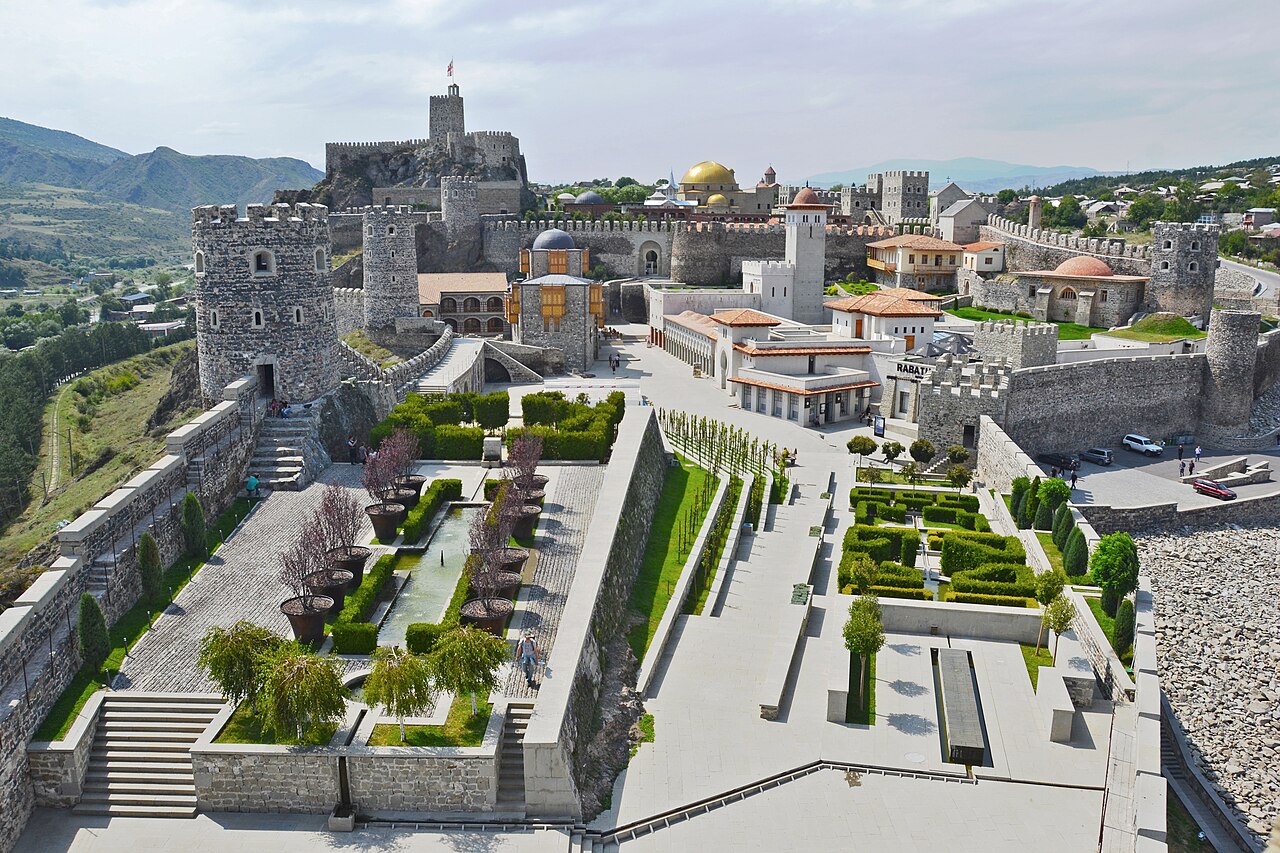
Rabati Castle — Georgia castle

Rabati Castle

Akhaltsikhe, Georgia

Rabati Castle is a prominent historic fortress complex located in the city of Akhaltsikhe, within the Samtskhe–Javakheti region of Georgia. This castle, also known as Akhaltsikhe Castle, has a rich history that spans over a millennium, reflecting the complex cultural and political changes in the region. Originally founded in the 9th century by Guaram Mampali, a Georgian Bagratid prince, the fortress was initially called Lomisa. The name Akhaltsikhe, meaning "New Castle," first appeared in historical records in 1204, indicating the replacement or expansion of an earlier fortification. The castle's strategic location on the left bank of the Potskhovi River and its position on a rocky outcrop known as Rabati Inn Rocky made it a vital stronghold throughout its history. The fortress complex is architecturally diverse, comprising a small castle perched on the highest point, a middle bailey containing religious and administrative buildings, and an outer bailey. The middle bailey notably includes a mosque, a madrasa (Islamic school), a church, and the Jaqeli Palace. A covered walkway from the outer bailey extends down to the river, illustrating the castle’s integration with the natural landscape. Early history and medieval significance The origins of Rabati Castle trace back to the 9th century when it was established by Guaram Mampali, the youngest son of Ashot I of Iberia. Initially called Lomisa, the fortress served as a defensive and administrative center. By the 13th century, Akhaltsikhe had become the capital of the Principality of Samtskhe or Samtskhe-Saatabago, governed by the influential House of Jaqeli. This Georgian princely family played a crucial role in the region’s political and cultural life. During the late 13th and 14th centuries, the castle and city flourished as a regional capital. However, in 1393, the fortress endured a significant attack by the Turco-Mongol armies of Tamerlane. Despite this assault, Rabati Castle withstood the siege and continued to serve as a vital stronghold in the region. Ottoman rule and architectural transformation The geopolitical landscape shifted dramatically after the 1590 Treaty of Constantinople, which placed the entire territory of Samtskhe-Saatabago under Ottoman rule. The Ottomans undertook extensive rebuilding and fortification of the castle throughout the 17th and 18th centuries. This period saw the addition of several Islamic architectural elements, including the construction of the present mosque in 1752 and the establishment of a madrasa within the complex. The Ottoman architectural influence is evident in the castle’s defensive walls, towers, and religious structures, which contrast with the earlier Georgian medieval elements. Despite the Islamization of much of the local population, the complex retained a functioning Orthodox church, highlighting the area's religious diversity during Ottoman rule. Russian conquest and decline The early 19th century marked a turbulent era for Rabati Castle. In 1810, the Russian Empire made an unsuccessful attempt to capture the fortress from the Ottomans. However, during the Russo-Turkish War of 1828-1829, Russian forces under General Paskevich successfully seized the castle at the Battle of Akhaltsikhe in 1828. This victory was a significant step in Russia's expansion into the Caucasus region. Following the Russian conquest and the subsequent Treaty of Adrianople in 1829, Rabati Castle gradually lost its military importance. The fortress and its buildings fell into disrepair over the ensuing decades, reflecting the diminished strategic value in the new political context. Modern restoration and cultural significance In the early 21st century, a comprehensive restoration project was undertaken between 2011 and 2012 to revive Rabati Castle as a cultural and tourist attraction. The restoration included the renovation of the mosque, madrasa, Jaqeli Palace, and the 9th/10th century church. Additionally, modern facilities such as a museum, hotel, and restaurants were developed within the outer bailey to enhance visitor experience. While the restoration has been praised for revitalizing the site, some critics note the extensive use of modern materials like concrete, which affects the castle's perceived authenticity. Nonetheless, Rabati Castle remains a significant symbol of the region's layered history, showcasing Georgian medieval heritage, Ottoman architectural influence, and modern cultural preservation. Architectural features and layout The castle complex is notable for its multi-layered defensive and functional layout. The small inner castle occupies the highest terrain, providing a vantage point for surveillance and defense. The middle bailey serves as the cultural and religious heart of the complex, containing the mosque, madrasa, church, and the palace. The outer bailey encloses the entire complex and includes modern amenities for visitors. The presence of both Islamic and Christian religious buildings within the same fortress is a unique feature, reflecting the region's diverse heritage. The covered walkway leading down to the Potskhovi River suggests a sophisticated integration of the fortress with its natural surroundings, likely facilitating water access and movement during sieges. Museum and cultural collections Rabati Castle also hosts the Ivane Javakhishvili Samtskhe-Javakheti History Museum, established in 1972 and named after the renowned Georgian historian. The museum's extensive collections include over 25,000 artifacts, ranging from ancient manuscripts and printed books dating back to the 11th century to archaeological, numismatic, ethnographic, and textile collections. The museum also preserves ancient stone inscriptions and carpets from the 19th and 20th centuries, providing invaluable insights into the region's cultural and historical development. Since 2004, the museum has been part of the Georgian National Museum network, enhancing its role in heritage preservation. Visiting rabati castle today Today, Rabati Castle is open to visitors for a small admission fee during regular office hours. The site offers panoramic views of Akhaltsikhe and the surrounding landscape, making it a popular destination for tourists interested in history, architecture, and culture. Despite some critiques regarding the restoration approach, the castle complex remains a compelling example of Georgia's rich and diverse past. Visitors can explore the well-preserved and reconstructed elements of the fortress, including the Jaqeli Palace, the mosque, the madrasa ruins, and the medieval church. The museum within the complex provides additional context and depth to the historical narrative of the region.

Post-Renaissance (17th–18th c.)
Details