Qishla of Asfan
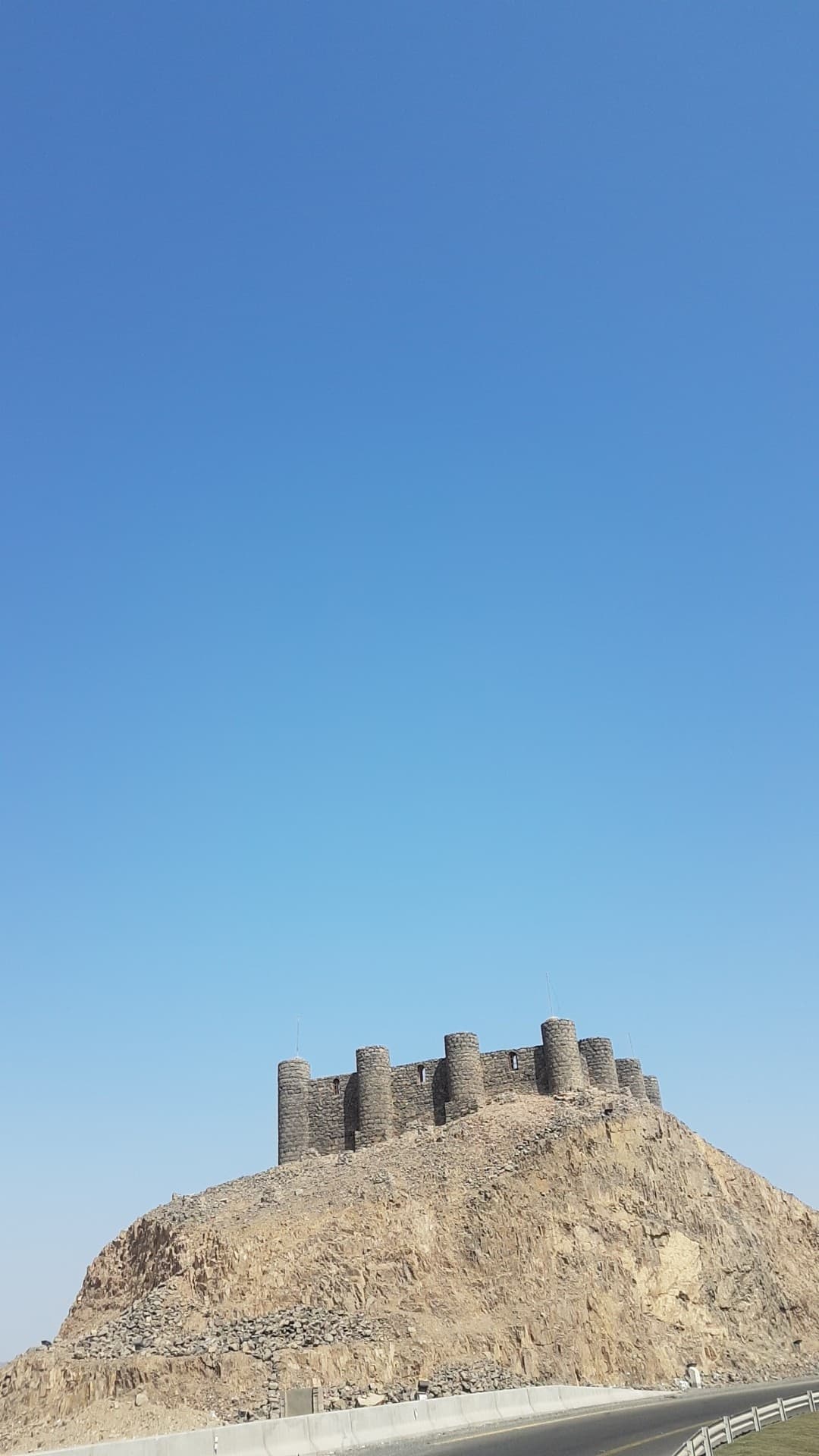
The Qishla of Asfan stands as a significant Ottoman military fortress located near the village of Asfan within the municipality of Jeddah, Saudi Arabia. Constructed in the 18th century, this fortress was a crucial part of the Ottoman Empire's defensive network designed to secure vital trade and pilgrimage routes in the region, particularly the road connecting Mecca and Medina. Its strategic position on a basaltic hilltop allowed for comprehensive surveillance over the surrounding terrain, including the adjacent valleys and the main caravan route used by pilgrims traveling from the port city of Jeddah to Medina.
Historical background and strategic significance
The origins of the Qishla of Asfan likely extend back much earlier than the Ottoman reconstruction, possibly to the Abbasid period, although precise dating remains uncertain. Historical Muslim travelers such as Ibn Jubayr in the 12th century and Ibn Battuta in the 14th century mention fortifications in this area, underscoring the long-standing strategic importance of the site. While it is unclear whether these early references correspond directly to the current fortress, they indicate that the location served as a key military and protective installation along pilgrimage and trade pathways for centuries.
During the Ottoman era, the fortress was either rebuilt or significantly enhanced to function as a garrison overseeing the critical road between Mecca and Medina. This route was essential for the safety of pilgrims undertaking the Hajj pilgrimage, making the Qishla a vital military outpost for protecting caravans and ensuring secure passage. Although the fortress served as a barracks and defensive position, there is no documented evidence of its direct involvement in major conflicts such as the Ottoman-Saudi (Wahhabi) War from 1811 to 1818.
Architectural design and construction materials
The fortress is characterized by its square-shaped layout featuring twelve strategically positioned towers. Four towers anchor each corner of the square, while two additional towers are placed along each wall, providing extensive coverage for surveillance and defense. This arrangement reflects the fortress's primary function as a military surveillance post.
Construction materials include dark volcanic basalt stones sourced from the nearby mountainous terrain, chosen for their durability and availability. The fortress sits atop a hill composed of basaltic rock near the eastern edge of the Harrat lava field, with the Wadi al-Hamran valley forming a natural boundary to the northwest. These natural features enhanced the fortress's defensive capabilities and its control over the surrounding landscape.
Internal layout and defensive features
Inside the fortress, there are multiple chambers designed for garrison accommodations and ammunition storage. The structure also includes designated positions for light artillery, consistent with its role as a military outpost or Qishla—the Ottoman term for a barracks or fort. Some internal chambers were supported by columns at entranceways, portions of which collapsed over time but have been reconstructed in recent restoration efforts.
Preservation, damage, and restoration efforts
Modern infrastructure developments, particularly the construction of the Hijra highway, have impacted the fortress's surroundings and caused partial damage to the site. Portions of the hill supporting the fortress were removed during road construction, leaving parts of the structure precariously close to the cliff edge. The entrance to the lower chambers remains damaged, with ongoing conservation efforts required to prevent further deterioration.
Restoration work initiated by the local municipality in 2015 aimed to stabilize the ruins and improve accessibility. These efforts included reconstructing collapsed columns and reinforcing walls and towers that remain in a stable and visible condition. Despite these interventions, some sections of the fortress continue to show the effects of environmental exposure and human activity.
Cultural and historical importance
Although no inscriptions or written dedications have been found at the site, the fortress's location and architectural features underscore its role in securing one of the most important pilgrimage routes in the Islamic world. As a military barracks and surveillance post, the Qishla of Asfan contributed to the protection of pilgrims and trade caravans traveling between Jeddah, Mecca, and Medina. Its preservation offers valuable insights into Ottoman military architecture and the strategic measures employed to safeguard critical routes in the Arabian Peninsula.
Today, the Qishla of Asfan remains a testament to the region's layered history, reflecting the military, cultural, and religious significance of the site. Visitors and scholars alike recognize the fortress as an important heritage landmark that encapsulates centuries of defensive architecture and the enduring importance of pilgrimage pathways in Saudi Arabia.
Photo gallery

Information
Loading map...
Visitor reviews
No reviews yet. Been here? Write the first review and help other travelers!
Write the first reviewVisited this castle? Share your experience
Your review helps other travelers and adds first-hand knowledge to our encyclopedia.