Qatrana Castle
Qasr al-Qatraneh, also known as Qatrana Castle, Fortress Qatrana, or Khan Qatraneh, is a significant Ottoman-era fortress located in modern-day Jordan. Positioned strategically just off the Desert Highway, approximately 90 kilometres south of Amman and northwest of the town of Qatraneh, this hill castle played a vital role in securing the Syrian pilgrimage route connecting the Levant to the Gulf. It is one of at least ten khans documented along this historic route, serving as a crucial stopover point for caravans and pilgrims.
Historical context and significance
Constructed during the Ottoman period, Qatrana Castle was primarily built to provide water supply and protection for travelers on the arduous journey along the Syrian pilgrimage route. This route was an essential corridor for Muslim pilgrims traveling to the holy cities of Mecca and Medina. The castle's location was carefully chosen to secure a reliable water source in the arid desert environment, ensuring the safety and sustenance of caravans.
The fortress also functioned as a military outpost to monitor and control movement through this part of the desert. Its presence helped to deter banditry and offered a refuge in case of attack. The castle's role extended beyond mere defense; it was a vital logistical hub facilitating the flow of people and goods across the region.
Architectural features and layout
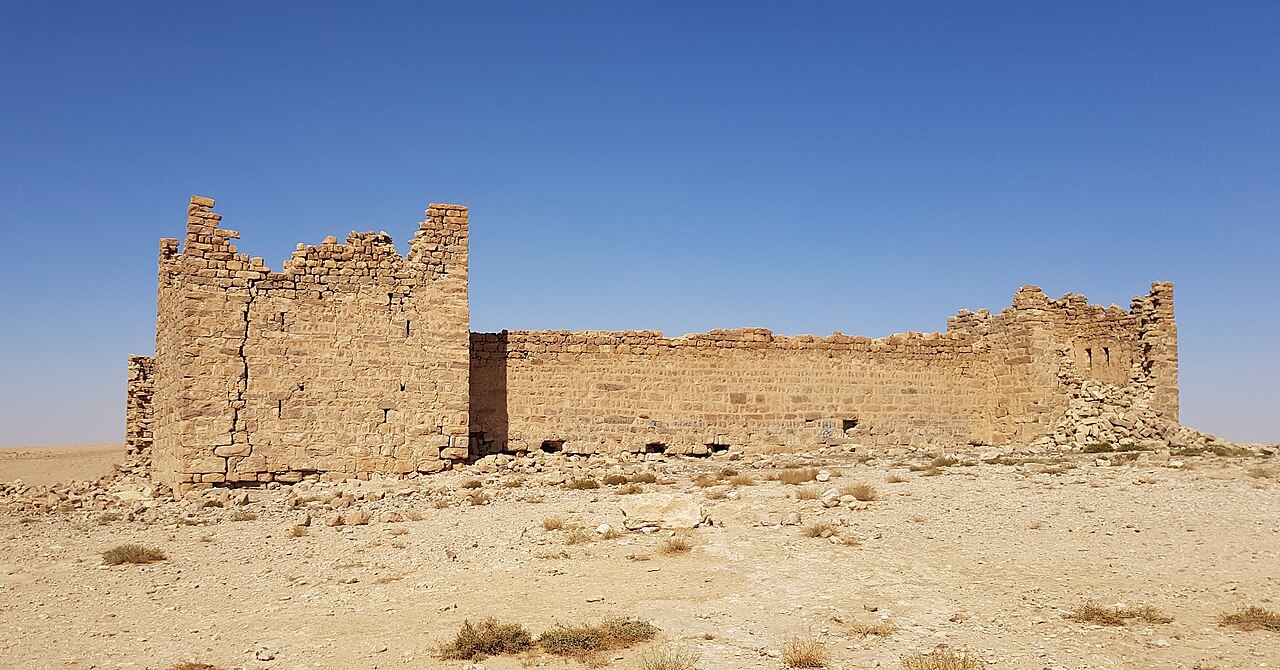
Qatrana Castle exemplifies typical Ottoman khan architecture, adapted to the harsh desert conditions. The fortress is built on a hill, which provides a commanding view of the surrounding landscape, an important defensive advantage. The structure is primarily constructed from local stone, designed to withstand the extreme climate and potential sieges.
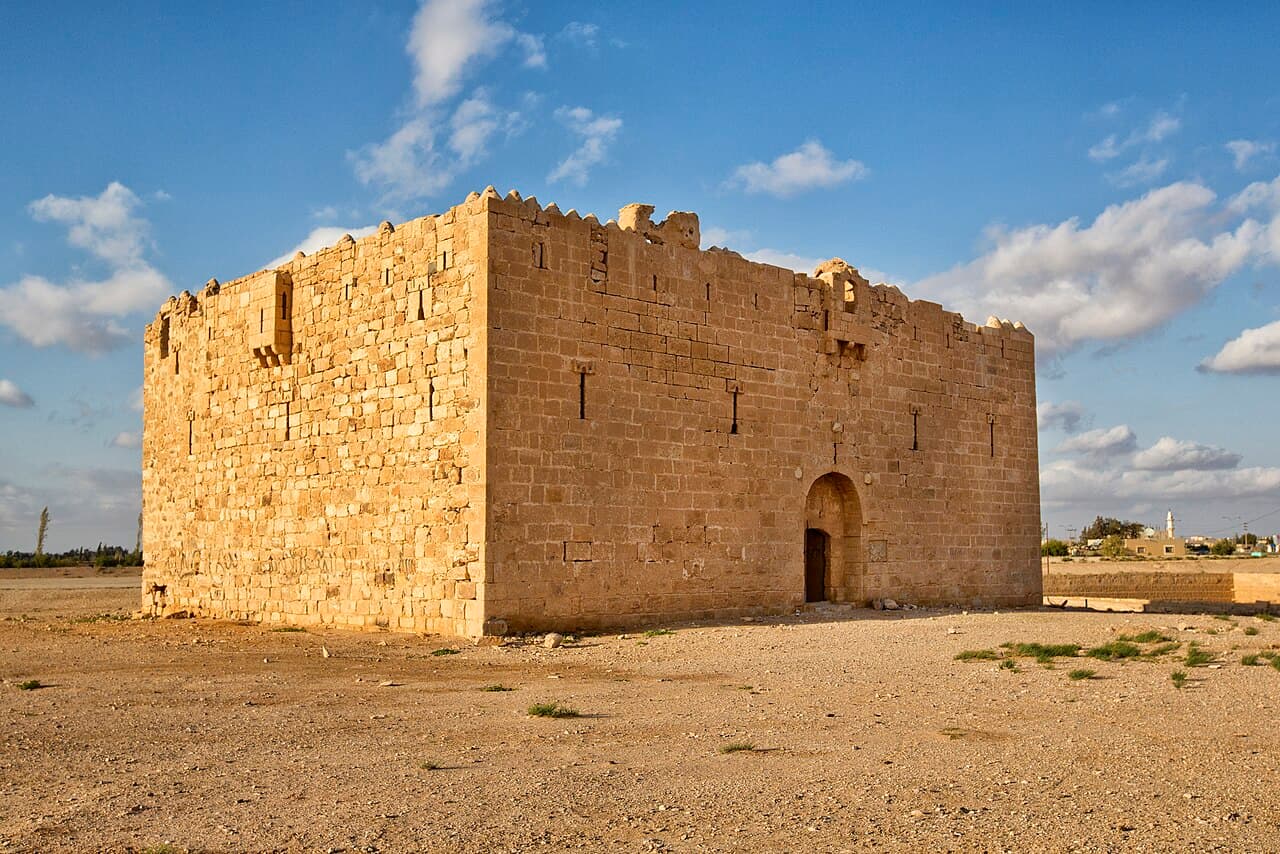
The castle complex includes a central courtyard surrounded by robust walls and fortified towers. These towers served as lookout points and defensive positions. The walls are punctuated with narrow windows and arrow slits, allowing defenders to observe and repel attackers while remaining protected.
Within the courtyard, there are facilities for accommodating travelers and their animals, including stables and storage rooms. Water cisterns and channels were integral to the design, ensuring a steady supply of water even during dry periods. This feature highlights the castle's primary function as a water station on the pilgrimage route.
Defensive elements
The castle's fortifications include thick curtain walls and a fortified gatehouse that controlled access to the interior. The gatehouse was designed to be easily defensible, often featuring a heavy wooden door reinforced with metal studs and a machicolation or murder holes above for dropping projectiles on attackers.
Battlements and crenellations atop the walls provided cover for defenders during skirmishes. The elevated position of the castle allowed for early detection of approaching threats, giving occupants time to prepare defenses or signal for reinforcements.
Role in regional trade and pilgrimage
Qatrana Castle's location on the Syrian pilgrimage route made it a key stop for caravans carrying goods and pilgrims traveling to the Hijaz. The castle's khan functioned as a caravanserai, offering shelter, water, and safety for merchants and travelers. This contributed to the economic vitality of the region by facilitating trade and ensuring the continuity of pilgrimage traffic.
The castle also served administrative functions, including the collection of tolls or taxes on goods passing through. This role underscores its importance not only militarily but also economically within the Ottoman provincial system.
Preservation and current status
Today, Qatrana Castle remains a partially preserved Ottoman fortress. While some sections have suffered from the ravages of time and natural erosion, significant portions of the walls, towers, and water management systems remain intact. The site offers valuable insights into Ottoman military architecture and the logistical challenges of desert travel during the period.
Efforts to study and preserve the castle contribute to understanding the broader network of khans along the pilgrimage route. It is a point of interest for historians, archaeologists, and visitors interested in Ottoman history and desert fortifications.
Visiting information and accessibility
Qatrana Castle is accessible from the Desert Highway and can be visited as part of cultural and historical tours exploring Jordan's desert heritage. Visitors can explore the remains of the fortress, including its defensive walls, towers, and water cisterns, gaining a tangible sense of the challenges faced by travelers centuries ago.
The site is open to the public, though facilities are limited due to its remote location. Visitors are advised to plan their trip carefully, considering the desert environment and the need for adequate supplies and guidance.
Frequently asked questions (FAQ)
- What is Qatrana Castle and where is it located?
- Qatrana Castle, also known as Qasr al-Qatraneh, is an Ottoman fortress in Jordan located near the Desert Highway, about 90 km south of Amman.
- What was the primary purpose of Qatrana Castle?
- The castle served to provide water and protection for travelers on the Syrian pilgrimage route, acting as a fortified caravanserai and military outpost.
- Can visitors explore Qatrana Castle today?
- Yes, the castle is partially preserved and open to the public, offering a glimpse into Ottoman desert fortifications and pilgrimage infrastructure.
- How does Qatrana Castle reflect Ottoman architectural style?
- It features typical Ottoman khan architecture with a central courtyard, fortified towers, thick stone walls, and water cisterns adapted for desert conditions.
- Is Qatrana Castle easily accessible for tourists?
- The castle is accessible from the Desert Highway but is in a remote location, so visitors should plan accordingly and consider guided tours.
Photo gallery

Information
Loading map...
Visitor reviews
No reviews yet. Been here? Write the first review and help other travelers!
Write the first reviewVisited this castle? Share your experience
Your review helps other travelers and adds first-hand knowledge to our encyclopedia.