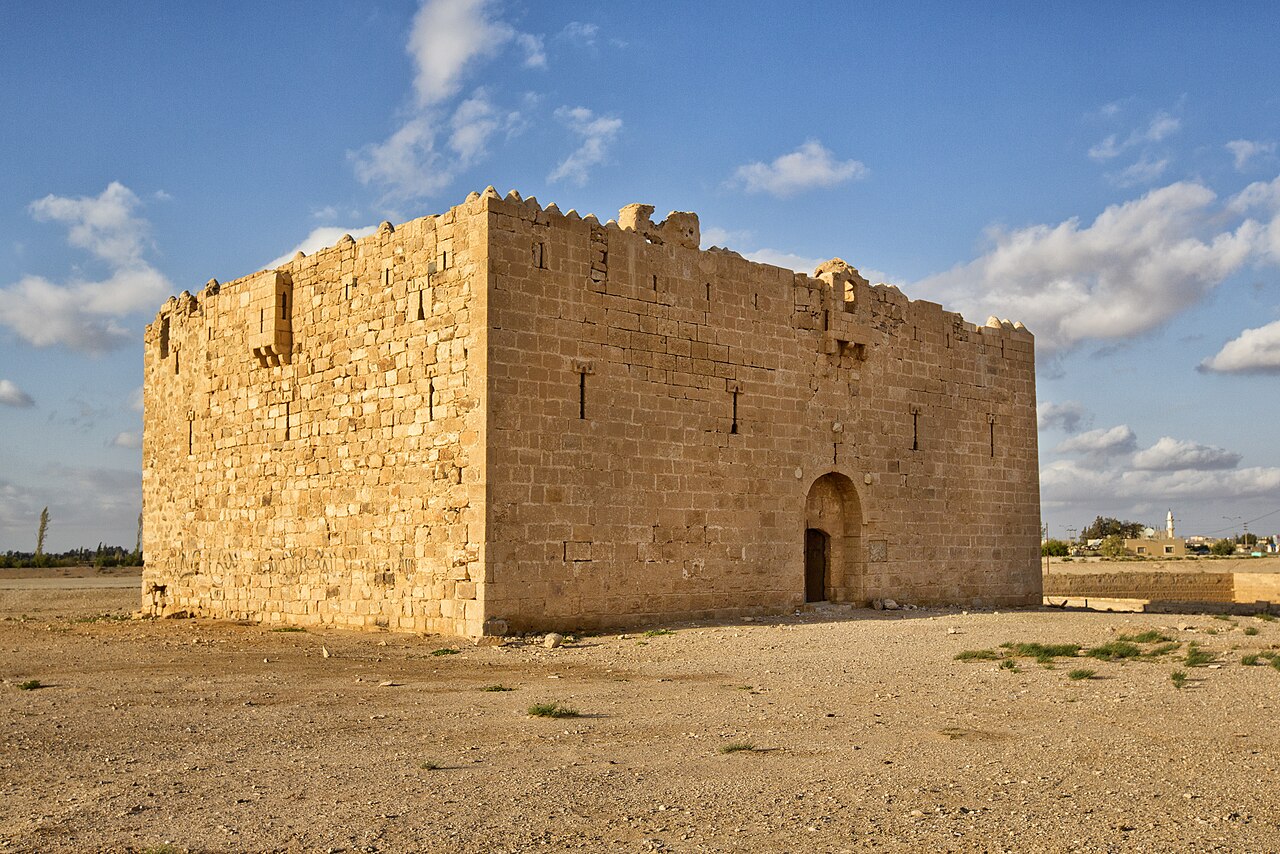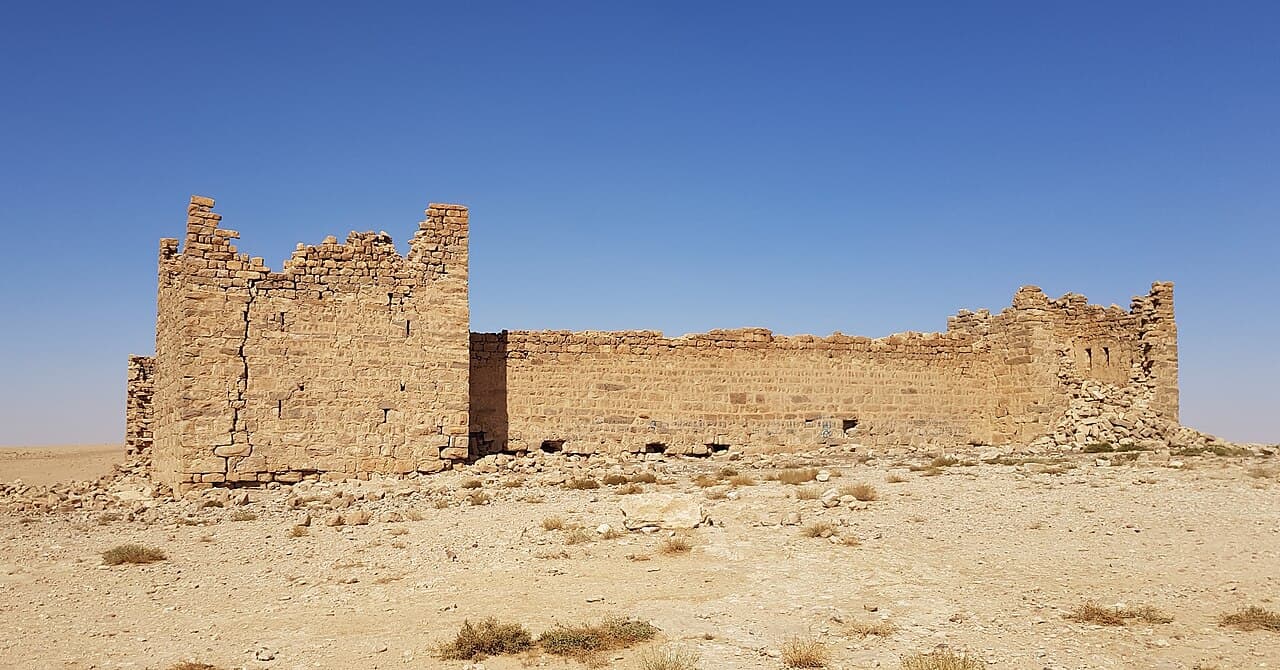
Qasr Bshir (Arabic: قصر بشير; Latin: Praetorii Mobeni) is a remarkably well-preserved ancient Roman fortification located in the modern-day country of Jordan. Situated about 80 kilometres south of Amman, the capital city, this isolated fortress stands in a desert region characterized by shallow valleys draining into the Wadi Mujib. The fort is not visible from nearby settlements or the Desert Highway, emphasizing its strategic seclusion. Qasr Bshir measures approximately 57 metres square and features towers rising to three storeys tall, making it a prominent example of a small Roman fort known as a castellum. It is considered the best surviving example of the four-towered forts constructed by Rome during the 3rd and 4th centuries AD. Above its entrance, a 1700-year-old Latin inscription remains intact, offering a direct link to its Roman origins.
Historical context and strategic importance
Qasr Bshir was an integral part of the Limes Arabicus, a system of forts and watchtowers that formed the eastern frontier of the Roman Empire. This defensive line was established to protect Roman territories from raids by Arab nomadic tribes and to control vital trade routes crossing the desert. The forts along the Limes Arabicus were spaced to allow for effective communication and mutual support, often using visual signals such as smoke and torches. The location of Qasr Bshir, where the Syrian Desert meets the Jordanian Highlands, was once more hospitable than today, with evidence suggesting higher rainfall and agricultural activity during classical antiquity.
Role in frontier defense
The fort’s design and position allowed it to monitor and secure the surrounding region, guarding access to water sources and trade paths. The four-towered layout provided a strong defensive perimeter, enabling the garrison to repel attackers and maintain surveillance over the desert approaches. This architectural style reflects the Roman military’s adaptation to the challenges of desert warfare and frontier management during the Late Roman period.
Architectural features and construction details
Qasr Bshir exemplifies Roman military architecture with its compact, square plan and robust construction. The fort’s walls are thick and built from local stone, designed to withstand assaults and the harsh desert climate. The towers, rising three storeys, allowed sentries to observe distant movements and coordinate with nearby forts.
Layout and defensive elements
The fort’s enclosure measures about 57 metres on each side, forming a nearly perfect square. Each corner features a tower, a typical element in Roman fort design intended to provide overlapping fields of fire along the walls. The entrance is marked by a gate complex, which includes defensive features such as battlements and possibly a gatehouse, enhancing security against intruders.
Inscription and historical evidence
The preserved Latin inscription above the main gate is a rare and valuable artifact. It provides insight into the fort’s construction period and the Roman units stationed there. Such inscriptions often recorded the names of commanding officers and the legion or cohort responsible for building or maintaining the structure.
Later history and archaeological significance
By around 500 AD, the fort was abandoned as the Roman Empire’s hold over the region weakened. Subsequently, the site was reoccupied during the Umayyad period, illustrating its continued strategic value. However, a major earthquake in 747 AD caused significant damage, including the collapse of the barracks, which led to the fort’s final abandonment.
Modern archaeological research
Archaeologists have studied Qasr Bshir since the late 19th century, uncovering its layout and historical context. During the 1980s, the Central Limes Arabicus Project conducted extensive excavations along the frontier, including Qasr Bshir. Experiments with ancient communication methods, such as smoke signals and mirrors, demonstrated how forts like Qasr Bshir coordinated with others like Qasr Abu el-Kharak.
Conservation efforts and heritage status
Qasr Bshir is currently listed on Jordan’s Tentative List for UNESCO World Heritage designation, reflecting its cultural and historical importance. In 2022, a conservation project was launched to stabilize and preserve the structure, ensuring its survival for future generations. These efforts focus on maintaining the integrity of the stonework and preventing further deterioration caused by natural and human factors.
Environmental and geographical setting
The fort’s location at the junction of the Syrian Desert and the Jordanian Highlands places it in a transitional zone between arid desert and semi-arid steppe. This setting influenced its strategic role and the lifestyle of its occupants. Archaeological evidence points to the presence of agriculture and water management systems in antiquity, indicating a more fertile environment than the present-day desert.
Water control and trade routes
Control over water sources was crucial for sustaining the fort’s garrison and for regulating caravan traffic. The proximity to the Wadi Mujib valley provided access to seasonal water flows. The Limes Arabicus forts collectively served to monitor and secure trade routes that connected the Roman provinces with Arabia and beyond, facilitating economic and military control.
Architectural legacy and influence
Qasr Bshir stands as a significant example of Roman military architecture adapted to desert conditions. Its four-towered design influenced subsequent fortifications in the region. The site offers valuable insights into Roman frontier policy, military engineering, and the interaction between imperial forces and local environments.
Comparison with other Roman forts
Unlike larger legionary fortresses, Qasr Bshir’s compact size and four-tower plan are characteristic of castella built for smaller garrisons. This design allowed for efficient defense and communication while minimizing resource requirements. Its preservation level is exceptional compared to many other desert forts, making it a key reference point for scholars studying the Limes Arabicus.
Frequently asked questions (FAQ)
- What is Qasr Bshir and where is it located?
- Qasr Bshir is an ancient Roman fort located about 80 kilometres south of Amman, Jordan, in a desert region near Wadi Mujib.
- When was Qasr Bshir built and what was its purpose?
- Qasr Bshir was built in the 3rd century AD as part of the Limes Arabicus frontier defense system to protect Roman territories from desert raids.
- What architectural features make Qasr Bshir notable?
- The fort features a nearly square layout with four towers, thick stone walls, and a well-preserved Latin inscription above the entrance.
- Is Qasr Bshir open to visitors and what conservation efforts are underway?
- While specific visiting hours are not widely published, Qasr Bshir is undergoing conservation efforts to stabilize the structure and is on Jordan's Tentative List for UNESCO World Heritage.
- How did the Romans communicate between forts like Qasr Bshir?
- Romans used visual signals such as smoke, mirrors, and torches to communicate between forts along the Limes Arabicus, enabling coordinated frontier defense.
Photo gallery

Information
Loading map...
Visitor reviews
No reviews yet. Been here? Write the first review and help other travelers!
Write the first reviewVisited this castle? Share your experience
Your review helps other travelers and adds first-hand knowledge to our encyclopedia.