Qasr Tuba
Qasr Tuba is a notable example of an early Islamic desert castle constructed during the Umayyad dynasty in the 8th century, located in the Amman Governorate of northern Jordan. This castle represents the architectural and cultural ambitions of the Umayyad caliphs, blending functional design with artistic decoration suited to a remote desert environment.
The construction of Qasr Tuba began in 743 CE under the commission of Caliph al-Walid II. Intended as a residence for his two sons, al-Hakam and ‘Uthman, the castle was designed as two symmetrical but separate compounds, each approximately 70 square meters. These twin enclosures were connected by an internal corridor that could be closed off, demonstrating a sophisticated approach to security and privacy within the complex. The design suggests the castle was not meant as a permanent royal palace but rather a seasonal retreat and hunting lodge reflecting the leisure pursuits of the Umayyad elite.
Architectural design and layout
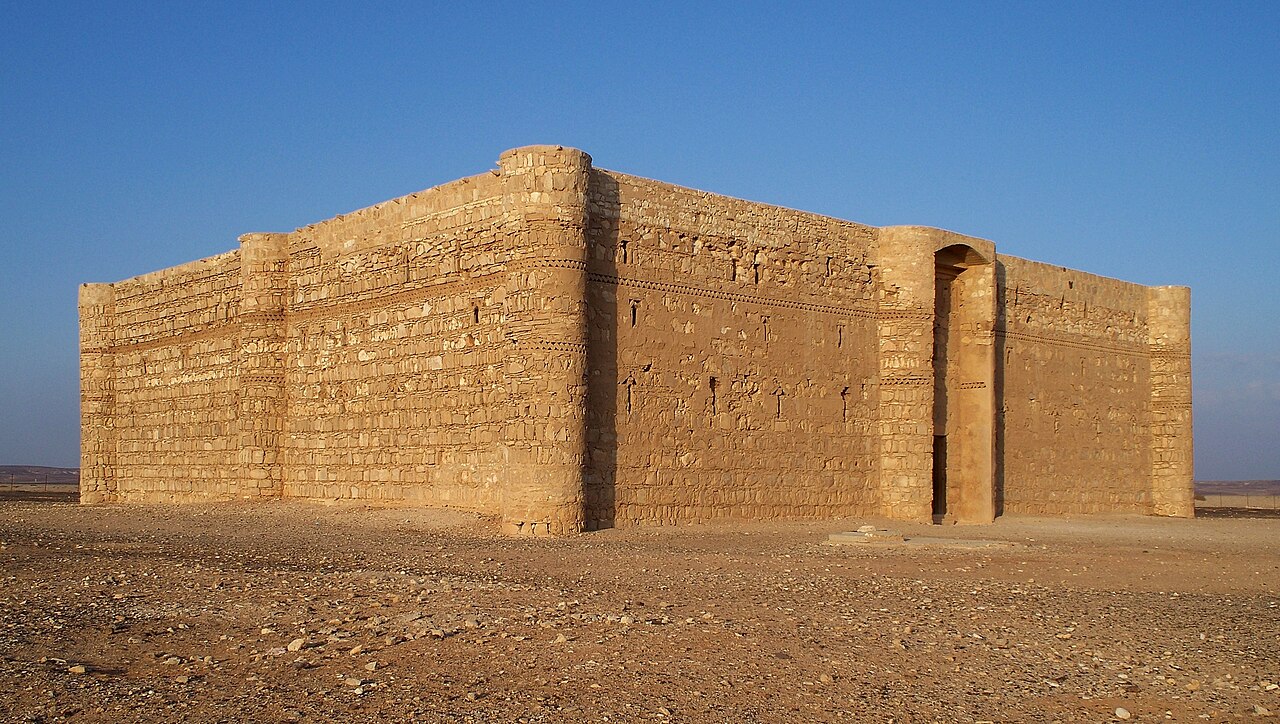
The castle's layout forms a nearly double-square shape, measuring about 140 meters long and 72 to 73 meters wide. Each enclosure featured a prominent north-facing entrance, flanked by semicircular towers and framed by square rooms, which added both defensive strength and visual rhythm to the facade. Additional semicircular towers reinforced the walls at intervals, except on the northern side, which notably lacked towers. This arrangement highlights a balance between defense and openness, suitable for a desert retreat.
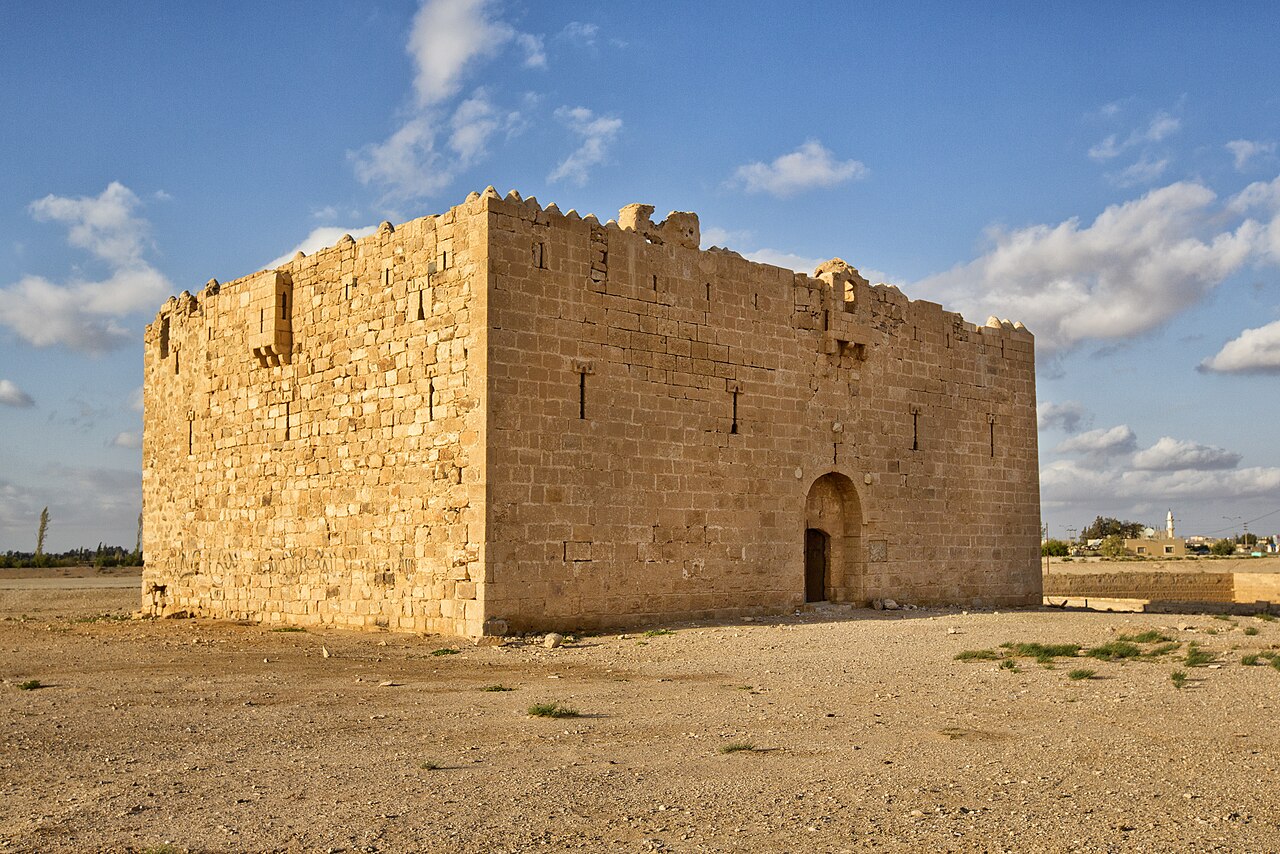
The surviving ruins primarily preserve the western wing of the castle, including stretches of the perimeter wall and the northwestern portion, which remains remarkably intact. Inside the complex, archaeologists have identified a prayer chapel, indicating the provision of religious facilities for the inhabitants and visitors.
Construction techniques and materials
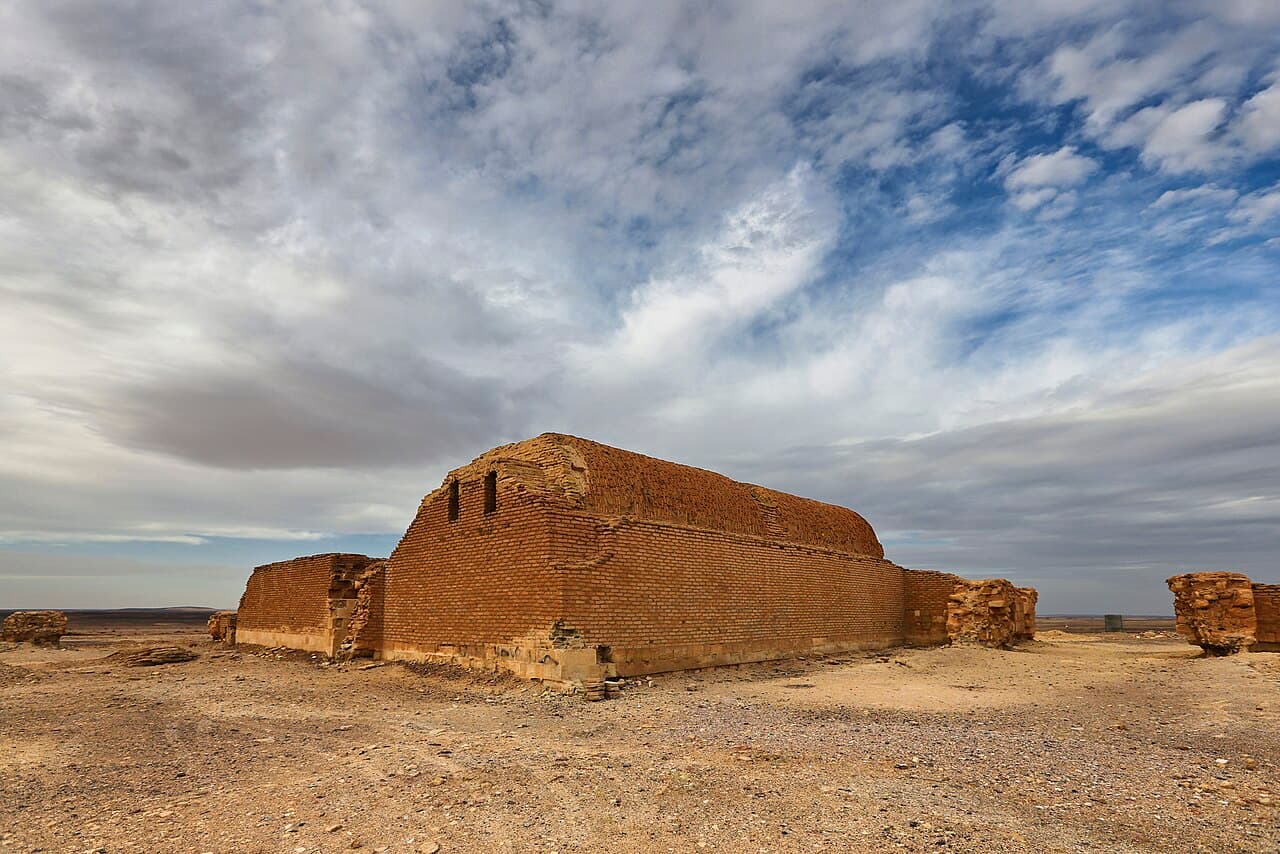
Qasr Tuba was built using a combination of limestone blocks shaped into ashlar masonry and baked bricks. The ashlar masonry provided a smooth, regular finish to the walls, a hallmark of Umayyad construction quality. The roofs and ceilings feature barrel vaults, an architectural element where bricks are arranged in an arch shape to create a curved ceiling resembling a half-cylinder. This technique allowed for durable and fire-resistant roofing suited to the harsh desert climate.
Decorative elements
The castle's aesthetic is enhanced by finely carved lintels above doorways. These lintels display intricate designs of rosettes intertwined with stylized plant leaves, exemplifying the Umayyad artistic tradition that combined natural motifs with geometric precision. This lace-like ornamentation reflects the cultural sophistication of the period and the importance of decorative arts in Umayyad architecture.
Historical context and functions
Located approximately 110 to 140 kilometers southeast of Amman in a remote desert area, Qasr Tuba served multiple roles. Primarily, it functioned as a seasonal retreat for the Umayyad elite, providing a comfortable and secure environment for leisure activities such as hunting. The castle's design and location also suggest its use as a caravanserai, a roadside inn offering shelter and supplies to merchants and travelers moving along trade routes toward the Hijaz region.
The castle's proximity to a dry riverbed (wadi) was strategically important. Several wells and a dam were constructed nearby to secure a reliable water supply in the arid desert environment. These water management features highlight the practical considerations necessary to sustain a remote settlement and support travelers and residents alike.
The project was left unfinished after the assassination of Caliph al-Walid II, and the castle was soon abandoned. Despite its incomplete state, Qasr Tuba remains an important example of Umayyad desert architecture and planning.
Modern rediscovery and preservation
Qasr Tuba was brought to the attention of modern scholars in 1896 when the Czech explorer Alois Musil documented the site. His work helped introduce Qasr Tuba into broader historical and artistic discussions, highlighting its architectural significance and cultural value.
Today, the ruins of Qasr Tuba are partially preserved, offering valuable insight into the Umayyad period and the architectural strategies employed in desert castles. The visible remains, including the perimeter walls, towers, vaulted ceilings, and decorative lintels, continue to attract scholars and visitors interested in early Islamic architecture and history.
Frequently asked questions (FAQ)
- What is the historical significance of Qasr Tuba?
- Qasr Tuba is an important archaeological site in Jordan, known for its well-preserved Islamic architecture and historical significance dating back to the early Islamic period. It served as a palace and a hub for administrative activities, reflecting the rich cultural heritage of the region.
- When was Qasr Tuba built?
- Qasr Tuba was constructed during the Umayyad period, specifically in the 8th century AD. This era is known for its architectural advancements and the establishment of numerous palatial complexes across the region.
- Can I visit Qasr Tuba year-round?
- Yes, Qasr Tuba is open to visitors throughout the year. However, it is advisable to check local conditions and any specific closure days before planning your visit.
- What are the opening hours for Qasr Tuba?
- Qasr Tuba generally opens from 8:00 AM to 5:00 PM daily, but hours may vary during holidays or special events. It is best to verify the hours before your visit to ensure access.
- Is it possible to access Qasr Tuba by public transport?
- While public transport options are limited, visitors can reach Qasr Tuba via taxi or private car for easier access. It is recommended to arrange transportation in advance to facilitate a smooth visit.
- What is the best time to visit Qasr Tuba?
- The best time to visit Qasr Tuba is during the spring and fall months when the weather is mild and pleasant for exploring the site. Avoiding the peak summer heat will enhance your experience.
- Are there any nearby attractions to visit after Qasr Tuba?
- Yes, nearby attractions include the ancient city of Jerash and the beautiful Ajloun Castle, both offering rich historical insights and stunning views. These sites make for excellent additions to your itinerary when visiting Qasr Tuba.
- What are the ticket prices for entering Qasr Tuba?
- Ticket prices for Qasr Tuba are typically affordable, with discounts available for students and groups. For the most accurate and current pricing, check the official site or local tourist information before your visit.
Photo gallery

Information
Loading map...
Visitor reviews
No reviews yet. Been here? Write the first review and help other travelers!
Write the first reviewVisited this castle? Share your experience
Your review helps other travelers and adds first-hand knowledge to our encyclopedia.