Qasr Usaykhim
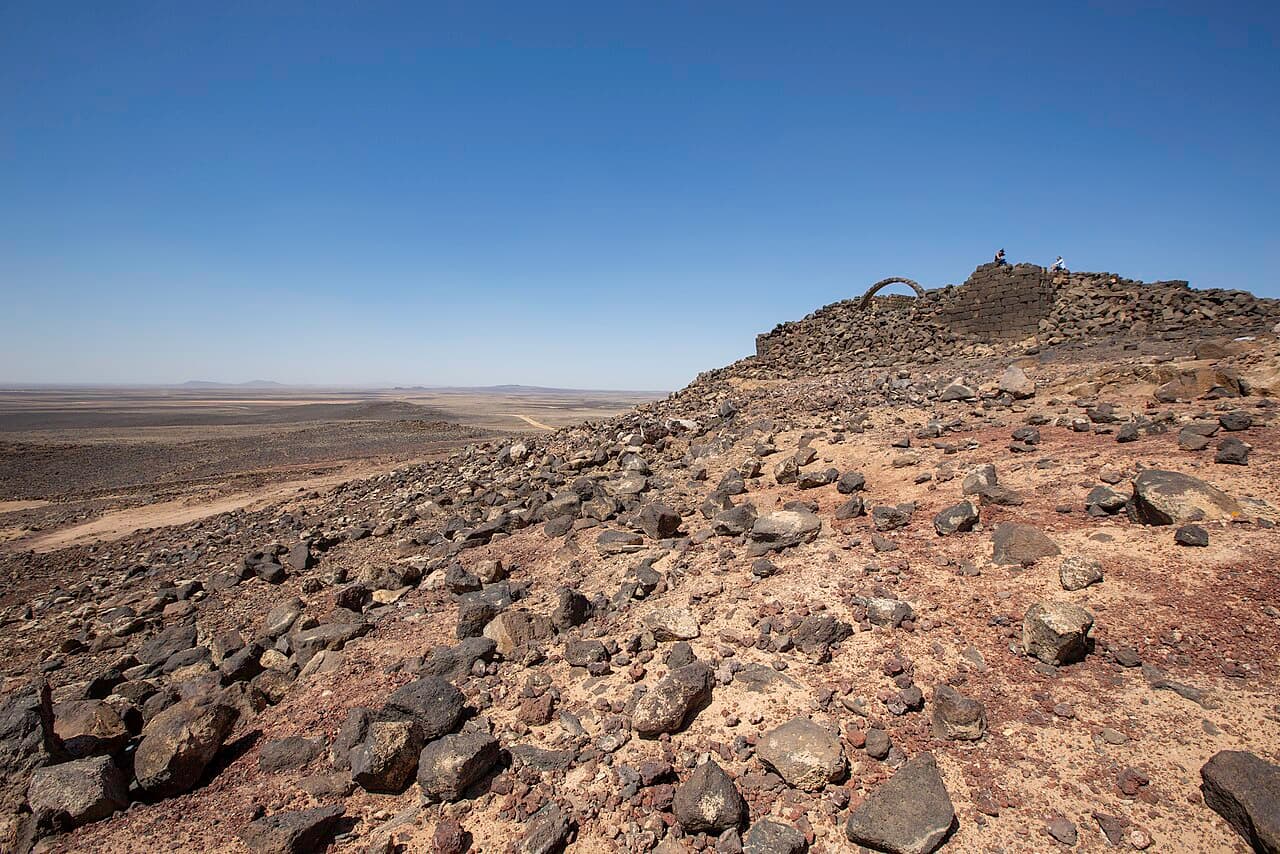
Qasr Usaykhim, also known as Qasr Aseikhin (Arabic: قصر أصيخم), stands as a remarkable example of a Roman military fortlet located on the far eastern frontier of the Limes Arabiae et Palaestinae. This small fortress occupies a strategic and isolated position on the crest of an extinct volcano within the Syria Desert, in the Zarqa Governorate of modern-day Jordan. It lies approximately 18 kilometers northeast of the town of Azraq, commanding a broad view over the surrounding wadi valleys where vegetation is sustained by rare desert moisture.
Strategic location and landscape
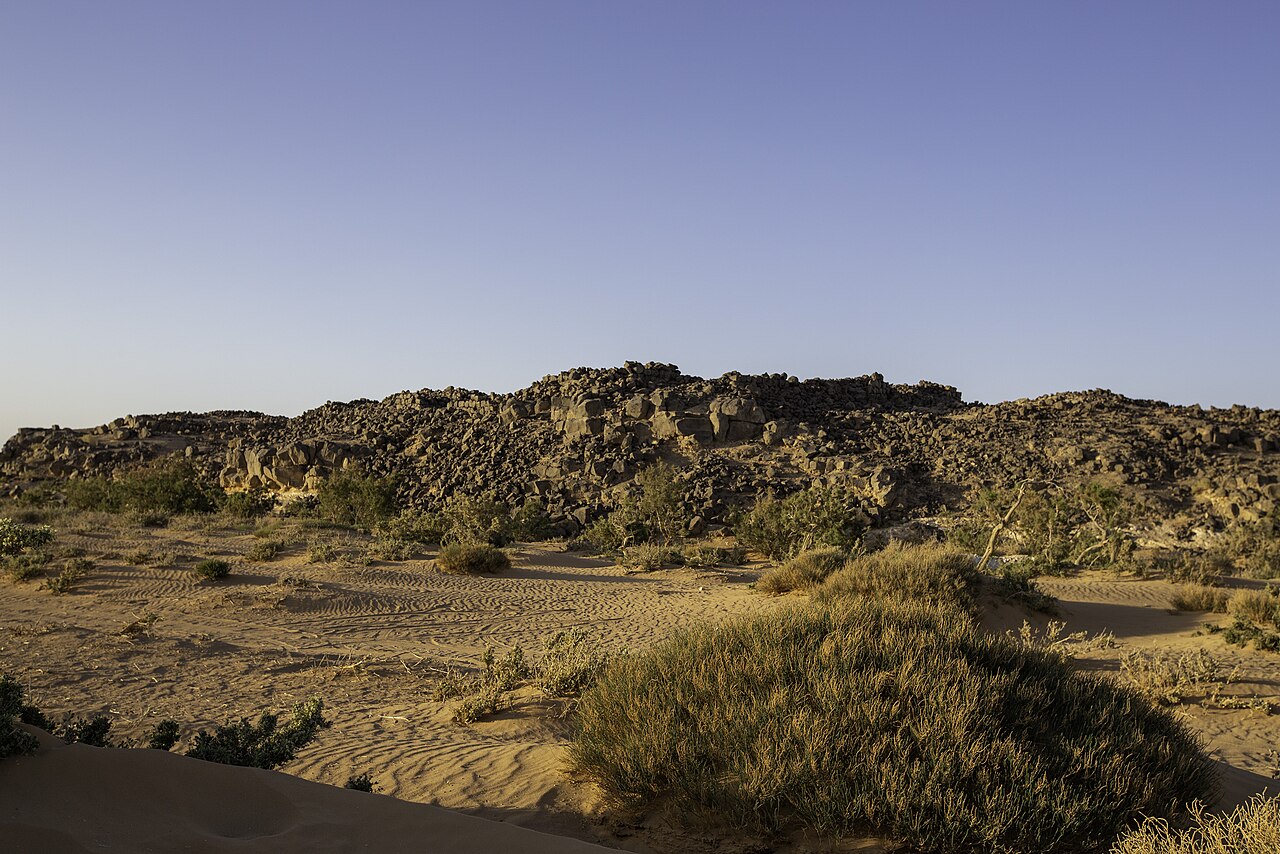
The fortlet's placement on a volcanic crest provided a natural elevation advantage, making it an excellent observation point for monitoring movements across the desert frontier. Its position at the edge of the Roman provincial boundary allowed it to serve as an early warning post against incursions and as a control point along the desert routes. The surrounding terrain is harsh and arid, but the wadi below supports some vegetation, which would have been vital for supplying water and grazing for animals.
Architectural features and structure
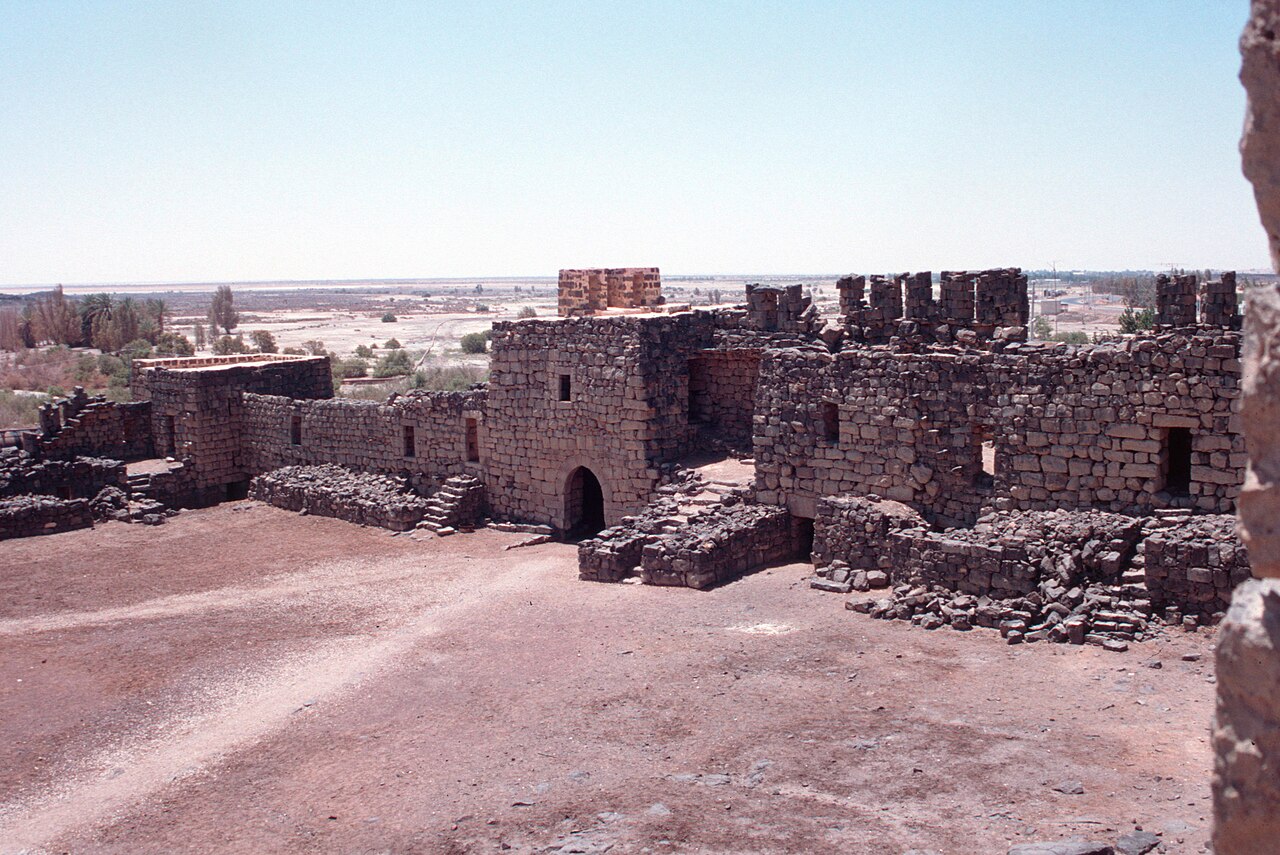
Though the ruins are now largely eroded, Qasr Usaykhim was constructed as a small bastioned fortress, characteristic of Roman military architecture designed for defense and surveillance. The structure likely included thick stone walls reinforced with bastions at key points to provide overlapping fields of fire. The fortress would have contained a central courtyard surrounded by rooms for soldiers, storage, and command functions. The use of local volcanic stone in construction helped the fort blend with the rocky landscape and provided durable building material.
Defensive elements
The bastions, projecting from the walls, were designed to cover the curtain walls with defensive fire, reducing blind spots. The fortress probably featured a single fortified gate, possibly with a guard tower, controlling access. Defensive ditches or moats may have been present, though the arid environment limited the availability of water for such features. The elevated position itself was a significant defensive advantage.
Historical context and function
Built in the 1st century AD, Qasr Usaykhim was part of the Roman Empire's extensive system of frontier fortifications known as the Limes Arabiae et Palaestinae. This line of defenses marked the empire's boundary against nomadic tribes and rival powers to the east. The fortlet served as a remote outpost for Roman soldiers tasked with surveillance, communication, and maintaining security over the desert approaches.
The isolated nature of the fort suggests it was manned by a small garrison, likely equipped for both defense and long-range reconnaissance. The presence of such fortifications highlights the strategic importance the Romans placed on controlling trade routes and securing their eastern provinces.
Current condition and archaeological significance
Today, Qasr Usaykhim exists as archaeological ruins with remnants of walls and bastions visible amid the volcanic rock. The site’s remote location has helped preserve its remains from extensive modern development. Archaeological studies have focused on understanding its construction techniques, strategic role, and relation to other Roman military sites in Jordan.
The ruins offer valuable insights into Roman frontier military architecture adapted to harsh desert environments. The fortlet’s position on a volcanic crest is unusual and adds to its significance as a unique example of Roman defensive planning in the region.
Visiting Qasr Usaykhim
Access to Qasr Usaykhim is challenging due to its remote desert location and lack of developed tourist infrastructure. Visitors interested in Roman archaeology and desert fortifications may find the site intriguing, but should prepare for rugged conditions and limited facilities. The surrounding landscape offers stark natural beauty and a glimpse into the ancient military geography of the Roman Empire’s eastern frontier.
Frequently asked questions (FAQ)
- What is Qasr Usaykhim and where is it located?
- Qasr Usaykhim is a Roman fortlet located on a volcanic crest in the Syrian Desert, Zarqa Governorate, Jordan, about 18 km northeast of Azraq.
- When was Qasr Usaykhim built and what was its purpose?
- It was built in the 1st century AD as part of the Roman frontier defenses to monitor and protect the eastern borders of the empire.
- What architectural features does Qasr Usaykhim have?
- The fortlet features bastioned walls, a central courtyard, thick stone construction using local volcanic rock, and defensive bastions for surveillance and protection.
- Can visitors access Qasr Usaykhim easily?
- Access is difficult due to its remote desert location and lack of tourist infrastructure, so visitors should prepare for rugged conditions.
- Why is Qasr Usaykhim historically significant?
- It represents a rare example of Roman military architecture adapted to desert environments and illustrates the strategic importance of the Limes Arabiae et Palaestinae frontier.
Photo gallery

Information
Loading map...
Visitor reviews
No reviews yet. Been here? Write the first review and help other travelers!
Write the first reviewVisited this castle? Share your experience
Your review helps other travelers and adds first-hand knowledge to our encyclopedia.