Qasr Amra
Qasr Amra stands as a remarkable example of early Islamic architecture and art in the Jordanian desert, approximately 50 miles east of Amman. This Umayyad desert castle, or qasr, is among the most significant surviving monuments from the Umayyad Caliphate, which ruled from Damascus and left a distinctive architectural legacy across the region. Built in the early 8th century, Qasr Amra served as a royal retreat and a symbol of the caliphate's power and cultural synthesis.
Historical context and construction
Qasr Amra was most likely constructed between 723 and 743 CE during the reign of Walid ibn Yazid, who later became Caliph Walid II. This period marks the High Medieval era in Islamic history, characterized by the consolidation of Umayyad rule and the flourishing of arts and architecture. The castle's remote location in the desert reflects its function as a leisure palace and hunting lodge rather than a military fortress.
The castle was part of a network of desert castles built by the Umayyads across modern-day Jordan, Syria, and Iraq, intended as multifunctional complexes combining administrative, recreational, and agricultural uses. Qasr Amra’s relatively small scale and refined decoration distinguish it from other desert castles, emphasizing its role as a private retreat for the caliph and his court.
Architectural features and layout
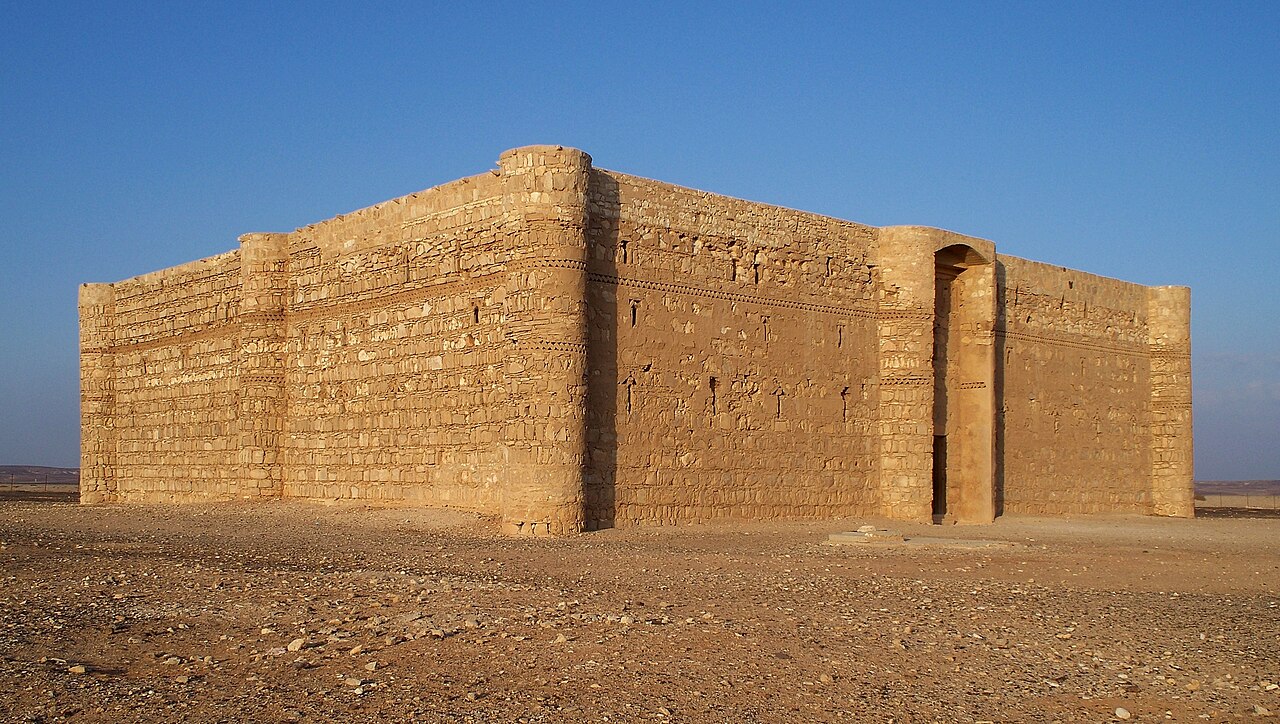
Qasr Amra is classified as a lowland castle due to its desert plain location rather than elevated terrain. Its architecture reflects a blend of Roman, Byzantine, and Persian influences, typical of Umayyad design, which sought to integrate diverse cultural elements under Islamic rule.
The complex includes a prominent audience hall and a baths complex, both essential components of Umayyad palatial architecture. The baths, or hammam, were not only functional but also a space for socializing and relaxation, richly decorated to convey luxury and sophistication.
The castle’s walls and ceilings are embellished with frescoes, an unusual feature in Islamic architecture, which generally avoided figurative art in religious contexts. These frescoes depict hunting scenes, musicians, dancers, and even zodiac signs, providing invaluable insight into the secular life and artistic tastes of the Umayyad elite.
The frescoes: a unique artistic heritage
The frescoes at Qasr Amra are among the earliest surviving examples of Islamic figural painting. They reveal a transitional style that bridges late antique Hellenistic traditions with emerging Islamic aesthetics. The imagery includes representations of human figures and animals, which is rare in Islamic art due to religious prohibitions on figural depiction in sacred spaces.
These paintings show clear Byzantine and Persian influences, reflecting the Umayyads’ cultural connections and the cosmopolitan nature of their court. The frescoes have been described as an "artistic renaissance of Hellenistic art," highlighting their importance in the history of art and architecture.
Preservation and cultural significance
Today, Qasr Amra is recognized as a well-preserved monument and a UNESCO World Heritage Site, celebrated for its exceptional frescoes and architectural integrity. It offers a rare window into the secular life of the early Islamic period, contrasting with the predominantly religious monuments of later centuries.
The site has undergone conservation efforts to protect its delicate frescoes and structural elements from environmental damage. Its preservation allows scholars and visitors alike to appreciate the artistic and historical richness of the Umayyad era.
Visiting Qasr Amra
Visitors to Qasr Amra can explore the castle’s main chambers, including the audience hall and the baths, where the frescoes remain visible. The site’s remote desert setting adds to its allure, offering a sense of the isolation and tranquility that the Umayyad rulers sought in their desert retreats.
While facilities are limited due to its location, the castle is accessible from Amman and is often included in tours of Jordan’s desert castles and archaeological sites. The best time to visit is during the cooler months to avoid the intense desert heat.
Frequently asked questions (FAQ)
- How do I get to Qasr Amra from Amman?
- Qasr Amra is located about 50 miles east of Amman and can be reached by car or guided tour. The drive takes approximately one hour along the Desert Highway.
- What makes Qasr Amra's frescoes unique?
- The frescoes at Qasr Amra are among the earliest examples of Islamic figural painting, showing Byzantine and Persian influences and depicting secular themes like hunting and music.
- Is Qasr Amra accessible to visitors year-round?
- Yes, Qasr Amra is open daily from 8:00 to 17:00. The best time to visit is during the cooler months to avoid extreme desert temperatures.
- Can I see the baths at Qasr Amra?
- Yes, the baths complex is part of the castle and visitors can explore the well-preserved rooms adorned with frescoes.
- Why is Qasr Amra considered an important historical site?
- Qasr Amra is a UNESCO World Heritage Site notable for its well-preserved Umayyad architecture and unique frescoes that provide insight into early Islamic secular art.
Information
Opening hours
8:00-17:00 daily
Ticket prices
Approx. 3 JD
Current owner
Jordanian Department of Antiquities
Loading map...
Visitor reviews
No reviews yet. Been here? Write the first review and help other travelers!
Write the first reviewVisited this castle? Share your experience
Your review helps other travelers and adds first-hand knowledge to our encyclopedia.