Qasr Shabeeb
Qasr Shabeeb is an ancient Roman fortress located in the municipality of Az-Zarqa, Jordan, constructed around 46 BCE. It represents a significant example of Roman military architecture in the region, strategically positioned as a defensive outpost overseeing the Zarqa River. This hill castle played a vital role in securing the eastern frontier of the Roman Empire during the early imperial period and continued to serve various military and administrative functions through successive historical eras.
Historical significance and Roman origins
The fortress was established by the Romans as part of their expansive military infrastructure designed to control and protect key routes and borders in the Levant. Its location on elevated terrain allowed for broad surveillance of the surrounding landscape and the Zarqa River valley, which was an important natural corridor. During the reign of Emperor Aurelian (253–268 CE), the fortress's strategic importance was reaffirmed, as evidenced by a Latin inscription found above the entrance arch commemorating the presence of a Roman military cohort stationed there. This inscription provides concrete proof of the fortress's role as a Roman garrison post.
Archaeological excavations have uncovered 2nd-century CE pottery and other artifacts, confirming sustained Roman occupation. The fortress's design incorporates typical Roman military architectural features such as thick stone walls, defensive arrow slits, and a well-planned water supply system that included a well connected by underground tunnels to the Zarqa River, ensuring access to water even during sieges.
Architectural features and layout
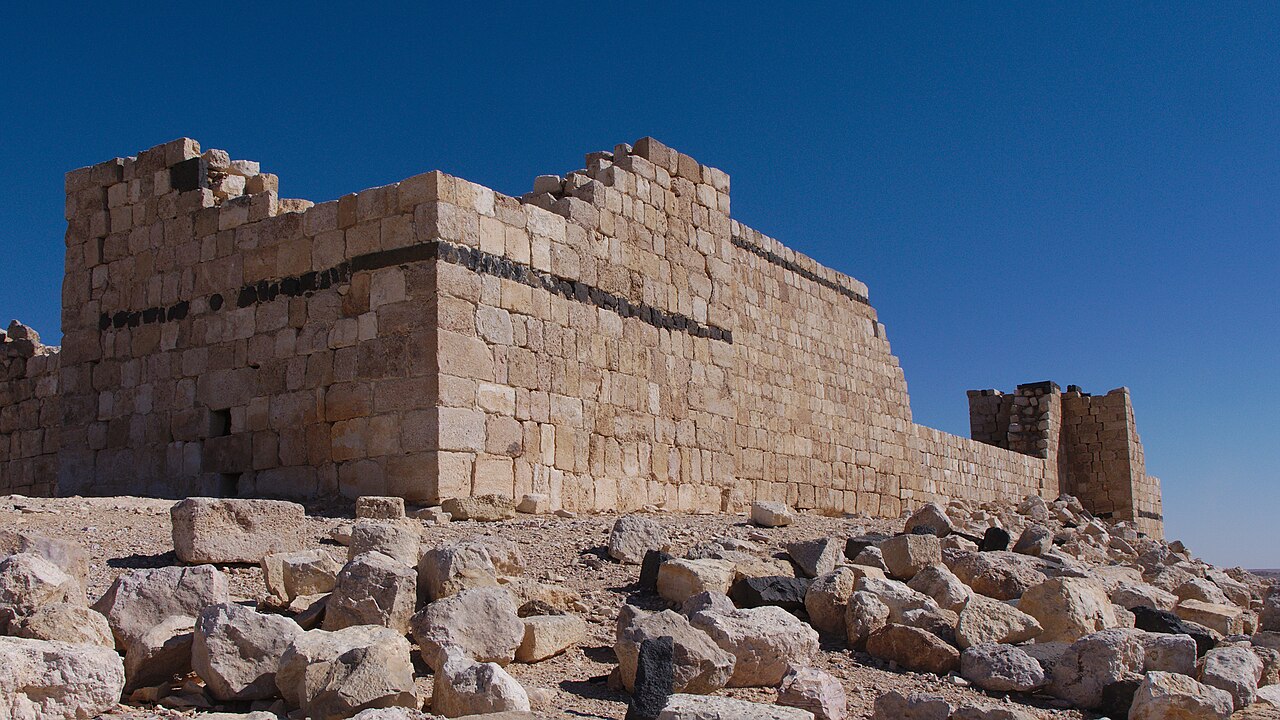
Qasr Shabeeb is a square fortress, each side measuring approximately 13.75 meters in length. The fortress is constructed primarily from stone, showcasing the durability and engineering skills of Roman builders. The eastern side features the main entrance gate, which is flanked by defensive openings designed for archers to repel attackers. The fortress's interior includes a central hall covered by a square vault supported by pendentive arches, an architectural technique that facilitates the transition from a square room to a vaulted ceiling, illustrating advanced Roman engineering.
Despite some roof collapses, parts of the internal staircase remain intact, providing access to the roof and demonstrating the vertical organization of the fortress. The presence of arrow slits in the walls highlights the defensive nature of the structure, designed to withstand assaults and provide protection for its occupants.
Later historical phases and cultural transitions
Following the Islamic conquests of the 7th century CE, the fortress's military role declined, transitioning into a station for travelers during periods of relative peace. This change reflects the shifting political and social dynamics of the region. During the Ayyubid and Mamluk periods, Qasr Shabeeb saw renewed use, adapting to the needs of those eras, possibly serving as a fortified rest stop or local administrative center.
In the Ottoman era, the fortress functioned again as a garrison, this time for Turkish forces tasked with protecting pilgrims passing through Zarqa. Local tradition associates the fortress with a figure named Shabeeb al-Mahdawi al-Jadhami, although historical records suggest multiple individuals named Shabeeb, including regional princes under the Ikhshidid, Fatimid, and Ottoman administrations, may have influenced the site's history or its name.
During the 20th century Hashemite period, Qasr Shabeeb fell into disuse and has since remained largely closed to the public, preserving its ruins as a historical monument rather than an active military or administrative site.
Archaeological remains and preservation
The surviving structure of Qasr Shabeeb offers valuable insight into Roman military architecture and the site's continuous adaptation through centuries. The fortress's stone walls, vaulted ceilings, and arrow slits remain visible, while the well and underground water tunnels exemplify Roman engineering designed for sustainability during sieges.
The coexistence of a Latin inscription and a later Arabic inscription above the entrance arch symbolizes the site's layered history, reflecting the cultural and political changes that occurred over time. While some roof sections have collapsed, fallen stones and the remnants of the internal staircase provide clues to the fortress's original vertical layout and defensive strategies.
Qasr Shabeeb stands as an important archaeological site that documents the military, cultural, and architectural evolution from the Roman Empire through the Islamic, Ayyubid, Mamluk, and Ottoman periods. Its preservation contributes to understanding the complex history of frontier fortifications in Jordan and the broader Levant region.
Visiting and cultural importance
Although currently not fully open to the public, Qasr Shabeeb remains a site of historical and cultural interest for scholars and visitors interested in Roman military architecture and the history of Jordan. Its location near Az-Zarqa makes it accessible for those studying the Roman presence in the region and the subsequent historical layers that shaped the fortress's role.
Future conservation efforts could enhance access and interpretation, allowing a wider audience to appreciate the architectural ingenuity and historical significance of this enduring hill castle.
Frequently asked questions (FAQ)
- When was Qasr Shabeeb built and by whom?
- Qasr Shabeeb was built around 46 BCE by the Romans as a military fortress to secure the eastern frontier of their empire.
- What are the main architectural features of Qasr Shabeeb?
- The fortress is a square stone structure with each side measuring about 13.75 meters, featuring an eastern entrance gate, arrow slits for archers, a vaulted hall supported by pendentive arches, and a well connected to the Zarqa River.
- What historical periods did Qasr Shabeeb serve through?
- Qasr Shabeeb was used during the Roman period, Islamic conquests, Ayyubid and Mamluk eras, Ottoman times, and into the 20th century Hashemite period.
- Is Qasr Shabeeb open to visitors today?
- Currently, Qasr Shabeeb is mostly closed and not fully accessible to the public, but it remains an important archaeological site.
- Why is the water system at Qasr Shabeeb significant?
- The well and underground tunnels connecting to the Zarqa River demonstrate advanced Roman engineering to ensure water supply during sieges or extended military presence.
Information
Loading map...
Visitor reviews
No reviews yet. Been here? Write the first review and help other travelers!
Write the first reviewVisited this castle? Share your experience
Your review helps other travelers and adds first-hand knowledge to our encyclopedia.