Amman Citadel
The Amman Citadel (Arabic: القلعة, romanized: al-Qal'a, lit. 'the Fortress') is a prominent archaeological site located on Citadel Hill (Arabic: جبل القلعة, romanized: Jabal al-Qal'a, lit. 'Fortress Mount') overlooking Downtown Amman, the capital of Jordan. This site is one of the oldest continuously inhabited places in the world, with evidence of human presence dating back to the Neolithic period. The strategic location of the hill has made it a focal point for settlement and fortification since at least the Bronze Age around 1800 BCE.
Historical significance and early occupation
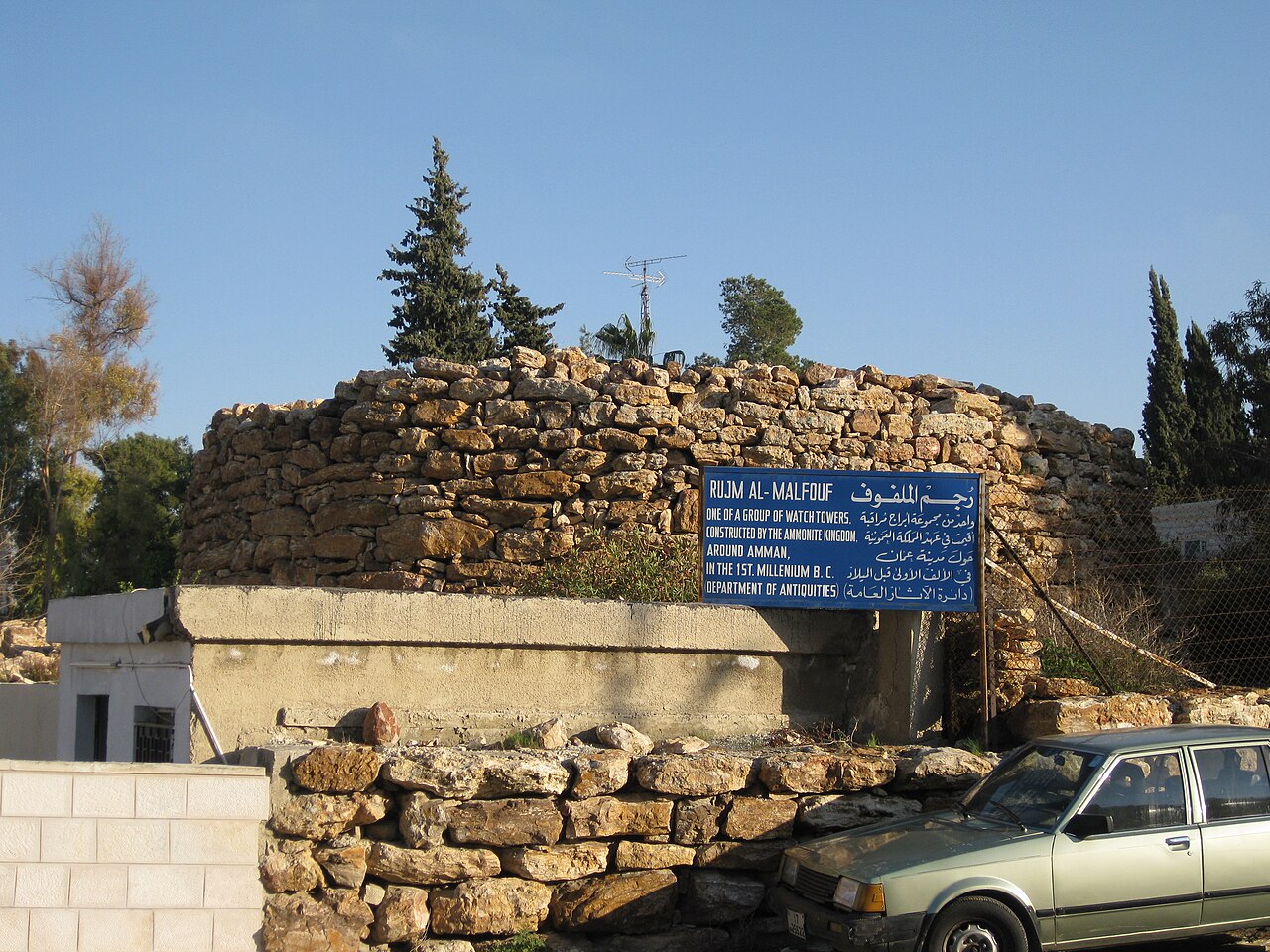
The hill was fortified during the Bronze Age and became the capital of the Kingdom of Ammon sometime after 1200 BCE. The Ammonites established a significant urban center here, which later came under the control of successive empires including the Assyrian, Babylonian, Ptolemaic, Seleucid, Roman, Byzantine, and Umayyad empires. Throughout classical antiquity, the city expanded beyond the confines of Citadel Hill, which served as the acropolis or fortified high point of the settlement.
Architectural remains and notable structures
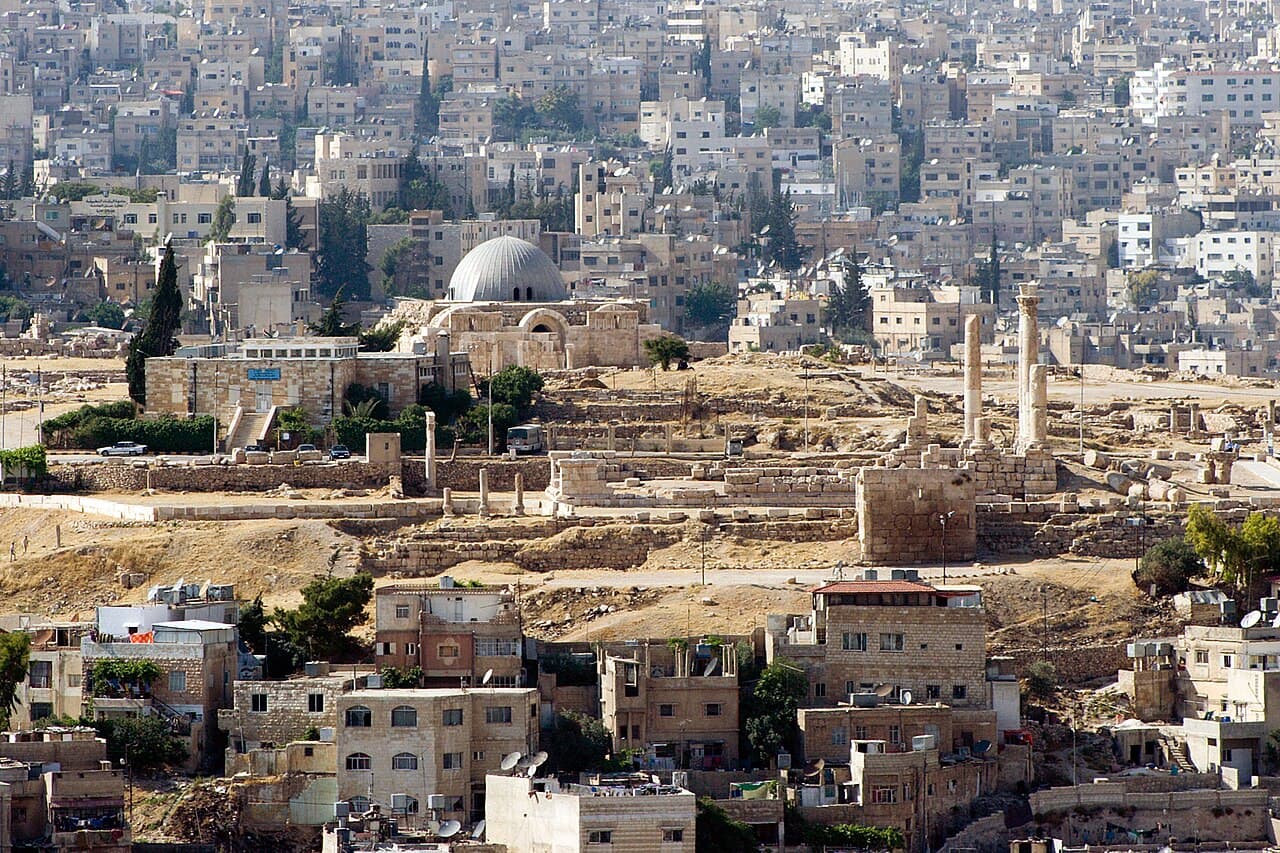
The majority of visible ruins at the Amman Citadel date from the Roman, Byzantine, and Umayyad periods. Among the most significant remains are the Temple of Hercules, a monumental Roman-era temple featuring massive stone columns, which reflects the influence of Roman architecture and religious practices in the region. Nearby is a well-preserved Byzantine church, indicative of the Christian presence during the Byzantine period. The Umayyad Palace complex, dating from the early Islamic period, includes residential quarters, a mosque, and bathhouses, showcasing the architectural style and urban planning of the Umayyad dynasty.
Temple of Hercules
This temple is one of the most iconic structures on the hill, with several massive columns still standing. It was constructed during the Roman period, possibly in the 2nd century CE, symbolizing the integration of Roman religious traditions in the city.
Byzantine church
The Byzantine church ruins include mosaic floors and architectural elements that reveal the Christian character of the city during the Byzantine era. The church's design reflects typical Byzantine ecclesiastical architecture.
Umayyad Palace
The Umayyad Palace is a large complex that served as an administrative and residential center during the early Islamic period. Its remains include a large audience hall, private quarters, and bathhouses, illustrating the sophistication of Umayyad architecture and the importance of the site during their rule.
Later history and modern rediscovery
Following the Umayyad period, the site experienced decline and was largely abandoned for many centuries. It was sporadically used by Bedouin tribes and seasonal farmers, with much of the ancient city reduced to ruins. In 1878, the Ottoman Empire resettled displaced Circassian refugees in the area, marking a new phase of habitation on the hill.
Archaeological interest in the Amman Citadel began in the early 20th century, with excavations starting in the 1920s. Both Western and Jordanian archaeological teams have conducted extensive research, although a significant portion of the site remains unexcavated, preserving its potential for future discoveries.
Current status and cultural importance
The Amman Citadel today is classified as archaeological ruins, with much of the original structures in a state of ruin but still accessible to visitors. The site houses the Jordan Archaeological Museum, established in 1951, which displays artifacts uncovered from the hill and surrounding areas, providing valuable insights into the region's long history.
As a key cultural landmark, the Citadel offers panoramic views of Amman and serves as a tangible link to the city's ancient past. It continues to be a focus for archaeological study and heritage preservation, highlighting the layered history of human civilization in this part of the Middle East.
Frequently asked questions (FAQ)
- What is the best time to visit Amman Citadel?
- The best time to visit Amman Citadel is during the spring and autumn months when the weather is mild and comfortable for exploring the outdoor ruins.
- How do I get to Amman Citadel from downtown Amman?
- Amman Citadel is located on Citadel Hill in downtown Amman and is easily accessible by taxi or on foot from the city center.
- What are the main historical periods represented at Amman Citadel?
- The main historical periods at Amman Citadel include the Bronze Age, Roman, Byzantine, and Umayyad periods, reflecting its long and varied history.
- Can visitors enter the Umayyad Palace at the site?
- Visitors can explore the ruins of the Umayyad Palace, including its audience hall and bathhouses, which are open to the public as part of the archaeological site.
- Is there a museum at Amman Citadel?
- Yes, the Jordan Archaeological Museum is located on the hill and features artifacts from the Citadel and other archaeological sites in Jordan.
Photo gallery

Information
Address
Citadel Hill, Amman, Jordan
Loading map...
Visitor reviews
No reviews yet. Been here? Write the first review and help other travelers!
Write the first reviewVisited this castle? Share your experience
Your review helps other travelers and adds first-hand knowledge to our encyclopedia.