Qasr Burqu’
Qasr Burqu’ stands as a remarkable example of a multi-period archaeological site in the arid landscape of eastern Jordan. Its history spans from prehistoric times through Roman military use and into the Islamic Umayyad period, illustrating a continuous adaptation to the challenging desert environment. Located near the modern municipality of Ruwaished, the site’s enduring significance largely stems from its strategic position near vital water sources in an otherwise dry region.
Prehistoric origins and early occupation
The earliest evidence of human presence at Qasr Burqu’ dates back to the Epipalaeolithic and Neolithic periods, approximately between 7000 and 6000 BCE. Archaeological findings indicate that prehistoric foragers and early agricultural communities utilized the area, attracted by the availability of water and natural shelter. This long history of occupation underscores the site's importance as a rare oasis in the desert, supporting human life and activity over millennia.
Roman military fortification and architectural features
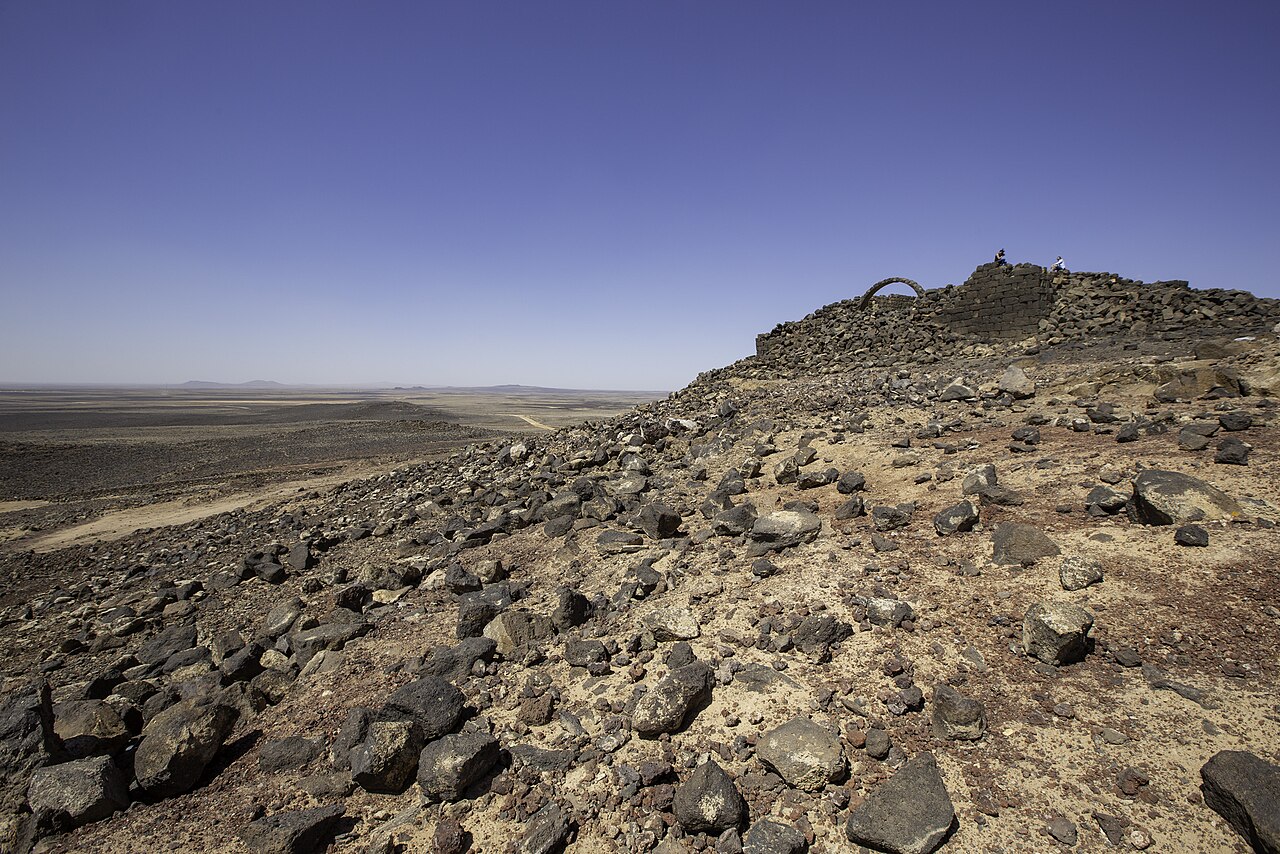
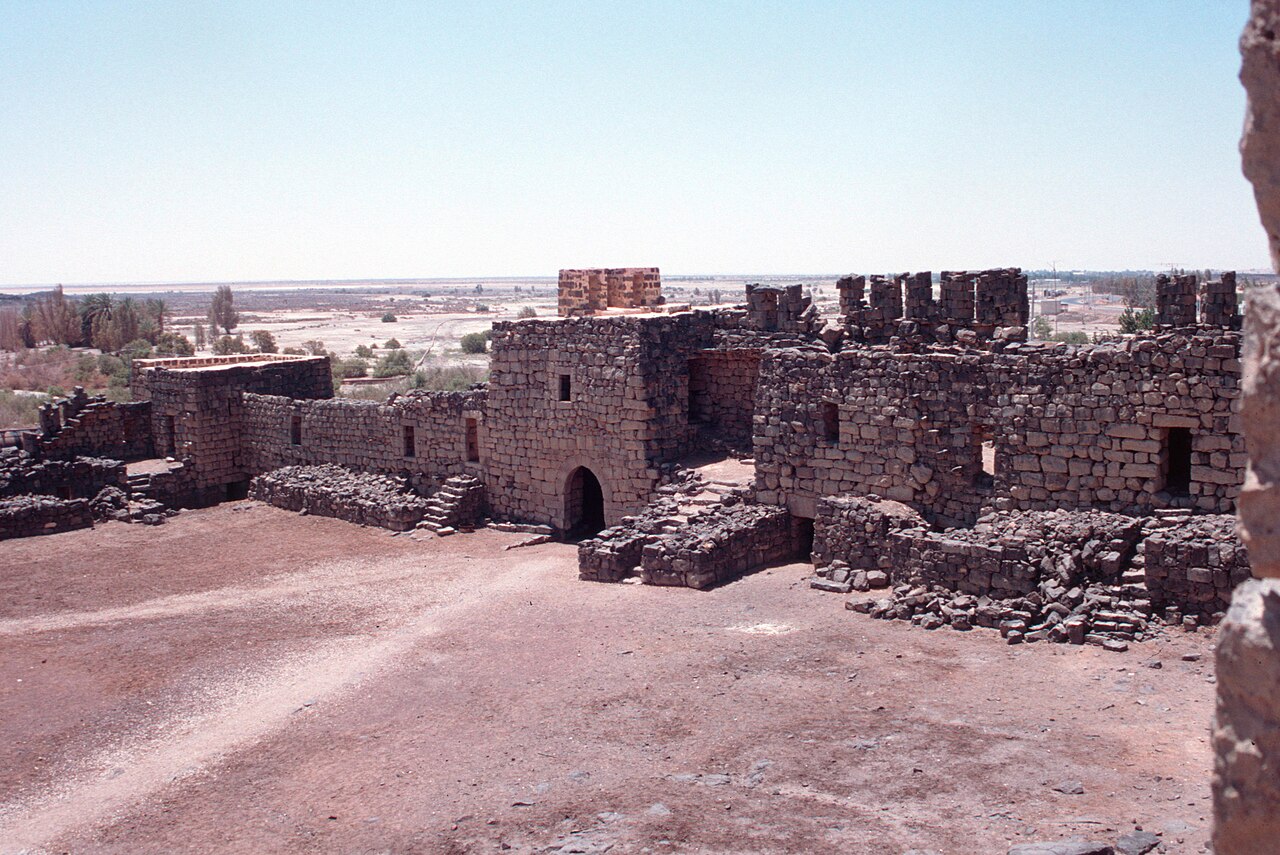
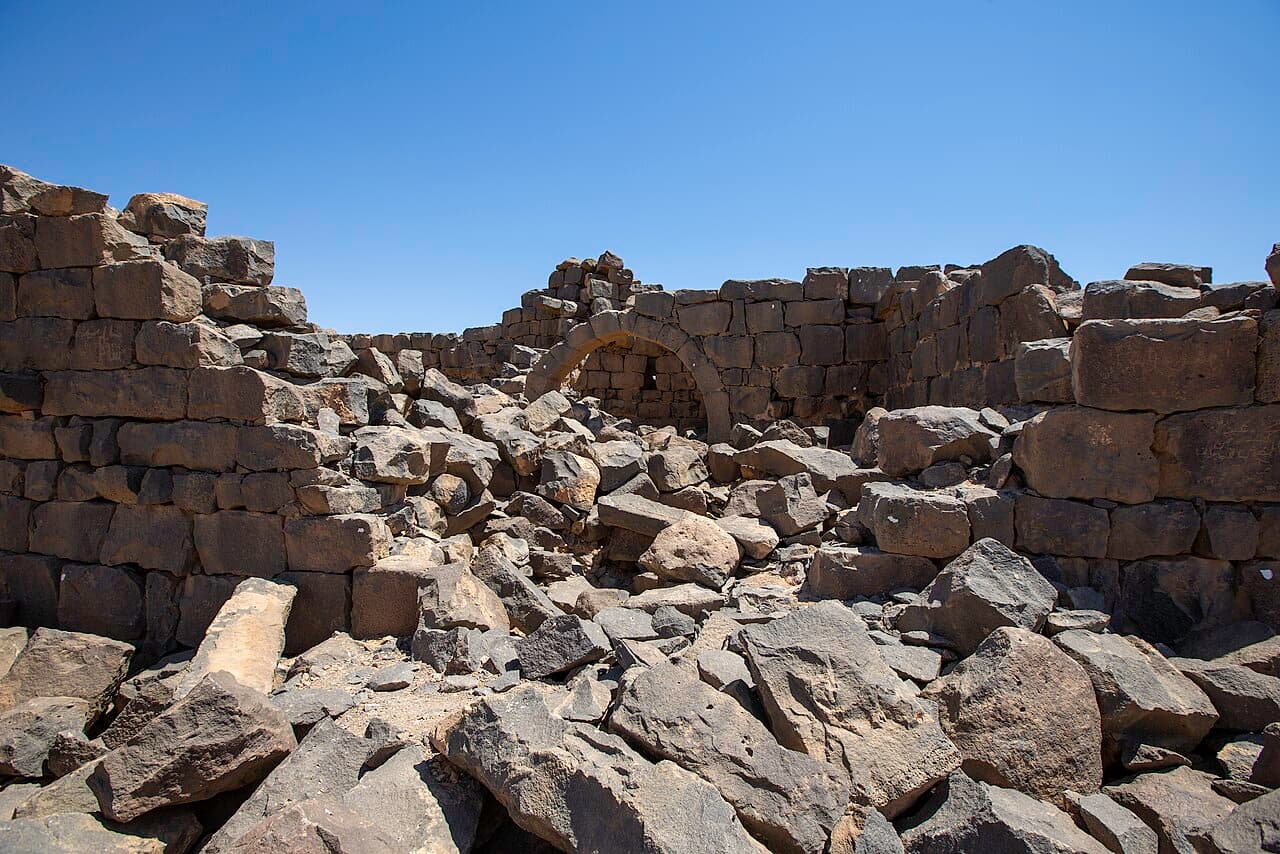
During the Roman period, Qasr Burqu’ was developed into a military fortification, marking a significant phase in its history. The Romans constructed a prominent stone tower using local black basalt, a volcanic rock abundant in the region. This tower, originally reaching an estimated height of up to thirteen meters, served as a defensive stronghold and observation point overseeing the surrounding desert terrain. Today, the tower stands approximately five meters tall, forming the central core of the later Umayyad palace complex.
The Roman fort's design reflects typical military architecture of the period, emphasizing durability and strategic surveillance. The use of basalt not only provided strength but also gave the structure a distinctive dark appearance, blending with the volcanic landscape. Surrounding the tower, the Romans likely established walls and enclosures to secure troops and supplies, although much of this early fortification has been modified or incorporated into later constructions.
Transition to a byzantine religious site
Following Roman control, the site saw the addition of a Byzantine monastery, indicating a shift from purely military use to religious and community functions during late antiquity. This transformation reflects broader regional trends where many Roman fortifications were repurposed for ecclesiastical purposes as Christianity spread throughout the empire. The monastery's remains, though less prominent than the fort and palace structures, contribute to the layered historical narrative of Qasr Burqu’.
Umayyad desert palace complex under al-walid i
In the early 8th century CE, during the reign of al-Walid I—first as emir and later as Umayyad caliph—Qasr Burqu’ underwent substantial renovation and expansion. Al-Walid I is credited with founding or significantly enhancing the site as an Umayyad desert palace complex. This development was part of a wider Umayyad trend of constructing desert palaces that combined administrative, residential, and recreational functions.
The palace served multiple strategic roles: it oversaw and taxed the migration routes of nomadic herders and their livestock, controlled important desert roads, and supported agricultural initiatives adapted to the semi-arid environment. Additionally, it functioned as a leisure retreat, with hunting grounds and spaces designed for relaxation and entertainment. The Umayyads incorporated the existing Roman tower into the palace layout, demonstrating a continuity of use and architectural adaptation.
Architectural elements of the umayyad complex
The Umayyad complex included substantial walls and enclosures constructed from black basalt, forming livestock pens and secure courtyards. These enclosures reflect the pastoral economy of the region, catering to the seasonal movements of Bedouin tribes who relied on the site for grazing during dry periods. Water management was a critical feature, with the palace situated near Wadi Minqat, a dry riverbed that collects winter rainwater into natural basins and ponds.
To maximize water availability, the Umayyads and later occupants developed various catchment and storage systems, including reservoirs and channels, although the precise dates of these installations remain uncertain. These innovations enabled sustainable agriculture and supported larger temporary populations during seasonal gatherings.
Medieval use and bedouin inscriptions
Throughout the medieval period, Qasr Burqu’ continued to serve as a seasonal encampment for Bedouin tribes. The basalt rocks surrounding the site bear numerous inscriptions carved by these groups, providing direct evidence of their regular presence and use of the area for summer grazing and camping. These inscriptions, dating from the medieval era, offer valuable insights into the social and economic activities of nomadic peoples in the region.
Archaeological significance and preservation
Qasr Burqu’ represents a complex, multi-layered archaeological site that illustrates the evolution of human settlement and architectural adaptation in a challenging desert environment. The integration of the Roman military tower into the Umayyad palace highlights the continuity and transformation of the site across different cultures and historical periods.
The use of local black basalt in construction gives the site a distinctive character and demonstrates the practical use of available materials. The combination of military, religious, administrative, and pastoral functions over time makes Qasr Burqu’ a unique example of desert architecture and settlement.
Today, the site is partially preserved, with the Roman tower and surrounding enclosures standing as key features. Ongoing archaeological research continues to uncover more about the site's history, water management strategies, and the lives of its diverse occupants.
Visiting qasr burqu’
Visitors to Qasr Burqu’ can explore the remains of the Roman tower and Umayyad palace complex, gaining insight into the architectural ingenuity and historical significance of this desert site. The location near Ruwaished makes it accessible for those interested in Jordan's rich cultural heritage and desert landscapes.
While facilities may be limited, the site offers a compelling experience for history enthusiasts, archaeologists, and travelers seeking to understand the interplay of environment, architecture, and human activity in the Middle East.
Frequently asked questions (FAQ)
- How do I get to Qasr Burqu’?
- Qasr Burqu’ is located near the town of Ruwaished in the Ma'an Governorate of Jordan. Visitors can reach the site by car via local roads; it is advisable to have a GPS or guide due to the remote desert location.
- What is the historical significance of Qasr Burqu’?
- Qasr Burqu’ is significant for its continuous occupation from prehistoric times through the Roman and Umayyad periods. It showcases the evolution of desert architecture and the strategic use of water resources in an arid environment.
- When was Qasr Burqu’ built?
- The site’s most notable construction phase as an Umayyad desert palace dates to the early 8th century CE, although it incorporates earlier Roman military structures.
- Can I visit the Roman tower at Qasr Burqu’?
- Yes, the Roman tower remains are a central feature of the site and can be explored by visitors. It illustrates Roman military architecture adapted into the later Umayyad palace complex.
- Is there an entrance fee to visit Qasr Burqu’?
- No, entry to Qasr Burqu’ is free of charge, making it accessible for all visitors interested in Jordan’s historical sites.
Photo gallery

Information
Opening hours
10:00-16:00, daily
Ticket prices
Free
Current owner
State museum
Website
Visit websiteSources & official resources
Verify the information above using these authoritative references.
Loading map...
Visitor reviews
No reviews yet. Been here? Write the first review and help other travelers!
Write the first reviewVisited this castle? Share your experience
Your review helps other travelers and adds first-hand knowledge to our encyclopedia.