Qasr al-Hayr al-Sharqi
Qasr al-Hayr al-Sharqi, meaning "Eastern al-Hayr Palace," is a significant Umayyad-era castle located in the heart of the Syrian Desert. Constructed in 728-29 CE by the Umayyad caliph Hisham ibn Abd al-Malik, this fortress-palace served both strategic and recreational purposes. It functioned as a military outpost and a hunting lodge, capitalizing on the area's rich desert fauna. The castle is part of the group known as the desert castles, a series of fortified palatial complexes scattered across the Syrian steppe, reflecting the Umayyads' interest in consolidating control over the desert frontiers and showcasing their power through architectural patronage.
Historical context and purpose
The construction of Qasr al-Hayr al-Sharqi occurred during the early medieval period, a time when the Umayyad Caliphate was expanding its territories and establishing administrative and military centers across the Levant. The castle was built shortly after its western counterpart, Qasr al-Hayr al-Gharbi, which was completed in 727 CE. Together, these palaces formed a network of fortified sites designed to secure trade routes, control nomadic tribes, and serve as royal hunting retreats.
The choice of location in the Syrian Desert was strategic, providing a vantage point over the surrounding landscape and access to water sources, which were critical for sustaining both the garrison and the hunting parties. The castle's role as a hunting lodge is underscored by the presence of extensive grounds once teeming with game, a popular pastime among Umayyad elites.
Architectural features and layout
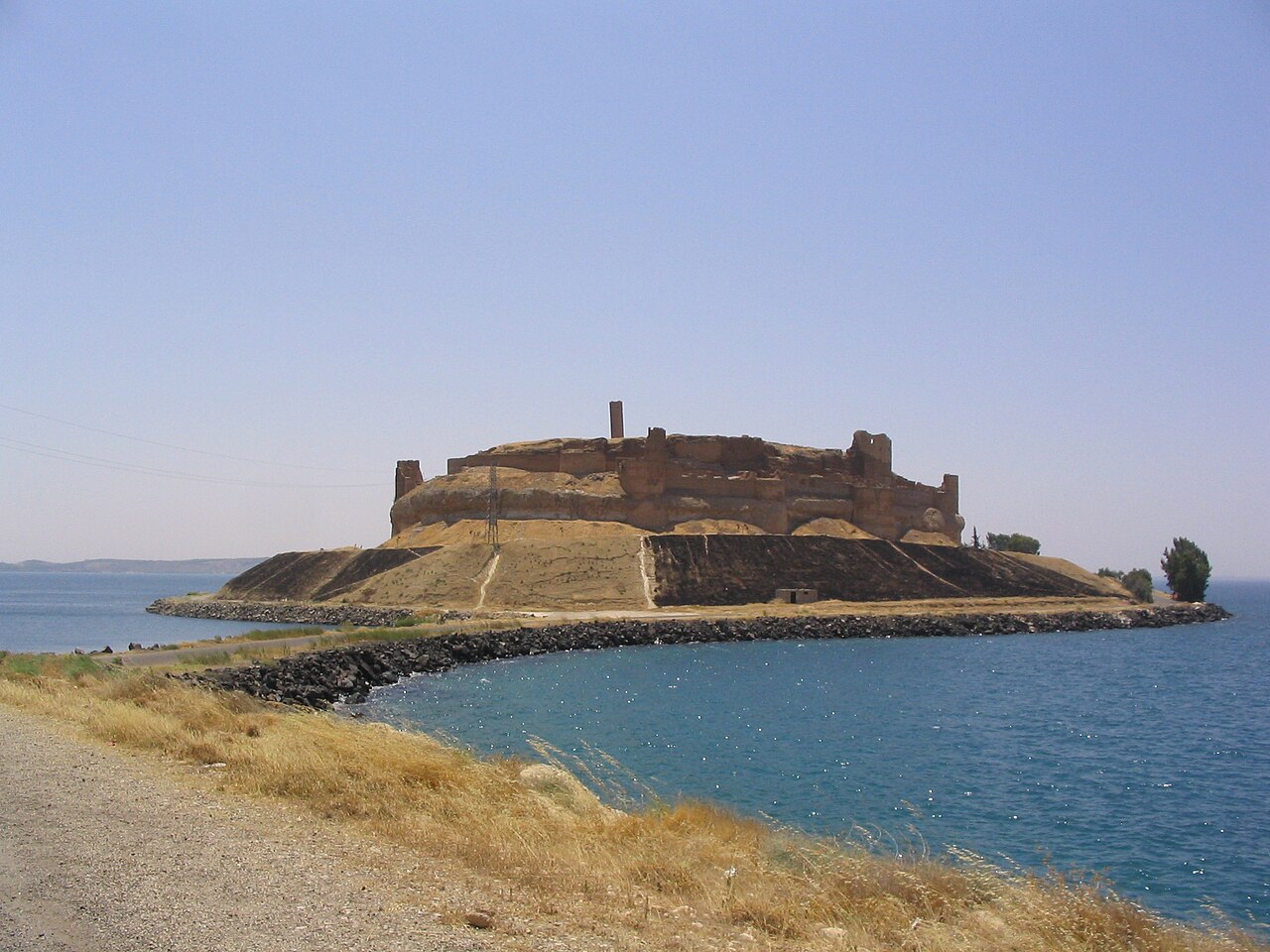
Qasr al-Hayr al-Sharqi is classified as a hill castle, situated on a slight elevation to enhance its defensive capabilities and visibility. The fortress exhibits early Islamic architectural elements combined with influences from Roman and Byzantine traditions, which were prevalent in the region during the Umayyad period.
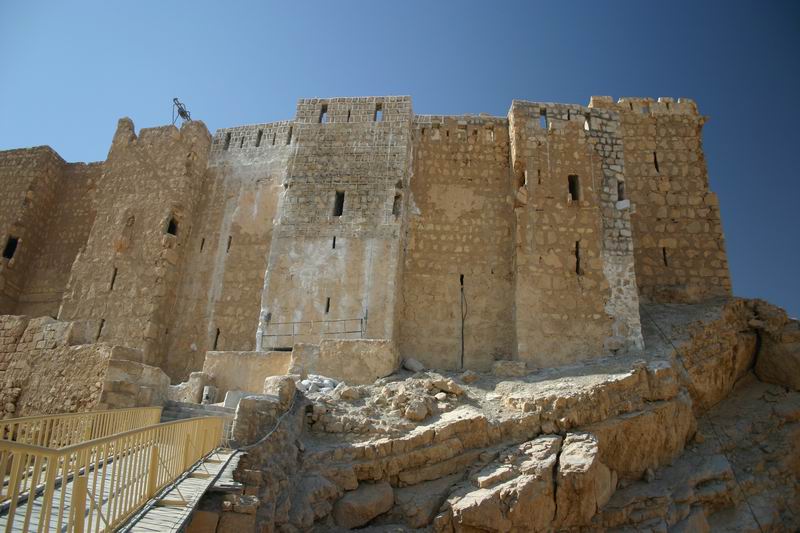
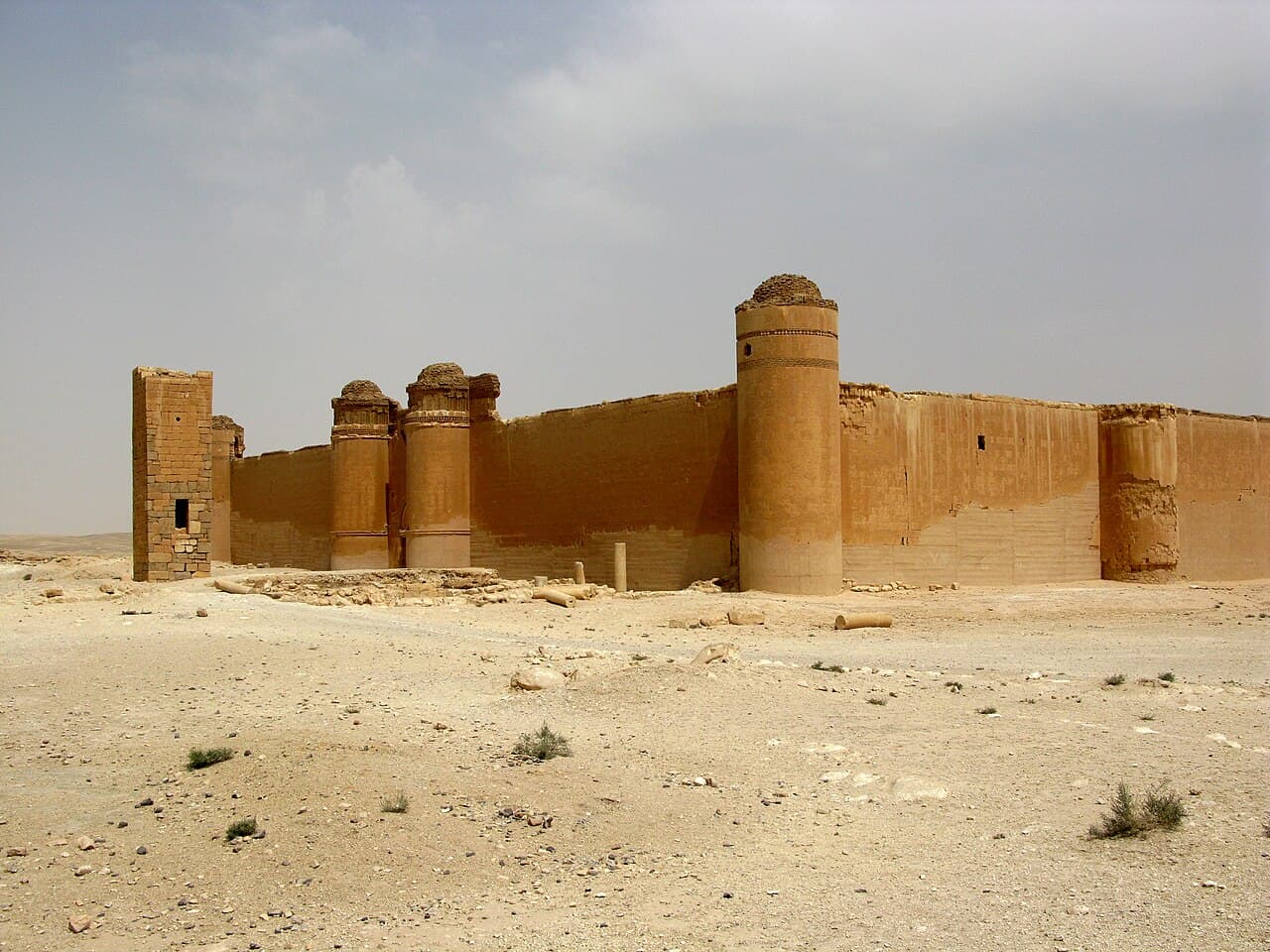
The castle's layout includes a fortified enclosure with robust stone walls and towers at the corners, designed to provide overlapping fields of fire and surveillance. The main gate is fortified and likely featured a bent entrance to slow down attackers. Inside the walls, the palace complex included residential quarters, reception halls, and storage facilities.
Water management was a critical aspect of the design, with cisterns and channels constructed to collect and store rainwater, ensuring a reliable supply in the arid environment. Decorative elements, although now mostly lost or eroded, once adorned the palace, reflecting the Umayyad aesthetic that favored geometric and vegetal motifs.
Defensive structures
The castle's fortifications were designed to withstand both direct assault and prolonged siege. The walls were thick and high, with battlements for archers and guards. The corner towers provided vantage points for early detection of approaching enemies. The use of local stone materials contributed to the durability of the structure.
Residential and ceremonial spaces
Within the enclosure, the palace housed various rooms for the caliph and his retinue. These included private chambers, audience halls, and possibly a mosque or prayer area. The layout facilitated both administrative functions and leisure activities such as hunting expeditions.
Relationship with Qasr al-Hayr al-Gharbi
Qasr al-Hayr al-Sharqi is often studied in conjunction with Qasr al-Hayr al-Gharbi (the Western al-Hayr Palace), which was built just a year earlier in 727 CE. These twin castles represent the Umayyad strategy of establishing a string of fortified palaces across the desert to project power and manage the frontier regions.
While both castles share similar architectural styles and functions, they are located approximately 45 kilometers apart, each overseeing different parts of the desert. Their construction demonstrates the Umayyads' sophisticated approach to military architecture combined with the desire for luxurious retreats.
Current condition and archaeological significance
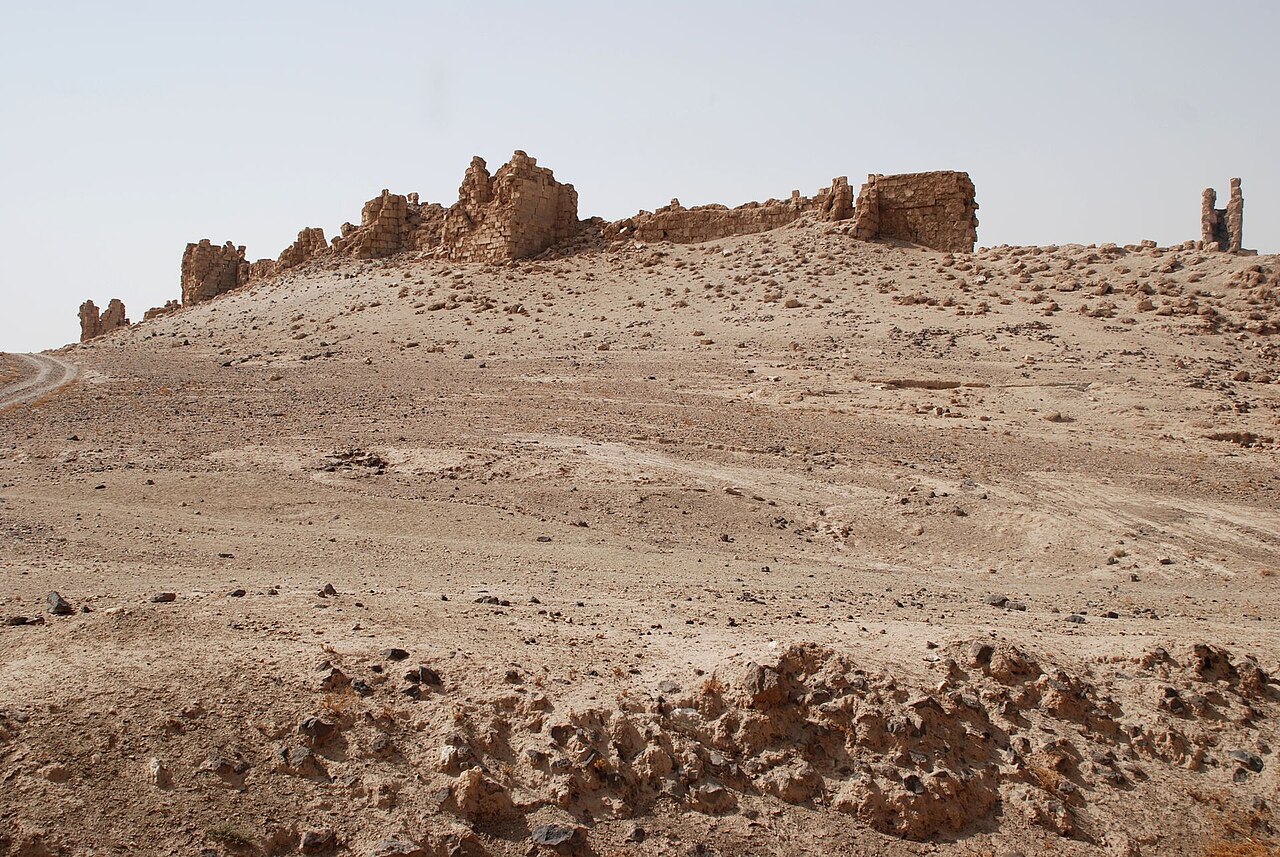
Today, Qasr al-Hayr al-Sharqi stands as partially preserved ruins. The harsh desert environment and centuries of neglect have taken a toll on the structure, but significant portions of the walls and towers remain visible. Archaeological excavations have provided valuable insights into Umayyad construction techniques and desert settlement patterns.
The site is important for understanding early Islamic architecture and the Umayyad dynasty's approach to governance and leisure. Preservation efforts have been challenged by regional instability, but the castle remains a key cultural heritage site in Syria.
Visiting and accessibility
Access to Qasr al-Hayr al-Sharqi is limited due to its remote desert location and the ongoing security situation in Syria. Visitors interested in early Islamic architecture and desert castles should seek updated information from local authorities or heritage organizations before planning a trip.
The castle offers a unique glimpse into the Umayyad period's architectural and cultural landscape, set against the stark beauty of the Syrian Desert.
Frequently asked questions (FAQ)
- What is Qasr al-Hayr al-Sharqi?
- Qasr al-Hayr al-Sharqi is a historic castle located in the Syrian Arab Republic, known for its distinctive Islamic architecture and rich historical significance. Built in the 8th century, it served as a desert palace and a vital stop for traders and travelers, showcasing the grandeur of the Umayyad dynasty.
- When was Qasr al-Hayr al-Sharqi constructed?
- The construction of Qasr al-Hayr al-Sharqi began in the early 8th century, during the reign of the Umayyad caliphate. It was completed around 743 AD, reflecting the architectural innovations and cultural influences of the time.
- Is it possible to visit Qasr al-Hayr al-Sharqi?
- Yes, Qasr al-Hayr al-Sharqi is open to visitors, allowing them to explore its impressive structure and learn about its historical context. However, it is advisable to check local travel advisories and conditions before planning your visit due to the region's current circumstances.
- What are the opening hours for Qasr al-Hayr al-Sharqi?
- Qasr al-Hayr al-Sharqi typically welcomes visitors from early morning until sunset. However, opening hours may vary seasonally, so it's best to verify the current schedule before your visit.
- Can I access Qasr al-Hayr al-Sharqi by public transport?
- While public transportation options may be limited in the region, it is possible to reach Qasr al-Hayr al-Sharqi by local buses or taxis from nearby cities. Additionally, guided tours often provide transportation, making it easier for visitors to access the site.
- What is the best time to visit Qasr al-Hayr al-Sharqi?
- The best time to visit Qasr al-Hayr al-Sharqi is during the spring (March to May) and fall (September to November) when temperatures are milder, making for a more comfortable exploration experience. It's advisable to avoid the peak summer months due to extreme heat.
- Are there any nearby attractions to visit alongside Qasr al-Hayr al-Sharqi?
- Yes, visitors can explore other historical sites in the vicinity, such as Qasr al-Hayr al-Gharbi and the ancient city of Palmyra. These attractions provide additional insights into the rich cultural heritage of the region.
- What are the ticket prices for visiting Qasr al-Hayr al-Sharqi?
- Ticket prices for Qasr al-Hayr al-Sharqi are generally affordable, with discounts available for students and groups. However, it is recommended to check the latest pricing information before your visit, as prices may change based on local policies.
Photo gallery

Information
Loading map...
Visitor reviews
No reviews yet. Been here? Write the first review and help other travelers!
Write the first reviewVisited this castle? Share your experience
Your review helps other travelers and adds first-hand knowledge to our encyclopedia.