Jaabar Castle
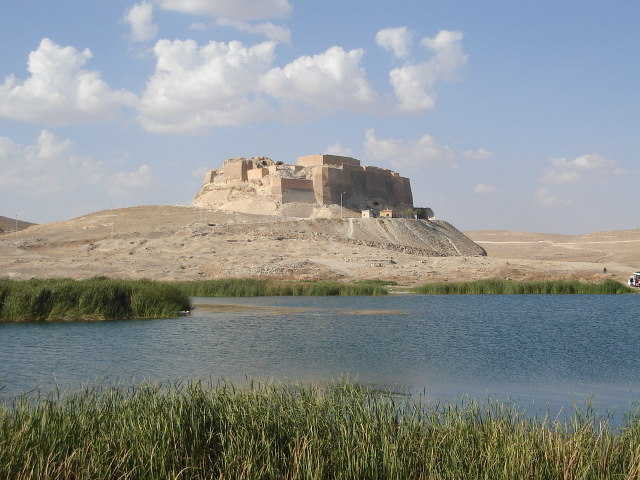
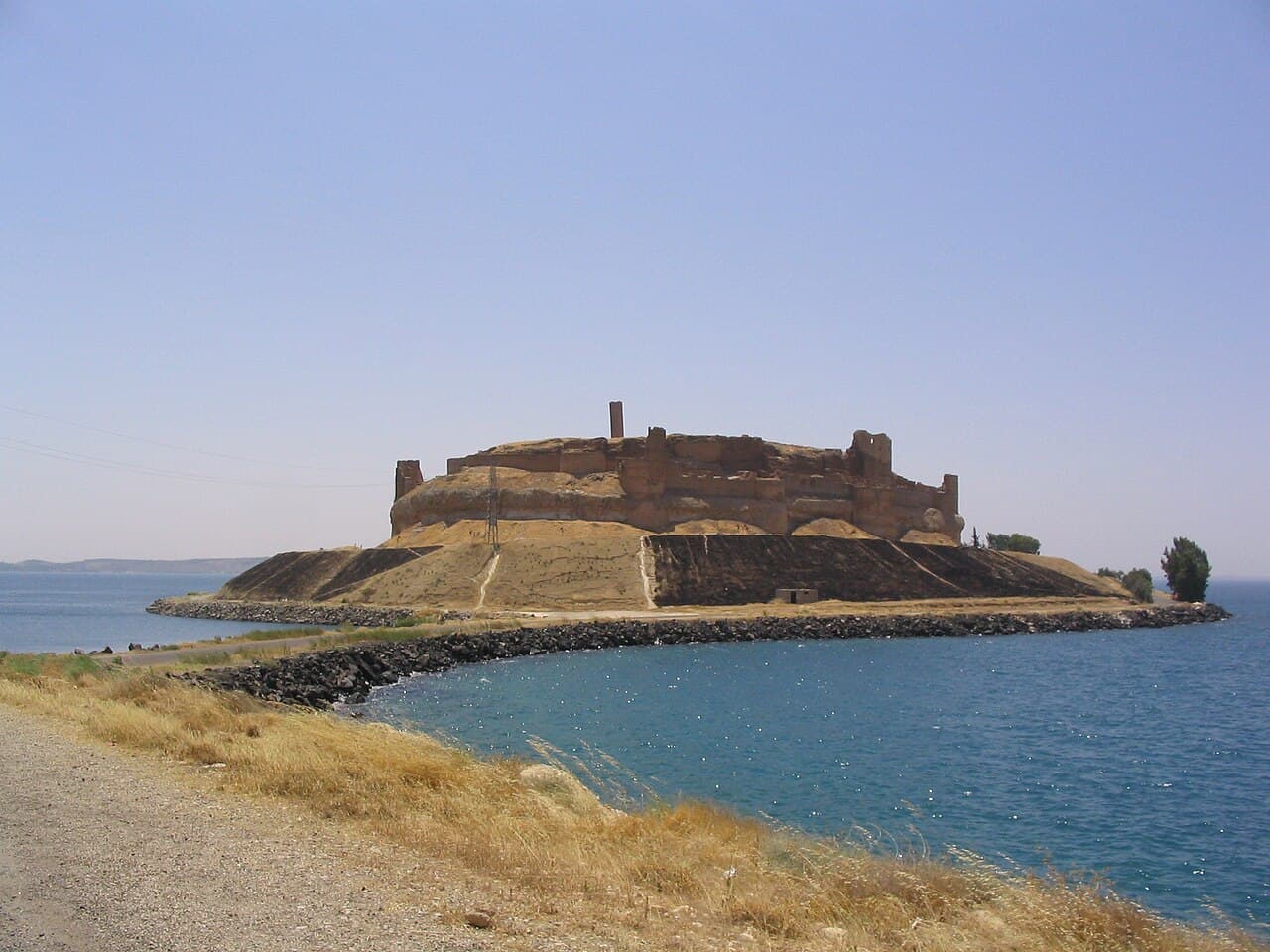
Jaabar Castle, also known locally as Qalaat Jaabar, is a remarkable hill castle situated on an island in Lake Assad, connected by a causeway to the east bank of this artificial reservoir in the Syrian Arab Republic. Its strategic location overlooks the Euphrates Valley, offering commanding views and control over the surrounding landscape. The castle's history is deeply intertwined with the nearby town of Ar-Raqqah, located approximately 30 kilometers away, and it has played a significant role in the region's military and political affairs since the early medieval period.
The site originally hosted a pre-Islamic settlement known as Dausar dating back to the 7th century, which may have included early fortifications. The castle as it stands today was likely constructed by the Banu Numayr tribe after they seized the site in 1011. Throughout the 11th and 12th centuries, Jaabar Castle changed hands multiple times among regional powers, including the Fatimids, Seljuks, and the Uqaylid dynasty. Notably, the castle was involved in conflicts with the Crusaders and was besieged by prominent figures such as Zengi, the atabeg of Aleppo, who was assassinated during a siege in 1146. His son, Nur ad-Din, undertook significant reconstruction efforts in 1168, shaping much of the castle's current architectural fabric.
Historical significance and political context
Jaabar Castle served as a vital military stronghold controlling the routes along the Euphrates and protecting the region from various incursions. The castle's strategic importance is highlighted by its role as a temporary prison for the future King Baldwin II of Jerusalem and his cousin Joscelin I in 1108. During the Seljuk period, the fortress was awarded as a fief to Salim ibn Malik ibn Badran, a commander linked to the Uqaylids, who maintained control for much of the 12th century.
The castle also played a role in the complex power struggles of the region, including the shifting alliances and conflicts between Muslim rulers and Crusader states. Its capture by Zengi and subsequent control by Nur ad-Din marked its integration into the powerful Zengid dynasty, which was instrumental in the Muslim resistance against the Crusaders. Later, in 1202, it came under the control of Az-Zahir Ghazi, son of the legendary Saladin, further cementing its importance in medieval Syrian history.
Architectural features and construction
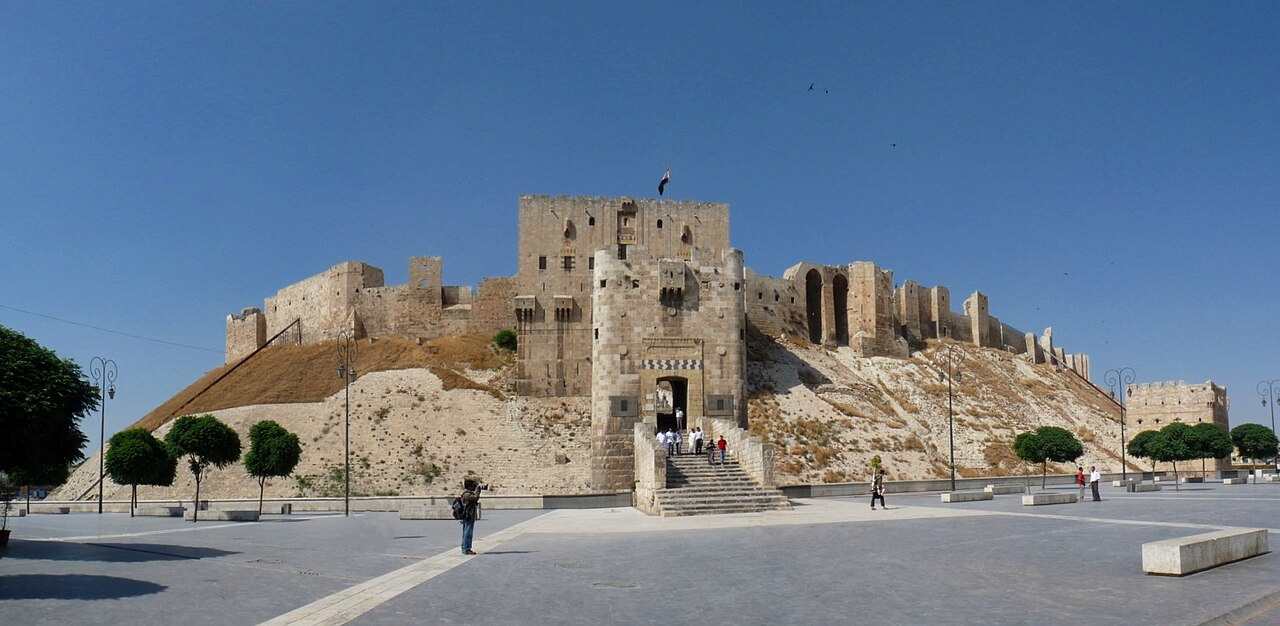
The castle occupies a roughly rectangular area approximately 370 by 170 meters, built atop a rocky outcrop. It is enclosed by robust stone walls reinforced with 35 bastions, providing formidable defenses. A dry moat partially surrounds the fortress, enhancing its security against siege warfare. The overall layout closely resembles that of the citadel of Aleppo, reflecting common architectural principles of medieval Syrian fortifications.
One of the castle's unique features is its construction primarily from baked mud bricks, a material choice that is relatively rare among Syrian castles. The main entrance is accessed via a tunnel carved into the rock, leading to a gatehouse approached by a winding ramp also hewn from stone. This design served to slow and expose attackers, increasing the defenders' advantage.
Within the castle walls, notable structures include a vaulted hall, likely used for ceremonial or residential purposes, and a distinctive cylindrical brick minaret. This minaret, attributed to the reconstruction efforts of Nur ad-Din around 1173, stands as the highest point in the fortress and exemplifies the Islamic architectural influence of the period.
Restoration and preservation efforts
Jaabar Castle suffered extensive damage during the Mongol invasions of Syria in the 13th century. Restoration efforts were undertaken in the 14th century to repair and maintain the fortress. In the 20th century, particularly during the 1960s and 1970s, major conservation projects were implemented to protect the castle from flooding caused by the creation of Lake Assad following the construction of the Tabqa Dam.
These efforts included the construction of a protective glacis—an artificial sloping embankment—and an artificial causeway connecting the island castle to the shore. A small brickworks was established on-site to produce authentic baked bricks for restoration, ensuring the preservation of the castle's original materials and architectural integrity. The donjon, known as Alia, was converted into a museum space to exhibit artifacts recovered from archaeological excavations conducted from 1965 to 1974.
Cultural and historical legacy
Jaabar Castle is linked to the legendary tomb of Suleyman Shah, traditionally believed to be the grandfather of Osman I, founder of the Ottoman Empire. While the exact identification of the tomb is debated, it is an important cultural symbol known as Mezār-i Türk or the "Tomb of the Turks." The tomb was rebuilt by Ottoman Sultan Abdul Hamid II in the late 19th or early 20th century.
Under the 1921 Treaty of Ankara, the area surrounding the tomb was designated as Turkish territory, creating a Turkish exclave within Syria until 1973. The rising waters of Lake Assad necessitated relocating the tomb and its exclave northward, returning control of the castle to Syria. This unique political history adds to the castle's significance beyond its military and architectural importance.
Recent history and archaeological research
During the Syrian Civil War, Jaabar Castle fell under the control of the Islamic State (ISIL) in 2014, who reportedly used it for weapons storage and training. The fortress was recaptured by the Syrian Democratic Forces in January 2017 after intense fighting. This recent conflict underscores the castle's continuing strategic relevance in the region.
Archaeological excavations have revealed important insights into the castle's construction phases and historical occupation. Finds are displayed in the National Museum of Aleppo and the Raqqa Museum, helping to illuminate the castle's role in Syrian and Islamic history. The castle remains accessible to visitors, offering a unique glimpse into medieval military architecture and the turbulent history of northern Syria.
Frequently asked questions (FAQ)
- How do I get to Jaabar Castle?
- Jaabar Castle is located in Al Tabqah, Syrian Arab Republic, and is accessible by car or local transport. The castle is situated near the Euphrates River, making it a scenic destination that is well-signposted for visitors.
- What is the historical significance of Jaabar Castle?
- Jaabar Castle dates back to the 12th century and served as a strategic fortification during the Crusades. Its rich history is reflected in its architecture and the various cultures that have influenced its design over the centuries.
- When was Jaabar Castle built?
- Construction of Jaabar Castle began in the 12th century, with significant modifications made over the years. The castle played a vital role in military defense and trade routes in the region during its prime.
- Can I take guided tours of Jaabar Castle?
- Yes, guided tours are available for visitors who want to learn more about the castle's history and architecture. These tours are led by knowledgeable guides who can provide insights into the significance of the castle and its surroundings.
- Why is Jaabar Castle a popular tourist destination?
- Jaabar Castle is popular due to its stunning architecture and panoramic views of the Euphrates River. Additionally, its historical significance and the opportunity to explore ancient ruins attract history enthusiasts and tourists alike.
- Is it possible to visit Jaabar Castle year-round?
- Yes, Jaabar Castle is open to visitors throughout the year, but it's advisable to check local conditions or restrictions before planning your visit. The climate can affect accessibility, especially during the winter months.
- What are the opening hours of Jaabar Castle?
- Jaabar Castle typically opens at 9 AM and closes at 5 PM, but hours may vary seasonally. It's recommended to confirm the current hours of operation before your visit to ensure a smooth experience.
- What are the ticket prices for Jaabar Castle?
- Ticket prices for Jaabar Castle are quite reasonable, allowing access to the castle and its grounds. Discounts may be available for students or group visits, so be sure to inquire at the ticket counter upon arrival.
- What nearby attractions can I visit after Jaabar Castle?
- After visiting Jaabar Castle, you can explore the beautiful Euphrates River and nearby archaeological sites. The region is rich in history, offering various opportunities for sightseeing and cultural experiences.
Photo gallery

Information
Loading map...
Visitor reviews
No reviews yet. Been here? Write the first review and help other travelers!
Write the first reviewVisited this castle? Share your experience
Your review helps other travelers and adds first-hand knowledge to our encyclopedia.