Qasr al-Hayr al-Gharbi
Qasr al-Hayr al-Gharbi is a significant Umayyad desert castle located approximately 80 kilometers southwest of Palmyra along the historic Damascus road in present-day Syria. Constructed in the 8th century under the reign of the Umayyad caliph Hisham ibn Abd al-Malik in 727 CE, this fortress-palace complex exemplifies early Islamic architecture and the desert palace tradition of the Umayyad period. It is one of a pair of palatial desert castles, the other being Qasr al-Hayr al-Sharqi, which together illustrate the Umayyads' strategic and recreational use of the Syrian desert landscape.
Historical context and purpose
The construction of Qasr al-Hayr al-Gharbi reflects the Umayyad dynasty's efforts to consolidate control over their vast empire by establishing fortified residences and hunting lodges in remote desert areas. While not intended as a primary residence, the castle served as a secondary lodging for the caliph and his retinue, providing a base for leisure activities such as hunting, horse racing, and falconry across the surrounding plains. The castle's location on a key trade and military route between Damascus and Palmyra also underscores its strategic importance.
Besides serving as a royal retreat, the complex likely functioned as an administrative center overseeing the surrounding desert territories and facilitating the collection of taxes and tribute from local tribes. The presence of noble guests who camped in tents nearby indicates the castle's role as a hub for elite gatherings and political networking.
Architectural features and layout
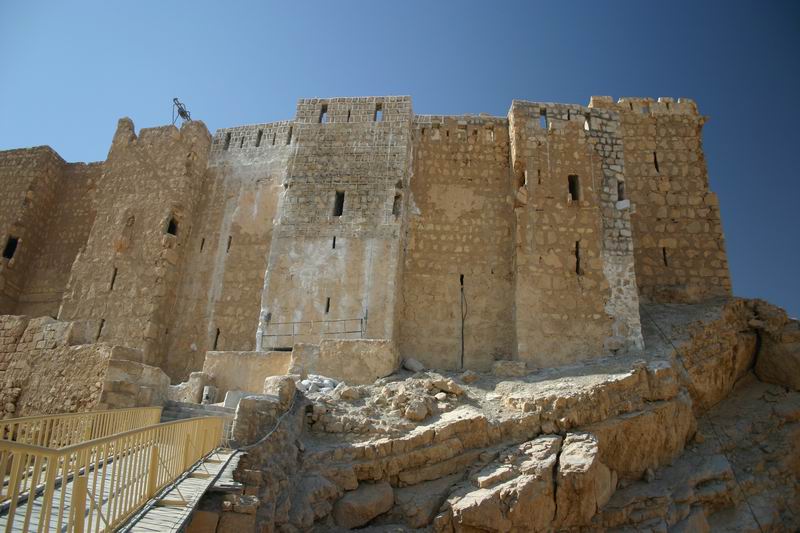
Qasr al-Hayr al-Gharbi is a prime example of the Umayyad architectural style, characterized by a blend of Roman, Byzantine, and Sassanian influences adapted to the desert environment. The castle's design includes robust defensive walls enclosing a complex of residential, administrative, and recreational buildings arranged around a central courtyard. The fortress walls are punctuated by towers and battlements, providing vantage points for surveillance and defense.
The palace and residential quarters
The palace within the castle complex features richly decorated interiors, including stucco wall carvings, figural reliefs, and floor frescoes that attest to the wealth and refined tastes of its occupants. These artistic elements incorporate vegetal motifs, geometric patterns, and occasionally human and animal figures, reflecting the Umayyads' artistic syncretism and the luxurious lifestyle of the caliph and his court.
Water management and infrastructure
Given the harsh desert setting, the castle was equipped with sophisticated water management systems, including cisterns and channels to collect and store rainwater, ensuring a reliable supply for the inhabitants and their horses. The presence of stables and open spaces within the complex facilitated equestrian activities, a favored pastime of the Umayyad elite.
Archaeological significance and preservation
Today, Qasr al-Hayr al-Gharbi stands as archaeological ruins that offer valuable insights into early Islamic architecture and Umayyad desert life. Excavations have uncovered numerous artifacts, including fragments of the castle's ornate decorations, which have been preserved and displayed at the National Museum in Damascus. These finds include stucco reliefs, frescoes, and architectural fragments that highlight the artistic achievements of the period.
The site has suffered from natural erosion and human activity, but conservation efforts aim to protect and study the remains. The ruins provide a tangible connection to the Umayyad era and contribute to the understanding of the political, cultural, and social dynamics of early medieval Syria.
Visiting and accessibility
While Qasr al-Hayr al-Gharbi is not a fully restored castle, it attracts scholars, archaeologists, and tourists interested in early Islamic history and desert architecture. Visitors can explore the remains of the fortress walls, towers, and palace foundations, gaining a sense of the scale and complexity of Umayyad desert palaces. The site's remote location requires careful planning for access, typically involving travel from Palmyra or Damascus.
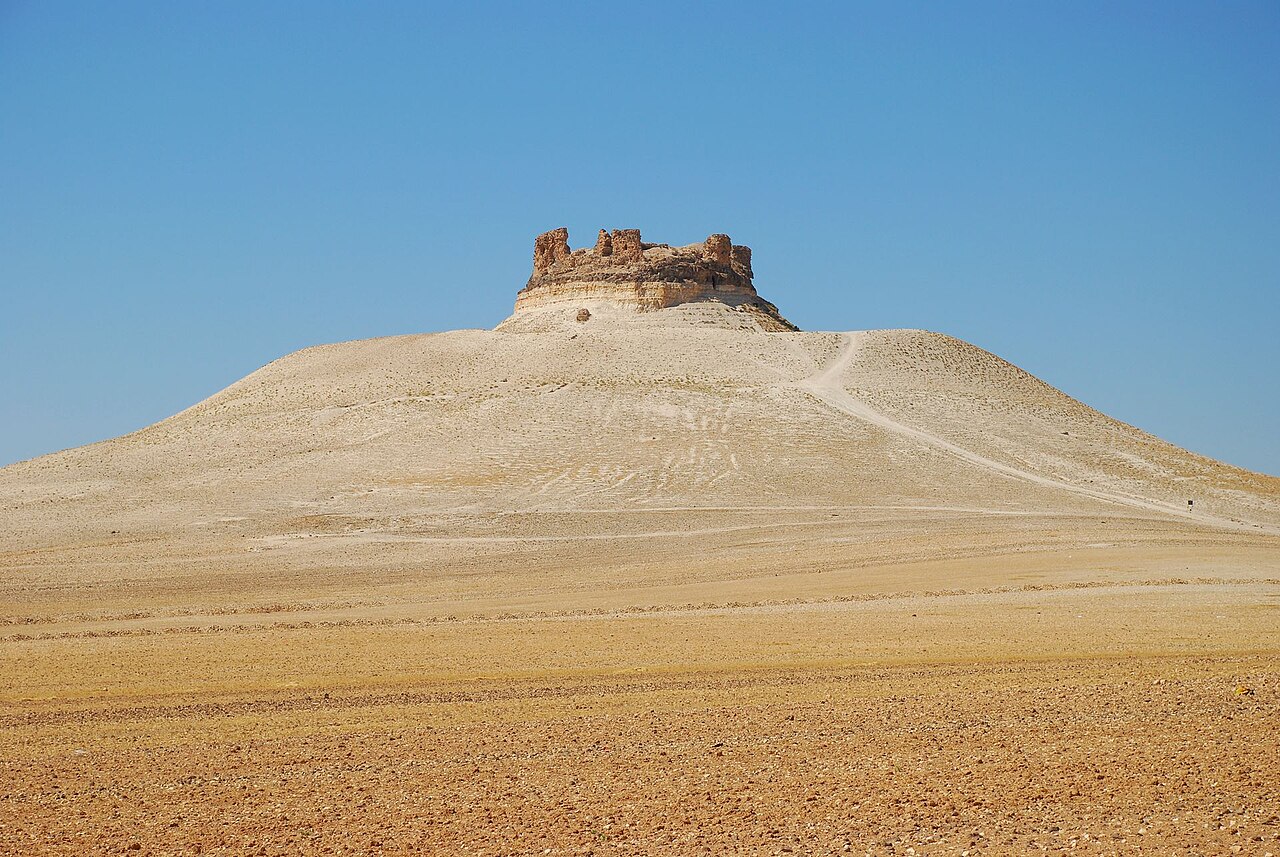
The castle's setting amidst the Syrian desert offers a unique landscape context that enhances the visitor experience, revealing how architecture and environment were integrated in Umayyad times.
Frequently asked questions (FAQ)
- What is Qasr al-Hayr al-Gharbi?
- Qasr al-Hayr al-Gharbi is a historical desert castle located in the Syrian Arab Republic. Built in the 8th century during the Umayyad period, it served as a fortress and a caravanserai, showcasing remarkable Islamic architecture.
- When was Qasr al-Hayr al-Gharbi constructed?
- Construction of Qasr al-Hayr al-Gharbi began in 727 AD and was completed in 730 AD. The castle was strategically built to serve as a resting point for travelers and traders crossing the desert.
- How do I get to Qasr al-Hayr al-Gharbi?
- Qasr al-Hayr al-Gharbi is located approximately 75 kilometers northeast of Palmyra, making it accessible by car or organized tours. Visitors can reach it via the main roads leading from major cities in Syria, though local guidance is recommended due to varying conditions.
- What are the opening hours for Qasr al-Hayr al-Gharbi?
- The castle is generally open to visitors from sunrise to sunset. However, it is advisable to check local conditions or any temporary changes in opening hours before planning your visit.
- Can I take photographs inside Qasr al-Hayr al-Gharbi?
- Yes, photography is generally allowed at Qasr al-Hayr al-Gharbi, but it's best to be respectful of any specific rules or guidelines set by local authorities. Capturing the castle's unique architecture and surrounding landscapes is highly encouraged.
- Is Qasr al-Hayr al-Gharbi accessible for people with disabilities?
- Accessibility to Qasr al-Hayr al-Gharbi can be challenging due to its historical nature and terrain. Visitors with mobility concerns should consider contacting local tour operators for advice on accessibility options.
- When is the best time to visit Qasr al-Hayr al-Gharbi?
- The best time to visit Qasr al-Hayr al-Gharbi is during the spring (March to May) and autumn (September to November) months when temperatures are milder. Visiting during these seasons enhances the overall experience of exploring the castle and its surroundings.
- What are some nearby attractions to Qasr al-Hayr al-Gharbi?
- Nearby attractions include the ancient city of Palmyra, a UNESCO World Heritage site, known for its stunning ruins and historical significance. Additionally, the surrounding desert landscape offers unique opportunities for exploration and photography.
- Are there any ticket prices for visiting Qasr al-Hayr al-Gharbi?
- There is typically a nominal fee for entry to Qasr al-Hayr al-Gharbi, which helps maintain the site. It's advisable to check for the latest information on ticket prices before your visit, as they may vary.
Photo gallery

Information
Loading map...
Visitor reviews
No reviews yet. Been here? Write the first review and help other travelers!
Write the first reviewVisited this castle? Share your experience
Your review helps other travelers and adds first-hand knowledge to our encyclopedia.