Qalʿat ar-Rahba
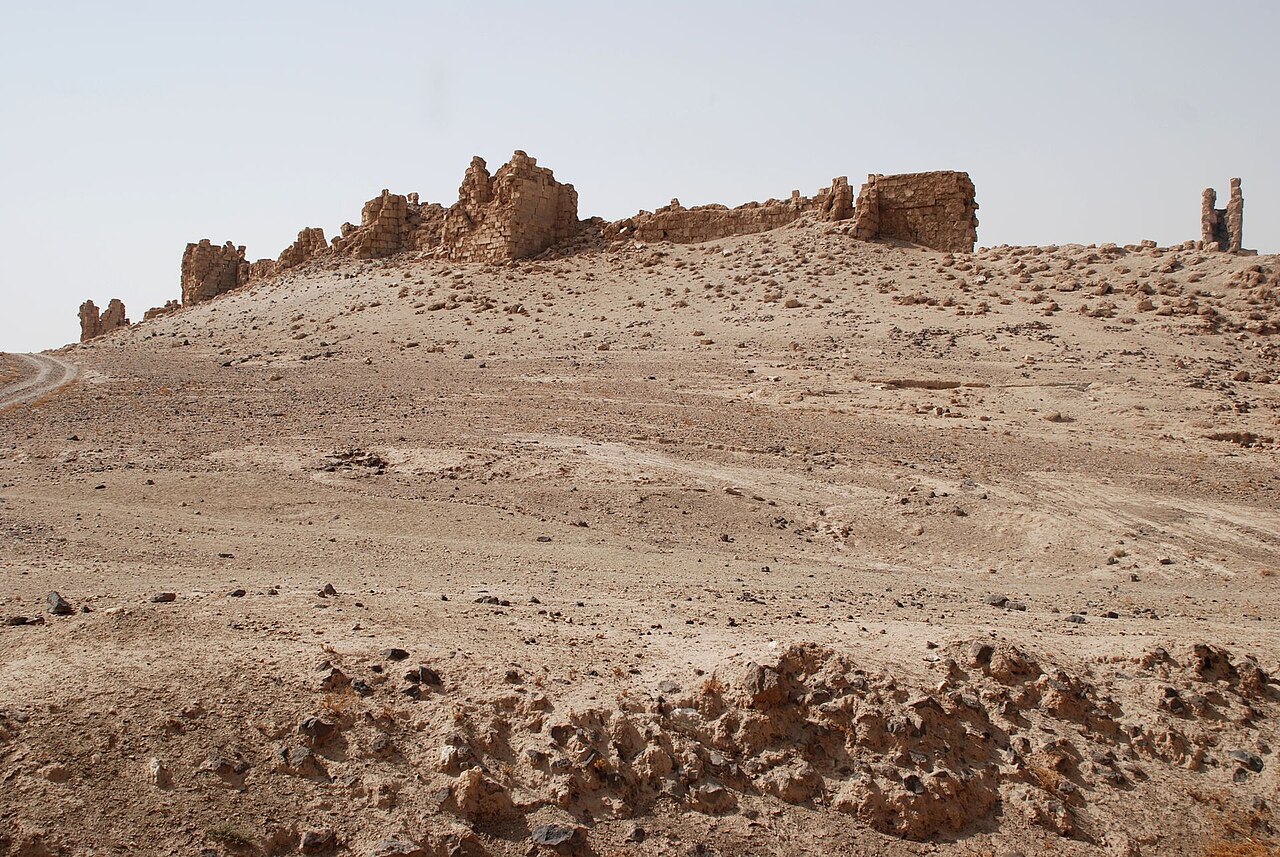
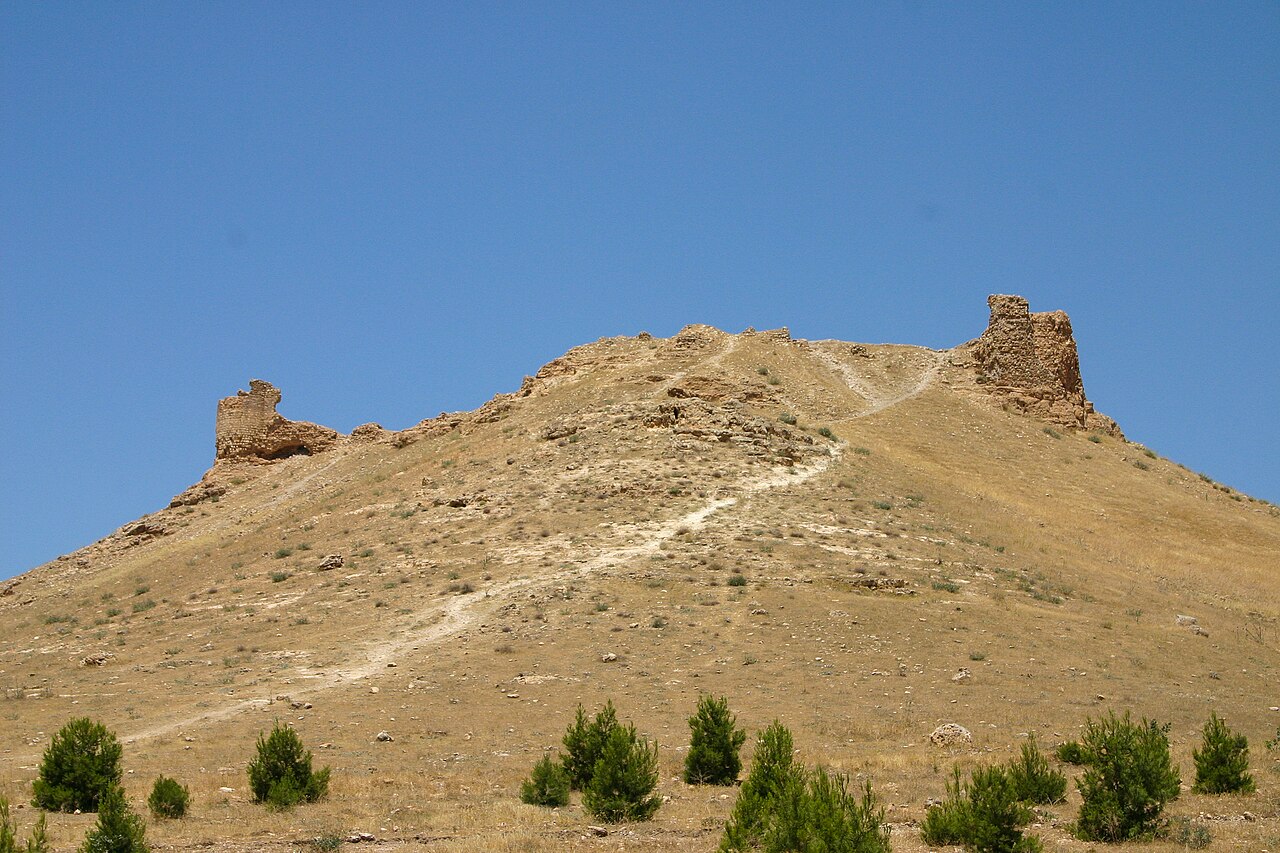
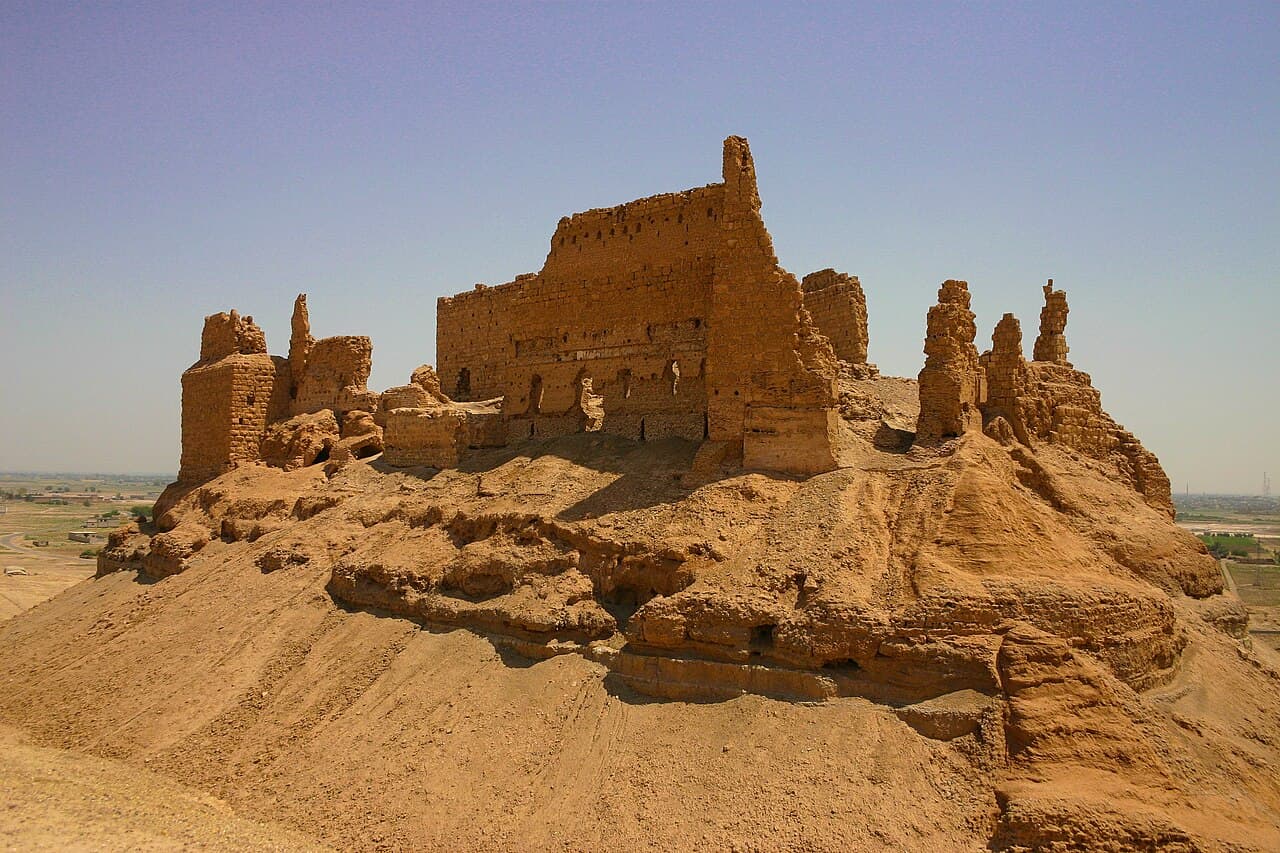
Qalʿat ar-Rahba, also known as the Citadel of al-Rahba, is a significant medieval Arab fortress located on the west bank of the Euphrates River near the city of Mayadin in Syria. This fortress, perched atop a mound rising 244 meters (801 feet) above the surrounding Syrian Desert steppe, served as a strategic military and administrative stronghold controlling the vital passage between Iraq and Syria. The site is often described as "a fortress within a fortress" due to its complex defensive layout, featuring a massive inner keep measuring 60 by 30 meters (197 by 98 feet), surrounded by a large enclosure measuring 270 by 95 meters (886 by 312 feet).
Historical background and strategic importance
The original fortress at this location was known as Rahbat Malik ibn Tawk, named after its Abbasid founder Malik ibn Tawk. It occupied a commanding position along the Euphrates, controlling one of the key routes between Iraq and Syria. This made it a coveted prize for various Muslim powers throughout the high medieval period. The fortress was frequently contested by regional dynasties such as the Hamdanids, Uqaylids, Mirdasids, and the Seljuks. Bedouin tribes also seized the fortress at times, using it as a base for raids into northern Syria.
In 1157, the original Rahbat Malik ibn Tawk was destroyed by a powerful earthquake, leaving the site in ruins. This disaster paved the way for the construction of the current fortress a few years later, commissioned by the Zengid–Ayyubid lord Shirkuh. This reconstruction marked a significant phase in the fortress's history, as it became a hereditary fief held by Shirkuh's descendants under the suzerainty of Saladin until 1264.
Architectural features and reconstructions
The fortress's architecture reflects its military importance and the need for robust defense against frequent attacks, especially during the turbulent times of the high medieval period. The inner keep, a rectangular stronghold, was the last line of defense and served as the residence and command center. It was surrounded by a large fortified enclosure with thick walls and battlements designed to withstand sieges.
In 1207, Shirkuh II, a descendant of the original builder, oversaw a major reconstruction that reinforced the fortress's defenses. These efforts continued into the early Mamluk era (late 13th to 14th centuries), as the fortress faced repeated sieges by the Ilkhanid Mongols from Iraq. During this period, the fortress was continuously restored and strengthened, becoming the most important Mamluk stronghold along the Euphrates. It also served as an administrative center and the terminal point of the sultanate's postal route.
Fortification elements
The fortress's walls were constructed using local stone and featured numerous defensive elements such as towers, gatehouses, and battlements. Its position on a high mound provided a commanding view of the surrounding desert and river, allowing defenders to spot approaching enemies from a distance. The layered defenses, including the inner keep and outer enclosure, exemplify medieval military architecture adapted to the harsh desert environment.
Decline and archaeological significance
Following the rise of the Ottoman Empire in 1517, Qalʿat ar-Rahba gradually lost its military and administrative importance. The fortress fell into disuse and was primarily used as a shelter by local shepherds and their flocks. Over the centuries, natural forces such as wind erosion have contributed to the fortress's current ruined state.
Excavations conducted between 1976 and 1981 have revealed important details about the fortress's construction phases and historical role. These archaeological efforts have helped preserve the memory of Qalʿat ar-Rahba as a key medieval fortress controlling the Euphrates corridor.
The fortress in regional context
Qalʿat ar-Rahba's location on the Euphrates made it a focal point in the struggle for control over northern Syria and the desert frontier. Its history reflects the broader political and military dynamics of the region during the high medieval period, including the rise and fall of various Muslim dynasties and the incursions of Mongol forces. The fortress stands as a testament to the strategic importance of controlling river crossings and desert routes in medieval Middle Eastern warfare.
Today, despite its ruined condition, Qalʿat ar-Rahba remains an important archaeological and historical site that offers insight into medieval fortification techniques and the complex history of the Euphrates region.
Frequently asked questions (FAQ)
- How do I get to Qalʿat ar-Rahba?
- Qalʿat ar-Rahba is located in the Syrian Arab Republic, near the city of Raqqa. Visitors can reach the castle by car or taxi, as public transportation options may be limited. It's advisable to check local travel advisories and road conditions before your visit.
- What is the historical significance of Qalʿat ar-Rahba?
- Qalʿat ar-Rahba, also known as the Castle of Rahba, dates back to the 11th century and served as an important fortress during the Crusades. Its strategic location and robust architecture made it a key defensive structure in the region. The castle reflects the rich history of the area and the various cultures that have influenced it over the centuries.
- When was Qalʿat ar-Rahba built?
- The construction of Qalʿat ar-Rahba began in the early 11th century, specifically around 1030 AD. It was built by the Seljuk Turks and later fortified by the Crusaders. The castle's enduring structure showcases the architectural styles of its time and the historical events that shaped the region.
- Can I visit Qalʿat ar-Rahba year-round?
- Yes, Qalʿat ar-Rahba is generally open to visitors throughout the year. However, it's advisable to check for any seasonal weather conditions or local events that may affect access. Always verify current visiting hours and any special guidelines before planning your trip.
- Why is Qalʿat ar-Rahba considered an architectural marvel?
- Qalʿat ar-Rahba is renowned for its impressive fortifications, including thick walls, towers, and a commanding view of the surrounding landscape. The castle showcases a blend of Islamic and Crusader architectural styles, which highlight the cultural influences of the period. Its design not only served military purposes but also reflects the artistic and engineering skills of its builders.
- Is it possible to explore the interior of Qalʿat ar-Rahba?
- Yes, visitors can explore various parts of the castle, including its towers and courtyards. Guided tours may be available, providing insights into the castle's history and architecture. However, some areas may be restricted for safety reasons, so it's recommended to follow local guidelines during your visit.
- What are the best times to visit Qalʿat ar-Rahba?
- The best times to visit Qalʿat ar-Rahba are during the spring (March to May) and fall (September to November) when the weather is mild and pleasant. Summer can be extremely hot, making exploration less comfortable. Visiting during these shoulder seasons allows for a more enjoyable experience while exploring the castle and its surroundings.
- Are there any nearby attractions to visit while at Qalʿat ar-Rahba?
- Yes, there are several nearby attractions worth exploring, including the ancient city of Raqqa and its archaeological sites. The Euphrates River and its scenic landscapes are also close by, offering opportunities for outdoor activities. These attractions complement your visit to Qalʿat ar-Rahba and enrich your understanding of the region's history.
- What are the ticket prices for visiting Qalʿat ar-Rahba?
- Ticket prices for Qalʿat ar-Rahba can vary based on factors such as age and residency status. Generally, entrance fees are modest, making it accessible for most visitors. It’s recommended to check local resources or official websites for the most current pricing information prior to your visit.
- What are the opening hours for Qalʿat ar-Rahba?
- Qalʿat ar-Rahba typically opens at 8 AM and closes at sunset, allowing visitors ample time to explore the castle. However, hours may change depending on the season or special events. Always verify the current opening times before your trip to ensure a smooth visit.
Photo gallery

Information
Loading map...
Visitor reviews
No reviews yet. Been here? Write the first review and help other travelers!
Write the first reviewVisited this castle? Share your experience
Your review helps other travelers and adds first-hand knowledge to our encyclopedia.